THE NIBBLE BLOG: Products, Recipes & Trends In Specialty Foods


Also visit our main website, TheNibble.com.

TIP OF THE DAY: Try A New Soup & The History Of Soup

It’s well below freezing in much of the country today: a good day to focus on soup.

Every culture makes soup. It’s easy, filling and nutritious, and can be inexpensive. In much of the world it’s eaten for breakfast, lunch and dinner.

January is National Soup Month. Rather than fall back on your favorites today, discover something new. Start with our delicious Soup Glossary, featuring many different types of soups.

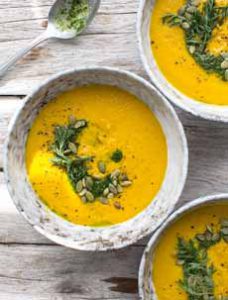
Then, check out our soup garnishes: ways to add flavor and excitement to your soup.

A BRIEF HISTORY OF SOUP

Mankind is up to 200,000 years old. For the majority of our existence, we have had no soup.

The earliest humans had no cookware—nothing to boil water (or anything else) in. Boiling was not easy to do until the invention of waterproof containers, probably pouches made of clay or animal skin, about 9,000 years ago. We can date the first types of soups to about 6,000 B.C.E., some 8,000 years ago.

Our word soup comes from French soupe, which derived from Vulgar Latin suppa, from the post-classical Latin verb suppare, to soak. This indicated bread soaked in broth, or a liquid poured onto a piece of bread. The bread added heft to the meal.


Choabani
Since its beginnings, soup was a poor man’s
dinner. The name of the meal evolved to
souper, than supper. Red lentil soup from
Chobani | Soho.


reggiano-soup-230
Soup gets its name from “sop,” the piece of bread regularly added to sop up the soup. Photo courtesy ParmigianoReggiano.com.

  In Germanic languages, the word sop referred to a piece of bread used to soak up soup or stew. The word entered the English language in the seventeenth century exactly as that: soup pored over “sops” of bread or toast (which evolved into croutons). Prior to then, soups were called broth or pottage. The bread or toast served as an alternative to using a spoon.

Today’s soup croutons evolved from sops.

While the rich enjoyed elaborate soups, basic soup was a poor man’s dinner. Until recent times, the evening meal was the lighter of the two meals of the day; a soup or sop would be a typical evening dish. The name of the meal evolved to souper, than supper.

It began to be fashionable to serve the liquid broth without the sop (bread), and in the early eighteenth century, soup became a first course.
 

EATING VS. DRINKING SOUP

Since it’s a liquid, why do we “eat” soup rather than “drink” soup?

Because it’s served in a dish. If you consume it from a mug or cup, then you can be deemed to be drinking your soup.


Comments off

TOP PICK OF THE WEEK: CedarLane Egg White Omelettes

It’s a new year and you’ve resolved to eat better. Get started by eating a good breakfast.

We flipped for CedarLane’s Egg White Omelettes, which go from freezer to plate in 4-1/2 microwave minutes. Eat them directly from the paper baking dish—no dish washing required.

You’ll benefit from 18-23 g of protein (depending on the variety) and all-natural ingredients. The calories range from 230 to 300 (the latter includes turkey bacon).

While these are egg white omelettes, made without the cholesterol-laden egg yolks, you wouldn’t know it. They both look and taste like the whole egg, conventionally yellow and very flavorful. They do, however, contain cholesterol from the cheese (and the turkey bacon), but it’s a net savings over a whole egg omelette.

   
garden-omelette-box-230

A delicious omelet in 4-1/2 minutes. Photo courtesy CedarLane.


spinach-omelete-plate-230

Each variety is delicious. Here, the popular spinach omelette. Photo courtesy CedarLane.


Tender and tasty, the options include:
The omelettes are available in four delicious flavors, so well seasoned, they don’t even need a shake of salt.

  • Garden Vegetable & Mozzarella Egg White Omelette: mozzarella cheese and a garden full of veggies—potatoes, red onions, green and red bell peppers, zucchini and tomatoes.
  • Green Chile, Cheese & Ranchero Sauce Egg White Omelette: green chiles and cheddar cheese topped with a delectable ranchero sauce. Not hot or spicy, just delicious.
  • Spinach and Mushroom Egg White Omelette: spinach, mushrooms and both mozzarella and feta cheeses.
  • Uncured Turkey Bacon, Vegetable & Cheese Egg White Omelette: turkey bacon with potatoes, bell peppers, cheddar and mozzarella cheeses.
  •  

    Beyond breakfast, the omelettes are delicious for lunch or a light dinner with a big salad.

    Each individual-portion box has an SRP of $5.00. Learn more at CedarLaneFoods.com.
     
    OMELETTE VS. OMELET?

    It’s French versus British spelling. Both are correct: Omelet is easier to spell while omelette is more elegant.


    Comments off

    RECIPE: Green Tea Rice

    If you like green tea, have you ever tried cooking with it? An easy way to start is with this Green Tea Rice recipe from Bee Yinn Low of Rasa Malaysia, a website that features easy Asian recipes.

    The recipe illustrates how green tea is not just for drinking but for adding flavor and nutritional benefits (antioxidants!) to everyday dishes.

    Bee Yinn Low uses Oi Ocha brand’s shincha tea in her cookng. Shincha is the year’s first harvest of green tea, which begins in early April. The young leaves used to brew shincha tea has even more benefits than other green teas, the result of wintertime dormancy. They deliver smooth umami flavor plus four times the amount of the amino acid L-theanine, higher concentrations of catechin antioxidants and vitamin C. It’s also lower in caffeine than regular green tea, with a subtle sweetness attributed to the higher content of L-theanine and the lower content of caffeine.

    In Japanese, “shin” means new and “cha” means tea. The tea is available for only a few months a year, but is still available on Amazon.com and from the manufacturer, Itoen.com. Think it as the summer ale or Beaujolais Nouveau of green tea.

       
    green_tea_rice-rasamalaysia-230

    Green tea rice. Photo courtesy Rasa Malaysia.


    oi-ocha-shincha-green-tea-itoen-230
    Shincha green tea. Photo courtesy Oi-Ocha |
    Itoen.

      RECIPE: GREEN TEA RICE

    Prep time is 5 Minutes, cook time is 10 minutes.

    Ingredients For 2 Servings

  • 1 cup cooked steamed rice (we prefer jasmine)
  • 1/4 teaspoon salt, or to taste
  • 1 cup shincha (or other plain green tea)
  • Garnish: thinly sliced scallions
  • Garnish: 1/2 teaspoon toasted white and black sesame seeds
  •  

    Preparation

    1. BRING the green tea to simmer in a small sauce pan. Add the salt and turn off the heat.

    2. PLACE the steamed rice in a large shallow bowl. Top with the scallions and sesame seeds. Pour the green tea over the rice and serve immediately.


    Comments off

    TIP OF THE DAY: Switch Up That Sandwich With Fusion Condiments

    You may love ham and Swiss cheese on rye with mustard, or a chicken sandwich with mayo on whole wheat toast. These sandwich and condiment pairings descend from the venerable English tradition of the sandwich (here’s the history of sandwiches).

    But it’s a new year, so how about a new approach? How about a chicken katsu sandwich served with pickled daikon, arugula and tonkatsu aïoli (garlic mayo mixed with tonkatsu sauce, also delicious with fries). It was on the menu at Sushi Samba’s Coral Gables, Florida location.

    Or, make a ham or chicken sandwich with spicy Asian peanut sauce, satay-style. Or a turkey sandwich with hoisin sauce and green onions, Peking Duck-style.

    Curried tuna and egg salads seem like something from your grandmother’s generation, and they were early fusion. Punch it up by adding chutney, as well.

    Today’s tip: Look at the ingredients you have in your fridge and pantry for:

  • Chutney
  • Hoisin sauce
  •    
    beef-grilled-tri-tip-doubleRranch-230
    Instead of mustard on a steak sandwich, go fusion with wasabi mayonnaise or green sriracha sauce. Photo courtesy Double Ranch.
  • Sriracha, including the splendid new green sriracha we reviewed recently
  • Wasabi
  •  
    Mix them into conventional spreads—mayonnaise, mustard, sour cream, Greek yogurt—or directly spread them onto sandwiches with conventional fillings.

    Don’t forget the kimchi or pickled jalapeños!

    Get inspiration from the many types of sandwiches in our delicious Sandwich Glossary. And tell us what your favorite new combination is.


    chicken-katsu-sandwich-sushisasmbaFB-230
    It looks like a regular chicken sandwich and fries. Look more closely! Photo courtesy SushiSamba | Coral Gables.


    WHAT IS FUSION CUISINE?

    According to an article in Nation’s Restaurant News, Florida chef Norman Van Aken claims to have coined the term in the late 1980s, writing a treatise on the subject in late 1988 or early 1989. In it, he described how he incorporated the flavors and dishes of the Caribbean with European cooking techniques and traditions.

    He wanted to salvage the vibrant Caribbean flavors of old Key West by fusing them—his words—with contemporary American cuisine. The idea was a cornerstone of the “Floribbean” cuisine that emerged in South Florida, developed by Van Aken, Allen Susser, Mark Militello and Douglas Rodriguez, among others. Even before then, we remember a French restaurant that used Japanese ingredients in New York City (alas, long closed).

    Fine dining pioneers like these began to evolve American cuisine 1990s, crossing their French culinary training with global ingredients. It led to fusion dishes like wasabi mashed potatoes, served at top restaurants, down to the barbecue chicken pizza, Thai pizza and numerous other fusions at California Pizza Kitchen.

    Fusion is alive and well in more recent creations like cronuts, Korean tacos, ramen burgers and Thanksgiving tortillas (turkey, stuffing and cranberry sauce rolled in a tortilla). The younger generations may thing of fusion as culinary mash-ups.

     
    Whatever you cook this year, look to fusion for fresh new flavors.


    Comments off

    RECIPE: Grapefruit Salad With Honey

    Remember the half grapefruit, a first course at breakfast, lunch or dinner? Rich in vitamin C, it became a staple at breakfast, lunch and dinner tables when train transport began to bring the fruits up from Florida in the the early 1900s.

    Today, the half grapefruit and grapefruit salad have largely fallen out of fashion. Yet grapefruits are winter sunshine, and the tradition should be revived posthaste. This recipe is from Bee Raw Honey, which used its maple honey. The fruity flavors of the honey balance the sweet acidity of the grapefruit.

    Our favorite grapefruits are in the pink and red families, but taste a variety to find what appeals to you.

    RECIPE: GRAPEFRUIT SALAD WITH HONEY

    Ingredients For 4 Servings

  • 2 grapefruits, peeled and sliced into rounds about 1/4 inch thick
  • 1 /3 cup hazelnuts, roasted and coarsely chopped
  • 1 /2 cup microgreens
  • 4 heaping teaspoons honey
  • Fleur de Sel or Maldon sea salt
  •  
    Preparation

    1. ARRANGE grapefruit slices on four salad plates.

    2. DRIZZLE each plate one teaspoon of maple honey.


    maple-honey-grapefruit-salad-beeraw-230
    The best fruit in winter: citrus! Photo courtesy BeeRaw.com.

    3. SPRINKLE each plate with hazelnuts, micro greens and a touch of salt. Serve immediately.


    amaranth-trio-2-230
    A trio of microgreens: red amaranth, mizuna
    and beet greens. Photo by Claire Freierman |
    THE NIBBLE.
     

    WHAT ARE MICROGREENS

    What are microgreens? They are tiny, tiny vegetables, no more than 8 to 14 days old, that have just developed their cotyledon (first) leaves. They are far tinier than “baby greens.”

    Think of the first, threadlike shoot that rises when you plant a seed, and the first tiny leaves, barely a quarter-inch in diameter. You may have seen a few scattered on your plate or garnishing your food at fine restaurants.

    Microgreens are very tender and oh, what flavor! Both intense and delicate, visually captivating and sublime to eat, they are a gourmet experience. Yet, they are highly nutritious with scarcely a calorie.

    For people who already like greens, microgreens are the zenith. For people who do not care for salad or raw vegetables: If you don’t like these precious greens, we’ll rest our case. Use them in salads, main dishes, soups and as general garnishes.

    Here’s more about microgreens.


    Comments off

    The Nibble Webzine Of Food Adventures


    © Copyright 2005-2026 Lifestyle Direct, Inc. All rights reserved. All images are copyrighted to their respective owners.