THE NIBBLE BLOG: Products, Recipes & Trends In Specialty Foods


Also visit our main website, TheNibble.com.

RECIPE: Black Ice Cream For Halloween

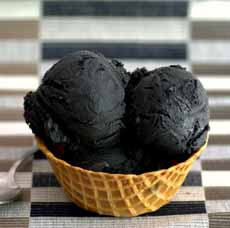
Is this black ice cream spooky enough for you?

Perfect for Halloween, it’s actually part of a “Goth” ice cream trend that sprang up in Los Angeles as an alternative to unicorn/rainbow ice cream trend.

We found this recipe at Baking Bites, a technique that uses activated charcoal to make a deathly black color with any flavor ice cream.

We added a selection of Halloween garnishes:

  • “Blood”: dripping raspberry purée
  • Cotton candy cobwebs
  • Skull candy
  • Spider candy
  •  
    RECIPE: BLACK HALLOWEEN ICE CREAM

    The original recipe is vanilla mint. To make it more Halloween-themed, we eliminated the mint for a pure vanilla flavor.

    You can make any ice cream recipe and turn it black with activated charcoal.

    Ingredients For 1 Quart

  • 2 cups heavy cream
  • 2 cup half-and-half*
  • 3/4 cup sugar
  • 1/3 cup activated charcoal
  • 1 tablespoon vanilla extract
  •  
    Preparation

    1. COMBINE the heavy cream, milk and sugar in a small saucepan. Bring to a simmer, stirring to dissolve the sugar.

      Black Ice Cream
    [1] The ideal color for Halloween ice cream (photo courtesy Baking Bites).

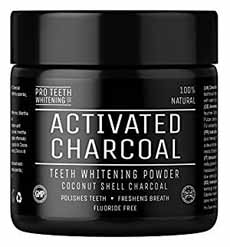
    Activated Charcoal

    [2] Activated charcoal, a natural, edible product, turns food black (photo Pro Teeth Whitening Co. | Amazon).

     
    2. REMOVE from the heat and whisk in the charcoal and vanilla extract. Transfer to a bowl, cover with plastic wrap and refrigerate until cold, about 2 hours or overnight.

    3. POUR the into an ice cream maker and freeze according to the manufacturer’s instructions. Eat at once or transfer to a covered container in the freezer.
     
     
    WHAT IS ACTIVATED CHARCOAL?

    Activated charcoal is a very fine form of carbon powder that is has numerous purposes, including teeth whitening and water purification.

    The charcoal is typically made from coconut shells. It is odorless, tasteless and safe to eat.

    Activated charcoal has long been a homeopathic remedy for indigestion. You can find it at health food stores and online.

    Just don’t buy the capsules, or you’ll be spending lots of time opening them to shake out the contents!

    ________________

    *You can substitute whole milk for a less rich ice cream.


    Comments off

    TIP OF THE DAY: Make Your Own Pumpkin Candies

    Pumpkin Candy
    [1] Pumpkin gummies for Halloween, or a Thanksgiving candy cornucopia. Photo and recipe from Hannah Kaminsky | Bittersweet Blog.

    Pumpkin Candy Molds
    [2] Don’t like gummies? You can melt white chocolate and add orange food color (photo Amazon).

      With a $4.99 plastic mold, you can make your own Halloween Thanksgiving gummy candies for snacking or favors.

    It’s not a single-purpose purchase. You can also use it* to make:

  • Caramels
  • Chocolates
  • Ice cubes
  • Molded butter
  • Soaps
  •  
    The finished product is 1-1/2″ square by 1/2″ deep.

    Our colleague Hannah Kaminsky shares her simple recipe with us. She used four plastic pumpkin molds (photo #2, $4.99 each with free shipping).

    Alternatively, you can line an 8 x 8-inch baking pan with foil and cut gummy squares. Just be sure to lightly grease the foil before proceeding.
     
     
    RECIPE: PUMPKIN GUMMY CANDIES

    Ingredients For About 60 Gummies

  • 1/2 cup pumpkin purée
  • 1 cup apple juice concentrate
  • 1-1/2 tablespoons agar powder
  • 1 teaspoon pumpkin spice extract or pumpkin spice blend
  •  
    Preparation

    1. WHISK all of the ingredients in a small saucepan until smooth, and set over medium heat. Stir gently but consistently: You should start to feel the mixture thicken almost instantly.

    2. CONTINUE scraping the bottom and sides of the pan as you stir to prevent sticking or burning, until the mixture is sticky but spoonable. It will be so dense that it doesn’t quite come to a boil, but should bubble up around the edges quite a bit.


    3. SMOOTH the mixture into the molds as quickly as possible—the candy sets up very quickly. Let stand at room temperature until fully

    set; at least 20 to 30 minutes.

    4. POP the pumpkins out of the molds and trim away any excess, if necessary. If they don’t mysteriously disappear first, the candy will keep in an airtight container in the fridge for 5 to 7 days.  

    Comments off

    RECIPE: Cranberry Orange Brussels Sprouts

    This recipe (photo #1), from Two Peas And Their Pod, would be at home on Thanksgiving and Christmas dinner tables; but why wait until then?

    It’s a delicious way to enjoy Brussels sprouts through the fall and winter seasons—and we have more recipes at the end of this article.

    Brussels sprouts buying tips:

  • While larger Brussels sprouts may look more tempting, the smaller ones are sweeter and more tender.
  • Take the time to pick uniformly sized sprouts. They’ll cook evenly.
  •  
    For some extra flavor and protein, add some toasted pecan or walnut pieces/halves to the recipe below. Here’s how to toast nuts.

    And a final note:

    Few foods are more unpleasant than overcooked Brussels sprouts. The same is true with other cruciferous members: excessive heat releases an unpleasant-smelling and -tasting chemical compound.

    Brussels sprouts have more of this compound. But cook them lightly, and they are bites of pleasure.

    > January 31st is National Brussels Sprouts Day.

    > November 23rd is National Eat A Cranberry Day.

    > The history of Brussels sprouts.

    > The history of cranberries.
     
     
    RECIPE: CRANBERRY-ORANGE ROASTED BRUSSELS SPROUTS

    The total prep/cook time is 50 minutes.

    If you like the cranberry-orange flavor profile, take a look at yesterday’s cranberry-orange white chocolate chip cookie recipe.

    Ingredients For 6 Servings

  • 1-1/2 pounds Brussels sprouts, rinsed and trimmed (NOTE ON smaller/even size)
  • 2 teaspoons orange zest
  • 1 large orange, juiced
  • 2 tablespoons olive oil
  • 2 teaspoons honey or 1 teaspoon agave
  • Salt and freshly ground black pepper to taste
  • 1/2 cup dried cranberries
  • Optional: toasted walnuts
  •  
    Preparation

    1. PREHEAT the oven to 400°F. Trim the brown bottoms of the Brussels sprouts (photo #2) and remove any discolored leaves. If they are large sprouts, cut them in half (leave small sprouts whole).

    2. ZEST and juice the orange. In a large bowl, whisk together zest, juice, olive oil and honey. Add the Brussels sprouts to the bowl and toss until they are well coated.

    3. ADD the sprouts to a large baking pan and season with salt and black pepper. Roast for 35 to 40 minutes, until crisp on the outside and tender on the inside. Shake the pan from time to time to brown the sprouts evenly.

    4. PLACE in a large bowl and add the dried cranberries. Stir, garnish with the toasted nuts and serve immediately.
     
     
    BRUSSELS SPROUTS HISTORY

    The Brussels sprouts plant is a beauty: A four-foot stalk crowned with large, wide graceful leaves resembling a cabbage (photo #4).

    The sprouts, edible buds, grow up the entire stalk in a progression from smallest to largest.

    So if we eat the buds, why are they called Brussels sprouts? Because rather than a conventional bud, which develops into a flower, Brussels sprouts just spring up on the stalk, and stay that way.

    The Brussels sprout is a member of the cancer-fighting Cruciferous vegetables group, also called the Brassicas. If they look like tiny cabbages, its because they’re a member of the cabbage genus and species, Brassica oleracea.


    Brussels Sprouts & Cranberries
    [1] A yummy fall dish from Two Peas And Their Pod.

    Brussels Sprouts
    [2] Trim off any brown edges before washing (photo courtesy Cava).

    Brussels Sprouts On Stalk
    [3] You can sometimes find the entire stalk at the store. You can remove the individual buds, or roast the stalk whole (photo courtesy ABCDs Of Cooking).

    Brussels Sprouts In Field

    [4] What looks like a cabbage on top of the stalk is known as Brussels leaves. They are most certainly edible: sweet and tender like greens, with a mild flavor that doesn’t have a cabbage’s edginess (photo courtesy Heirloom Organic Vegetable Garden | YouTube.

     
    If you follow our comments on taxonomy, you’ll be interested to know the genus and species Brassica oleracea includes these different vegetable cultivars*: broccoli, Brussels sprouts, cabbage, kale, cauliflower, collard greens, gai lan (Chinese broccoli), kohlrabi and Savoy cabbage.

    They are distinguished taxonomically by their cultivar group. Brussels sprouts belong to the Gemmifera group of cabbages.

    From Rome To Brussels To Louisiana

    Cabbage species are native to the Mediterranean region, and early versions of Brussels sprouts were likely cultivated by the ancient Romans. The original wild plants resembled leafy kale, and were selected and crossbred to create the Brassica oleracea cultivars we know today.

    Modern Brussels sprouts were cultivated in northern Europe during the 5th century. By the 13th century they were (and still are) cultivated near Brussels, which is how they got their name. They were also cultivated extensively in The Netherlands, Germany and Britain: They do well in colder climates.

    French settlers brought Brussels sprouts to Louisiana in the 18th century. It took a while for them to head west to the Golden State, where most of America’s supply is grown today. The first plantings in California began in the 1920s. The Central Coast areas of San Mateo, Santa Cruz, and Monterey counties offer an ideal combination of coastal fog and cool temperatures year-round.

    A smaller harvest is grown in Skagit Valley, Washington, and to a lesser extent on Long Island, New York.

    Once harvested, the sprouts will keep well for three to five weeks in near-freezing storage (and about half as long in a home refrigerator), before wilting and discoloring. The minute you see that happening, steam them and turn them into a purée or soup.

    Editor’s Note: We capitalize Brussels because it’s the name of a city. We do the same with French fries. After all, we wouldn’t like to see new york strip steak or california roll: They’re all proper names, named after places that don’t want to be lower-cased.

    However, you’ll frequently see them spelled brussels sprouts, Brussel sprouts and brussel sprouts.
    ________________

    *Other Brassica species include familiar crucifers such as arugula, bok choy, cauliflower, cress, horseradish/wasabi, mizuna, mustard greens/seeds, radish/daikon, rapini, rutabaga, tatsoi and turnip, among others.


    Brussels Sprouts Caesar Salad Recipe
    [5] Brussels Sprouts Caesar Salad (here’s a recipe from Kitchen 52).

    Winter Vegetable Kabobs

    [6] Brussels sprouts as part of winter veggie kabobs skewers. Here’s the recipe (photo Bittersweet Blog).


    BRUSSELS SPROUTS NUTRITION

    Brussels sprouts and other members of the cruciferous vegetables group are high in cancer-protecting phytochemicals.

    Brussels sprouts themselves are exceptionally rich in protein, dietary fiber, vitamins, minerals and antioxidants, including glucosinolate, an important cancer-fighting phytonutrient. All cruciferous vegetables contain glucosinolates, but brussels sprouts are especially potent in this regard.

    They are also cholesterol-fighters. Steamed brussels sprouts actually have a have better cholesterol-lowering effect than raw brussels sprouts. The plant fibers do a better job of binding when they’ve been steamed.

    Brussels sprouts are an excellent source of vitamin C: One cup provides more than the daily requirement.

    Vitamin C, along with vitamins A and E, also found in Brussels sprouts, protect the body by trapping harmful free radicals.

    Brussels sprouts are one of the best vegetable sources for vitamin K, which strengthens bones and helps to prevent, or at least, delay the onset of Alzheimer’s disease.
     
     
    MORE BRUSSELS SPROUTS RECIPES

  • Beer-Roasted Potato Salad With Fngerlings & Brussels Sprouts
  • Bone In Brussels Sprouts With Dip (served on the stalk)
  • Brussels Sprouts Caesar Salad
  • Buffalo Brussels Sprouts Sandwich With Blue Cheese Dressing
  • Frizzled Ham & Brussels Sprouts
  • Grilled Cheese Sandwich With Turkey, Tilsit & Brussels Sprouts
  • Roasted Beets & Brussels Sprouts
  • Shaved Brussels Sprouts Recipes
  • Winter Vegetable Kabobs
  •  


    CHECK OUT WHAT’S HAPPENING ON OUR HOME PAGE, THENIBBLE.COM.


    Comments off


    © Copyright 2005-2026 Lifestyle Direct, Inc. All rights reserved. All images are copyrighted to their respective owners.