THE NIBBLE BLOG: Products, Recipes & Trends In Specialty Foods


Also visit our main website, TheNibble.com.

TIP OF THE DAY: Rethink Your Sandwiches

PBJSliderTheShedatGlenwood-NatlPeanutBoard-230

The new PB&J, battered and fried. Elvis
would approve. Photo courtesy National
Peanut Board.
  As reported in Restaurant-Hospitality.com, chefs nationwide are adding new life to sandwiches with simple ingredients switches. Some of them are fusion (adding an ingredient from a different culture’s cuisine), others are simply new interpretations of classics.

Check out what they’re up to, and adapt the ideas to your own sandwiches.

PB&J. At South Water Kitchen in Chicago, the PB&J stands for Pears, Brie and Jam. The sandwich is composed of sliced pear, Brie and blueberry jam on whole wheat bread. If you want a “real” PB&J, Chef Todd Richards of The Shed at Glenwood, Atlanta, batters and fries a conventional PB&J sandwich (see the photo).

Grilled Cheese. At Cannery Brewing Company in Monterey, California, the Short Rib Grilled Cheese combines braised short rib, oven-roasted tomatoes, goat cheese and Provolone, along with balsamic onions and pickled peppers on sourdough bread.

Dagwood. How about a piled-high Dagwood with lamb instead of cold cuts? Chef Rodney Scruggs of The Occidental in Washington, D.C. combines thinly sliced lamb shoulder with goat cheese, arugula, pickled ramps and strawberry jam. (That sounds awfully gourmet for a Dagwood!)

 
Steak Sandwich. Chef John Tesar of Knife in Dallas reinterprets the steak sandwich with braised beef cheeks. Or go for a bulgogi steak sandwich, Korean grilled beef, topped with pickled red onions and kimchi.

Panini. Italian grilled sandwiches—panini—go fusion filled with Middle Eastern and Asian ingredients such as grilled tofu. The Peanut Panini from Parish in Atlanta combines green peanut “hummus,” tomato jelly and prosciutto on ciabatta bread.

Pulled Pork. Chef Allison Leono of Goodyear, Arizona transfers classic Carolina pulled pork in mustard sauce from its classic bun into Thai rice paper wraps—with fresh mango!


You don’t have to travel the country to try these sandwiches. Here are the latest hot recipes described above:

  • Beef Cheek Sandwich Recipe
  • Bulgogi Steak Sandwich Recipe
  • Fileo Fish Sandwich Recipe
  • Green Peanut Panini Recipe
  • Honey and Garlic Grilled Tofu Panini Recipe
  • Lamb Dagwood Sandwich Recipe
  • PB&J (Pears, Brie and Jam) Grilled Cheese Sandwich Recipe
  • PB&J Slider Recipe
  • Potato-Stuffed 1-Pound Burger Recipe
  • Pulled Pork and Mango Rolls with Carolina Mustard Sauce Recipe
  • Short Rib Grilled Cheese Recipe
  •   pulled-pork-mango-rolls-natlmangobd-230
    Carolina pulled pork in a Thai fusion recipe. Photo courtesy National Mango Board.
     

    Read the full article.
      

    Comments off

    FOOD FUN: How Many Of These International Foods Have You Had?

    Grilled Halloumi cheese on rocket salad
    Grilled halloumi cheese, which doesn’t lose
    its shape when heated. Photo by Ina Peters |
    IST.
      No matter where it originated, you know a food is mainstream if you can find it in an English language dictionary. Burrito, sushi and quiche, for example, have been around for a while.

    But in 2014, other foodie favorites were added to our lexicons: You can read the full article here.

    Some of these foods have been available in the U.S. since we were in grade school, but familiar only to those who frequented say, bistros (Croque Monsieur, anyone) or Sicilian-style restaurants (arancini).

    The criterion for inclusion in the dictionaries, according to the article, is how widely the term is now used. That is, has it reached mainstream America via everyday cookbooks, or mentions in broadcast cooking segments, digital and print articles?

    Thanks to a proliferation of cooking shows, and of food media in general, the answer is often yes. (The article points out that few people had heard of ras el hanout, a Moroccan spice blend, before Top Chef. Thanks to its frequent use on the popular cooking show, it entered the American Heritage Dictionary in 2011.)

    So grab an imaginary fork and knife and dig in!


    New Food Terms In The American Heritage Dictionary

  • Bahn-mi, Vietnamese baguette made from wheat and rice flour, and also the sandwich served on it (more).
  • Halloumi, a brined Greek cheese that keeps its shape when fried (more).
  • Mochi, a doughy Japanese sweet treat made from rice of the same name (more).
  • Saison, a fruity Belgian farmhouse ale, typically made in the summer (more).
  •  

    New Food Terms In The Merriam-Webster Dictionary

  • Aji, a native word for chile, these days often refers to the aji amarillo, a yellow version popular in Peru (more).
  • Brat, a shortened term for bratwurst (more), the popular sausage brought over by German immigrants in the late 1800s.
  • Croque-Monsieur, a classic French grilled ham and cheese sandwich that is dipped into beaten egg then sautéed in butter. With a fried egg on top, it is called a Croque-Madame. “Croque” means crispy.
  • Crudo, an Italian preparation of sliced raw fish/shellfish (more).
  • Pepita, toasted pumpkin seed (more).
  • Pho, a traditional Vietnamese noodle soup based on oxtail broth (more).
  • Poutine,a Canadian dish of French fries topped with gravy and cheese curds (more).
  • Yuzu, a Japanese citrus fruit, known best here via its bottled juice (more).
  •   arancini-rice-balls-230
    Arancini, fried rice balls. Photo courtesy Wisconsin Milk Marketing Board.
     

    New Food Terms In The Oxford Dictionaries Online

  • Arancini, small balls of rice and mozzarella (and possibly other ingredients like peas or meat), breaded and fried; a popular Southern Italian appetizer.
  • Cavatelli, cappellaci and trofie, pasta shapes representing a miniature hot dog bun, a tortellini-like stuffed pasta and a thin twist, respectively (see more in our Pasta Glossary).
  • Queso-cheese, a shortened form of “Chile con Queso,” a melted cheese dip served with nachos.
  • Guanciale, an Italian cured meat made from pork jowl, not the cheek, as often reported (more)
  • Izakaya, the Japanese version of tapas, small plates served in a restaurant that specializes in them.
  •  
    It’s still January, and you’ve got time to make more new year’s resolutions. Resolve to try everything above that you haven’t yet had!
      

    Comments off

    TIP OF THE DAY: Microwave Scrambled Eggs

    microwaved-scramble-eggs-aeb-230
    Yes you can…make scrambled eggs in the microwave. Photo courtesy American Egg Board.
      Don’t like to scrub pans? Make scrambled eggs in a mug in the microwave. Here’s how from the American Egg Board:
     
    RECIPE: MICROWAVE SCRAMBLED EGGS

    Ingredients Per Serving

  • 2 large eggs
  • 2 tablespoons milk
  • Salt and pepper to taste
  • Garnish or mix-in: fresh herbs or shredded cheese
  •  
    Preparation

    1. BEAT the eggs, milk, salt and pepper in microwave-safe bowl or 12-ounce coffee mug, until blended. Add cheese or herbs as desired.

    2. MICROWAVE on HIGH for 45 seconds, then stop and stir. Continue to microwave until the eggs are almost set, 30 to 45 seconds longer. Serve immediately.

     
    NOTES

  • Microwave ovens vary in strength. Cook time may need to be adjusted.
  • Even if the eggs look like they can use a few more seconds, don’t overcook. Scrambled eggs will continue to cook and firm up after removed from microwave.
  •  

    Variations For Any Scrambled Eggs Recipe

  • For rich creamy scrambled eggs, you can use cream instead of milk, or add small cubes of cream cheese or a dollop of cottage cheese before cooking. Chef Wylie Dufresne adds cream cheese to his scrambled eggs recipe.
  • For added flavor, stir a bit of creamy salad dressing, pesto or salsa into the egg mixture.
  •  
    MILK VERSUS NO MILK

    Always add milk (ideally whole milk) or cream to scrambled eggs. The fat in the milk/cream slows down the cooking process, and the additional water (milk is approximately 87% water) adds to the tenderness.

    On the other hand, don’t add milk to omelets. They have a more compact structure; adding milk can make them harder.


    Comments off

    RECIPE: Crispy Fried Cauliflower (Lashooni Gobi)

    Junoon is one of the most popular Indian restaurants among gourmand New Yorkers. The name, which means passion, interprets Indian cuisine with a modern spin. The space is large and comfortable, unusual for New York City. And the food: Well, it inspires passion.

    While many American home cooks are wary of taking on Indian cuisine without the benefit of a class or an expert friend, here’s one of Junoon’s dishes that’s easy to make. The Indian name is Lahsooni Gobi, but Crispy Fried Cauliflower sounds so much more tempting.

    We love cauliflower in all its forms, plain and fancy. But here, lightly battered and tossed in a tomato garlic sauce, this hearty appetizer or side will make even those who don’t typically crave cauliflower want more.

    No eggs are used in the batter because in India, eggs are not part of a vegetarian diet (this recipe is actually vegan). This recipe is also gluten-free. Chef Vikas Khanna notes, “I use rice flour here, not just for its superior crisping quality but also for people who are gluten sensitive. It’s a warm and homey dish and can easily be adjusted in terms of heat and garlic to suit anyone’s palate.”


    crispy-fried-cauliflower-junoon-worleygig-ps-230

    Junoon’s delicious Crispy Fried Cauliflower. Photo courtesy Worleygig.

     
    RECIPE: LAHSOONI GOBI, CRISPY CAULIFLOWER

    Ingredients For 4 Servings

  • 1 medium sized head of cauliflower, cut into small florets
  • Vegetable oil for frying, plus 2 tablespoons to make the sauce
  • 2 teaspoons fine sea salt
  • ½ cup rice flour
  • ½ cup cold water
  • 2 teaspoons minced fresh ginger root
  • 2 cloves garlic, finely chopped, or more to taste
  • ¼ cup tomato purée
  • ¼ cup water
  • ¼ teaspoon cayenne pepper
  • Two pinches salt
  • Two pinches sugar
  • Two pinches ketjiap spice (recipe below)
  • Garnish: 2 sprigs cilantro
  •  

    cauliflower-beauty-goodeggs-230
    Turn an everyday cauliflower into something special. Photo courtesy GoodEggs.com.
     

    Preparation

    1. SPRINKLE 2 teaspoons of sea salt evenly over the cauliflower and let it sit at room temperature for 10 to 15 minutes.

    2. PREHEAT the oil to 350°F: Heat two tablespoons of oil in a heavy-bottomed skillet over medium heat. Add the chopped garlic and ginger, stirring constantly until golden brown, about 2-3 minutes.

    3. ADD the tomato purée, water, cayenne pepper, sugar, salt and ketjiap spice; mix well with a whisk until combined. Cook, stirring frequently, for 5 minutes. Taste for seasoning and adjust if necessary just before serving.

    4. PREPARE the batter by quickly blending the rice flour and water together in a large bowl. Coat the florets in the batter by placing all of the florets in the bowl. Toss gently and then carefully drop the florets into the hot oil. Fry the cauliflower until golden brown, about 5 minutes. Remove with a slotted spoon and drain on paper towels.

    5. BRING the sauce to a simmer over medium heat and then add the cauliflower to the pan. Stir and toss gently to coat the cauliflower with the sauce until well combined. Serve the cauliflower in a bowl garnished with cilantro.


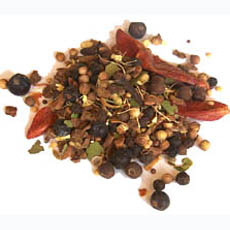
    KETJIAP SPICE MIX

    Ketijap is a traditional Indonesian spice mix used for the many different sauces that are loosely called cat-siop and ketjiap (and other spellings*). A pinch or two livens up soups and sauces. You can keep the spice tightly covered in a cool, dark place for up to two months.

  • 1 tablespoon allspice berries
  • 1 tablespoon mace flakes†
  • 1 tablespoon whole black peppercorns, preferably tellicherry
  • 1 tablespoon cumin seeds
  • ½ teaspoon whole cloves
  • 1 tablespoon cinnamon powder
  •  
    Preparation

    1. LIGHTLY TOAST the whole spices in a small heavy bottomed skillet over medium heat for about one minute.

    2. COOL, then grind to a fine powder with the cinnamon in a spice grinder.
     
    *Yes, this is the origin of our word catsup/ketchup, although our familiar tomato ketchup was a New World invention. Here’s the history of ketchup.

    †It can be difficult to find mace flakes, also called mace blades, in consumer markets. Use ground mace instead.


    Comments off

    FOOD FUN: Mashed Potato Stuffed Burger Recipe

    You’re used to fries or potato chips with your burger. But how about mashed potatoes?

    For some food fun, executive chef Craig (Andy) Beardslee of Hash House A Go Go in San Diego suggests a layer of Parmesan mashed potatoes between two eight-ounce burgers. This one-pound burger with mashed potatoes is not quite Paula Deen (who famously sandwiched a burger, fried egg and bacon between Krispy Kreme donuts), but it’s fun.

    About the name: It’s not really a potato-stuffed burger. It’s more of a potato-layered burger; otherwise, the potatoes would be stuffed inside the burger patties. As in recipe ingredients, in naming, strive for accuracy!

    We like onion with our burger; so when we tried this recipe, we added thinly sliced green onions (scallions) to the mashed potatoes. We also mashed the potatoes with basil oil, and on another occasion with truffle oil. Both are inspired choices, with or without the Parmesan cheese.

    RECIPE: MASHED POTATO STUFFED BURGERS

    Ingredients For 1 Serving

      mashed-potatoStuffed-burger-IdahoPotCom-230

    Mashed potato stuffed burger: Just in time for Super Bowl supping. Photo courtesy Idaho Potato Commission.
  • 2 8-ounce ground prime beef patties
  • 6 ounces mashed potatoes with fresh shaved Parmesan cheese, griddled
  • 2 bread and butter plank pickles
  • 2 tomato slices
  • 2 romaine lettuce leaves
  • 1 red onion slices
  • 2 applewood-smoked bacon strips
  • 1 ciabatta or sesame bun
  •  

    Preparation

    1. PLACE the mashed potatoes on a griddle in a pancake shape. Brown and turn.

    2. LAYER the lettuce, tomato, onion and pickles on bottom bun. Top with one beef patty.

    3. LAY on a mound of griddled mashed potatoes and add 2 strips cooked bacon. Top with the second beef patty, then the top half of the bun.
      

    Comments off

    The Nibble Webzine Of Food Adventures
    RSS
    Follow by Email


    © Copyright 2005-2026 Lifestyle Direct, Inc. All rights reserved. All images are copyrighted to their respective owners.