THE NIBBLE BLOG: Products, Recipes & Trends In Specialty Foods


Also visit our main website, TheNibble.com.

TIP OF THE DAY: Cooking With Coconut Oil

If you like coconut, have you cooked with coconut oil?

We’re not talking about hydrogenated coconut oil, a trans fat long been used in American processed foods, which has been phased out of use over the past few years.

We’re talking extra virgin coconut oil, which is 90% saturated fat but of a type that metabolizes in the body similar to an unsaturated fat. It thus does not increase LDL (bad) cholesterol.

  • Pressed from the fruit (the “flesh” or “meat”) of the coconut, coconut oil is very popular in India and throughout Southeast Asia. It adds a hint of coconut flavor and aroma to cooked dishes.
  • If you don’t want the coconut aroma and flavor, you can use refined coconut oil. But since we only use coconut oil for that hint of coconut, why bother when there other neutral oils in the pantry?
  •  
    At room temperature, coconut oil solidifies but turns liquid as soon as it hits the heat (or if your room is warmer than 76°F). Don’t put it in the fridge: It will turn rock-hard.

    You can find liquid coconut oil, which is fractionated coconut oil that has had the good-for-you lauric acid removed so it doesn’t solidify. It stays liquid, even in the fridge. Use it on your hair and skin if you want, but not for cooking.

       
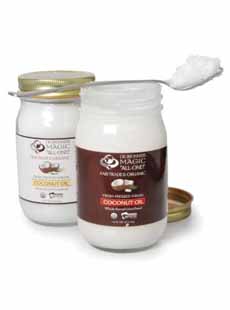
    Coconut-oil-dr-bronner-230

    The same coconut oil that is used to cook is also used as a beauty product to make skin soft and hair shiny. Photo of virgin coconut oil—Fair Trade, organic and certified kosher—courtesy Dr. Bronner.

     
    DIFFERENT TYPES OF COCONUT OIL

    When you’re in the store, you may discover a confusing list of options, including extra virgin coconut oil, virgin coconut oil, expeller-pressed coconut oil, the aforementioned liquid coconut oil, and generic products simply called “coconut oil.”

    Go with the virgin or extra virgin. According to Health Impact News, they’re the same thing. There’s no industry standard for “extra virgin”; it’s simply better marketing that leverages consumers’ preference for extra virgin oil oil.

    Here’s a detailed explanation of the different types of coconut oil.


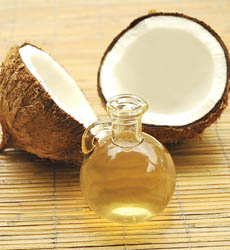
    Coconut-and-oil-w-coconut-PhuThinhCo-230
    Refined coconut oil is pale yellow in color; unrefined (virgin) coconut oil is white.
    Photo courtesy Phu Thinh Co.
     

    WAYS TO USE COCONUT OIL

    Manufacturers use coconut oil in candies, cookies, whipped toppings, nondairy creamers and other foods. At home, we use it to add a hint of coconut flavor in:

  • Baked goods
  • Sautéed veggies: Brussels sprouts, cabbage, cauliflower, root vegetables, potatoes
  • Stir fries
  • Sautéed chicken or fish (if you’re making a breading, use half bread crumbs and half flaked unsweetened coconut)
  • Stir fries
  • Marinades
  • Popcorn drizzle (add flaked coconut and toasted almonds!)
  • Bread spread (a vegan friend uses it to make delicious cinnamon toast)
  • Grains, as a butter alternative (we love what it adds to rice, regular and fried)
  •  
    The same coconut oil that is eaten is also used as a beauty product. You can use it to soften skin, shine hair or as a massage oil.
     
    BAKING WITH COCONUT OIL

    You can replace other oils or butter at a 1:1 ratio in baked goods. For shortening, replace 1 part with 3/4 part coconut oil.

    Solid coconut oil will mix like softened butter with other ingredients are at room temperature; but to be sure to please the gods of baking chemistry, we melt it first.
     
    DIFFERENT TYPES OF COCONUT FOR COOKING, BAKING & DRINKING

  • Coconut oil is an edible oil extracted from the meat of matured coconuts, which are specifically harvested from the coconut palm. A versatile oil, it is used in both cooking and personal care products. It is liquid at room temperature and solid when cold. Look for cold pressed, organic, virgin coconut oil.
  • Coconut butter is the flesh of the coconut which has been ground into a butter. It is creamier than the oil, and a popular dairy-free spread.
  • Coconut flakes are the dried, flaked meat of the coconut. They are our coconut garnish of choice, more impressive than shredded coconut (think grated parmesan cheese vs. shaved parmesan) All shredded/flaked coconut can be eaten raw or lightly toasted, and can be found sweetened and unsweetened.
  • Coconut water is the clear liquid inside young coconuts, before it hardens into meat. It is high in electrolytes, making it good as a sports drink. Contrary to some claims, there is no evidence that it is better for hydration than water. Look for 100% coconut water without added sweetener for the most healthful drink.
  • Coconut milk is produced by gating coconut meat. The full-fat version has a rich taste and is used as a dairy milk replacement in foods and for drinking.
  • Coconut cream is similar to coconut milk, but has had more water removed, giving it a thicker, paste-like texture. It is used to enhance both sweet and savory dishes.
  • Coconut flour is made by grinding dehydrated coconut meat into [a gluten-free] flour. It can be used instead of wheat flour in baking and cooking, but it doesn’t substitute in equal proportions (the recipe usually needs more liquid).
  • Dessicated coconut is coconut meat that has been shredded or flaked, then dried.
  • Shredded coconut is similar to desiccated coconut, but has a coarser texture. It is more toothsome and looks better as a garnish.
  •   

    Comments off

    TIP OF THE DAY: Types Of Radishes & Ways To Use Radishes

    Low in calories, high in crunch, often with a hot pepper spiciness, radishes (Raphanus sativus) can be a fun food. They’re nutritious*, too.

    If you’re old enough, you may remember the time when radish “roses” were almost as common a plate garnish a sprig of parsley. You sliced the rose in a certain way (or used a radish cutter), then dropped the radish into cold water, where the slices opened up into “petals.” As a child, we ate them petal by petal.

    There are numerous varieties of radish beyond the red globe “supermarket radish,” known as the Cherry Belle.

    Different varieties have varying levels of heat-spiciness, mostly depending on growing conditions. Even within a particular variety, it can vary based on soil, water, hot vs. cold weather, early versus late harvest and other factors.

    Some people like them hot, others not so much. Unfortunately, you have to sample one to know what you’ve got.
     
     
    RADISH HISTORY

    The wild radish may have originated somewhere in southeast Asia, and developed by farmers in central Asia, China and India.

    Radishes enter the written record in the third century B.C.E. and appear in Greek and Roman texts in the 1st century C.E., which describe small, large, round, long, mild and sharp varieties. The name comes from the Latin word “radix,” which means “root.”

    The radish was one of the earliest vegetables to be brought over from Europe (source).

    Burpee currently sells 30 varieties of differing shapes, sizes and colors.

  • Our favorite is the watermelon radish: When sliced, it resembles a slice of watermelon (photo #6).
  • Runner up: Mardi Gras radishes, a mix of seeds that yield black, purple, white and yellow radishes. (Easter radishes are a similar mix—photo #5).
  •  
    See six different types of radish below.
     
     
    WAYS TO SERVE RADISHES

    Breakfast

  • French breakfast radishes. Serve with toast and butter, or with avocado toast.
  • Egg garnish. Slice or grate to add heat to any style of egg.
  •  
    Appetizer & Snack

  • Crostini or tea sandwiches. For crostini, toast slices of baguette and top with sweet butter or pesto, thinly-sliced radish, a bit of cress or other green, and a pinch of sea salt. For tea sandwiches, trim the crusts from un-toasted white or whole wheat bread.
  • Raw, with butter and sea salt. It’s a popular dish in France. If you can find longer-shape radishes, cut a slice lengthwise, drop into cold water to open a channel, and pipe in softened butter. Otherwise, slice round radishes in half horizontally, butter the bottom half and serve like poppers.
  • Pickled. Any type of radish can be quickly and easily pickled, for snacking, sandwiches, garnish, etc. Here’s the recipe.
  • With ricotta. Put together a plate of fresh radishes and a dish of mild ricotta drizzled with olive oil. We enjoy this as a weekend breakfast with crusty rustic bread.
  • Crudités and dip! In decades past, the predecessor of the crudité plate was the relish tray, with celery, radishes and olives.
  •  
    Lunch & Dinner

  • Julienned. Toss radish strips into salads, scrambled eggs, rice and grains and anything that needs some color and crunch. Duda Farm Fresh Foods sells radishes already trimmed, sliced into matchsticks and coins (see photo).
  • Boiled or steamed. Top with a cheese sauce, Eastern European-style.
  • Garnishes: Sandwiches (a must on Vietnamese bánh mì), burgers, tacos, soups, sides.
  • Salads: In addition to green salads, see the Radish Salad recipe below.
  • Roasted or braised: A great solution to deal with radishes that are too hot. The heat of the oven removes much of the heat from the radishes, making them sweet and buttery. If you don’t want to turn on the oven, braise on the stove top in butter until tender.
  • More: Kabobs, chilled radish soup and as many options as you can research or invent.
  •  
    Cocktails

  • Cocktail garnish: notch a radish or a thick slice on the rim of a Bloody Mary or Martini.
  •  
     
    RECIPE: RADISH & CUCUMBER SALAD

    This recipe from Natasha’s Kitchen is a Ukranian influence.

    The sour cream dressing helps to neutralizes the pungency of the radishes. Easy to make, prep time is just 10 minutes. It goes very nicely with grilled meats and anyplace you’d serve cole slaw.

    Ingredients For 6 Side Servings

  • 1 English cucumber, thinly sliced
  • 2 bunches radishes, thinly sliced
  • 1 large red bell pepper, diced
  • 1 bunch scallions, chopped
  • 3/4 cup sour cream
  • 1 teaspoon Dijon or whole grain mustard (more to taste)
  • 3/4 to 1 teaspoon salt, or to taste (substitute half garlic salt for a touch of garlic flavor)
  • Fresh-ground black pepper to taste
  • 2 teaspoons fresh chopped dill (more to taste)
  •  

    Fresh Radishes
    [1] The basic “supermarket radish” is called the Cherry Belle (photo courtesy The Chef’s Garden).

    Black Radishes
    [2] Black Spanish radishes: the spiciest (photo courtesy Good Eggs).

    Daikon Radish
    [3] Daikon, Japanese radish (photo courtesy Good Eggs).

    Easter Egg Radishes
    [4] Easter egg radishes, produced from a mix of seeds with different colors (photo courtesy Jengod | Wikipedia).

    Breakfast Radishes
    [5] French breakfast radishes. Serve them with toast and butter (photo courtesy Burpee).

    Watermelon Radishes
    [6] Watermelon radishes (photo courtesy Rodale Institute).

     
    Preparation

    1. COMBINE the cucumbers, radishes, bell pepper and green onion in a medium salad bowl.

    2. COMBINE the sour cream, dill and salt in a small bowl.

    3. STIR the sour cream dressing into the salad just before serving.
     
    What About The Radish Tops?

    If the radish leaves are fresh and sprightly, consider leaving them on. They’re edible and pretty (photo #3).

    In fact, the leaves are the most nutritious part of the plant. They have a very mild flavor, like lettuce.
     
     
    TYPES OF RADISHES

    There are many varieties of radish, but here are the key ones to look for in markets:

    Black Spanish Radish: The spiciest radish, and the one that looks least like a radish (photo #2). It can be pickled or grated like horseradish.

    Cherry Belle Radish: The red, round supermarket radish (photo #1). Slice thin and toss into salads or onto tacos.

    Daikon Radish: This long, white Japanese radish looks more like a parsnip than a radish (photo #3). A mild radish, it can be used any way. It’s shape enables it to be shredded garnish as a garnish or a base, as it’s used with sashimi.

    Easter Egg Radish: So called because they come in a variety of colors, like easter eggs: pink, purple, red, and white (photo #4). They are similar in taste and texture to the basic Cherry Belle radish.

    French Breakfast Radish: They’re small and mild in flavor, which is why you can eat them for breakfast (photo #5). French people enjoy them with sweet butter. You can also roast them.

    Watermelon Radish: More mild in flavor but vivid in color—green and rose, similar to the colors of the watermelon for which it is named (photo #6). Slice it thin for salads or garnishes, cut them a bit thicker for crudités. You can pickle them, too.
     
    _________________
    *Radishes are rich in folic acid, potassium and vitamin C.


    Comments off

    TIP OF THE DAY: Fried Cheese For The Cheese Course

    Sophisticated diners in the U.S.—and many people in Europe—have long finished dinner with a cheese course and small salad, instead of a sweet dessert.

    How about a twist: fried cheese with salad on top—or underneath?

    There are many fried cheese recipes; today’s is a Sicilian specialty. Caciocavallo, which means “cheese on horseback,” is a cheese that dates back to Roman times. Two large, pear-shaped cheeses are tied with rope and slung over a wooden board to drain and age.

    Believed to have been so shaped to make it easy to transport by slinging over pack animals, the cheese duo evokes the image of saddlebags, hence the name (here’s a photo).

    Caciocavallo is hard to find in conventional U.S. markets, although you can find it at Italian specialty stores and online from cheesemongers like Murray’s Cheese.

       
    fried-caciacavallo-esquaredhospitality2

    Fried caciacavallo cheese topped with salad. Photo courtesy E-squaredhospitality.

     
    Or, substitute halloumi, kasseri, provolone, scamorza, smoked mozzarella or queso de freier (Mexican frying cheese). You’ve got plenty of options!

    RECIPE: FRIED CHEESE COURSE

    Ingredients For 4 Servings

  • ¼ cup olive oil
  • 4 large cloves of garlic, crushed
  • 3/4 pound of Caciocavallo, cut into 4 slices
  • ½ teaspoon oregano
  • Pinch of pepper
  • 4 tablespoons vinegar
  • ½ tablespoon sugar
  • Italian bread, sliced
  • Salad of choice (we like arugula, basil, cress, endive, chives or sliced green onions and sometimes, fennel; but you can use absolutely anything, very lightly tossed with vinaigrette to slightly moisten)
  •  

    fried-cheese-eatwisconsincheese-230
    Fried caciacavallo served atop the salad. Photo courtesy EatWisconsinCheese.com.
      Preparation

    1. HEAT the oil in a nonstick skillet over medium heat. Add the garlic and slices of cheese and lower the heat.

    2. COOK covered for 1 minute; then turn the cheese over and cook covered for an additional minute, or until the cheese is golden in color.

    3. REMOVE the skillet from the heat, add the oregano and pepper and transfer the fried cheese to the serving plates.

    4. ADD the vinegar and sugar to the hot oil in the pan and cook for about 1–2 minutes until some of the liquid evaporates. This creates a sweet and sour sauce.

    5. DECIDE if you want your salad on top or underneath the cheese. Add the salad accordingly.

    6. TOP the cheese with the sauce if the cheese is on top of the salad; or use it to dot the plate if the salad is on top. Use the garlic as garnish and serve immediately with slices of fresh Italian bread.


    ABOUT CACIOCAVALLO CHEESE

    Caciocavallo, a popular cheese in southern Italy and Sicily, is typically made from unpasteurized cow’s or sheep’s milk. Two pear-shaped cheeses, about 4 pounds each, are joined at the neck by a rope to age.

    Like burrata, mozzarella, provolone and scamorza, caciocavallo is a pasta filata, a cheese made by stretching and forming the curd by hand.

    It is then aged for two to three months, and optimally for one year. Because the pairs of tied cheeses hang from rods in the air to age, instead of sitting on shelves like other cheeses, more microbes can enter the cheese, where they help to develop sharp, spicy flavors, deep, earthy undertones and fruity aromas.

    The result is a layered, complex cheese that is typically sliced and served with fresh fruit, plus a glass of hearty red wine. The yellow rind is edible.

    There are different types of caciocavallo:

  • Caciocavallo Silano, a PDO* cheese made in the southern Italian regions of Basilicata, Calabria, Campania, Molise and Puglia.
  • Caciocavallo Ragusa, a PDO* cheese made in Ragusa, Sicily.
  • Caciocavallo affumicato, smoked caciocavallo.
  • Caciocavallo piccante, spicy caciocavallo.
  • Caciocavallo primaverile, made from milk gathered in the spring, which has subtle flavors of the aromatic herbs in spring pastures.
  •  
    MORE FRIED CHEESE RECIPES

  • Cashew-encrusted fried cheese recipe.
  • Fried cheese curds recipe.
  • Grilled halloumi cheese recipe.
  •  
    *PDO, Protected Designation of Origin, is a designation of authenticity from the European Union. In the case of Caciocavallo Silano or Ragusa, it guarantees that the milk used comes only from local herds.


    Comments off

    RESTAURANT: Texas De Brazil

    Last week we went to two churrascarias, also known as Brazilian steakhouses. They were both good, but one was better: Texas de Brazil.

    Churrascarias in the U.S. often have numerous locations across the country. If you want to score a table for Father’s Day, reserve now! For Mother’s Day, every seat of the large spaces at both restaurants we visited was sold out.

    A churrascaria (Portuguese, pronunced choo-rah-SCAH-ree-ya with rolled “r’s”) is a type of restaurant where meat is cooked churrasco style, on a rotisserie called a churrasqueira.

    In most parts of Brazil, the meat is roasted over charcoal; in the south of Brazil, wood is also used.

    Modern churrascarias typically offer rodízio service. Passadores, meat waiters, come to the table with meat on a large skewer—beef, chicken (some wrapped in bacon), duck, filet mignon, lamb, flank steak, sirloin, pork, chicken, duck, sausage, fish, or any other sort of local cut of meat.


    bacon-wrapped-filet-230
    Bacon-wrapped filet mignon. Photo courtesy Texas de Brasil.

     
    Some have even more options: We enjoyed delicious grilled octopus at one location.

    The passadores slice whatever you like. If you want your meat more rare or more well-done, just ask. If you don’t like the sprinkling of salt on the meat, ask for it without salt.

    If the opportunity to eat and endless amount of great meat (yes, it’s all you can eat) is your idea of paradise, plan a visit. But there’s more:


    lamb-chops-2-230r-s
    Succulent lamb chops. How many would you like? Photo courtesy Texas de Brasil.
     

    Start at the salad bar with 50 or more items: shrimp, smoked salmon and sushi; grilled vegetables; salads of every description (tabbouleh, quinoa, whatever); cheeses; soups; and so much more that you have to watch how much you take or you won’t have room for the meat.

    TIP: Start with a small plate, and don’t take any bread. If you have the slightest bit of hunger after you’ve finished the meat course, you can go back for as much salad bar as you like.

    Sure, there are build-your-own green salad fixings; but you can have that at home.

    If you don’t want meat, you can indulge in the salad bar only, at a lower price.

    The price at Texas de Brazil: $59.95 for the whole shebang; $39.95 for those who just want the salad bar (prices may vary by location). It’s just a few dollars for children 12 and under.

     
    Beverages and desserts are extra; but if you still have room for dessert, you haven’t done justice to the salad bar and meats.

    We now admit that we really enjoyed the chocolate ganache cake—but it was in the name of research.

    Check the website for the location nearest you.


    Comments off

    RECIPE: Grilled Chicken Or Fish With Pico De Gallo

    There are many different types of salsa, but our favorite is the finely chopped fresh salsa called pica de gallo.

    Pico de gallo, pronounced PEE-coh-deh-GAH-yo, is Spanish for “rooster’s beak.” How did it get that name? It once was eaten between the thumb and finger in a way that resembled a pecking rooster. (Salsa as finger food?!)

    Pico de gallo is made with finely diced raw tomatoes, onions, lime juice and cilantro. Jicama and other raw ingredients can be added. It differs from salsa fresca and salsa cruda in that the ingredients are uniformly chopped; but the terms are often used interchangeably. Another term is salsa mexicana.

    Most Americans not of Mexican ancestry limit their use of pico de gallo to Tex-Mex recipes—chips, nachos, tacos, tortilla chips, quesadillas, etc.

    But this better-for-you condiment provides great flavor and nutrition to everyday better-for-you foods, like grilled chicken and fish.

    Those in the know use fresh salsa to complement grilled meats—especially pork and steak—egg dishes, rice and other recipes.
     
    We make a lower-calorie dip by blending it into nonfat Greek yogurt, and serve it with crudités as well as chips. When people hesitate to eat salad, we mix it into a vinaigrette.

    This recipe is from QVC’s chef David Venable. Serve it with a large salad, other sides of choice, and a few tortilla chips for crunch.
     
     
    RECIPE: GRILLED CHICKEN OR FISH WITH PICO DE GALLO

    Ingredients For 4 Servings

    For The Pico De Gallo

  • 4 ripe plum tomatoes, seeded and finely chopped
  • 1 small white onion, finely chopped
  • 1/2 cup loosely packed cilantro leaves, chopped
  • 1 jalapeño chile, seeded and finely chopped
  • 1-1/2 tablespoons lime juice
  • 1/2 teaspoon salt
  • 1/2 teaspoon pepper
  • Optional: tortilla chips
  •  
    If you’re pressed for time, buy the salsa (it’s in the refrigerator case). Then just grill, top and enjoy!

    For The Chicken Or Fish

  • 4 (5–6 ounces) boneless, skinless chicken breasts/fish fillets
  • 1/4 cup extra virgin olive oil
  • 4 garlic cloves, minced
  • 1-1/4 teaspoons salt
  • 1/2 teaspoon freshly ground black pepper
  • Zest of 1 lemon
  •    
    chicken-breast-pico-de-gallo-QVC-230
    [1] Grilled chicken breasts topped with pico de gallo salsa. Delicious and good for you (photo © QVC).

    A bowl of pico de gallo surrounded by tortilla chips
    [2] Pico de gallo is delicious with so much more than tortilla chips—and low in calories, too (photo © WayMoreAwesomer | Fotolia).


    [3] Another idea for pico de gallo: Serve it with a shrimp cocktail instead of convention cocktail sauce (photo © Simply Organic | Facebook),.


    Preparation

    1. MAKE the pico de gallo: Toss all the ingredients in a medium-size bowl until evenly combined. Place into an airtight container and refrigerate for at least 2 hours, or overnight.

    2. PREPARE the chicken or fish. If chicken, place the breasts between 2 pieces of wax paper. Use a meat mallet to pound them to a 3/4″ thickness.

    3. PLACE all the ingredients into a large zip-tight bag. Gently toss so the marinade evenly coats the chicken/fish. Place in a bowl in the refrigerator and marinate for at least 8 hours, or up to 12 hours.

    4. PREHEAT the grill to high. Place the chicken breasts onto the hot grill and cook for 4–5 minutes until char marks appear. Flip the chicken and cook until an instant-read thermometer inserted in the chicken reads 165°F, about 4–5 more minutes. Top each chicken breast with pico de gallo before serving.
     
     
    HOW TO GET CROSSHATCH GRILL MARKS ON THE MEAT

    Most people are happy with simple horizontal grill marks. But if you’d like to get fancy and create crosshatch marks, just rotate the meat.

    Position the piece(s) at a 45-degree angle (the 1 o’clock position), sear, then turn 90 degrees (back to about the 11 o’clock position). Flip and repeat.


    CHECK OUT WHAT’S HAPPENING ON OUR HOME PAGE, THENIBBLE.COM.


    Comments off

    The Nibble Webzine Of Food Adventures
    RSS
    Follow by Email


    © Copyright 2005-2026 Lifestyle Direct, Inc. All rights reserved. All images are copyrighted to their respective owners.