THE NIBBLE BLOG: Products, Recipes & Trends In Specialty Foods


Also visit our main website, TheNibble.com.

FOOD 101: Empanadas, History & National Empanada Day

Empanadas
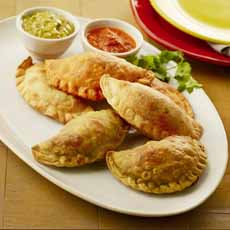
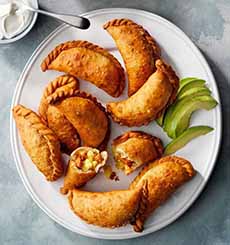
[1] Latin American empanadas are made in half-moon shapes (photo © Fairway | NYC).

Breakfast Empanadas
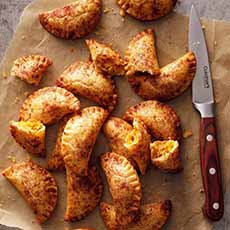
[2] Breakfast empanadas. Here’s the recipe (photo © Good Eggs).

Pumpkin Cheesecake Dessert Empanadas
[3] Dessert empanadas have become popular. Here’s the recipe for these pumpkin cheesecake empanadas.

Buffalo Chicken Empanadas
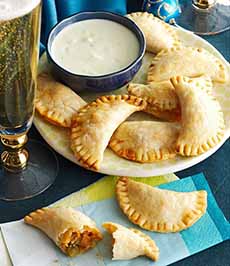
[4] Go fusion with Buffalo chicken empanadas. Here’s the recipe.


April 8th is National Empanada Day.

Most Americans know empanadas as fried Latin American fare. They are savory turnovers: pastry dough that is filled, folded, baked or fried. For National Empanada Day, April 8th, here’s the empanadas history.

The concept came to Latin America with Spanish immigrants. The pies originated in Galicia, the northwest corner of Spain, and across the border in Portugal.

Below:

> Types of empanadas.

> The history of empanadas.

> A recipe for air fryer empanadas.

Elsewhere on The Nibble:

> Dobladas recipe: Guatemala-stye empanadas.

> The year’s 25+ Mexican and Tex-Mex food holidays.
 
 
THE DIFFERENT TYPES OF EMPANADAS

  • Latin American empanadas are typically made in individual half-moon-shapes (photo #1) filled with minced meat (photo #2), cheese or vegetables.
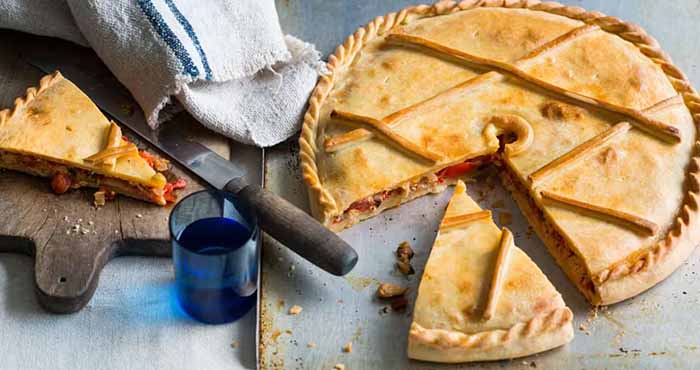
  • In Galicia and Portugal they are typically prepared as a large pie which is cut into slices (photo #3). The wedges are a portable yet hearty meal for working people.
  • Galician and Portuguese empanadas fillings include chorizo, codfish, pork, sardines or tuna, often in a tomato, garlic and onion sauce.
  • A specialty of Galicia is the empanada gallega, filled with pork and bell peppers (photo #5 below).
  • Empanadas are found in cuisines worldwide. In Indonesia, they are known as panada or pastel filled with spicy tuna and chiles.
  • Italian calzones are close relatives of empanadas, but are seen as “folded pizza,” with ingredients such as mozzarella, ricotta, parmesan, meats (ham, salami) and other pizza toppings. They are baked rather than fried.
  • Food trucks: Empanadas have become popular food truck fare.
  • Dessert empanadas: Some Mexican restaurants serve dessert empanadas, and “gourmet” empanadas are created by fine chefs.
  •  
     
    THE HISTORY OF EMPANADAS

    The concept of wrapping meat in dough likely originated in Persia or the Middle East. Historians believe that the direct ancestor of the empanada is the sambusak, which originated in Arabia before migrating to India to become the samosa.

    These portable, fried or baked triangles filled with spiced meat, were designed to be easily carried by travelers and soldiers.

    When the Moors, Muslimd from North Africa, occupied parts of the Iberian Peninsula for nearly 800 years, from 711 to 1492. They brought their cuisine with them, and Spain adapted these portable pies into what we recognize today as
    empanadas.

    The first known mention of an empanada appears in a Catalonian cookbook from 1520, mentioning empanadas filled with seafood.

    The Spanish name empanada comes from the verb empanar, meaning to wrap or coat in bread.

    On the opposite end of the country, in Galicia, the empanadas evolved into large, circular double-crust pies that were served in slices—very different from the individual hand-pies common in the Americas.

     
    Empanada Gallega, Galician Empanada Pie
    [5] In Galicia, Spain, empanadas are made in a pie shape called empanada gallega, and served in slices. Here’s the recipe for this lovely pie (photo © SBS.)
     
    Empanadas Come To The Americas

    Empanadas arrived in the Americas with the Spanish colonization of the 16th century. Not surprisingly, regional recipes varied based on local ingredients:

  • Argentina: Each province has its signature recipe. The most famous is the Tucumán version, filled with specially prepared beef.
  • Chile: The most famous is the empanada de pino, filled with a conventional mix of diced beef, onions, cumin, paprika, and oregano, and adding hard-boiled eggs, olives, and raisins.
  • Colombia and Venezuela: Cooks here shifted from using wheat flour to cornmeal (masa). Instead of baking, they’re typically deep-fried
  •  
    Wherever they landed, empanadas were traditionally working-class fare. Because the dough protected the filling, they were the perfect portable lunch for miners, gauchos, and field workers, easy to carry in their pockets and eat without utensils.
     
    What’s for lunch? Empanadas! And these days, you can have a plate, knife, fork, and napkin!
     
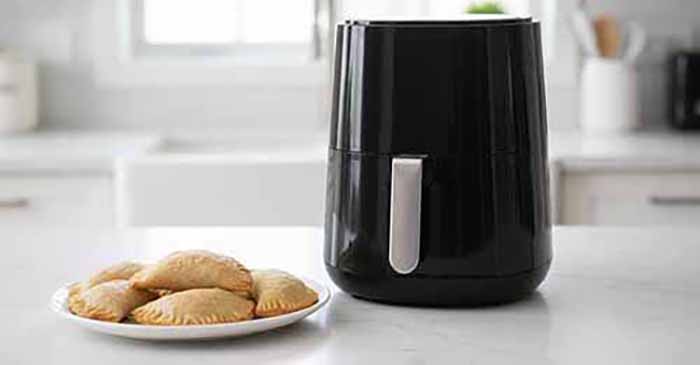
    A Plate Of Air Fryer Empanadas
    [6] Use your air fryer to make empanadas. Here’s the recipe (Abacus Photo).
     
     
    RECIPE: AIR FRYER EMPANADAS

    You can vary the ingredients to create the filling you want. Just use the same proportions.
     
    Ingredients

  • 1 tablespoon olive oil
  • 1 medium sweet onion, halved and thinly sliced
  • 1 log (4 ounces) fresh goat cheese, crumbled
  • 1/4 cup finely chopped oil-packed sun-dried tomatoes, drained
  • Dough for single-crust pie or 1 sheet refrigerated pie crust
  • Cooking spray
  •  
    Preparation

    1. HEAT the oil in a large skillet over medium heat. Add the onion; cook and stir until softened, 4-5 minutes.

    2. REDUCE the heat to medium-low. Cook, stirring occasionally, until deep golden brown, 30-40 minutes. Remove from the heat and let cool slightly. Gently stir in the goat cheese and tomatoes.

    3. PREHEAT the air fryer to 375°F. On a lightly floured surface, roll the dough to 1/4-inch thickness. Cut with a floured 3-inch round biscuit cutter.

    4. PLACE 1 heaping teaspoon of filling on half of each circle. Brush the edges of pastry with water; fold circles in half. With a fork, press edges to seal.

    5. ARRANGE the empanadas in a single layer on greased tray in the air-fryer basket; spritz with cooking spray. Cook in batches until golden brown, 4-5 minutes. Turn; spritz with cooking spray. Cook until the other side golden brown, 4-5 minutes longer.
     
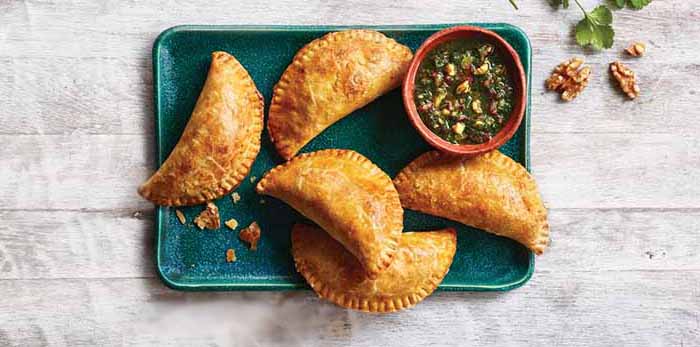
    Picadillo-Style Empanadas With Walnuts
    [7] Picadillo-style empanadas with added protein from crunchy walnuts and walnut chimichurri. Here’s the recipe. Picadillo-style includes tomato sauce, olives, raisins, and spices (photo © California Walnut Board).
     

    CHECK OUT WHAT’S HAPPENING ON OUR HOME PAGE, THENIBBLE.COM.


    Comments off

    TIP OF THE DAY: Brie For Dessert

    Here’s an idea for Mother’s Day for moms who don’t want cake or other sugary dessert: Brie.

    Brie and its cheese brothers are known as bloomy-rind, soft-ripened or surface-ripened (i.e., ripened from the outside) cheeses. These terms refer to their their downy, edible white rind.

    The cheesemaker creates the rind by adding a powdered form of mold (Penicillium candidum, Penicillium camemberti), yeast, and/or a yeast-like fungus, Geotrichum candidum.

    These microorganisms bloom on the exterior of the ripening cheeses, ultimately forming the rind. They break down the fats and proteins of a cheese, creating the creamy texture. The result: lush, creamy, unctuous cheese delight.

    The longer the cheese ages, the runnier it gets. Cheese Trivia: An older cheese will develop an extra creamy, custardy layer just under the rind, which is called the creamline. It’s an extra layer of texture and flavor.

    Can you eat the bloomy rind? Any serious cheese lover will: It’s delicious!
     
    BRIE, CAMEMBERT & THEIR RELATIVES

    It’s easy to confuse Brie and Camembert. They are similar recipes, made in different parts of France with different terroirs. They are different sizes. Here’s the difference.

    Some other bloomy rind cheeses found in the U.S., both domestic and French, include:

  • Brillat Savarin (France)
  • Chaource (France)
  • Cotton Bell (North Carolina)
  • Coulommiers (France)
  • Devil’s Gulch (California)
  • Fromager d’Affinois (France)
  • Humboldt Fog (California)
  • Moses Sleeper (Vermont)
  • Mt. Tam (California)
  • Pierre Robert (France)
  • St. Andre (France)
  • St. Agur (France)
  •  
    However, the French cheeses are made in larger wheels and sold in wedges rather than in smaller rounds. Go for the American varieties; and if you need advice, don’t hesitate to ask your cheesemonger.

    To bake or not to bake? In the warm weather, there’s no reason to bake a Brie—especially when it’s going to be sliced for individual portions.
     
    CHEESE GARNISHES

    You can use all of these as a top garnish (photo #2), or serve some on the side (photo #1).

  • Caramel sauce or fruit purée
  • Chocolate bar or bark pieces (dark is better)
  • Honey or maple syrup
  • Berries
  • Figs
  • Nuts
  • Orange zest
  • Preserves (especially fig or quince) or chutney
  • Sweet herbs*
  •  
    For a savory touch, add some olives. Red cerignola olives are especially nice for the occasion.
     
    BREADS & CRACKERS

    Instead of baguette slices and water biscuits, go for flavorful choices such as:

  • Artisan graham crackers
  • Fruit and/or nut crackers (see Raincoast Crisps)
  • Fruit and/or nut bread
  • Ginger snaps
  • La Panzanella Croccantini
  • Oatmeal or wheatmeal biscuits
  •  

    Brie Cheese Board
    [1] You can top the cheese with one fruit and let guests select from other accompaniments (photo courtesy The Almond Eater).

    Brie Dessert
    [2] Bring the cheese to the table cut into slices, for easy serving (photo courtesy Baldor Specialty Foods).

    Cranberry Pecan Brie
    [3] For fall, consider chopped nuts and dried fruits. Orange zest is a nice added touch. You can also top the cheese with chunky cranberry sauce or chutney (photo courtesy Damn Delicious).

    Brie With Compote Topping
    [4] You can top the cheese with homemade compote. Here’s a ginger-pear compote recipe from Eat Wisconsin Cheese, and our guidelines for making fruit compote.

     
    WHAT ABOUT SALAD?

    Some people enjoy a cheese course instead of a sweet dessert; and some like it with a bit of salad.

    Mesclun (mixed baby greens) with a light toss of vinaigrette is the way to go here. To avoid an acid clash with the sweet complements to the cheese, we make a balsamic vinaigrette.
     
     
    WINE PAIRINGS WITH BLOOMY RIND CHEESES

    White wines and rosés pair better with bloomy rinds than red wines. Fruity whites are better than dry whites. We like a good Pinto Grigio or Sauvignon Blanc.

    Champagne or other dry sparkling wines (Cava, Crémant, Prosecco, etc.) add a festive flair, as do sweet sparklers such as Asti Spumanti, Brachetto d’Acqui (a rosé), or a dry Prosecco (in wine terminology, “dry” means sweeter).

    ________________

    *Sweet herbs include chamomile, lavender, lemon verbena, licorice, mint, rose geranium and tarragon.
      

    Comments off

    TIP OF THE DAY: Try A Feijoa

    Feijoa
    Feijoa, a native of South America now grown in other subtropical climates (photo courtesy Baldor Specialty Foods).
     

    The feijoa (FEE-joe-ah)is an egg-shaped fruit with a thin, lime-green skin.

    The fruit originated in the highlands of southern Brazil, parts of Colombia, Uruguay, Paraguay and northern Argentina. Today it is grown around the world in semi-tropical climates. New Zealand is a large grower.

    While not well known in the U.S., its flavor calls up better-known fruits.

    Feijoa is sometimes called the pineapple guava (guava is a brother*). Other nicknames include Brazilian guava, fig guava and guavasteen.

  • The juicy flesh inside is cream-colored and encases a jelly-like center.
  • It tastes like a combination guava and pineapple. Sometimes, you’ll get a hint of strawberry.
  • The texture is close to that of a pear.
  • The aroma is fragrant and complex: guava with notes of quince, pineapple, apple and mint.
  •  
    Although the skin is edible, the fruit usually is eaten by cutting it in half, then scooping out the pulp with a spoon, like a kiwi. No spoon? Cut off an end with a knife, or take a bite to expose the flesh and squeeze the pulp into your mouth.

    In recipes beyond fruit salad and stewed fruit, feijoa is as versatile as most fruits. In New Zealand, they are:

  • Tossed into smoothies and made into fruit drinks.
  • Made into chutney and preserves.
  • Made into yogurt and ice cream.
  • Made into cider, wine and feijoa-infused vodka.
  •  
    Since the fruit is the same shade of green when immature and ripe, you need to give it a soft squeeze. A ripe feijoa yields to pressure like a just-ripe banana.

    Fruits are at optimum maturity when the seed pulp has turned into a clear jelly, with no hint of browning. Once the seed pulp and surrounding flesh begin to brown, the fruit is overripe.

    Overripe fruit can of course be eaten, juiced, or turned into jam or compote [source].

    Have fun with it!
    ________________

    *Both feijoa and guava are members have the same phylogeny, all the way down to the Family level. The phylogeny is Kingdom Plantae, Clade Angiosperms, Clade Eudicots, Clade Rosids, Order Myrtales, Family Myrtaceae. They then split into different genuses. The genus and species for feijoa is Acca sellowiana. For guava, it is Psidium guajava.
      

    Comments off


    © Copyright 2005-2026 Lifestyle Direct, Inc. All rights reserved. All images are copyrighted to their respective owners.