THE NIBBLE BLOG: Products, Recipes & Trends In Specialty Foods


Also visit our main website, TheNibble.com.

TIP OF THE DAY: Reuse Citrus Rinds As Mini Bowls

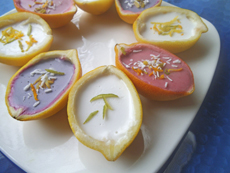
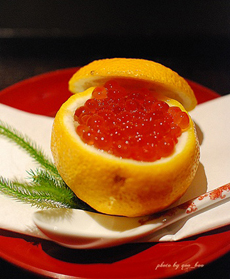
As you cook your way through the holidays, consider saving the shells (whole rinds) of halved, juiced lemons, limes, oranges and grapefruit. You can repurpose them as mini serving bowls—for sides, desserts, condiments and more.

First, use a serrated grapefruit spoon or other implement to scrape out the empty juice sacs—but leave the white pith intact.

Then cut a tiny slice off from what will become the bottom of each “bowl,” so it will sit flat on a plate. Place the empty shells in the freezer; when frozen, store them in freezer bags. Then, for a festive meal, take them out and use them for:

  • Condiments
  • Cranberry sauce
  • Dipping sauce
  • Relish
  • Rice or mashed potatoes, with a topping
  • Salsa
  •  
    Our favorite use is dessert, specifically:

  • Fruit salad
  • Sorbet
  •  
    For cold foods, you don’t have to wait for the shells to defrost. Scooping sorbet into frozen shells, for example, keeps it from melting more quickly. Check out yesterday’s recipe for Meyer Lemon Sorbet.

     
    WHAT TO DO WITH A LEFTOVER HALF LEMON OR LIME

    Freeze the entire half, or cut it into quarters.

  • You can defrost a piece when you need juice.
  • You can also freeze the juice alone, ideally, in ice cube trays, so you can defrost only what you need.
  • After the citrus pieces or juice cubes freeze, store them in a heavy-duty freezer bag.
  •  
    Freeze individual slices.

  • Cut into slices about 1/4-inch thick and freeze them for garnishing.
  • First freeze them on a cookie sheet so the slices don’t stick together; then store them in freezer bags.
  • For a glass garnish, cut a slit into the slice before freezing. You can then place the frozen slice onto the rim of the glass, without waiting for it to thaw.
  •  
    TRIVIA


    Citrus Cups

    panna-cotta-swirlsandspice-230

    ikura-qoo-boo-230

    TOP PHOTO: Fruit salad. Cut the fruit as fine as it needs to be to fit nicely into the shell. Photo courtesy Elegant Affairs Caterers. MIDDLE PHOTO: These are panna cotta, but could as easily be sauces or sides. Photo courtesy Swirls And Spice. BOTTOM PHOTO: Stuffed with rice and topped with salmon caviar. Photo courtesy Qoo’s Life.

     
    Botanically, citrus fruits are berries with leathery rinds. In botany this type of berry is called a hesperidium.

    The great botanist Carl Linnaeus (1707 – 1778) bestowed the name Hesperideæ to the order the contains the Citrus genus. It’s an allusion to the the Hesperides, nymphs who in Greek and Roman myth guarded a blissful garden of golden apples.

    From Sweden, Linnaeus was a botanist, zoologist and physician. He laid the foundations for taxonomy, the modern biological naming system for describing species (taxa in Latin). Many of his writings were in Latin, as was custom among scientists of the time. Latin was a common language among educated Europeans, so no matter what one’s native language, one could read the works of others in Latin.


    Comments off

    RECIPE: Vanishing Oatmeal Raisin Cookies From Quaker Oats

    Quaker Famous Oatmeal Cookies
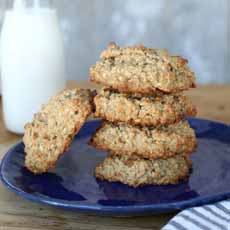
    [1] Quaker’s most popular recipe is for its Vanishing Oatmeal Cookies (all photos © Quaker Oats.

    Original Quaker Canister
    [2] What great-great grandmother would have purchased.

    Quaker Oats Canister
    [3] Today’s canister reminds us that oatmeal is a heart-healthy food.


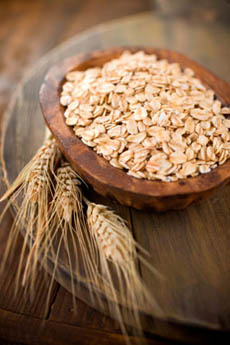
    [4] Milled oats, ready for oatmeal and baking (photo © Kelly Cline | iStock Photo).


    National Oatmeal Cookie Day is April 30th.

    America’s favorite oatmeal cookie recipe is below.

    The history of Quaker Oats is below. And here’s the history of oats from prehistory to the present.
     
     
    RECIPE: QUAKER VANISHING OATMEAL COOKIES

    Prep time is 20 minutes, and cook time is 8 minutes.

    Ingredients For 4 Dozen Cookies

  • 1/2 cup (1 stick) plus 6 tablespoons butter, softened
  • 3/4 cup firmly packed brown sugar
  • 1/2 cup granulated sugar
  • 2 eggs
  • 1 teaspoon vanilla
  • 1-1/2 cups all-purpose flour
  • 1 teaspoon baking soda
  • 1 teaspoon ground cinnamon
  • Optional: 1/2 teaspoon salt
  • 3 cups Quaker Oats (Old Fashioned or Quick Oats, uncooked)
  • 1 cup raisins
  • Optional: 1 cup chopped nuts
  • Raisins substitute/addition: 1 cup dried cherries, cranberries or diced mixed fruit
  • Raisins substitute/addition: 1 cup semisweet chocolate chips; omit the cinnamon
  •  
    Preparation

    1. PREHEAT the oven to 350°F. In a large bowl, beat the butter and sugars with an electric mixer on medium speed until creamy. Add the eggs and vanilla; beat well. Add the combined flour, baking soda, cinnamon, and salt; mix well. Add the oats and raisins; mix well.

    2. DROP the dough by rounded tablespoonfuls onto ungreased cookie sheets. Bake 8 to 10 minutes or until light golden brown. Cool 1 minute on cookie sheets; remove to a wire rack. Cool completely. Store tightly covered.

    3. HIGH ALTITUDE ADJUSTMENT: Increase the flour to 1-3/4 cups and bake as directed.
     
    For Bar Cookies

    1. PRESS the dough onto the bottom of an ungreased 13 x 9-inch baking pan. Bake 30 to 35 minutes or until light golden brown. Cool completely in the pan on a wire rack.

    2. CUT into bars. Store tightly covered. Yield: 24 bars.
     
     
    TIPS FROM QUAKER

  • Use an empty Quaker Oats canister as the “gift box” for cookie gifting.
  • For the holidays, consider making Oatmeal Gingerbread Cookies.
  •  

    THE HISTORY OF QUAKER OATS

    One hundred years ago, Quaker introduced the now-iconic cylinder package for Old Fashioned Quaker Oats. The cylindrical package was a first in the industry. While the packaging design has been updated, the round canister can still be found on store shelves today.

    The Quaker Mill Company of Ravenna, Ohio, was founded in 1877 by Henry Parsons Crowell, who purchased the bankrupt Quaker Oat Mill Company there.

    Canned foods were a hot new trend in 1915, and Crowell noticed the public’s growing appetite for colorful, conveniently sized packaging. He began to sell his oats in distinctive round cardboard cartons. At the time, many groceries, including cereal grains, were sold in bulk from barrels.

     
    Today, The Quaker Oats Company sells more than 350 million pounds of oatmeal annually, and some 120 million canisters are produced at its Cedar Rapids plant. A food conglomerate headquartered in Chicago, it has been owned by PepsiCo since 2001.

    Quaker also lays claim as the first to feature a recipe on packaging: Oatmeal Bread, in 1891. In 1908, the brand introduced the first cookie recipe on a package: Oat Cakes.

    In 1922, the company introduced Quaker Quick Oats, one of America’s first convenience products. It can be swapped for Quaker Old Fashioned Oats in baking recipes.

    In 1966, Quaker Instant Oatmeal pouches debuted to help people keep pace with a busy, on-the-go lifestyle. Cup packaging debuted in 2000, to portable eating even easier. Earlier this year, Quaker launched Quick 3-Minute Steel Cut Oats.

    The History Of The Quaker Vanishing Oatmeal Raisin Cookies

    As previously noted, the first-ever oatmeal cookie recipe to appear on the company’s package was in 1908: Oat Cakes.

    Those first oatmeal cookies were dry and hard with no sweetener—more like crackers than cookies.

    The precursor of today’s Vanishing Oatmeal recipe, a sweet oatmeal cookie, appeared on the packages sometime between 1910 and 1917.

    After the 1929 stock market crash, when Americans needed a sweet treat, Quaker’s Oat[s] Macaroons appeared, the first oatmeal drop cookie (so-called because spoonfuls of dough were dropped onto cookie sheets and baked—here are the different types of cookies). Like macaroons, they contained almond extract—no raisins (here’s the recipe).

    The company has continued to keep up with the times, creating breakfast bars, no-bake bars, and different styles of oatmeal cookies to meet consumer preferences. Here are more historical notes, and a link to all Quaker recipes.

    The Vanishing Oatmeal Raisin Cookies recipe, above, remains a consumer favorite. As of 2015, it’s been on the Old Fashioned Oats canister for 20 years.


    Comments off

    TIP OF THE DAY: Meyer Lemons

    Meyer Lemons
    A profusion of Meyer lemons at Good Eggs |
    San Francisco.
     

    You should start seeing Meyer lemons in stores now. The no-pucker lemon’s season is November through March.

    A cross between a true lemon and either a sweet orange or a mandarin, Citrus × meyeri was named for Frank Nicholas Meyer, who brought it back from China in 1908. Meyer worked for the U.S. Department of Agriculture as an “agricultural explorer,” traveling the world to find new foods that might be desirable in America.

    The Chinese had long been growing the lemon variety in pots, as ornamental trees. Meyer lemon trees thus were planted in California yards, and the fruit was enjoyed by the home owners.

    Meyer lemons became a hot food item when they were “rediscovered” by Alice Waters at Chez Panisse in the 1990s. Other chefs and personalities like Martha Stewart began featuring them in recipes; groves were planted and the fruits began to arrive in markets.

    The benefit is yours.

     
    THE DELIGHTS OF MEYER LEMONS

    Meyer lemons are much sweeter and more flavorful than the Bearss and Lisbon varieties commonly found in American grocery stores (here are the different types of lemons). They have much less acid, which is why the juice is sweeter and brighter.

    While they are smaller than the Bearss and Lisbon lemons, they are much juicier with a very thin (and edible) peel, and can even deliver more juice per lemon.

    And their fragrance is beguiling.


    GROW YOUR OWN MEYER LEMONS

    You can buy ornamental dwarf Meyer lemon trees to keep in pots indoors or on the patio. Planted in the ground, they can grow to heights of eight feet. Check out the options at:

  • BrighterBlooms.com
  • LemonCitrusTree.com
  • NatureHills.com
  •  
    The trees produce lovely white blossoms before they fruit, and have glossy leaves year-round. Consider one for your own home or for gifting.
     
    HOW TO USE MEYER LEMONS

  • Lemonade without the pucker (and just a bit of sugar required)
  • Cocktails, spritzers and lemon water
  • Cakes, pies and other baked goods
  • Ice cream, sorbet, pudding
  • Marmalade, lemon curd
  •   Meyer Lemon Tree
    This fragrant tree can grace any home. We’d love to receive one as a gift. Photo courtesy BrighterBlooms.com.
  • In any recipe that calls for lemon juice and/or peel: chicken, ham, fish and seafood, vegetables, salads, etc.
  •  
    Here are 30+ ways we use Meyer lemons, plus a recipe for Meyer Lemon Beurre Blanc. You can also peruse these recipes from Sunset.com.

    Perhaps our favorite Meyer lemon recipe:

    RECIPE: MEYER LEMON SORBET

    Ingredients

  • 1-1/2 cups sugar
  • 1-1/2 cups water
  • 1 tablespoon Meyer lemon zest
  • 1 cup Meyer lemon juice
  •  
    Preparation

    1. ZEST all the lemons and save the extra (it freezes well). You can add it to salad dressings, baked goods, anything.

    2. BRING the sugar and the water to a boil in a small saucepan, stirring until the sugar dissolves. Add the lemon juice and zest; stir to combine.

    3. POUR the mixture into the canister of a 1-quart ice cream maker. Freeze according to the manufacturer’s instructions (approximately 25-30 minutes). Transfer to a freezer container and freeze for 4 hours or longer.

    4. SET the container on the counter to stand for 5 minutes before serving.
      

    Comments off

    THANKSGIVING: Food Safety Tips

    Thanksgiving Food Safety Tips
    Make your Thanksgiving dinner a safe one. Photo courtesy ThanksgivingDay2015i.com.


    Even if you’ve never had a problem before, check out these food safety tips prior to Turkey Day. They’re courtesy of The Learning Center at State Farm.

    1. Keep everything clean.

  • Scrub your hands with soap under warm water for 20 seconds before touching food. Do the same after handling food, especially raw meat or poultry, to avoid cross-contamination.
  • Clean the counters, cutting boards, dishes and silverware with hot water and soap before and after preparing each food item.
  • Wash fruits and vegetables to remove the surface dirt, but do not rinse raw meat or poultry. Rinsing them enables bacteria to spread.
  •  
    2. Heat foods to the proper temperature.

  • Color is never a reliable indicator of safely cooked food. Use a food thermometer to make sure meat, poultry, and fish are cooked to a safe internal temperature,typically 165°F.
  • Frying your turkey? Follow these turkey fryer safety tips.
  •  
    3. Keep foods at appropriate temperatures.

  • Keep hot foods at 140°F or warmer with chafing dishes, slow cookers and warming trays.
  • Keep cold foods at 40°F or colder. Nest serving dishes in bowls of ice and store moist desserts, such as pumpkin pie and cakes with whipped frosting, in the refrigerator until serving.
  • Never let food sit out at room temperature for more than two hours.
  •  
    4. Store leftovers safely.

  • Divide leftovers into shallow containers, which allow rapid cooling, before storing in the refrigerator or freezer.
  • Never defrost food at room temperature. It enables bacteria to multiply.
  • Use a microwave or oven to reheat foods to an internal temperature of 165°F.
  • Eat refrigerated leftover food within three to four days.
  •   

    Comments off

    TIP OF THE DAY: Uses For Duck Fat

    Duck fat has long been a staple in the kitchens of top chefs. Like bacon fat, duck fat enhances the flavor of anything it touches.

    One of the finest animal fats for cooking, it actually is low in saturated fat. As an ingredient, it has a silky mouth feel, subtle flavor and a high smoke point, which makes it valuable for high-heat cooking like French fries or pan searing.

    Other benefits include deep browning and the ability to re-use the fat after cooking with it (strain it into a container).

    DUCK FAT WITHOUT GUILT

    Recent studies on duck fat show that it is low in saturated fat and high in unsaturated fat, making it one of healthiest animal fats you can eat.

  • Duck fat contains only 33% saturated fat; 62% is unsaturated fat (13.7% of which is polyunsaturated fat, containing Omega-6 and Omega-3 essential oils).
  • Duck fat is closer nutritionally to olive oil, with 75% monounsaturated fat, 13% saturated fat, 10% omega-6 linoleic acid and 2% omega-3 linoleic acid, than it is to other animal fats.
  • It’s high in oleic acid, a monounsaturated fat that actually helps keep cholesterol numbers in check (it’s the same fat that makes olive oil heart-healthy).
  • Most of the saturated fat is stearic acid, which is generally considered to be heart friendly.
  •    

    Duck Fat Uses

    TOP PHOTO: Duck Fat-Potato Galette with Caraway and Sweet Onions from Bon Appetit. Here’s the recipe. BOTTOM PHOTO: A French classic: confit leg of duck in cassoulet, with duck bacon. Photo courtesy Payard | NYC.

  • Duck fat has less saturated fat than butter, (which has 51%).
  • High use of duck fat equals lower heart disease. In the southwest of France, where duck is the go-to cooking fat, the incidence of cardiovascular disease is about half that of the rest of France—which, per the French paradox, is already less than half that of the U.S.
  •  
    While the USDA may never declare duck fat to be heart-healthy like olive oil, you can use it without guilt. You have plenty of time to try it: It keeps frozen for six months or longer.
     
    HOW TO USE DUCK FAT

    Use duck fat as you would any other animal fat, in the same quantity and manner (melted vs. solid, cold vs. room temperature, for example) as the fat you’re replacing.

  • In place of a stick of butter, use a half cup of duck fat.
  • For a drizzle of oil, use a drizzle of slightly warmed duck fat.
  • When using duck fat for deep frying, gently melt the solid fat over medium-high heat until it completely liquefies; then raise the temperature to high to bring the fat up to the proper frying temperature.
  •  
    Use Duck Fat At Breakfast

  • Eggs: fried or scrambled eggs, omelets, frittatas, etc. cooked in duck fat.
  • Potatoes: hash browns cooked in duck fat.
  •  
    Use Duck Fat At Lunch & Dinner

  • Biscuits and popovers.
  • Classic French dishes such as cassoulet, confit de canard and rillettes.
  • Potatoes: French fries, galettes and roasted potatoes will be even crisper. Use it instead of butter in mashed potatoes.
  • Poultry: Instead of rubbing the bird with butter or oil before roasting, use duck fat for crisper skin. Rub some softened duck fat under the skin of the breasts and inside the cavity; massage it into the skin; then seasoning and roast in a hot oven.
  • Salad dressing: Substitute heated (liquid) duck fat for the oil, and pair with a fruity vinegar. Serve immediately after tossing with greens.
  • Searing: Give fish and seafood, meats and poultry, fish and shellfish an evenly browned, flavorful crust.
  • Vegetables: Sautéed or roasted, a little duck fat goes a long way in adding richness and facilitating caramelization.
  • Savory pie crusts: pot pie and quiche.
  •  

    D'artgnan Duck Fat

    /home/content/p3pnexwpnas01 data02/07/2891007/html/wp content/uploads/open tub dartagnan 230
    You can buy duck fat from companies that specialize in pates and charcuterie, like D’Artagnan and Aux Delices. Photos courtesy Dartagnan.com.


    Use Duck Fat To Make Desserts & Snacks

  • Donuts: Fry them in duck fat—really! It adds a depth of flavor.
  • Popcorn: Pop the corn in it duck fat.
  • Pastry: It makes crisp, golden puffed pastry, tender, flaky pâté brisée and short crust pastry. Use a 50:50 duck fat:butter blend for most baking recipes. If using it as a replacement for lard, use an equal measure.
  •  

    WHERE TO FIND DUCK FAT

  • Gourmet/specialty food stores.
  • Your local butcher or anywhere raw or cooked duck* is sold.
  • Your local poultry farmer.
  • Online: from D’artagnan.
  •  
    *Gourmet take-out shops that sell rotisserie duck should have lots of it.


    Comments off

    The Nibble Webzine Of Food Adventures
    RSS
    Follow by Email


    © Copyright 2005-2026 Lifestyle Direct, Inc. All rights reserved. All images are copyrighted to their respective owners.