THE NIBBLE BLOG: Products, Recipes & Trends In Specialty Foods


Also visit our main website, TheNibble.com.

RECIPE: Christmas Peppermint Hard Candies

Peppermint Stars

Peppermint Christmas Trees
Use your holiday cookie cutters to make these fun mint shapes from conventional peppermint candies. Photos courtesy Reynolds Kitchens.


We love the recipe developers at Reynolds Kitchen, who often surprise us with their creativity. Just by looking at the photos, you can see what they’ve done with an everyday bag of striped peppermint candies.

The result is like candy canes, but as Elle Woods would say, the shape is more funner.

It’s also funner to make them with mints in both holiday colors, red and green. Brach’s makes their striped Starbrite Mints in both colors, as well as a sugar-free red and white mint*.

So pick up the mints and get out every shape and size of cookie cutter that works for the holidays. Then, serve the mints:

  • On a platter, with after-dinner coffee
  • As decorations on holiday cakes and cupcakes
  • Wrapped in cellophane as stocking stuffers or party favors
  •  
    We’d suggest making them as tree ornaments, but can’t figure out how to affix something so that they hang evenly. We tried making holes with an ice pick before the shapes fully hardened, but it wasn’t neat. Ribbon didn’t stick to the peppermint with the glues we had at hand.

    Any other ideas?

    RECIPE: HOLIDAY SHAPE PEPPERMINTS CANDIES

    Ingredients

  • All of your holiday-appropriate metal cookie cutters (borrow as needed)
  • Cookie sheet and parchment paper
  • Baking spray (or bland cooking spray)
  • A bag of red and white and a bag of green and white hard mints
  •  
    Preparation

    1. PREHEAT the oven to 350°F. Line a cookie sheet with Reynolds Parchment Paper.

    2. SPRAY oven-safe, metal cookie cutters with non-stick cooking spray, then place on the cookie sheet. Fill each cookie cutter with peppermint candies. Break the candies into smaller pieces to fill in the smaller areas of the mold (we used a meat mallet).

    3. BAKE for 3–9 minutes until the candies melt into cookie cutter shapes. Remove the sheet from the oven and let the candy harden. Stretch the cookie cutter a bit to remove the candy.

     
    TIP

    This concept works for Valentine’s Day, too. Collect a bunch of heart-shaped cookie cutters.

     
    *We haven’t tested the recipe with sugar-free mints, but guess that they’ll melt in a similar fashion to the conventional variety.
      

    Comments off

    GIFTS: Food Books

    For hard-to-buy-for people, a book in an area of their interest is something we fall back upon. Sometimes it’s a combination gift: a book about Champagne, for example, along with a bottle of it, a book on Cognac with a set of snifters, and so on.

    Here we highlight books that would be welcome to people with specific food passions.

    CHEESE

    A Year In Cheese, A Seasonal Cheese Cookbook applies the seasonal eating approach to cheese. It was written by Alex and Léo Guarneri, the team behind the renowned Parisian artisan cheese shop and cheese restaurant, Androuet (established in Paris in 1909 and now in the Old Spitalfields Market in London).

    What’s seasonal depends on the grazing cycle of the animal and what they graze on at which time of year. The recipes from chef Alessandro Grano are tantalizing.

     
    CHOCOLATE

    Tracy Zabar celebrates the chocolate chip cookie in Chocolate Chip Sweets: Celebrated Chefs Share Favorite Recipes. Chefs such as Dominique Ansel, Lidia Bastianich, Florian Bellanger, Daniel Boulud, Maida Heatter, Thomas Keller, Pichet Ong, Jacques Torres, Sherry Yard and other top chefs share their favorite recipes. Brownies, cakes, doughnuts, ice cream sandwiches, marshmallows, pies, puddings, waffles and more get the chocolate chip treatment.

    Who could resist this book?

    For people who appreciate fine chocolate, cookbooks from chocolatiers are always very interesting. No one knows chocolate more intimately, or can envision new ways to use it. This year’s chocolatier-authored cookbook is Theo Chocolate Recipes and Sweet Secrets From Seattle’s Favorite Chocolate Maker.

    The authors, Debra Music and Joe Whinney, principals of Theo, worked with leading chefs to develop the more than 75 recipes in this book. They encompass chocolate for breakfast, cookies, cakes, confections, drinking chocolate, frozen desserts and dessert sauces, savory dishes, pies, puddings and tarts. Where to begin? We started with the Chocolate Bread Pudding.

     
    SPECIAL INGREDIENTS

    The next book is for cooks who seek out different ingredients. For anyone who’s bought a bottle of fish sauce for a particular Asian recipe, the challenge is what else to do with it. Open condiments decline over time, so you don’t want to tuck it out of sight. There are also plenty of home cooks who have decided not to buy a bottle for the same reasons.


    A Year In Cheese Book

    Chocolate Chip Sweets Book

    Fish Sauce Cookbook

     
    In The Fish Sauce Cookbook, 50 Umami-Packed Recipes From Around The Globe, Veronica Meewes has consulted with prominent chefs on using fish sauce as a key seasoning with popular American ingredients. This is the first cookbook to focus on fish sauce, and you can package it with a other fish sauces: naam plaa from Thailand, nuoc mam from Vietnam and numerous others.

    Among those others is colatura di alici, a modern representation of garum, the fish sauce favored by the ancient Romans. Worcestershire sauce is is made with anchovy, a recipe brought back to England by a ship’s captain Captain and first sold commercially in 1837.

    GENERAL COOKING

    For the aspirational home cook, Mastering Sauces: The Home Cook’s Guide to New Techniques for Fresh Flavors will be a welcome addition to the cookbook shelf.

    Taking a different approach from classic French and other sauce cookbooks, Susan Volland demonstrates how great cooks all over the world make sauces with impromptu drizzling and splashing. She provides the fundamental principles of great sauces: maximize flavor, manipulate texture and season confidently. Thus armed, you can add your own flair to any sauce.

    There are more than 150 recipes that focus on seasonal produce, international ingredients and alternative dietary choices. She goes over the how’s and why’s of making great sauces. And at the end of it all, she provides a list of remedies for those attempts that don’t come out to your expectations.
    Then there’s The Food Lab: Better Home Cooking Through Science. Kenji Lopez-Alt focuses on the science behind popular American dishes, providing easy-to-understand explanations of the interactions between heat, energy, and molecules that create great food. He shows that often, conventional methods don’t work that well, and home cooks can achieve far better results using simple new techniques.

    But it’s also a cookbook, with hundreds of easy-to-make recipes and 1,000 full-color images. you will find out how to make foolproof Hollandaise sauce in just two minutes, how to transform one simple tomato sauce into a half dozen dishes, how to make the crispiest, creamiest potato casserole ever conceived, and much more.


    Mastering Sauces Cookbook

    The United States Of Pizza

    Complete Guide To Sushi & Sashimi

       
    FRIES

    For people who love really good French Fries, Anne de la Forest’s handsome if slender volume, Frites, spans traditional, trendy, creative and yes, sweet fries recipes. The more than 30 recipes are half potato recipes, and half “other.” The other includes fries made from asparagus, beet, black radish, butternut squash, carrot, celeriac, Comté cheese, eggplant, feta, kohlrabi, panisse (chickpea paste), parsnip, polenta, pumpkin, salsify, sweet potato, turnip, and zucchini.

    The sweet fries include apple, banana, pain perdu (French toast), pear and sweet potato. Savory or sweet, there are recommendations for dipping sauces and recipes for them, too. For those with reaching palates, this book is an inspiration.
     
    PIZZA

    Award-winning Executive Chef & Pizza Connoisseur, Craig Priebe, brings us The United States of Pizza: America’s Favorite Pizzas, from Thin Crust to Deep Dish, Sourdough to Gluten-Free. Chef Craig Priebe has scoured the country to present recipes forthe tastiest pies, from classics to semi-modern (smoked ham and cheddar) to of-the-moment (roasted cauliflower and salsa verde).

    With beautiful photography, it gives the pizza lover a perspective on what’s happening nationwide, and the recipes to make those pies!

    For people who love pizza and have a barbecue grill, there’s Grilled Pizza The Right Way: The Best Technique for Cooking Incredible Tasting Pizza & Flatbread on Your Barbecue Perfectly Chewy & Crispy Every Time. It was written by John Delpha, a 10-time award winner of the Jack Daniel’s BBQ Championship Grilling and BBQing Awards. He’s been grilling pizzas for 20 years.

    Although a paperback, all the recipient will notice are the beautiful photos of grilled pizza. Each recipe includes the technique required to master it. Every type of pizza is represented: brunch, classic, cross-border, dessert, fish and seafood, flatbreads, meat, veggie and “the masqueraders,” favorite sandwiches converted to pizza.

    We want to eat every one of them.
     
    SUSHI & SASHIMI

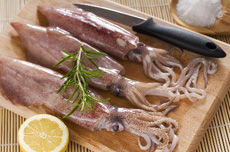
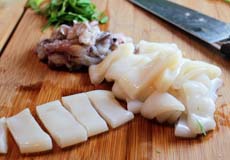
    We’ve eaten sushi and sashimi all of our life, at least twice a week. We’ve taken classes, hoping to make our own at home. If only we’d had The Complete Guide To Sushi & Sashimi, a compendium with step-by-step color photographs. It imparts hundreds of tips and techniques, that, in all of our sushi years, is still new information (and now we can finally cut squid properly!!).

     
    This user-friendly book, for both novice and experienced sushi makers, has concealed wiro-bound hardcover binding, 500 photos and a whopping 625 recipes, this book is sure now our go-to guide.

     
    BUT THAT’S NOT THE END

    There are more, of course. So many food books, so little time to try recipes from each!

    We just may get around to writing Food Books, Part 2.
      

    Comments off

    Christmas Cupcakes From Scratch Or Decorate Store-Bought

    December 15th is National Cupcake Day (there are 8 more cupcake holidays).

    When a holiday like this falls right before Christmas, there’s only one way to go: Christmas eat cupcakes.

    We have great ideas for you, but first, for your consideration:

    > The history of cupcakes is below.

    > The history of cake.

    > The different types of cake: a photo glossary.

    > The year’s 55 cake holidays.
     
     
    CHRISTMAS CUPCAKE IDEAS

    You can turn thi food holiday into a seasonal holiday party, with a DYO (decorate your own) cupcake party, with holiday flavors and garnishes.

    Whether you bake them from scratch or buy plain cupcakes to decorate, here are 10 easy approaches:

  • Candy cane cupcakes: Crushed red and white peppermints on chocolate or vanilla iced cupcakes (see photo).
  • Coconut “snowball” cupcakes: Shredded coconut on vanilla icing, plain, or decorated with a mini candy cane or other Christmas candy.
  • Cone Christmas tree cupcakes: Cover a small ice cream cone with green frosting and invert it on top of a cupcake. Add sprinkles or dragées for “ornaments.”
  • Dragée-dotted cupcakes: A sophisticated approach using metallic-colored gold and/or silver balls.
  • Frosty The Snowman cupcakes: Use black and orange gels or icing to create Frosty’s face atop flat-iced white cupcakes: eyes, nose, and mouth (see photo).
  • Holly cupcakes: Use real or candy mint leaves and mini red candies to create a holly sprig.
  • Red and green icing: Use food color to tint icing, store-bought or homemade. Serve as is or with decorations of choice. Check out the special Christmas-wrap Hershey’s Kisses.
  • Rudolph cupcakes: To a chocolate-frosted cupcake, add white frosting eyes or candy eyes, a red candy nose, and pretzel antlers (see photo).
  • Sprinkles cupcakes: Garnish iced cupcakes with red and green sprinkles, confetti, stars or Christmas trees.
  • Star cupcakes: Crown cupcakes with foil-wrapped chocolate stars or red and green gummy stars .
  • Candy Cane Cupcake
    [1] Crushed peppermint and a mini candy cane, at Trophy Cupcakes (photos #1 and #3 © Trophy Cupcakes).

    Snowman-Cupcake-c-createdbydiane-230b
    [2] Snowman cupcakes © CreatedByDiane.com.

    Reindeer Cupcake
    [3] Rudolph cupcake at Trophy Cupcakes. The kids can help make this design!


    CUPCAKE HISTORY

    Before the advent of muffin tins, cupcakes were baked in individual tea cups (hence “cup” cakes) or ramekins. The first reference to these miniature cakes dates to 1796 when a recipe for “cake to be baked in small cups” appeared in the cookbook, “American Cookery.” The earliest documentation of the term “cupcake” was in Eliza Leslie’s Receipts cookbook in 1828 (receipt is an earlier term for recipe). [Source]

    Back then, cupcakes were easier to make than cakes because they cooked much faster. It took a long time to bake a cake in a hearth oven; cupcakes were ready in a fraction of the time. [Source]
    The cupcake was once known as the 1-2-3-4 cake because the recipe called for 1 cup of butter, 2 cups of sugar, 3 cups of flour, and 4 eggs—plus 1 cup of milk and 1 spoonful of baking soda.

    Muffin tins (doing double duty as cupcake tins) became widely available around the turn of the 20th century and offered a new convenience to bakers of muffins and cupcakes. But the next convenience took a while longer: For easier removal of cupcakes from the pan, paper and foil cupcake pan liners were created after World War II.

    An artillery manufacturer, the James River Corporation, began to manufacture cupcake liners when its military markets diminished. By 1969, they left artillery manufacturing behind and became a paper manufacturer. During the 1950s, the new paper baking cup gained popularity with U.S. housewives. Its popularity grew, even more, when bakers realized that they could bake muffins as well as cupcakes in the baking cups [source].

    Cupcakes evolved into children’s party fare, but in the last decade, they have taken a more sophisticated turn. First, some younger couples began to choose “cupcake trees” instead of conventional wedding cakes. This prompted a flurry of cupcake articles and recipes, and ultimately the opening of boutique cupcake bakeries nationwide, offering what has become an everyday treat.

  • December 15th is National Cupcake Day; October 18th is National Chocolate Cupcake Day.
  • National Cupcake Day in Canada is held in late February, beginning in 2013, with the purpose of raising money for SPCAs and Humane Societies across the country. The date is different each year.
  • In 2005, Sprinkles Cupcakes, the first cupcakes-only bakery in the world, started in Beverly Hills, opened in New York City in 2005, and now has 24 locations across the U.S. Other cupcake boutiques were founded, and for a time seemed to be ubiquitous. Get your share, and have a happy National Cupcake Day.
  •  
    ________________

    *Both receipt and recipe derive from the Latin recipere, to receive or take. Receipt was originally used in medieval English to designate a formula or prescription for a medicinal preparation, and the symbol Rx emerged in medieval times. The sense of receipt as a written statement that money or goods have been received emerged later, at the beginning of the 17th century. In terms of cooking instructions, recipe became an alternative to receipt in the 18th century, gradually replacing it over time. Here’s more.


    CHECK OUT WHAT’S HAPPENING ON OUR HOME PAGE, THENIBBLE.COM.


    Comments off

    TIP OF THE DAY: Create A Special Christmas Mocktail

    Ocean Spray Mocktail

    strawberry-mint-lemonade-asweetpeachef-230

    A fun mocktail is a treat for non-drinkers. Top photo courtesy Ocean Spray. Bottom photo courtesy ASweetPeaChef.com.

      If you serve alcohol at parties, you’re bound to have some non-drinkers, designated drivers, and probably, drinkers who shouldn’t have another.

    Most hosts address the need with soft drinks and mineral water. But special occasions merit an extra step: a holiday mocktail.

    It’s easy to make it look and taste interesting, and those who can’t drink will feel special.

    For your Christmas mocktail, we suggest something red and green: a red- or rosy-hued drink with a green garnish.

  • Determine on the proportions, e.g. 2 parts cranberry juice and 1 part soft drink.
  • Decide if you want to serve a tall or short drink.
  • Consider a low-calorie option: The juice and soft drink ingredients both have diet versions, which will be especially appreciated by calorie-counting guests.
  •  
    CHRISTMAS MOCKTAIL #1: CRANBERRY GINGER

    Ingredients

  • Cranberry juice*
  • Ginger ale
  • Ice cubes
  • Garnish: stemmed cherry†, lime wheel or mint leaves
  •  
    CHRISTMAS MOCKTAIL #2: CRANBERRY ORANGE

    Ingredients

  • Cranberry juice*
  • Orange soda‡
  • Garnish: stemmed cherry†, lime wheel or mint leaves
  •  
    You can make the drinks a deeper red color with grenadine.
    _____________________________________________
    *Our favorite cranberry juice is Knudsen’s. Ocean Spray has several 100% juice flavors: plain or blended with blueberry-blackberry, cherry, grape, orange, pomegranate, raspberry, etc. Use 100% juice instead of “juice cocktails” or “juice drinks,” which are typically sweetened with high fructose corn syrup.

    †The best maraschino cherries by far are the all-natural (and kosher-certified) Tillen Farms Merry Maraschino Cherries. They are “maraschino red” in color but taste great—nothing like the traditional varieties. The company also makes Bada Bing Cherries, with the deep burgundy hue of bing cherries. If you buy multiple packs online, use the extras as stocking stuffers.

    ‡San Pellegrino Aranciata (orange) and Aranciata Rossa (blood orange), and Boylan’s Orange, are the only ones we’ve found that use sugar instead of high fructose corn syrup. San Pellegrino is less sweet and more elegant; Boylan’s is conventionally sweet.
      

    Comments off

    TIP OF THE DAY: Cranberry “Mistletoe” Kissing Ball

    You don’t need to buy mistletoe to encourage people at holiday get-togethers to kiss. Instead, substitute this “holiday kissing ball” from Ocean Spray.

    First head to the crafts store, then pick up fresh whole cranberries. You can pick up an extra bag or two for a Valentine Kissing Ball (and if you prefer, a foam heart instead of a ball).

    DIY CRANBERRY KISSING BALL

    Ingredients

  • 5” styrofoam ball
  • Red acrylic craft paint
  • 24-gauge beading wire
  • Hot glue gun/glue sticks -or- wooden toothpicks
  • 1-2 12-ounce bag(s) Ocean Spray fresh cranberries
  • Optional: shellac spray
  • Trim of choice: ribbon, mistletoe, holly, ivy, bells
  •  
    Preparation


    Cranberry Kissing Ball
    A kissing ball, mistletoe optional. Photo courtesy Ocean Spray.

     
    1. PAINT the foam ball with red craft paint. Set aside to dry.

    2. CUT an 18″ piece of wire and fold it in half. Push the folded wire all the way through the center of the ball, leaving a 1″ wire loop extending at bottom of ball and 3″ of wire extending at top.

    3. ATTACH the cranberries to ball with a hot glue gun or toothpicks, covering the ball completely. Spray with shellac for longevity (otherwise, the berries soften after 5 days or so, and the appearance will diminish). NOTE: The glue gun is a better choice. If you don’t have one, you can pick one up when you buy the foam ball at the crafts store.

    4. TWIST the two wires at top of ball into a simple hook for hanging. Use ribbon to tie the desired holiday trim to wire above and below ball, and hang with a hook.

    5. FIND someone to kiss and guide him/her underneath the ball.
      

    Comments off

    The Nibble Webzine Of Food Adventures
    RSS
    Follow by Email


    © Copyright 2005-2026 Lifestyle Direct, Inc. All rights reserved. All images are copyrighted to their respective owners.