|
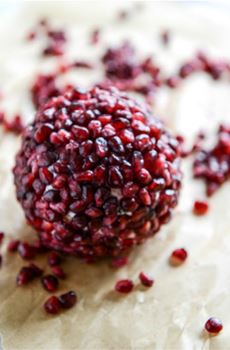
[1] The Christmas Cheese Ball, festive with cocktails. This recipe, from How Sweet Eats, is made with with white cheddar, mascarpone and sage (photo © How Sweet Eats).
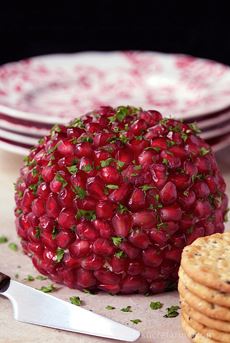
[2] The cheese ball at The Café Sucre Farine is made with Monterey Jack, pecans, rosemary and thyme. Minced parsley accents the arils for an even better holiday effect. Here’s the recipe (photo © The Cafe Sucre Farine).
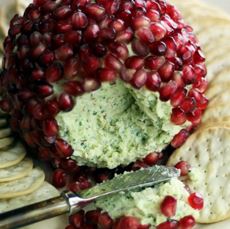
[3] Our original inspiration was this red and green cheese ball from Go Bold With Butter (recipe below).
|
|
Deck the hall with this festive almond-Gruyère/Swiss Cheese cheese ball.
Parsley colors the interior green, while the pomegranate arils create a crimson cloak.
Bonus: Prep time is 15 minutes, and you can make it two days in advance. Thanks to Go Bold With Butter for the recipe.
RECIPE #1: CHRISTMAS CHEESE BALL
Ingredients
1 cup pomegranate arils
8 ounces cream cheese, softened
8 ounces Gruyère/Swiss cheese, shredded
3-1/2 tablespoons unsalted butter, softened
1/3 [heaping] cup slivered almonds
1-1/2 teaspoons horseradish mustard (recipe below)
1 cup fresh parsley, chopped (or ½ parsley, ½ chives)
Salt and freshly ground pepper to taste
For Serving
Bagel chips
Breads
Crackers and crisps
Preparation
1. PAT the arils dry with paper towels, ensuring removing as much moisture as possible. You can do this an hour or more in advance and leave the arils on paper towels on the counter to further dry.
2. PLACE the cheeses and butter along with almonds, horseradish mustard, parsley and seasonings in the bowl of a food processor. Pulse for 1-2 minutes, scraping the bowl frequently until ingredients are well combined.
3. SHAPE the mixture into cheese mixture into a large ball and refrigerate. can be made up to 2 days ahead, wrapped and stored in refrigerator. Before serving…
4. ROLL the ball in pomegranate arils until fully coated. Gently press the arils into the heese ball to adhere. To serve, place on plate with breads, crackers and spreaders.
RECIPE #2: HORSERADISH MUSTARD
We tend to keep sugar away from where it doesn’t need to be—in savory foods. We just don’t enjoy sugary potato chips or wasabi-flavored mustard. (Honey mustard gets a pass.)
Numerous recipes for cheese balls contain a sweetened condiment: honey, maple syrup, sugar brown sugar. It’s the same with horseradish mustard.
We don’t mind a brief hint of sweetness; but if a cheese ball tastes sweet (and it isn’t a sweet style, e.g. with dried fruit, or a dessert ball), it’s too sweet for us.
Since the cheese ball recipe requires just 1-1/2 teaspoons of the mustard, you can adjust the amounts below accordingly.
Ingredients
1/4 cup white prepared horseradish
1/4 cup Dijon mustard
Optional: sour cream, crème fraiche, mascarpone or plain yogurt
Salt and pepper to taste
|
|
Preparation
1. DRAIN the horseradish in a fine strainer or cheesecloth, pushing down with the back of a spoon to remove the excess liquid.
2. COMBINE with the mustard, mix well and taste. If it’s too strong for you, you can add a bit of sour cream to remove some of the spiciness.But remember, mixing the mustard with the cream cheese will temper the heat.
Variation
Make a mustard horseradish sauce for meat or poultry, simply by adding one cup of sour cream to recipe above.
MORE CHRISTMAS CHEESE BALL RECIPES
Mini Cheese Balls With Green, Red and Golden Coatings
Pecan Pine Cone Cheese Ball (yes, it’s made in the shape of a pine cone)
|