THE NIBBLE BLOG: Products, Recipes & Trends In Specialty Foods


Also visit our main website, TheNibble.com.

TIP OF THE DAY: Cookies & Wine Pairings

Here’s an activity for Valentine’s Day, movie night or any fun occasion.

Pair cookies and wine!

Thanks to Chip City of New York City, purveyors of large, gooey cookies, for these pairing ideas:

  • Chocolate Chip Cookies & Cabernet Sauvignon: Cab is the perfect complement to chocolate chip cookies. Dry and full-bodied, it pairs well with the sweetness of the chocolate chips.
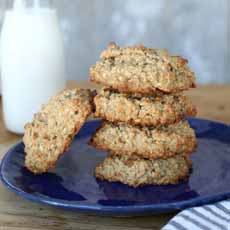
  • Oatmeal Raisin Cookies & Shiraz/Syrah*: The dense chewiness of oatmeal raisin cookies can overpower some wines, but pairs well with a full-bodied, spicy Shiraz (substitute Zinfandel).
  • Peanut Butter Cookies & Madiera: Madeira is a sweet, strong fortified wine that has a nutty flavor similar to sherry. It pairs well with the nuttiness of peanut butter cookies.
  • Sugar Cookies & Champagne: The slight tartness of Champagne is a match for the sweetness of sugar cookies.
  • Shortbread Cookies & Chardonnay: The buttery flavor and vanilla notes of shortbread are complemented by the buttery and vanilla notes of an oaky Chardonnay.
  • White Chocolate Macadamia Cookies & Riesling: A fruity, light Riesling provides a nice contrast to the buttery richness of the cookies.
  •  
    Two other tips from Cookies & Corks:

  • Ginger/Spice/Molasses Cookies: Gewürtztraminer, Pinot Grigio (Pinot Gris).
  • Peanut Butter Chocolate Chip Cookies: Chardonnay, Gewürtztraminer, Pinot Grigio (Pinot Gris).
  •  
    These are not the only pairing options, of course; but they’re a good start.

    If you only want to taste one type of cookie, get the suggested wine and a second, similar wine.

    For example, with chocolate chip cookies taste both Cabernet Sauvignon and Merlot.
     
     
    > THE DIFFERENT TYPES OF COOKIES
     
    > THE HISTORY OF COOKIES

    > THE HISTORY OF CHOCOLATE CHIP COOKIES

    > THE HISTORY OF SHORTBREAD


    [1] Pair sugar cookies with Champagne (photo © Cookies & Corks [now closed]).


    [2] How about a Cab with your chocolate chip cookies? (photo © Janie’s Cookies).

    Quaker Famous Oatmeal Cookies
    [3] Hearty oatmeal cookies pair with a spicy Shiraz (photo © Quaker Oats).

     
    ________________

    *Syrah and Shiraz are the same grape, but the difference between the two wines stems from climate-driven styles. Winemakers who work in cooler-climate growing regions, both in the Old World and New World, tend to call their wines Syrah. Shiraz is the name used in warm climates like Australia and South Africa.


    Comments off

    Avocado Is A Fruit: Possibly America’s Favorite Fruit


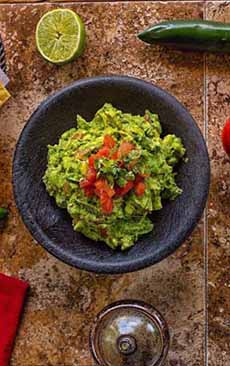
    [1] By far the most popular use for avocados in the U.S.: guacamole (photo © Cabo Flats | Miami).


    [2] We love an avocado salad with a balsamic vinaigrette (photo © Love One Today | Hass Avocado Board).

    A two-tiered dish with guacamole on top, tortilla chips on the bottom.
    [3] Elegance is having a two-tier dish (photo © Richard Sandoval Hospitality).

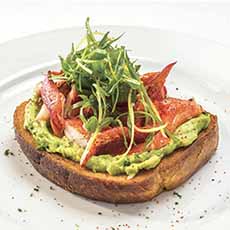
    Lobster Avocado Toast
    [4] Avocado toast, luxury-style, topped with lobster and microgreens (photo © Ocean Prime | NYC).

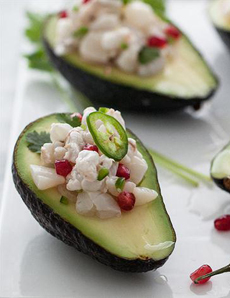
    Ceviche Stuffed Avocado
    [5] Avocado stuffed with ceviche—a great combination (photo © Avocados From Mexico).


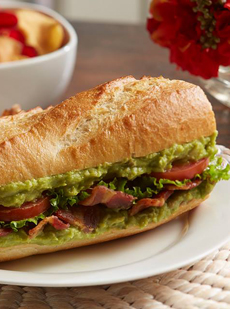
    [6] Guacamole provides an extra layer of flavor on this BLT. It’s also great on burgers (photo © Wholly Guacamole).


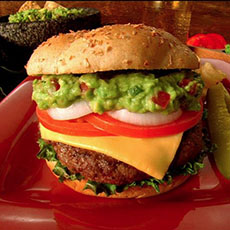
    [7] Guacamole on a burger: Yum! (photo © Avocados From Mexico)


    America loves avocados. Sales have grown steadily over the last 15 years, according to the Hass Avocado Board.

    And the biggest consumption day is Super Bowl Sunday.

    More avocados are sold for Super Bowl Sunday than for any other time of the year, including Cinco de Mayo.
     
     
    THE HASS AVOCADO

    The avocado is indigenous to Mexico. While there are much larger varieties of avocado, the Hass variety has the creamiest, most delicious flesh.

    As a result, some 98% of the avocados grown in Mexico are Hass. The variety was developed by a Southern California mail carrier and and amateur horticulturist, Rudolph Hass. He patented it in 1935.

    The Hass Avocado Board aims to make avocados America’s most popular fruit, and they’re well on course.

    In 2019, the volume of fresh Hass avocados sold in the U.S. was an astounding 2.576 billion pounds, or 7.8 pounds per capita.

    The Board estimates that annual per capita consumption will be 9.1 pounds per capita in 2021.

    The California Avocado Commission notes that 13.2 million pounds of avocado—approximately 26 million individual avocados—are sold in preparation for Super Bowl Sunday [source].

    That “preparation” is largely guacamole.

    But year-round, there are other popular uses for avocados, including salads, avocado toast, sushi rolls, tacos, burgers (photo #7), sandwiches (photo #6) and these 23 ways to eat avocado.

    Avocado is marketed as a healthy “super food.”

    In addition to creamy goodness, avocados are heart-healthy, nutrient-dense and a good source of fiber (here’s more about avocado nutrition).
     
     
    THE HISTORY OF THE AVOCADO

    Mesoamericans “discovered” the avocado, which had grown there for perhaps 50 million years. They called it ahuacatl, ah-hwa-CA-tay, which the Spanish conquistadors transcribed to aguacate.

    Archaeologists have found evidence of avocado consumption that dates back almost 10,000.

    Initially, people simply gathered wild avocados. Mesoamerican tribes such as the Olmec and the Maya began to cultivate the avocado tree about 5,000 years ago.

    Here’s more on the history of the avocado.
     
     
    WHERE DOES YOUR AVOCADO COME FROM?

    In the U.S., the answer has traditionally been Mexico first, followed by California‡. A small amount is produced in Florida.

    Because of global demand, Peru and Colombia are ramping up to be the major suppliers of Hass avocados to Europe, according to AgroFresh, a company that provides integrated solutions to industry and retailers, for more freshness and quality in produce.

    In the near future, avocados from Chile, Peru, Colombia, even Africa may arrive in the U.S. market.

    Avocado ranks as one of the largest categories in the produce department, they note.

    And new markets like China, South Korea and Japan are demanding more avocados. We look forward to a lot of delicious East-West fusion dishes.

     
    HOW DO YOU GET A RIPE AVOCADO

    How are grocery stores making sure you have a perfect ripe avocado?

    There may be off-the-shelf ripe avocados in your future.

    According to Daniel Manriquez and Narciso Vivot of AgroFresh, the company is working on technologies to control ethylene in combination with controlled atmosphere containers (in the case of fruit traveling from Mexico, the transit conditions are under cold storage condition only).

    The efforts ensure that the fruit reaches the market in the best condition: better avocados for you.

    AgroFresh also has a “ripe avocado program” that enables retailers to sell ripe avocados, ready to use.

    As the program becomes more popular, you may be able to buy them. Imagine bringing home the tenderly soft avocado, instead of a rock!

    Keep an eye out at your grocer’s.

    How To Ripen An Avocado

    Until then, here’s how to ripen an avocado.

    We’ve recently learned that you can ripen an avocado in the microwave:

  • Cut the avocado in half and remove the pit. Wrap each half in plastic wrap.
  • Microwave on high for two minutes.
  • Remove and hold the wrapped avocados under cold water to stop cooking.
  •  
    By the way, like all agricultural products, avocados grown in different regions can have differences in taste.

    As with wine, olive oil and other products, the terroir† has an impact.

    To conclude:

    We look forward to being able to pluck ripe avocados from the produce department. (If not, we’ll be trying the microwave technique.)

    Let there be guacamole—and avocado toast, avocado dip, avocado salads including Cobb salad, avocado deviled eggs, avocado burger and sandwich spreads, avocado smoothies, and on, and on, and on.

    Dice them into ceviche, atop pizza, in grain bowls; grill them; use them as a garnish on just about everything!

    ________________

    *Yes, avocados is a fruit, not a vegetable. It grows on trees and has a pit in the center just like peaches, cherries, apricots and other drupes. Here’s the difference between fruits and vegetables.

    *Terroir, pronounced tur-WAH, is a French agricultural term referring to the unique set of environmental factors in a specific habitat that affect a crop’s qualities. It includes climate, elevation, proximity to a body of water, slant of the land, soil type and amount of sun. These environmental characteristics gives a fruit or vegetable its unique character.

    ‡According to the USDA, the west-central Mexican States of Michoacán and Jalisco accounted for 78% and 8%, respectively, of Mexican production. California and Florida accounted for 86% and 13% respectively, of U.S. avocado production.


    Comments off

    VALENTINE GIFT: Tea With Roses

    For a tea lover, Valentine’s Day is an opportunity for a special gift: tea with rose petals.

    Teas are not only delicious to drink, they have no calories and are high in antioxidants.

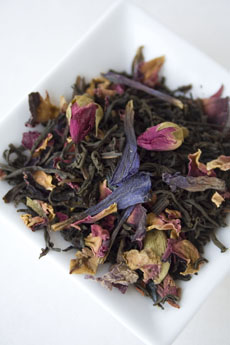
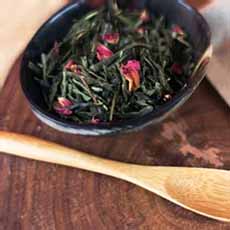
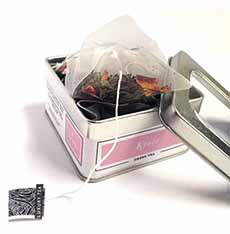
    The photos show a two teas from one of our favorite artisan tea blenders, Tay Tea.

    They, and the other teas listed below, have something “extra” that makes them lovely Valentine gifts: different varieties of flower petals, including roses.

    Depending on variety, the teas are available in:

  • Loose leaf tea
  • Tea bags
  • Gift tins and jars
  • Paper packets
  •  
     
    BLACK, GREEN & HERBAL TEAS WITH FLOWERS

    Take a look at:

  • A Day In Provence, a floral and fruity rooibos herbal blend with lavender, rose petals, red and black currants and rose hips.
  • Azul, an herbal tea of butterfly pea flowers (that give it its blue color), lemon verbena and lemongrass.
  • Kyoto, a sencha green tea with cherry blossom and rose petals.
  • Marry Me Again, Ceylon black tea, violets and lavender with a sprinkling of purple cornflower petals.
  • Persian Rose, black Ceylon tea scented with bergamot and blended with rose petals, organic rose buds, green cardamom and borage.
  • Twiggy, an organic aged oolong with chrysanthemum flowers.
  • Wedding Tea, a blend of white and black teas, enhanced with pink rose buds and petals, cornflowers, vanilla and lemon verbena.
  • Wild Woman, An organic high-grown Ceylon tea with wild blueberries, black currants, hibiscus, elderberries and corn flower petals.
  •  
    And that’s not all.

    Any tea lover will enjoy perusing the site and relishing the many varieties created by Nini Ordoubadi, a third-generation tea blender.

    We’ve had perhaps a dozen of Tay Teas’ blends.

    All are delicious, and there are black, green and herbal teas aplenty; plus teaware and gift boxes.

    Here’s our review of Tay Tea.
     
     
    > THE HISTORY OF TEA

    > TEA TERMINOLOGY: AN ILLUSTRATED GLOSSARY


    [1] Persian Rose, black tea with rosebuds and borage flowers (photo © The Nibble | Claire Freiermann).


    [2] Kyoto, green sencha tea, blended with rose petals (photos #2 and #3 © Tay Tea).


    [3] Don’t want loose tea? Tea bags are available in a number of varieties.


    Comments off


    © Copyright 2005-2026 Lifestyle Direct, Inc. All rights reserved. All images are copyrighted to their respective owners.