THE NIBBLE BLOG: Products, Recipes & Trends In Specialty Foods


Also visit our main website, TheNibble.com.

FOOD FUN: Valentine Pita Chips Recipe & The History Of Pita

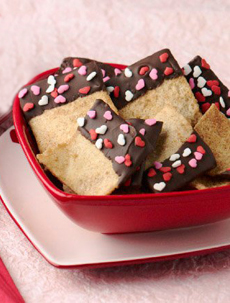
Stacy’s Pita Chips made these Valentine chips with their Cinnamon-Sugar Pita Chips.

If you like the idea (and how can you not), you can use the same recipe, substituting graham crackers, shortbread or sugar cookies.

You can buy Valentine-themed decorations on Amazon, at Wilton, or at baking supply stores and craft shops.

We suggest making at least two bags’ worth: These will go fast.

They pair well with:

  • Beaujolais, Syrah or other fruity red wine
  • Coffee or tea
  • Hot chocolate or milk
  • Dessert wine (red or white)
  •  
    Or, who needs a beverage?

    > The history of pita is below.

    > The history of bread.

    > The different types of bread: a photo glossary.
     
     
    RECIPE: CHOCOLATE-CINNAMON PITA CHIPS

    Ingredients

  • Chocolate bar, chopped, or chocolate chips
  • Valentine decorations: hearts, confetti or sprinkles
  • Stacy’s Pita Chips Cinnamon Sugar
  •  
    Preparation

    1. LINE a tray or baking sheet with wax paper or parchment.

    2. MELT the chocolate in a shallow microwavable bowl for 30 seconds; stir and continue to microwave and stir at 30-second intervals.

    Take care not to scorch the chocolate. If there’s just a slight amount of undissolved chocolate, for example, whisk it to melt it instead of overheating the chocolate.

    3. DIP half of the pita chips into the chocolate and place on the waxed paper or parchment.

    4. SPRINKLE with the decorations and allow the chocolate to set (you can do this on the counter or by putting the tray in the fridge).

    5. STORE in an airtight tin.
     
     
    > HOMEMADE PITA CHIPS RECIPE
     
    > THE HISTORY OF VALENTINE’S DAY
     
    > THE HISTORY OF CHOCOLATE
     

    THE HISTORY OF PITA BREAD

    Rounds of pita bread, made from wheat, have been a staple of Middle East cuisine for 4,000 years.

    But its roots go way back to the prehistoric flatbreads of the Middle East.

    There is evidence that around 14,500 years ago, during the Stone Age, people in what is now Jordan made a kind of flatbread from wild cereal grains [source].

    Archeologists believe that pita we know originated west of the Mediterranean, possibly invented by the Amorites or the Bedouins.

    Both farmers and desert nomads made pita, and its popularity spread as the nomadic Bedouins traveled and traded across the Arabian and Sahara deserts.

    Throughout the Eastern Mediterranean and Greece, pita has also been used as a utensil, a plate and a scoop; a vehicle to pack, dip or wrap foods such as beef, chicken, falafel and lamb.

    In Greece, pita is an essential component of souvlaki, a popular street food consisting of small cubes of meat (and sometimes vegetables) that are grilled on a skewer and often served fried potatoes, lemon and sauces.

    Pita is also served with Middle Eastern mezze, such as baba ganoush, hummus, tabouleh (tabbouleh, tabouli, taboula) and tzatziki.

    Originally, pita dough was let to sit in the air to collect naturally occurring lactobacilli bacteria and wild yeasts, which created a low rise†.

    (Cultivated yeast was not available until the 19th century).

    As technology advanced, pitas could be cooked at high temperatures (800°-900°F). The steam produced made the flat dough expand, forming an interior pocket.
     
     
    Modern Pita

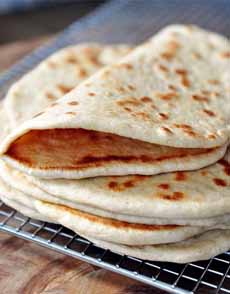
    Many traditional cultures continue to use pita more like a soft taco to fold and hold food—whether the pocket style (photo #5) or pocketless pita (photo #4 [source]).

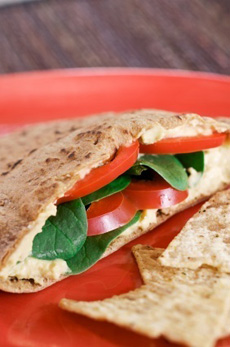
    Today, in the U.S., pita is available with and without pockets. The pockets are particularly attractive for sandwiches (photo #5).

    In fact, whole wheat pita was created to meet the demand for healthier foods. Flavored varieties like garlic pita are also available.

    In addition to sandwiches and wraps, pita is also cut into wedges and eaten soft or toasted.

    And in the case of Stacy’s Pita Chips, pita is cut into chip sizes baked twice, for a perfect crunch.
     
     
    > THE DIFFERENT TYPES OF BREAD: A GLOSSARY
     
     
    ________________

    *While meat grilled on skewers is an ancient cooking technique, modern souvlaki became popular in Greece after World War II.
    awhitman1993@kellogg.northwestern.edu
    †Think of the thickness of pita compared with yeastless flatbreads like matzoh and tortillas.


    stacys-cinnamon-sugar-pita-chips-230
    [1] Turn Cinnamon-Sugar Pita Chips into a Valentine snack (all photos ©
    Stacy’s Snacks).


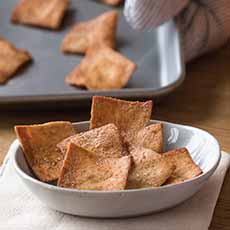
    [2] Stacy’s Cinnamon-Sugar Pita Chips are so delicious, you may not be able to resist them as soon as you open the bag.


    [3] Cinnamon-Sugar is the only sweet pita chip in the line. Here are all seven flavors.

    Homemade Flatbread
    [4] Pocketless pita is folded over, like a soft taco (photo © Mel’s Kitchen Cafe).


    [5] Pita pockets are a tasty sandwich alternative (photo © Night And Day Images | iStock Photo).


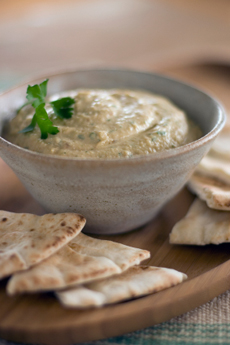
    [6] Pita sliced in triangles to dip or spread with hummus (photo © SFF Food Photo | iStock Photo).


    Comments off

    RECIPE: Grilled Radicchio Salad & More Radicchio Recipes


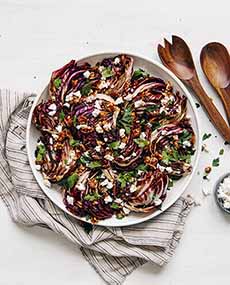
    [1] Grilled radicchio. The recipe is below (photo © Vermont Creamery).

    Grilled Filet Mignon
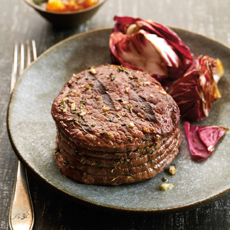
    [2] Grilled radicchio with filet mignon (photo © Omaha Steaks).


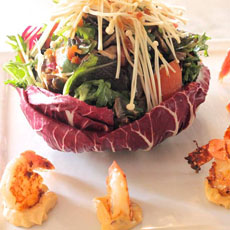
    [3] Radicchio leaves nested for a salad bowl (photo © Alcove Cafe | Los Angeles).


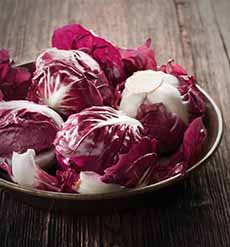
    [4] A bowl of radicchio di chioggia, the most common variety in the U.S. (photo © Hillshire Farm | Facebook).


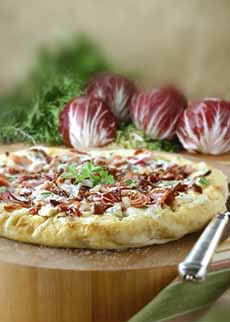
    [5] Radicchio pizza with three cheeses. Here’s the recipe (photos #5 and #6 © Royal Rose Radicchio).


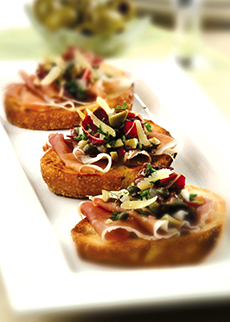
    [6] Bruschetta with prosciutto, radicchio and tapenade. Here’s the recipe.


    We’re making this salad for Valentine’s Day: Every dish in our dinner has a red, purple or pink accent.

    The recipe works on any other day, too.

    Radicchio, a member of the chicory family, can be grown year-round*, although its peak season is midwinter to early spring.

    Radicchio (rah-DEE-key-yo) is an Italian leaf chicory. There are different varieties, each named after the region in Italy where it is grown.

    The most common variety in the U.S. is radicchio di chiogga (pronounced key-YO-guh), a round, tightly packed head of dark maroon leaves with thick white veins (photo #4).
     
    > THE DIFFERENT TYPES OF CHICORY
     
     
    RADICCHIO: NOT JUST FOR SALADS

    Beautiful in burgundy and white, radicchio is not just for salads.

    The following recipe from Vermont Creamery was created using their Clover Blossom Honey Goat Cheese, a log with the honey blended in.

    More radicchio recipes are below.

    It’s delicious on salads, crackers and flatbreads, or spread on sandwiches (our favorite is rustic bread).

    And of course, it happily takes its place on a cheeseboard—a bit of sweetness amid the seriously savory.

    Alas, when time came to try the recipe, we could only find Vermont Creamery’s plain goat cheese log.

    It wasn’t a tragedy, as we love every goat cheeses from this creamery.
     
     
    RECIPE: GRILLED RADICCHIO

    You can serve this recipe (photo #1) as a salad course or a side dish.

    Grilling radicchio helps draw out some of the bitterness in this hearty and beautiful vegetable.
     
    Ingredients

  • 2-3 small-medium heads of radicchio (photo #4 see buying note below)
  • 2 tablespoons olive oil
  • Salt & pepper
  • 4 ounces Vermont Creamery Clover Blossom Honey Goat Cheese
  • 1/4 cup chopped parsley leaves
  • 1/2 cup candied walnuts (recipe)
  • Balsamic vinegar and EVOO for dressing
  •  
    Preparation

    1. HEAT the grill to medium-high. Remove any outside leaves on the radicchio that appear wilted. Slice the heads of radicchio lengthwise into even quarters (if heads are small) or sixths (if slightly larger).

    2. BRUSH the sliced edges with olive oil; season well with salt and pepper. Grill over medium-high heat for 2 minutes on each side or until the edges are slightly charred and have softened slightly.

    3. REMOVE from the grill to a serving platter.

    4. CRUMBLE the fresh goat cheese over warm radicchio. Sprinkle with the parsley leaves and candied walnuts.

    5. TOP everything with a drizzle of balsamic vinegar and olive oil to taste. Serve with a pepper mill for optional freshly-ground pepper.
     
     
    BUYING RADICCHIO

    When buying radicchio (photo #4), pay attention to size. A fresh radicchio head should be about the size of a grapefruit.

    It you find one with a small, drier head, it likely means that it is older and the outer leaves have been pulled off to keep it looking good.

    Some shopping tips include:

  • Look for dark red to purple leaves with small white veins.
  • Select tight, firm radicchio heads that feel heavy for their size.
  • Avoid very small heads (less than 1/2 pound)–they’re old.
  • Avoid heads that are pointed, misshapen or ones with loose leaves.
  •  

    MORE RADICCHIO RECIPES

  • 3-Cheese Pizza With Radicchio (photo #5)
  • Fig & Radicchio Salad
  • Grilled Bitter Greens With Peach & Caraway Dressing
  • Mushroom & Radicchio Savory Bread Pudding
  • Mushroom Risotto In A Radicchio Wrap
  • Pear Salad With Blue Cheese & Radicchio
  • Prosciutto Bruschetta With Radicchio & Tapenade (photo #76)
  • Radicchio Salad With Bourbon-Soaked Raisins & Pecans
  • Radicchio Salad With Piave Vecchio Cheese
  • Spinach & Radicchio Salad With Grapefruit
  • Squab With Braised Lentils & Radicchio
  • Steak & Grits With Julienned Radicchio
  • Using Radicchio Leaves As A Salad Bowl (photo #3)
  • Variegated Radicchio (Variegato di Castelfranco)
  •  
    ________________

    *The heads should be moist, not dried out. A fresh radicchio head should be about the size of a grapefruit. It you find one with a small, drier head, it likely means that it is older and the outer leaves have been pulled off to keep it looking good.


    Comments off

    FOOD FUN: Make Pork Rinds For National Pork Rinds Day

    Super Bowl Sunday is Pork Rinds Day, a no-carb, Keto, Paleo snack. And a beloved snack before anyone ever heard of Paleo and Keto diets*. Pork rinds (chicharrónes, the Spanish word) are made from pork skin, with the attached fat removed and deep-fried.

    That’s the difference between pork rinds and pork cracklings.

    Cracklings include the fat that adheres to the skin. Because of the extra fat, cracklings are greasier, denser, and a bit chewy.

    In comparison, pork rinds are airy like cheese puffs, and they dissolve in your mouth.

    The fat is seasoned or marinated before frying; pork skins are often dehydrated.

    Fried pork rinds/chicharrones are popular in various cuisines, including Latin American, Filipino, Mexican, and Spanish. Fried skin is also prepared from other animals, including beef, chicken, fish (think of salmon skin sushi), and mutton.

    > The history of pork rinds.

    > The different cuts of pork.
     
     
    MORE PORK RINDS

  • Homemade Pork Rinds Recipe
  • PigWizard Flavored Chicharrones
  • 4505 Flavored Pork Rinds
  •  
     
    CHICHARRONES PREPARATIONS

    In the U.S., fried pork rinds are most often served as a crunchy snack, in the manner of potato chips.

    Like potato chips, manufacturers of pork rinds flavor them in every which way, from international flavors to bacon and beer.

    Contemporary pork-rind-loving chefs began to use it as a garnish, for burgers, salads and other dishes.

    Each country has its own style of serving fried pork rinds. For example:

  • Bolivia: Served on Sundays with tomato salsa, llajwa (chile sauce) and mote (boiled hominy corn).
  • Guatemala: Eaten with tortillas, lime, guacamole, and moronga, a blood sausage.
  • Peru: Served as an appetizer along with red onion relish and fried yuca†.
  • Philippines: Served with chili vinegar, liver sauce or papaya pickle.
  • Puerto Rico: Stuffed in mofongo, a mashed plantain dish. The chicken version is also popular.
  • Venezuela: Served as a roadside food, a crispy snack prepared with some meat under the skin [source].
  •  
     
    ________________

    *Paleo eliminates grains, legumes, processed sugar and most sources of dairy, eating a “caveman” diet before processed foods. The Keto diet aims to put the body into ketosis, a metabolic state in which the body uses calories from fat, instead of carbs, to create the energy needed to carry out its normal functions. Here’s more about it.

    †Yuca (YOO-cuh) is the root portion of the cassava plant. Yucca, on the other hand, is an ornamental plant, not the same as yuca. While they are both members of the Angiosperms clade (near the top of the binomial chart), they diverge at that point:


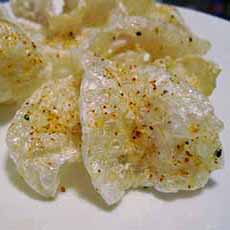
    [1] Pork rinds with a simple seasoning (photo © Arnold | Inuyaki | CC-BY-2.0-License).


    [2] Pork rinds on a burger. It’s a fun garnish for many foods (photo © Sutter Home).


    [3] Use pork rinds to garnish a salad (photo © Culinary Vegetable Institute).


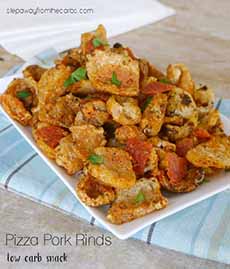
    [4] How about pizza pork rinds? Here’s the recipe from Step Away From The Carbs (photo © Step Away From The Carbs).

     
    Yuca: Kingdom Plantae, Clade Tracheophytes, Clade Angiosperms, (they diverge here) Clade Monocots, Order Asparagales, Family Asparagaceae, Subfamily Agavoideae, Genus Yucca, Species [various].

    Yucca: Kingdom Plantae, Clade Tracheophytes, Clade Angiosperms, (they diverge here) Clade Eudicots, Clade Rosids, Order Malpighiales, Family Euphorbiaceae; Genus Manihot, Species esculenta [source: Wikipedia].


    CHECK OUT WHAT’S HAPPENING ON OUR HOME PAGE, THENIBBLE.COM.


    Comments off


    © Copyright 2005-2026 Lifestyle Direct, Inc. All rights reserved. All images are copyrighted to their respective owners.