THE NIBBLE BLOG: Products, Recipes & Trends In Specialty Foods


Also visit our main website, TheNibble.com.

TOP PICK OF THE WEEK: Cleveland Kraut & Ways To Serve Sauerkraut

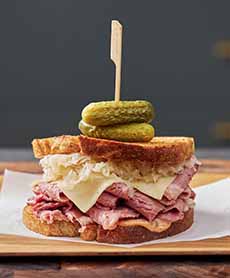
Reuben Sandwich With Pickles
[1] How to make a better Reuben sandwich: use the best sauerkraut and a great recipe like this one (photo © Marion’s Kitchen).

Foods With Sauerkraut
[2] Sauerkraut with beef, burgers, hot dogs, salmon, and sandwiches (photos #1 to #4 © Cleveland Kraut).
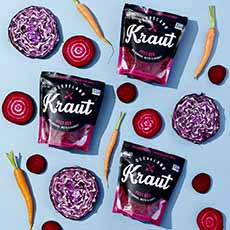
Beet Sauerkraut
[3] Beet Red Cleveland Kraut, made with red cabbage, beets, and cabbage. Try it with hot dogs, meat dishes, and salads paired with goat cheese.

Kimchi-Like Sauerkraut
[4] Green cabbage, green bell peppers, jalapeños, leeks, red chiles, sriracha, and seasonings make Gnar Gnar a match with egg dishes, rice, salads, and tacos.
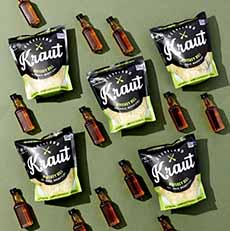
Whiskey Infused Sauerkraut
[5] This “spirited” kraut combines fresh garlic and dill with barrel-aged whiskey, which adds a subtle sweetness to each batch. Pair it with chicken, salads, and sandwiches.

Chocolate Sauerkraut Cake
[6] Did you say sauerkraut cake? “People might need some coaxing to try it,” said someone who made the recipe, “but once they do, they will love it.” Here’s the recipe (photo © Taste Of Home).


Sauerkraut is one of our colleague Laura’s favorite foods. Her family has made it for generations and love it so much, they eat it from the jar.

We created a sauerkraut dinner menu for her—6 courses selected from these 40 sauerkraut recipes—using our Top Pick Of The Week:

Cleveland Kraut sauerkraut, a terrific line of flavored krauts: raw, unpasteurized and lacto-fermented.

By the way, the third week in October is National Kraut Sandwich Week. So put some kraut on your sandwich. It doesn’t have to be a Reuben.

Think burgers, ham sandwiches, hot dogs (yes, they’re a sandwich), sausage heroes, and the others we’ve suggested below.
 
 
CLEVELAND KRAUT FLAVORS

If you like plain sauerkraut—which is all that most of us have had—you’ll likely be thrilled with Cleveland Kraut’s flavored krauts. All start with green cabbage (except for Beet Red, which uses red cabbage), then deftly add seasonings.

Flavors—each deliciously flavorful and crunchy—include:

  • Beet Red (photo #3)
  • Cabbage & Cukes
  • Classic Caraway (the traditional Bavarian style)
  • Curry Kraut
  • Gnar Gnar† (photo #4—kraut’s answer to kimchi, with green bell peppers, jalapeños, leeks, sriracha, garlic, and red chilis)
  • Whiskey Dill (photo #5—with barrel-aged whiskey)
  •  
     
    WHY SAUERKRAUT IS GOOD FOR YOU

    Sauerkraut is one of a group of fermented foods that is full of natural probiotics, nutrients, and flavor*.

    Here’s a review of the nutrition and health benefits.

    Fermented foods such as sauerkraut and kefir offer many health benefits. They restore gut health, support our immune system and help us to better absorb nutrients.

    Whether it’s sauerkraut in Germany, kimchi in Asia (especially Korea), cortido (or curtido) in Central America, or choucroute in France, fermented cabbage is consumed wherever cabbage is grown.

    All you need to ferment it is salt. At the correct level of salinity and at the proper temperature, cabbage will ferment into sauerkraut.

    The addition of vinegar is looked upon with contempt by makers of “true” sauerkraut, who declare that it’s used only by those who don’t take the time to go through a full fermentation process and want a cheap and quick way to achieve acidity.

    Several different bacteria are at work during this process. The most often cited probiotic bacterium associated with sauerkraut is Lactobacillus plantarum.

    With supermarket sauerkraut, note: Many commercial fermented cabbage products have been pasteurized. The heat destroys the friendly bacteria as well as the harmful ones. For probiotic benefits, seek out raw/unpasteurized kraut.

    Another benefit: Unlike pasteurized kraut, raw kraut is crunchy.

    If you want to make your own sauerkraut, here’s how.

    Whether you buy it or make it, save the liquid—it’s a great tenderizer in a marinade, and good in a vinaigrette.
     
     
    WAYS TO USE SAUERKRAUT

    Whether you make it or buy it, use it beyond hot dogs with:

  • Avocado toast, filled avocado halves.
  • Cold cuts and charcuterie.
  • Condiment: Stir a bit into ketchup, mayo, or plain yogurt for more of a zing. Use it on anything from burgers and hot dogs (photo #2) and other sandwiches, from avocado toast to grilled cheese to Reubens.
  • Chicken dishes.
  • Eggs: omelets, in a scramble, as a side, or mixed into deviled egg filling.
  • Fish dishes: as a side, in a sauce (photo #2).
  • Green salad or grain bowl.
  • Hot dogs (photo #2), brats, and other sausages: a given. But imagine them with Cleveland Kraut’s Curry, Roasted Garlic, or Whiskey Kraut.
  • Pierogies, with or without sour cream.
  • Pork chops, loin, pulled pork, Asian-style ribs.
  • Ricedishes.
  • Sandwiches: kraut atop a burger, deli meat, fried fish, grilled vegetable, ham, roast beef, or sausage sandwich—not to mention the Reuben.
  • Sides: plain, with caraway seeds, or with cubes of your favorite vegetables. Don’t forget the mushrooms and onions.
  • Soups & Stews: to punch up flavor.
  • Taco topping, burrito condiment.
  • And beyond: dips, meatballs, potato pancakes potato skins, stuffed cabbage, summer rolls, vegetable sushi and so much more—even chocolate cake (photo #6). Check out these recipes.
  •  
     
    WHERE TO BUY CLEVELAND KRAUT

    Ready to dig in?

    Shop online at ClevelandKraut.com, or if you’re in the Cleveland area, check out the store locator.

     
    ________________

    *Here’s more on yogurt, kefir, buttermilk, brined olives and other foods that are probiotic.

    †The company named this spicy flavor Gnar Gnar for gnarly, a word the Urban Dictionary defines as “beyond radical, beyond extreme.” Cleveland Kraut calls it Cleveland’s answer to kimchi.


    CHECK OUT WHAT’S HAPPENING ON OUR HOME PAGE, THENIBBLE.COM.


    Comments off

    TIP OF THE DAY: Ways To Serve Polenta (Gluten-Free Comfort Food)

    Fall reminds us of polenta, a comfort food from Italy, served hot. (It’s comforting like mashed potatoes.)

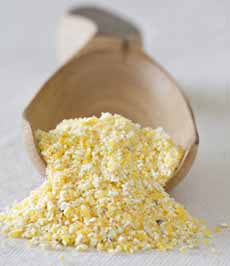
    Polenta is cornmeal (photo #1) that is often boiled served as breakfast porridge (here’s the difference between grits and polenta).

    Its versatility allows it to be incorporated into mains and sides for lunch and dinner.

    You can also slice it and use it as a base for appetizers or hors d’oeuvre.

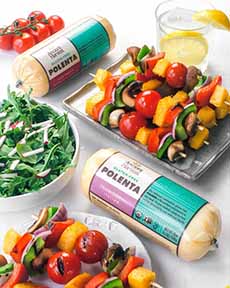
    That’s because when polenta cools, it solidifies into a loaf (photo #2) that can sliced and baked, fried, or grilled.
     
     
    WHAT IS POLENTA?

    Polenta—which is both the Italian word for cornmeal and a cooked dish made from it—has become familiar in America through Italian and Continental restaurants.

    But it’s not new to America.

    For the first two centuries on the continent, American diets contained much cornmeal: in bread, as breakfast porridge, as a side starch, and in other recipes.

    Paradoxically, corn, which is native to the Americas, was shipped to Europe, where Italians turned it into polenta.

    Back in the Americas, except for the Southern region, cornmeal was gradually replaced in American diets by refined wheat flour (note that milled polenta is not a whole grain).
     
    Is Polenta Gluten Free?

    Polenta is naturally gluten-free (the only grains that do naturally contain gluten are barley, rye and wheat).

    Since so many other grains are processed in facilities that also handle these latter grains, however, some varieties of polenta may become contaminated with trace amounts of gluten.

    Some brands of polenta print “gluten-free” directly onto their product labels for easy identification. Others don’t.

    To be certain, check the label carefully for allergy information or a statement such as, “Produced in a facility that also handles wheat, rye or barley.”

    Such a statement doesn’t mean cross-contamination has occurred, but it does increase the likelihood.
     
    Polenta Nutrition

    For most of history, polenta was grains of ground cornmeal that were stirred into boiling water until the grains plumped into a cooked cereal.

    But with the advance of milling methods, it became more efficient to process the cornmeal.

    While corn itself is a whole grain, polenta is refined: It is degerminated cornmeal, which has the germ and endosperm—(which contain the fiber and other nutrition—removed.

    As with all refined grains, including white rice, the majority of the grains we consume have left their protein, iron and vitamins on the factory floor.

    You can make polenta from scratch, or buy it in rolls, available in most supermarkets (photo #2).

    The latter makes it easy to create stacked appetizers and sides. It’s available in plain plus flavors such as basil-garlic and sundried tomato.
     
    We have to add a note here, that while we regularly buy all three, the flavor impact of the basil and the sundried tomato versions is not truly discernable. Note to Ancient Harvest: Add more flavor!
     
     
    HOW TO SERVE POLENTA

    The only limit is your creativity.
     
    While it pairs delightfully with meat, poultry, and seafood, polenta is a great canvas for vegetarian and vegan dishes. Try it for your next Meatless Monday.

    In addition to breakfast polenta—both as porridge and fried and served with eggs, we regularly serve it:

  • With a grilled vegetable plate.
  • In a “Polenta Caprese” salad, adding to, or instead of, tomato or mozzarella.
  • Polenta Parmesan, topped with tomato sauce and mozzarella, melted, then garnished with diced fresh basil and
     
     
    POLENTA RECIPES

  • Chili & Polenta Savory Cobbler
  • Garden Ratatouille With Crispy Rosemary Polenta & Stuffed Pork Chops
  • Gorgonzola Polenta Bites
  • Grilled Polenta & Cilantro Appetizer
  • Grilled Polenta Kabobs (photo #2)
  • Grilled Polenta Skewers With Peach BBQ Sauce, an appetizer or snack
  • Mojo Verde Polenta Bites
  • Polenta Appetizer Stacks and many more polenta recipes
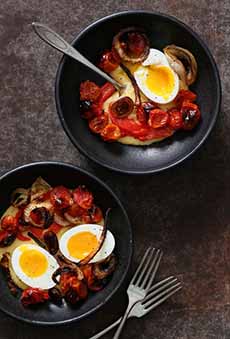
  • Polenta Breakfast Bowl (photo #3)
  • Polenta Casserole With Sweet Potatoes & Garden Vegetables
  • Polenta Crostini With Shrimp & Grits
  • Polenta Eggs Benedict (polenta instead of the English muffin)
  • Polenta Lasagna With Spinach, Butternut Squash & Quinoa (polenta substitutes for the noodles)
  • Polenta Pesto Lasagna
  • Polenta Pizza Bites, an appetizer or snack
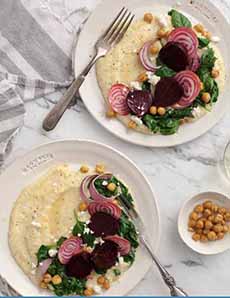
  • Polenta With Beets, an appetizer or light lunch
  • Ratatouille With Crispy Polenta
  • Smoked Paprika Shrimp With Poblano Polenta & Red Pepper-Agave Sauce
  • Sweet Potato Polenta Bake, a cheesy vegetarian main
  • Vegetarian Shepherd’s Pie With A Polenta Top Crust
  •  
     
    SWEET POLENTA RECIPES

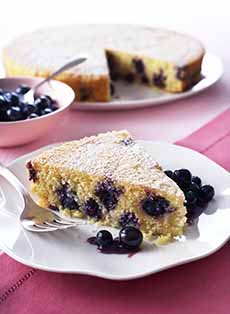
  • Blueberry Polenta Cake (photo #6)
  • Olive Oil Polenta Cake for dessert!
  • Polenta Cookies)
  •  

    Heirloom Polenta
    [1] Organic yellow polenta made from heirloom corn, from Anson Mills. The company also sells white polenta from heirloom white corn (photo © Anson Mills).

    Ancient Harvest Polenta
    [2] Polenta Kabobs made with refrigerator-case polenta. Here’s the recipe from Ancient Harvest (photo © Ancient Harvest).

    Polenta Breakfast Bowl
    [3] Polenta for breakfast or brunch, in a beautiful bowl with eggs, vegetables, and cheese (the polenta is hiding underneath the toppings). Here’s the recipe from DeLallo (photo © Delallo).

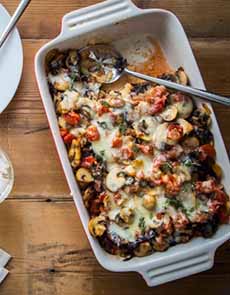
    Polenta Mushroom Casserole
    [4] Polenta Mushroom Casserole for lunch or dinner. Here’s the recipe from Oh My Veggies. (photo © Oh My Veggies.

    Polenta & Beets
    [5] Polenta appetizer with beets. Here’s the recipe from Blue Diamond (photo © Blue Diamond).

    Blueberry Polenta Cake
    [6] Ready for dessert? Here’s the recipe for this Blueberry Polenta Cake (photo © The Blueberry Council).


    CHECK OUT WHAT’S HAPPENING ON OUR HOME PAGE, THENIBBLE.COM.


    Comments off

    TIP OF THE DAY: Lasagna Hack, Chicken Parm Hack

    Baked Pasta
    [1] Instead of lasagna, make this pasta bake. Add chicken for a Chicken Parm fusion.

    Delallo Tomato Passata
    [2] Delallo Tomato Passata (puree) forms the sauce. You can find it in stores or online. (photos #1 and #2 © DeLallo).

    Panko
    [3] Panko, Japanese-style crunchy breadcrumbs, are our favorite. We no longer use conventional breadcrumbs for breading (photo © Progresso).


    We count ourselves among the lasagna lovers who eagerly order it at restaurants but don’t have the energy to make it at home.

    We found a great hacks in Ravioli Lasagna, where sheets of ravioli are layered in between the cheese.

    (Since it’s the first day of fall, here are recipes for Pumpkin Lasagna and Pumpkin Ravioli Lasagna.)

    Today’s hack is simply a pasta bake with tomato sauce, mozzarella, and parmesan: the ingredients of lasagna in an easy-to-throw-together dish.

    You can use any “short cut” of pasta, from:

  • Tubular pasta, such as elbows, penne, rigatoni, trenne and ziti.
  • Shaped pasta, such as fusilli (corkscrews), gemelli, orecchiette, ruote (wagon wheels), small shells and strozzapreti.
  •  

    This recipe, which was contributed to the DeLallo recipe archive by Love & Olive Oil, adds chicken breasts as protein. If you don’t want the chicken, adapt the recipe to pasta only.

    But chicken turns it into a different hommage recipe: Chicken Parmesan.

    Americans say their favorite Italian food is Chicken Parm, and March 11th is National Chicken Parm Day.

    > Check out all the types of pasta in our Pasta Glossary.
     
     
    RECIPE: LASAGNA HACK & CHICKEN PARM HACK

    Ingredients For 8 Servings

  • 2 tablespoons olive oil
  • 1 large onion, chopped
  • 3 large garlic cloves, finely chopped
  • 1 jar (24 ounces) tomato purée
  • 2 medium chicken breasts (about 1 pound), cut into bite-sized pieces
  • 1 tablespoon chopped fresh basil
  • Salt and black pepper, to taste
  • 1 pound dried pasta
  • 2 cups shredded mozzarella cheese
  • 1/3 cup finely shredded parmesan cheese
  • 1/4 cup panko breadcrumbs
  • Dried Italian herb seasoning blend (here’s the recipe if you want to blend your own)
  •  
    Preparation

    1. PREHEAT the oven to 350°F. Lightly spray a 3-quart casserole dish with cooking spray.

    2. BRING a large pot of salted water to a boil. Meanwhile…

    3. HEAT the olive oil in a large skillet over medium-high heat. Add the onion and garlic and sauté for 6 to 8 minutes, or until the onion is softened and fragrant.

    4. ADD the tomato purée and bring the mixture to a simmer. Add the chicken and simmer for about 10 minutes or until the sauce is thickened slightly and the chicken is just cooked through. Stir in the fresh basil and season generously with salt and pepper. Meanwhile…

    5. COOK the pasta in boiling water until it is not quite al dente (subtract 2-3 minutes from the cooking time listed on the package). Reserve a cup of the pasta water before draining the pasta.

     
    6. USE a large slotted spoon to strain pasta and transfer it to the sauce. Add a few splashes of pasta water and stir until the pasta is evenly coated with sauce.

    7. TRANSFER half of the pasta to the prepared casserole dish, spreading it into an even layer. Sprinkle with half of the mozzarella and half of the parmesan cheese. Top with the remaining pasta, followed by the rest of the cheese.

    8. SPRINKLE with the breadcrumbs and Italian herb seasoning. Bake for 20 to 30 minutes or until the cheese is melted and bubbly and the pasta is heated through*. If desired, broil for 2 to 3 minutes at the very end until the cheese is browned in spots. Let cool for 5 minutes before serving.
    SHARE

    ________________

    *If your pasta was cool or cold when you put it in the oven—for example, if you made the pasta ahead of time and refrigerated it overnight—it will likely need more time.


    CHECK OUT WHAT’S HAPPENING ON OUR HOME PAGE, THENIBBLE.COM.


    Comments off

    PRODUCT: American Cheese (What Is It?)

    September 18th was National Cheeseburger Day. It inspired us to create this history of the cheese that tops more cheeseburgers than any other: American cheese.

    But is American cheese “real” cheese? Not in the sense that blue, cheddar, Swiss and other cheeses are.

    It is made from milk, but not with the traditional cheese-making process of separating curds from whey and then packing the curds into a block.

    Instead, it is made by by processing cheese trimmings with emulsifiers, salt, and coloring, classified by the USDA as “processed cheese.”
     
     
    WHAT IS PROCESSED CHEESE?

  • It is made by combining milk, milkfat, milk protein concentrate, whey, whey protein concentrate and salt, plus colorant.
  • It does not use enzymes or bacteria to give it a distinct flavor, as do conventional cheeses. Instead, additives gives it its texture and flavor.
  • Different manufacturers vary the percentage of cheese product in American cheese, as well as the amount of additives that are used for emulsification. Kraft singles are only 51% cheese, and that percent was required by law just to get it called processed cheese.
  • White and orange American cheeses are the same product, except that the orange version is colored with annatto, a natural dye made from the pulp of a tropical fruit.
  • Loved for its meltability, American cheese was long the best-selling cheese in the U.S., until it was surpassed by mozzarella last year (from all the pizza consumed [source]).
  •  
     
    THE HISTORY OF AMERICAN CHEESE

    British colonists arrived in America with a preference for cheddar cheese. In the New World, before the advent of commercial producers, a basic cheese was made at home.

    The first cheese factory in the U.S., founded in 1851 in New York, made cheese that anyone could buy—thus saving the housewife the labor of making cheese.

    The proprietor, Jesse Williams, purchased milk from local herds and pooled it to make cheese. Other cheese-makers followed suit.

    Soon, generic, factory*-made cheddar became common throughout the country.

    Terminology evolved such that many Americans simply called this type of cheddar “store cheese” or “yellow cheese.”
     
    How American Cheese Got Its Name

    These early colonial cheddars weren’t as tasty as fine English cheddars, but they were so cheap that they could be shipped to England and sold for a profit.

    By 1878, Americans were exporting more than 300 million pounds of cheese to England each year.

    British consumers didn’t think much of the quality of the “Yankee cheddar” or “American cheese,” but it sold well due to its low price [source].
     
    The Dawn Of Modern American Cheese

    In 1916 James L. Kraft, a cheddar cheese wholesaler in Chicago, patented a process to reduce waste of leftover pieces of cheese.

    He shredded the cheddar, re-pasteurized it through heating, and added some sodium phosphate as an emulsifier.

    The resulting product was cheaper than cheddar, with a longer shelf life—and, may we add, far less flavorful, and made from inferior cheese.

    But money talks, and it sold well. By 1930 Kraft cheese represented 40% of cheese consumed in the U.S. [source].

    The name “American cheese” gradually came to refer to Kraft’s processed cheese [source].

    Hand-sliced at the store, the cheese slices would vary in thickness, dryness, etc. It took 15 years to figure out how to slice the rectangular bricks of cheese into individual slices (not as easy as it sounds—read the story here).

    But in 1950, Kraft De Luxe Process Slices, eight square slices sized for a piece of bread, debuted. They became a go-to for burgers, grilled cheese sandwiches, cheese omelets and more.

    However, it was not an ideal solution. The it was typically difficult to peel the slices apart without tearing them.

    In 1956, an outside inventor patented machinery to create individually-wrapped slices of cheese. Kraft created a similar technology, and Kraft Singles were introduced in 1965 (source).
     
    Velveeta & Cheez Whiz

    Velveeta is a processed cheese product that tastes like American cheese, but softer and spreadable.

    Invented in 1916, it was sold to Kraft in 1927. Customers love its meltability.


    Block Of American Cheese
    [1] American cheese has always been made in a block. It was sliced in the store before the advent of packaged slices. It is a favorite for grilled cheese sandwiches because of its meltability (photo © Boarshead).

    Bacon Cheeseburger
    [2] The vast majority of cheeseburgers use American cheese (photo © Smokey Bones Restaurant | Aventura, FL).

    Philly Cheesesteak
    [3] Philly Cheesesteak. Here’s the recipe from Taste Of Home (photo © Taste Of Home).

    Nachos
    [4] While we prefer cheddar on our nachos, American cheese has superior meltability. Velveeta and Cheez Whiz are the preferred solution for many (photo © Rick’s Picks).

    Breakfast Biscuits
    [5] Breakfast biscuits. Here’s the recipe from Taste Of Home (photo © Taste Of Home).

     
    Velveeta has even less cheese than American cheese, and is labeled by the USDA as a “Pasteurized Prepared Cheese Product” [source].

    Cheez Whiz, classified as a cheese sauce or spread, is made of whey (a protein byproduct of milk), oil, sodium-heavy flavorings, and colorants and emulsifiers that make it bright yellow and shelf-stable.
     
     
    AMERICAN CHEESE MONTH

    October is American Cheese Month, but it doesn’t celebrate the American cheese in this article.

    Instead, it celebrates the fine artisan cheeses made by American cheesemakers. Here’s more about it.
    _________________

    *Here, “factory” does not refer to today’s massed-produced cheeses, but to cheese still handmade, but in larger batches.


    Comments off

    TOP PICK OF THE WEEK: Kracklin Kamut®, Khorasan Wheat

    Kamut Grains
    [1] A bowl of Kamut grains. Here’s how to cook it from Vegan Lovlie (photo © Vegan Lovlie).

    Kamut Kernels
    [2] A close up of the grains, three times the size of conventional wheat grains (photo © Purcell Mountain Farms).

    Cooked Kamut
    [3] Cooked Kamut grains (photo © Vegan Lovlie).

    Kracklin Kamut
    [4] Kracklin Kamut, our Top Pick Of The Week (photo © Kracklin Kamut).

    Butternut Squash & Kamut Gratin
    [5] Butternut squash and kamut gratin. Here’s the recipe from Vegan Lovlie (photo © Vegan Lovlie).

    Kamut Salad
    [6] Kamut salad with blood oranges, toasted almonds and parsley. Here’s the recipe from Well And Full (photo © Well And Full).


    Have you heard of Kamut (kah-MOOT)? If so, do you know what it is?

    Kamut® is a trademarked brand of khorasan wheat, one of those better-for-you ancient grains you read about.

    Originally from the Fertile Crescent, Kamut khorasan wheat is grown in the U.S. on certified organic farms, primarily in Montana and other northern Great Plains of the U.S.

    It is a whole grain.

    Our Top Pick Of The Week is Kracklin Kamut, one of many products with the grain.

    You can jump to our review below, or first discover more about Kamut wheat.
     
     
    WHAT IS KAMUT (KHORASAN WHEAT)?

    Kamut is an ancient relative of modern durum wheat, a hard amber spring-type wheat.

  • It is two to three times the size of common wheat grains and can be substituted for common wheat.
  • It has 20%–40% more protein than conventional wheat, and is, higher in lipids, amino acids, vitamins and minerals.
  • It is an excellent source of protein, fiber, and many vitamins; and is high in minerals including selenium*.
  • It is easily digested (as wheat, it does contain gluten). Many people with sensitivities to modern wheat report being able to eat Kamut khorasan wheat with no difficulty.
  • It is sustainably grown.
  • It has a positive impact on blood insulin and glucose for patients with diabetes, and benefits for patients with cardiovascular disease and IBS (source).
  •  
    The Kamut brand is the original grain as it was cultivated from the wild, un-altered by breeding and hybridizing.

    As an important note, many, if not most, of agricultural products have been bred and re-bred since ancient times.

    This is done to produce versions that have higher yields, are disease- and weather-resistant, and/or grow better in different climates.

    In the process, flavor, nutrition and other features are sacrificed.

    With Kamut, you know you have the real deal, the true ancient grain: nutritious, ancient wheat with a rich, buttery flavor and firm texture (photo # 1).

    The Kamut brand of khorasan is guaranteed to never be hybridized or genetically modified. It is always organically grown.
     
     
    THE HISTORY OF KAMUT

    Khorasan-type wheats originated in the Fertile Crescent, in what is now Mesopotamia. The Quinns coined the trade name “Kamut” an ancient Egyptian word for wheat. Egyptologists claim the root meaning of Kamut is “Soul of the Earth.”

    Although the Kamut brand wheat is thousands of years old, it was off the radar for a few thousand years. Its resurrection sounds like a tall tale (and in fact it likely is, according to Bob Quinn, founder of Kamut International, the largest grower of khorasan wheat which he branded as Kamut®.

    Following World War II, a U.S. airman claimed to have taken a handful of grains from a stone box in a tomb near Dashare, Egypt.

    Thirty-six kernels of the grain were given to a friend who mailed them to his father, a Montana wheat farmer. The farmer planted and harvested a small crop and displayed the grain as a novelty at the local fair.

    Believing the legend that the giant grain kernels were taken from an Egyptian tomb, the grain was dubbed “King Tut’s Wheat” (source).

    But soon after, the ancient grain was again all but forgotten.

    [Farmers in Turkey call the grain “Camel’s Tooth” because of its shape, or the “Prophet’s Wheat,” referring to another legend that Noah brought the grain with him on the ark. Beyond the tomb tale, the grain may in fact have existed in small pockets in Mesopotamia.]

    Here’s what Bob Quinn calls the more likely story: In 1977, one remaining jar of “King Tut’s Wheat” was obtained by T. Mack Quinn, another Montana wheat farmer—we don’t know from where. He and his son Bob, an agricultural scientist and plant biochemist, soon perceived the value of the unique grain.

    They spent the next decade propagating some of the humped-backed kernels selected from the small jar. Their research revealed that wheats of this type originated in the Fertile Crescent.

    The Quinns coined the brand name “Kamut,” an ancient Egyptian word for wheat. Egyptologists say the root meaning of Kamut is “soul of the Earth.”

    In 1990, the USDA recognized the grain as a protected variety. The Quinns also registered Kamut as a trademark.

    Perhaps the most significant aspect of the introduction and cultivation of Kamut brand wheat is that it is an important new crop for sustainable agriculture. This grain’s ability to produce high quality without artificial fertilizers and pesticides make it an excellent crop for organic farming (source).
     
     
    KRACKLIN KAMUT: TOP PICK OF THE WEEK

    When you roast Kamut kernels, you get Kracklin Kamut: a most delightful, crunchy, flavorful, satisfying snack.

    Made in small batches with Montana-grown Kamut and organic, cold-pressed, hi-oleic safflower oil†. It is lightly seasoned with sea salt from ancient caves in Utah (from a sea that evaporated millions of years ago).

    Like crunchy corn nuts, we enjoy it as a grab-and-go snack, but this simple, clean roasted grain is delicious on salads—green and fruit—on vegetables, rice and grains.

    A 1.5-ounce pack has 200 calories, 7 grams of fat, 6 grams of protein and no cholesterol, trans fat or sugar. The product is also USDA organic and non-GMO.

    It’s available at natural food stores and online. Learn more about it at KracklinKamut.com.
     
     
    MORE KAMUT PRODUCTS

    Because of its higher nutrition, you can now find Kamut in dozens of products, from baby’s and children’s food and breakfast cereals cold and hot, to energy bars and snacks.

    Kamut can be found in cereals, breads, cookies, snacks, waffles, pancakes, bread mixes, baked goods, and prepared and frozen meals.

    Because of the inherent sweetness of the grain (referred to by some as “the sweet wheat”), no added sugar is required to hide the subtle bitterness associated with most wheats and whole wheat products.
     
     
    HOW TO SERVE KAMUT

    The natural firmness of the cooked kernels lend themselves to:

  • Any grain dish (rice, couscous, quinoa, etc.)
  • Chili and other dishes, as a substitute for beans
  • Cold salads
  • Pasta (made from Kamut)
  • Pilafs
  • Soups
  •  
     
    In addition to Kamut pasta, which has outstanding texture and flavor compared to other whole grain pastas, you can also find Kamut brand bulgur and couscous.

    You can see a list of Kamut products here.

    __________________
    *Trace amounts of selenium are necessary for cellular function in. It is an ingredient in many multivitamins, other dietary supplements, and infant formula.

    High oleic safflower oil is a healthy alternative to saturated or hydrogenated oils. A naturally occurring liquid vegetable oil, it is not chemically modified. It has a neutral flavor and odor.


    Comments off

    The Nibble Webzine Of Food Adventures
    RSS
    Follow by Email


    © Copyright 2005-2026 Lifestyle Direct, Inc. All rights reserved. All images are copyrighted to their respective owners.