THE NIBBLE BLOG: Products, Recipes & Trends In Specialty Foods


Also visit our main website, TheNibble.com.

M. Cacao Chile Caramels For Your Hot Valentine

Even if you’re not a big fan of hot chile peppers, these caramels from M. Cacao are hot stuff.

Chef Delphin Gomes: Michael collaborates with Chef Delphin Gomes, a French pastry master, and Michael Nichols, the company founder, to develop chocolate creations that never fail to dazzle.

For this box of spicy caramel enrobed in the finest chocolate, the chocolatiers took their chocolate covered caramels and added just enough pulverized chile pepper to provide great chile flavor without burning the tongue numb.

They are still hot, we hasten to add, but chile connoisseurs can actually taste the different fruit flavors* of each type of chile.

Plus, you can customize your box of caramels to the particular level of heat you want, whether all mild, medium, or hot, or a combination.

We’ll get to them in a moment, but first:

> The history of chiles.

> The different types of chiles: a photo glossary.

> The Scoville scale that establishes heat level—SHU, for Scoville Heat Units.

> Below: Chile vs. chili vs. chilli and chiles vs. peppers, and why The Nibble uses “chiles” instead of “peppers.”

> Below: The difference between fruits and vegetables.
 
 
CARAMEL + CHILE ENROBED IN CHOCOLATE:

TAKE YOUR PICK

Before we describe each of the chiles to you, we don’t want to bury the shopping information.

There are eight different types of chile caramels, and M. Cacao offers their caramels 8-piece and 16-piece boxes.

You can choose a mixed box of everything, a box of the lower-heat chiles only, or a box of the high-heat chiles only.

And if it all becomes too much for you, try a scoop of ice cream. The dairy is a great help in neutralizing the capsaicinoids, the chemical compounds that give chile peppers their spicy flavor and burn.

> Get your chile caramels from M. Cacao here and prepare to sizzle.
 
 
INTRODUCING THE 8 CARAMEL CHILES

Note that the heat level of chiles varies depending on subspecies, terroir, and growing conditions.
 
1. Green Hatch Chile

Mild Hatch chiles measure from 1,000–2,500 SHU, similar to Anaheim chiles. They deliver an earthy, smoky, rich flavor to the caramel (photo #3).
 
2. Red Hatch Chile

Red Hatch chiles are the ripened version of the green chiles, with similar heat. In addition to the earthy and smoky flavors, ripeness adds a buttery quality (photo #4).
 
3. Serrano Tampiqueño Chile

Serrano Tampiqueño chiles, a variety of serrano, has medium-high heat—typically between 10,000 and 23,000 SHU. They are hotter than jalapeños but milder than Thai chiles or habaneros (photo #5).

Known for their bright, fresh flavor, they have a delayed-fuse heat, allowing their flavor notes to unfold first.
 
4. Scotch Bonnet Chile

Scotch Bonnet chiles typically range between 100,000 and 350,000 SHUs. This places them in the same heat range as habaneros, but with a slightly sweeter and fruitier flavor (photo #6).

Its complex profile including flavors of tomato and apple are appreciated by chile lovers.
 
5. Habanero Chile

The bright fruity, citrus notes that are beloved in habaneros bite back with ripping heat.

Habanero chiles typically range between 100,000 and 350,000 SHU (photo #7).
 
6. Ghost Chile

Previously ranked as the the world’s hottest† chile pepper, these caramels are prepared in such a way that you’ll enjoy the smoky, deeply peppery notes of the chile before the slow burning heat rises up to haunt you (photo #8).
 
7. Scorpion Chile

Scorpion chiles are aggressively hot, with a long-lasting, lingering heat signature. The flavors you’ll experience before the heat gets you are citrusy, sweet, and even floral (photo #9).
 
8. Carolina Reaper Chile

Another opportunity for “death by chocolate,” the Carolina Reaper chile caramel is a delicious way to tempt fate. Even if you like it hot, start with a small nibble from one corner (photo #10).
 
 
WHY CHILES ARE CALLED PEPPERS

The first chiles were brought to Spain in 1493 by Diego Álvarez Chanca, a physician on Columbus’ second voyage to the West Indies. He first wrote about their medicinal effects in 1494.

From Europe, chiles spread rapidly to India, China, and Japan. In Europe, they first were grown in the monastery gardens of Spain and Portugal as botanical curiosities.

The monks experimented with their culinary potential and discovered that their pungency offered an inexpensive substitute for black peppercorns, which were so costly in Europe that they were used as legal currency in some countries.

“Chile pepper” is a misnomer, and the term “pepper” is not used in Latin America where chiles originated.

The etymology:

  • The word chile (also spelled chili or chilli) originates from the Nahuatl (Aztec) word chīlli.
  • Spanish colonizers adopted the word from Nahuatl, spelling it chile.
  • When he word spread globally, variations in spelling appeared.
  • Chile used in Mexico, the southwestern U.S., and some Spanish-speaking countries.
  • Chili is common across the U.S., especially when referring to foods like chili powder and chili con carne.
  • Chilli is the spelling used in the U.K., British territories, and India (a former British territory).
  •  
    How did we get from “chile” to “pepper?”

    The first European to come across hot chiles was Christopher Columbus, when he landed in the Caribbean. He called them “pimientos” (the Spanish word for black pepper) because of their fiery similarity to black peppercorns with which he was familiar.

    He brought the “peppers” back to Europe and chiles have been mis-named peppers ever since. But the two aren’t related at the order and family levels of botanical classification.

    THE NIBBLE uses the authentic word, “chile,” and for elucidation for everyone who grew up with “pepper,” we often use “chile pepper.” But beyond peppercorns, never use “pepper,” except in the case of bell peppers, which have no heat.

    Why not call bells pepper, too? Because most peopled don’t realize that bell peppers, a mild vegetable, are related to hot chiles.
     
     
    THE DIFFERENCES BETWEEN CHILES & PEPPER

    Chiles

  • Chiles are from the order Solanales, family Solanaceae (the nightshades), genus Capsicum
  • Domesticated chiles are divided into five species: Capsicum annuum, Capsicum baccatum, Capsicum chinense, Capsicum frutescens, and Capsicum pubescens.
  • Most of the chiles eaten in the U.S. are Capsicum annuum (bell pepper and jalapeño, e.g.), Capsicum chinense (Carolina reaper, ghost (bhut jolokia), habanero and Scotch bonnet, e.g.), and Capsicum frutescens (bird’s eye and tabasco, e.g.).
  • The heat in chiles comes from the chemical compound capsaicin.
  • Chiles originated in South and Central America.
  • Its edible nightshade family relatives include eggplants, potatoes, and tomatoes.
  •  
     
    Black Pepper

  • Black peppercorns are from the order Piperales, family Piperaceae, genus and species Piper nigrum (photo #11).
  • Piper nigrum includes black, white, and green peppercorns. Pink pepper is not a peppercorn—it is the berry of a tree.
  • You may come across other species, most commonly Piper longum, the long pepper, and Piper cubeba, cubeb or tailed pepper.
  • The pepper originated on the Malabar Coast of India, the southwestern coast.
  • The heat black pepper comes from the chemical compound piperine.
  •  
    To clear up another item of confusion, there is:


    Szechuan (Sichuan) Pepper

    Szechuan (Sichuan) pepper is neither pepper nor chile (photo #12). It comes from the dried husks of berries from trees in the Zanthoxylum genus of deciduous and evergreen trees, and belongs specifically to the citrus family of trees.

  • Its order is Sapindales, family Rutaceae (the citrus family), genus Zanthoxylum, and the genus and species Zanthoxylum simulans.
  • The Japanese pepper (sansho), Zanthoxylum piperitum, is another species in the genus.
  • Sichuan pepper gets its heat from the chemical compound hydroxy-alpha-sanshool, which creates a unique numbing and tingling sensation on the tongue. It is a key ingredient in Sichuan cuisine, often used in spicy dishes alongside chiles.
  • The species is native to China, India, Japan, Korea, Nepal, and Southeast Asia.
  •  
    ________________
     
    *The difference between fruits and vegetables: In botanical terms, a fruit is the part of a plant that develops from a flower and contains seeds. Chiles grow from the flower of the plant and contain seeds, making them a fruit by definition. Among the various categories of fruits, chiles are classified as a berry because they have fleshy pulp and seeds enclosed in a single ovary.


    Chile Caramels
    [1] Colorful caramels, packed with heat, each hot chile with its own logo. This box contains all 8 flavors (all photos © M. Cacao ).

    Chile Caramels
    [2] This box contains only the hot flavors. You can choose a milder box or a hot box instead of the mixed box.

    Chile Caramels
    [3] Green Hatch chile caramel. Each chile caramel variety has its own special design.

    Chile Caramels
    [4] Red Hatch chile caramel.

    Chile Caramels
    [5] Serrano chile caramel.

    Scotch Bonnet Caramel
    [6] Scotch bonnet chile caramel.

    Scotch Bonnet Caramel
    [7] Habanero chile caramel.

    Chile Caramels
    [8] Scorpion chile caramel.

    Chile Caramels
    [9] Ghost chile caramel.

    Chile Caramels
    [10] Carolina reaper chile caramel.

    Chocolate Covered Chile Peppers
    [10] Want even more heat? Check out these chocolate-covered whole chiles! They’re not caramels—just pure chiles.

    Black and White Peppercorns
    [11] Black, white, and green peppercorns are the members of Piper nigrum. Green peppercorns are not yet ripe, and white peppercorns are white with the black husks—which contain most of the capsaicin—removed (photo © iStock Photo).

    Sichuan Peppercorns
    [12] Szechuan (Sichuan) pepper: not peppercorns but the bud of a tree in the citrus family (photo © The Spice House).

     
    Why chiles are considered a vegetable in cooking: In culinary terms, chiles are used like vegetables because they are savory, not sweet, and commonly cooked in savory, spicy dishes.

    Other botanical fruits used as vegetables include tomatoes, peppers, zucchini, and cucumbers [source: Chat GPT 2025-02-04].
     
    Heat levels have gotten so much attention from chile lovers that breeders are constantly coming up with new, hotter varieties.
     

    CHECK OUT WHAT’S HAPPENING ON OUR HOME PAGE, THENIBBLE.COM.


    Comments off

    Marry Me Cookies Recipe (a.k.a. I Want To Marry You Cookies)

    Marry Me Cookies
    [1] The Marry Me recipe, below (photos #1 and #2 © Nancy Mock | Taste Of Home).

    Balls Of Marry Me Cookie Dough
    [2] Marry Me cookie dough.

    The Original I Want To Marry You Cookies
    [3] The original I Want To Marry You cookie by Melissa Stadler. You can press an extra chunk of chocolate into the top of the cookies when they come out of the oven (photos #3 and #4 © Modern Honey).

    I Want To Marry You Cookies
    [4] A batch of original I Want To Marry You cookies.

    Peanut Butter Chocolate Heart Cookies
    [5] A personal favorite for Valentine’s Day is a peanut butter cookie topped with a chocolate heart. Here’s the recipe (photo © The Baker Chick).

    Valentine Cookies
    [6] While this photo and the next one look like more “appropriate” Valentine’s Day cookies, they usually look a lot better than they taste (photo via Webneel).


    Is there a romantic cookie for Valentine’s Day—beyond those heart-shaped sugar cookies (photo #1)? Yes: It’s called the Marry Me cookie (a.k.a. I Want To Marry You Cookies).

    Well…if marketing means something, then it might be the rich chocolate chip cookies with caramel notes that are supposedly so good they inspire marriage proposals—the so-called Marry Me cookies (also called I Want To Marry You cookies).

    Marry Me Cookies are made with browned butter, semisweet and white chocolate chips, plus oats for texture and added flavor notes. And for that hint of something special, a bit of cinnamon.

    >The recipe is below.

    While Marry Me cookies contain no aphrodisiacs (unless chocolate counts), they are so good, the story goes, that you just might get a proposal.

    Or in these times, instead of a pre-selected† ring, you might hand a tin of them them to your beloved along with your proposal.

    This works whether you are proposing to a man or a woman.

    And even if it’s a gift for a family member or friend, you’ll win hearts.

    > The history of cookies.

    > The 11 basic cookie styles.

    > The different types of cookies: a photo glossary.

    > Check out all the cookie holidays (there are 44!).

    > The history of Marry Me Cookies is below.


    RECIPE: MARRY ME COOKIES 

    In this variation of the recipe the cookies are jumbo—more than four inches in diameter (photo #1). They have a welcome blend of textures: crispy at the edges but chewy to bite through, with a rich and fudgy flavor.

    Thanks to Taste Of Home for the recipe.

    For best results, use a better brand of chips like Guittard.

    You can also add your own touches. The first time we made them, we added pistachio nuts, a refreshing change from pecans or walnuts. Macadamias also work well here (as anyone who ever had the original Mrs. Fields’ Macadamia White Chocolate Chip Cookies will attest).

    On our second pass, we used toffee bits instead of nuts. We would gladly marry either version. Other options:

  • Add some dried fruit: cherries, cranberries, raisins, sultanas.
  • Top with flaky sea salt during the latter portion of baking.
  •  
    Ingredients For 24 Jumbo Cookies

  • 1 cup granulated sugar
  • 1 cup packed light brown sugar
  • 1 cup unsalted butter, melted*
  • 2 large eggs at room temperature
  • 1-1/2 teaspoons vanilla extract
  • 2 cups all-purpose flour
  • 1 cup old-fashioned oats
  • 1/2 teaspoon salt
  • 1/2 teaspoon baking soda
  • 1/2 teaspoon cinnamon
  • 1 cup white chocolate chips plus extras for top decor
  • 1 cup semisweet chocolate chips plus extras for top decor
  • ________________
     
    *To keep as much moisture in the butter as possible, melt it over low heat or in short bursts in the microwave just until it liquefies.
    ________________

    Preparation

    1. BEAT together the granulated and brown sugars with the melted butter, using a stand or hand mixer on medium speed until the ingredients are blended. Pop the mixture into the fridge for 10 minutes to cool. Then…

    2. BEAT the eggs one at a time into the butter-sugar mixture, blending them in very well after each addition. Mix in the vanilla extract.

    3. MIX together in a separate bowl the dry ingredients: flour, oats, salt, baking soda, and cinnamon. Add the dry mixture into the wet ingredients gradually, with the mixer running at medium-low speed. Finally…

    4. STIR the white chocolate and semisweet chocolate chips into the batter. Scrape the bowl well to catch any unmixed pockets at the bottom of the bowl.

    5. LINE two large baking sheets with parchment paper. Use a quarter-cup-sized cookie scoop or measuring cup to scoop the dough. (If you have a kitchen scale, the portions should weigh about 2.5 ounces.) Place the scoops on the baking sheet spaced two inches apart.

    6. PLACE the baking sheets in the fridge to chill the dough for 30 minutes. While it chills, preheat the oven to 325°F. Note: Don’t skip this important chilling step. It firms up the melted butter in the batter and prevents the cookies from spreading too thin during baking.

    7. PLACE the baking sheets in the preheated oven and bake the cookies for 18 to 20 minutes. If you have two baking sheets in the oven at once, swap them around halfway through baking so that the cookies bake evenly.

    When the cookies are done they’ll be set and lightly browned around the edges, and the centers will look soft and almost underbaked.

    8. REMOVE from the oven and let the cookies cool on the baking sheets for two minutes to make them easier to move. Then, use a spatula to carefully transfer them to a cooling rack. Let the cookies completely.

    9. STACK them in an airtight container—sheets of wax paper between the layers will keep them from sticking. They’ll taste their best when eaten within a few days of baking, however, you can store them at room temperature for up to two weeks.

    They can be frozen, stacked, inside freezer-proof, resealable bags for up to three months. Allow them to defrost in the fridge with the bag slightly vented to prevent condensation that will make the cookies soggy.

    TIP: Most of the chocolate chips end up hiding inside the cookies. To make the cookies prettier, add more chips to the outside. Once the dough is scooped, push several white and semisweet chocolate chips into the tops; once baked, they’ll become beautiful, eye-catching pockets of chocolate (photos #3 and #4).

    TIP: Don’t make the dough the day before. The oats will absorb the moisture, making it dough dry and crumbly. Instead, you can partially mix the ingredients the day before, withholding the oats, chocolate chips, and nuts. Then, prior to baking, allow the dough to sit out for 30 minutes before adding those ingredients and baking as directed.


    THE HISTORY OF MARRY ME COOKIES

    The origin of the story appears to be a winning recipe entered in a Food Channel contest in 2012. The “I Want To Marry You” cookies created by Melissa Stadler of Modern Honey were their most popular recipe that year.

    > Here’s Melissa’s recipe and the full story of how it came to be.

    Briefly, Melissa was a big fan of The Food Network. In the spring of 2011 the network announced a contest on behalf of their new sister channel, The Cooking Channel. The grand prize winner would win a trip to NYC to film a segment for the show.

    She submitted a browned butter cookie that she had been working on perfecting for years, gave them the name “I Want To Marry You,” and sent off the recipe.

    The recipe became popular through food blogs and social media, with different bakers adding their own touches, and shortening the name to Marry Me.
     
     
    ________________
     
    †Remember that episode of Sex In The City where Aidan proposes to Carrie with a ring that she finds very different from her taste (“Just Say Yes,” Season 4, Episode 12)? Consider it a teaching moment.


    CHECK OUT WHAT’S HAPPENING ON OUR HOME PAGE, THENIBBLE.COM.


    Comments off

    The History Of Caffe Latte For National Latte Day

    February 11th is National Latte Day, a coffee drink made with one or two shots of espresso and steamed milk. The word “latte” comes from the Italian caffè e latte, meaning coffee and milk.

    The latte is one of the top-selling espresso drinks in U.S. coffee shops, along with cappuccino and plain espresso.

    We plunge into the world of latte below with:

    > The beginning of coffee culture.

    > The history of latte.

    > The history of latte art.

    > The difference between latte and cappuccino.

    > The history of the espresso machine.
     
     
    Elsewhere on The Nibble:

    > The year’s 25 coffee holidays.

    > The different types of espresso drinks.

    > The history of espresso.

    > The different types of coffee, a photo glossary.

    > The different types of espresso: a photo glossary.

    > The history of coffee.

    > The history of pumpkin spice latte.
     
     
    THE BEGINNING OF COFFEE CULTURE

    The original “coffee culture,” the Ottoman Empire, did not make latte—it wasn’t a dairy cattle culture.

    The concept of mixing coffee with milk dates to 17th-century Europe, particularly in Italy, France, and Spain.

  • In Vienna, the Kapuziner (an early cappuccino) was popular in coffee houses in the 1700s.
  • In France, café au lait (coffee with hot milk) became a staple breakfast drink.
  •  
    But the modern version of the latte emerged in 19th-century Italy—as a breakfast beverage made at home.

  • The milk created a smoother, milder coffee drink than espresso.
  • It didn’t become a café drink until the mid-20th century, with the rise of espresso machines*.
  •  
     
    THE HISTORY OF LATTE

  • In the late 19th/early 20th century, Italians began to add milk to their morning coffee. While cappuccino had already gained popularity in cafés, caffè latte was not yet made outside the home. A stovetop Moka pot on the kitchen stove was used, with milk heated in a separate pot.
  • In the 20th century, the first commercial espresso machines appeared in the market (see the history of espresso machines in the footnote*). Beginning in the 1940s, the first steam wand appeared, enabling baristas to heat and froth milk.
  • By the 1950s, the modern caffè latte began to appear in Italian cafés, especially those catering to tourists who found cappuccino too strong.
  • In the 1980s the American-style latte, larger and milkier than the Italian version, became popular in Seattle, the origin of America’s coffee culture. Coffee culture expanded across the country.
  • Later in the 1980s, baristas in American coffee shops began making lattes with more milk and introducing latte art. See the history of latte art below.
  •  
    Today in Italy the Italian caffè latte remains a home drink or breakfast drink, while cappuccino and macchiato are more commonly ordered in cafés.

    The latte, on the other hand, has been adopted globally.

  • Flavored lattes—caramel, pumpkin spice, vanilla, and other flavors—have become widespread (photo #7).
  • Non-dairy alternatives made with almond, oat, and soy milk are now common.
  •  
     
    THE HISTORY OF LATTE ART

    Latte art—the intricate designs created by pouring steamed milk into espresso—originated as a result of advancements in espresso-making technology and milk frothing techniques (photo #6).

    While it has roots in Italy, the technique was perfected and popularized in the U.S. and Japan in the late 20th century.

    David Schomer, a barista from Seattle, is often credited with refining and popularizing latte art in the late 1980s. Schomer experimented with milk texture and pouring methods, developing the heart and rosette patterns.

    Latte art was enabled by the development of microfoam, a velvety foam created by the steam wand of a cappuccino machine. The wand foams the milk in a stainless-steel pitcher; the pitcher pours the foam onto the top of the coffee (photo #2).

    The combination of the natural crema atop the cup of espresso and velvety microfoam allows patterns to be made. (Note that other types of milk steamers/foamers do not create microfoam.)

    By 1989 the heart pattern was a signature at David Schomer’s Espresso Vivace and the rosette pattern followed, based on a photograph Schomer saw of latte art in an Italian café.

    He shared his techniques by 1994, helping spread latte art across the U.S. as coffeehouse culture expanded.

    In the early 2000s, Japanese baristas took latte art to new levels, introducing etching techniques (the use of tools to draw detailed patterns.

  • 3D latte art, where milk foam is sculpted into raised figures (photo #6), became a trend in Tokyo cafés.
  • Social media boosted the popularity of latte art worldwide.
  •  
     
    CAPPUCCINO & LATTE: THE DIFFERENCE

    Both drinks originated in Italian cafés, but are slightly different, based on the amount of milk.

  • Cappuccino is an espresso-based drink made with 1/3 espresso, 1/3 steamed milk, and 1/3 foamed milk. In sum: 1/3 espresso, 2/3 milk.
  • Food trivia: Cappuccino is named after the color of the hooded robes worn by monks and nuns of the Capuchin order. Cappuccino, referring to the red-brown color of the robes, was a common descriptor in 17th-century Europe. The foamy drink, however, was created in the 20th century.
  • Latte has even more milk: A basic latte is 2 ounces espresso and 6 ounces steamed milk. For latte art, foamed milk is needed on top, which moves the proportions to 1/6 espresso, 4/6 steamed milk, 1/6 foamed milk.
  •  
    Cups Of Cappuccino & Latte
    [8] Cappuccino (left) and latte (Abacus Photo).


    Latte Art With Flower Design
    [1] Lattes offer baristas the opportunity to create art, by pouring more espresso on top of the foam (photos #1 and #2 © Chevanon | Pexels).

    Pouring A Latte Design
    [2] Velvety foam from a steam wand enables the creation of latte art.

    Cup Of Latte
    [3] Not every barista is an artist, but a plain latte is equally delicious (photo © Martin Dearriba | Pixabay).

    Latte With Barista Art
    [4] The leaf motif (photo © Proof Bakeshop [permanently closed]).

    Latte With Heart Art
    [5] Another favorite: the heart (photo © Ogawa Coffee).

    Foam Latte
    [6] Pikachu rendered in 3D foam (photo by Ajay Suresh | CC By 2.0).

    Lavender-Flavored Latte
    [7] The broad variety of flavored simple syrups enable the creation of lattes from lavender to salted caramel (photo © Sonoma Syrup).


    ________________
     
    *The history of the espresso machine: The first espresso machine was presented at the Universal Exposition in Paris in 1855, developed to solve the slow speed and loss of flavor that occurred with other methods of coffee preparation. Luigi Bezzera, an Italian engineer, filed a patent for the first espresso machine in 1901. His machine used steam pressure to force hot water through coffee grounds, significantly reducing brewing time. In 1905, Desiderio Pavoni purchased Bezzera’s patent and founded La Pavoni, which started producing espresso machines in Milan.
    In 1945, Achille Gaggia introduced the first lever-operated espresso machine, which used a spring piston to increase pressure to 8–10 bars. This created crema, the golden foam that became a defining feature of espresso. Gaggia’s machines were smaller and faster, making espresso more easy to serve in coffee shops. His machines also introduced the first integrated steam wand, allowing baristas to froth milk directly on the espresso machine for cappuccinos.

    In 1961 Ernesto Valente improving espresso quality by introducing the first electric pump machine, Faema E61, which maintained consistent water pressure at 9 bars. It made pulling a shot easier and more consistent.

    In the 1970s, home espresso machines became available. In the 1990s, super-automatic machines were introduced that could grind and tamp the beans and brew espresso at the press of a button.

    Today, high-end machines machines with PID (Proportional-Integral-Derivative) advanced temperature control, pressure profiling, and smart technology allow baristas and home users to fine-tune espresso extraction.
     

    A Cup Of Caffe Latte
    Latte

    [98] The broad variety of flavored simple syrups enable the creation of lattes from lavender to salted caramel (photo © Sonoma Syrup).
     

    CHECK OUT WHAT’S HAPPENING ON OUR HOME PAGE, THENIBBLE.COM.


    Comments off

    Love Potion No. 31 Valentine Ice Cream From Baskin-Robbins

    Love Potion No. 31 Ice Cream
    [1] Love Potion No. 31 is delicious, even if you’re not after love (photos #1 and #2 © Baskin-Robbins).

    Valentine Ice Cream
    [2] Get the fancy red waffle cone with the heart-shaped sprinkles.

    Red Love Potion
    [3] You can mix up your own potion, with hibiscus tea, cranberry juice and pomegranate juice, plus mulling spices (photo © Anete Lusina | Pexels).

    Cranberry Mimosa Cocktail
    [4] A very easy love potion: the Cranberry Mimosa, cranberry juice and sparkling wine (photo © Ocean Spray).

    Mumm Champagne Bottle
    [5] Our personal favorite love potion: a bottle of good Champagne. The roses are optional (photo © G. H. Mumm).


    Those who are fond of golden oldies may remember the song Love Potion No. 9 by The Clovers (written by Leiber and Stoller, released in 1959). Here it is.

    Alas, it didn’t provide the ingredients. We have some listed below.

    But first, while not a real potion

    so it doesn’t describe real ingredients. However, in folklore and pop culture, “love potions” often contained herbs, aphrodisiacs, and mystical ingredients.

    Baskin-Robbins’ Love Potion No. 31, which debuted 30 years ago (1995) as a monthly special is making an appearance for the month of February.
     
     
    WHAT’S IN LOVE POTION NO. 31?

    White chocolate and tangy raspberry ice creams are swirled into wedded bliss, with chocolate chips and ribbons of raspberry purée.

    To take it over the top, Love Potion No. 31 is speckled with tiny raspberry-filled chocolate-flavored hearts.

    But wait, there’s more: a fresh-baked pink waffle cone that’s been dipped in chocolate and coated with heart sprinkles.

    Named for Baskin-Robbins’ 31 flavors, in this flavor of the month,

    > Head to your nearest Baskin-Robbins.

    If you fall under the spell of Love Potion No. 31, take home some pints for the freezer…or wait until next February.

    Here are two cocktails to serve with it:

  • Love Potion No. 299 with Champagne and pomegranate.
  • Love Potion No.1 with Absolut Raspberri and cranberry juice.
  •  
     
    WHAT’S IN A “REGULAR” POTION?

    A potion is a liquid mixture, often with [purported] magical or medicinal properties, that is typically consumed to achieve a specific effect.

    Potions appear in folklore, mythology, fantasy literature, and historical medicine. There are different types of potions, starting with:

  • Healing potions.
  • Love potions.
  • Poisonous potions.
  • Elixirs and tonics (the basis of homeopathy).
  •  
    While the song Love Potion No. 9 doesn’t list any ingredients, in folklore “love potions” typically contain herbs, [purported] aphrodisiacs, and mystical ingredients. Some historical love potions:

    In Ancient Greece & Rome, love potions (called philtra in Greek) were made with mandrake root, saffron, and honey.

  • Aphrodisiacs like wine infused with herbs were believed to enhance desire.
  • The Romans used Spanish fly (dangerous and toxic) in some love elixirs.
  •  
    In Medieval & Renaissance Europe:

  • Herbalists created love potions with belladonna, henbane, and vervain.
  • The Church often banned love potions, associating them with witchcraft.
  • Some believed that adding a few drops of one’s blood into a lover’s drink would bind their affection.
  • Note that many so-called “witches” of the past were actually herbalists, healers, and midwives who practiced traditional medicine. In many cultures, they had deep knowledge of plants, natural remedies, and folk magic, which made them both respected and feared.*.
  •  
    In The Middle East & North Africa, the famed book of folk tales, One Thousand and One Nights, mention magical brews for love and attraction.

  • Arabic and Persian traditions used saffron, myrrh, and rose water in love tonics.
  •  
    In China & East Asia, some legends mention love potions made from rare herbs to ensure devotion.

  • Traditional Chinese medicine included ginseng, cinnamon, and deer antler as aphrodisiacs.
  •  
    In Africa, various cultures use roots, barks, and animal parts in love charms and potions.

  • In some regions, shamans or traditional healers create love-binding drinks.
  •  
    In India, the Kama Sutra mentions herbal preparations to increase attraction.

  • Ayurveda prescribes ashwagandha, shatavari, and saffron for love and passion.
  •  
    In the Americas:

  • Aztecs and Mayas used chocolate, vanilla, and damiana (an herbal that grows on a shrub from Texas down to South America) as love-enhancing ingredients.
  • Some Native American tribes had rituals involving herbal teas to attract lovers.
  •  
    As for contemporary America, we’d be happy to start with a bottle of Krug Champagne.


    ________________
     
    *Why were herbalists accused of witchcraft?
    > Their remedies sometimes worked when church-sanctioned medicine didn’t.
    > They had knowledge of contraceptives and abortifacients, which threatened male-dominated society.
    > For religious, political, and sexist reasons, it was easy to persecute women.


    CHECK OUT WHAT’S HAPPENING ON OUR HOME PAGE, THENIBBLE.COM.


    Comments off

    For Furmint February Try Furmint, A White Wine From Hungary

    February 1st was International Furmint Day. The month is designated Furmint February. But what is Furmint*, many might ask?

    It’s a white grape from Hungary, made into a noteworthy white wine.

    We knew Furmint as the main white wine grape used in the grape blend for Hungarian’s famous Tokaji (Tokay), but we’d never had any that was bottled as a single varietal.

    So we set out to find a few well-regarded to taste with wine friends at a weekend dinner.

    This turned out to be a challenge, since Furmint wines appear to be quite rare in the U.S. We ended up buying them online.

    So white wine lovers: Let’s all do our part. Try it, share it, and get sales up so more people can get to know this food-friendly, affordable wine.

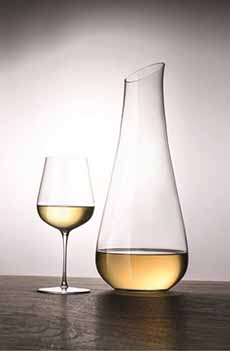
    It’s not a wine that gets much attention in the U.S. Furmint (FUR-mint) is important enough that the world’s best wineglass maker, Riedel, has designed a glass for it (photos #9 and #10).

    Before we go further, a bottle of Furmint and a set of glasses would make a welcome gift for a wine connoisseur (by which we mean students of wine as well as experts).

    An overview of Furmint (FUR-mint) follows. Also below:

    > The history of Furmint.

    > The year’s 40+ white wine holidays.

    > The white wine varietals.

    Also on TheNibble.com:

    > All the red wine holidays.
     
     
    AN INTRODUCTION TO FURMINT

    From Hungary’s Tokaj region, Furmint is a white grape variety most famously known for its role in producing the prized Tokaji Aszú† (TOE-ky ah-ZU) sweet wines from the region. Nobles from all over Europe became fans, with King Louis XIV of France calling it the wine of kings.

    Its high acidity and sugar content make the grape perfect for sweet wine production. It’s also thin-skinned and susceptible to the noble rot†, the mold Botrytis cinerea (photo #7).

    Botrytis cinerea attacks the grapes and sucks out moisture, which concentrates the grape’s sugars and flavors into a honeylike sweetness and complexity.

    Botrytised wines are the apex of sweet wine production, sought after by many for their lush, rich, intense sweetness.

    Tokaji Aszú is one of the most famous dessert wines in the world. Like Sauternes, the botrytis brings out complex flavors of honey and apricot; and in the case of Tokaji Aszú, Furmint’s intense minerality as well.

    Thus, while traditionally associated with sweet wines, many Hungarian winemakers now produce excellent dry Furmint wines. Food-friendly and refreshing, with high acidity and high minerality, wine aficionados now have the chance to discover dry Furmint.

    While our focus here is dry Furmint, let’s start by defining the different types of Furmint wines.
     
     
    Four Styles Of Furmint Wines

  • Dry Furmint: These wines are crisp, with high acidity and minerality—like Chablis but with even more acidity. Their minerality is different from Chablis also, often described as having a smoky, flinty quality from the volcanic soils of the Tokaj region, while Chablis has a distinctive “chalk and seashell” minerality from limestone soil that’s rich in clay and marine fossils.
  • Food Pairings: Lighter fruit desserts, blue cheese, foie gras, or as an aperitif. Their fruit gives notes of citrus, green apple, and pear. There are more detailed pairings in the next section.
  • Sparkling Furmint: The sparklers are made in mostly dry (brut) style, although some may have a touch of residual sugar. Winemakers often use the méthode traditionnelle of Champagne. A bubbly version of dry Furmint, they are crisp and refreshing. Enjoy them as an apéritif, and with seafood, fried dishes, and soft cheeses.
  • Food Pairings: As with other sparkling wines: caviar, fresh goat cheese, double-cremes and triple-cremes; shellfish (lobster, oysters, scallops, shrimp); sushi and sashimi, smoked fish.
  • Late Harvest Furmint: This is a sweeter style of Furmint, but lighter than and not nearly as intense as Tokaji Aszú. The grapes are overripe since they are harvested later and there may be a slight amount of botrytis. Its vibrant acidity balances the sweetness.
  • Food Pairings: The pairings are the same as for sweet Furmint and Tokaji Aszú. See them in the footnote†.
  • Sweet Furmint: These are sweet wines made from Furmint, but not necessarily in the manner of Tokaji Aszú. The latter is a specific type of sweet wine made under strict regulations. In other words, while all Tokaji Aszú is made from sweet Furmint, not all sweet Furmint wines are Tokaji Aszú. While the latter are often 60-80% Furmint, winemakers blend in other grapes for added complexity. See the footnote††.
  • Food Pairings: The pairings are the same as for sweet Furmint and Tokaji Aszú. See them in the footnote†.
    These sweet wines are glorious and worth the splurge with the right foods.
  •  
     
    PAIRING DRY FURMINT & FOOD

    The key to pairing food with dry Furmint is to work with its high acidity and complex mineral character. That’s pretty easy with everyday favorites such as:

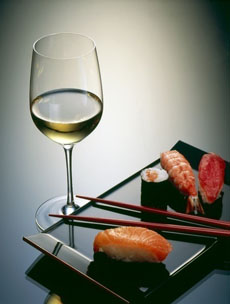
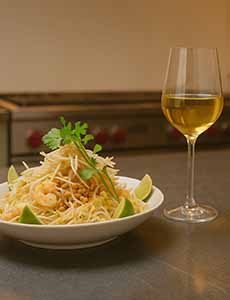
  • Asian foods: from sushi/sashimi and stir fries to the spicier fare of China, India, and Thailand.
  • Comfort foods: mac and cheese, turkey burgers/cheeseburgers, cheese fondue or other melt.
  • Fried foods: fried chicken, French fries, fish and chips.
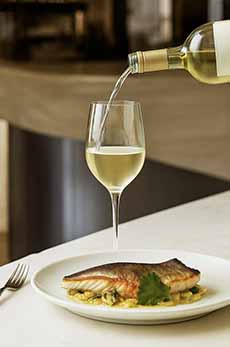
  • Grilled and roasted foods: chicken, fish, seafood, veggies.
  • Other favorites: barbecue (with a tangy rather than sweet sauce), Buffalo wings.
  • Pasta: aglio e olio, cacio e pepe, linguine with clam sauce, pasta primavera, pesto—basically, anything not in a red sauce or a cream sauce (like Fettuccine Alfredo).
  • Pizza: arugula, clam/seafood, Margherita, mushroom/truffle, white pizza.
  • Pork: chops or roasts, particularly when prepared with apples or other fruit
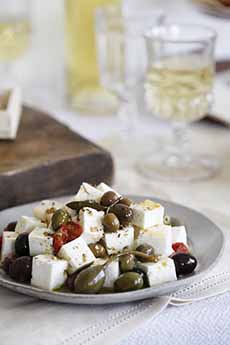
  • Vegetarian dishes: avocado toast, salads (especially with cheese like Caesar, Caprese, Cobb, and goat cheese.
  •  
     
    THE HISTORY OF FURMINT WINE

    A wild grape native to Hungary, Furmint has been cultivated in the Tokaj-Hegyalja wine region for centuries, with documented mentions dating back to the 16th century, during tumultuous period of the Ottoman occupation (1541 to 1699 C.E.).

    Ampelographers** believe that it is highly probable that the grape originated there.

    Furmint’s use in Tokaji dessert wines has its first known reference 1635, describing a full-bodied sweet dessert wine made from late-ripened grapes affected by Botrytis cinerea (noble rot).

    Although it was still a dangerous frontier zone exposed to frequent raids, during the Ottoman occupation the Tokaj wine region remained unoccupied and became a sanctuary for wine production and cultural preservation.
     
     
    The Wine Of Kings

    Tokaji Aszú, the sweet wine made from Furmint, gained international acclaim quickly. In the 17th century, it was known as the “wine of kings, king of wines,” a phrase famously attributed to King Louis XIV of France, a lover of Tokaji wines.

    This reputation spread across European royal courts, making it a prestigious quaff among nobility.

    The unique wine-making process involved hand-picking individual botrytized grapes from the cluster, a labor-intensive method that made the wine extremely expensive and rare (not all grapes in a cluster would get botrytis).

    In 1737, the Tokaj wine region became the world’s first classified wine region, predating the Port wine region (Douro Valley, Portugal) in 1756. The famed classification of Bordeaux did not happen until 1855.

    The sweet wine was well established by the late 18th century when, in 1796, the Hungarian politician János Dercsényi described Furmint as the “genuine Tokaji Aszú” grape [source].

    During the Austro-Hungarian Empire (1867 to 1918), Tokaji wines became known as a national treasure and were often used as diplomatic gifts

    The phylloxera epidemic that began in 1863 and lasted for decades nearly destroyed Hungarian vineyards (as well as those in other parts of Europe, Australia, South Africa, and California, as the insect spread).

    The recovery was slow, and wine production in Europe was further disrupted by the two World Wars and communist era.

    While Tokai was produced then, quality was often sacrificed.

    After the fall of communism in 1989, Hungarian winemakers began reviving traditional Furmint production techniques. They started focusing on both the traditional sweet styles and exploring dry Furmint wines, which have gained significant international recognition in recent years.
     
     
    The Emergence Of Dry Furmint Wines

    While Hungary has been producing dry Furmint wines for centuries, it was in small quantities for local consumption. The main focus was where the money was: in the world-famous Tokaji Aszú.

    Dry furmint became widely recognized and commercially significant only recently, in the late 20th and early 21st centuries.

    In the 1990s, after the fall of communism, Hungarian winemakers began experimenting more with dry Furmint, influenced by international demand for food-friendly dry white wines.

    By the early 2000s, top producers like István Szepsy (Szepsy Winery), Disznókő, and Királyudvar began making high-quality dry Furmint wines, proving its potential beyond sweet wines.

    Since then, Tokaj and other regions have developed crisp, mineral-driven dry Furmints, gaining international recognition.

    Dry Furmint is now considered one of Hungary’s flagship white wines, enjoyed both domestically and internationally, with styles ranging from fresh and citrusy to rich and oak-aged.

    They have caught the eye of winemakers in other countries. Plantings appeared in the neighboring countries of Austria and Slovenia.

    There are small plantings in California, Australia, and South Africa as small winemakers experiment with what the grape might do in their regions—where the climate is very different from southern Hungary’s.
     
     
    The Name “Furmint”

    The origin or etymology of “furmint” is not entirely certain, but here are the leading theories—for which there is no evidence:

  • The “Froment” (Wheat) Theory: Some believe that furmint may derive from the French word “froment,” meaning wheat and referring to the grape’s yellowish, wheat-like color when ripe. However, there is no historical link between furmint and French viticulture.
  • Central European Roots: Some believe the name originated in a local or regional dialect††. But again, no definitive evidence, nor is there a connection to any Austrian or German words related to winemaking.
  •  
    The truth is out there…somewhere.


    Furmint White Wine
    [1] A dry Furmint from István Szepsy’s Szepsy Pince (cellar or winery). One of the greatest winemakers in the history of Hungary, Szepsy was instrumental in reviving Tokaj’s reputation post-communism. He was one of the first to refocus on making high-quality dry Furmint wines in addition to the traditional sweet wines. The Szepsy family has been making wine in Tokaj since the late 16th century (photo © 9 Elms Wines).

    Furmint White Wine
    [2] The first records of Disznókő vineyards, one of the most renowned wineries in Tokaj, date back to 1413. By the 18th century, the estate was recognized as a premier Tokaji vineyard. Its modern revival began in 1992, when it was acquired by the French company AXA Millésimes, a wine investment group that restored the winery, modernizing production (photo © Disznoko).

    Furmint Late Harvest Wine
    [3] See the difference in color between the dry Furmint above and this late harvest Furmint, the result of the concentration of sugar and aging (photos #3, #4, #6, and #7 © Disznoko Tokaj | Facebook.

    Glasses Of Sparkling Furmint
    [4] Sparkling Furmint.

    Bottle Of Tokai Wine
    [5] Tokaji Aszú, the king of wines or wine of kings (photo Best Of Hungary).

    Furmint Grapes
    [6] A cluster of furmint grapes, just snipped from the vine.

    Botrytised Grapes
    [7] Grapes attacked by Botrytis cinerea mold dry out like raisins. This concentrates the flavor.

    Vizsla Furmint Wine
    [8] This dry Furmint celebrates the beloved Hungarian Vizsla, one of whom was evidently an army officer. It’s inexpensive and the label makes it a best-seller Here’s more about the wine (photo © Vivino).

    Glass Of Furmint Wine
    [9] The world’s first Furmint glass was designed by the world’s leading wine glass maker, Riedel (photos #8 and #9 © Furmint Glass).

    Furmint Glasses
    [10] Gift a box of two Furmint glasses along with a bottle of furmint.


    A YEAR OF 40+ WHITE WINE HOLIDAYS 

    January 

  • January 10: Champagne And French Fries Day
  •  
     
    February 

  • February: Furmint February
  • February 1st: National Furmint Day
  • February 18th: National/Global Drink Wine Day
  • Last Saturday in February: Open That Bottle Night
  •  
     
    March 

  • March 3rd: National Mulled Wine Day
  • March 13th: National/International Riesling Day
  • March 21: World Vermouth Day
  •  
     
    April 

  • Last Friday in April: National Viognier Day
  •  
     
    May 

  • Aussie Wine Month
  • First Friday in May: International Sauvignon Blanc Day
  • May 9th: National/World Moscato Day
  • May 16th: International Ezerjó Day
  • Thursday Before Memorial Day: National/International Chardonnay Day
  • May 25th: National Wine Day
  •  
     
    June 

  • June, Second Week: National Prosecco Week
  • June, Second Thursday: World Verdejo Day
  • June, Second Saturday: International Drink Chenin Blanc Day
  • June 13th: National Rosé Day (alternately celebrated the Fourth Friday in June)
  • June 20th: Drink Chenin Blanc Day (the grape in Vouvray and Quarts de Chaume)
  • June, 3rd Saturday: English Wine Week Begins
  • June, 4th Friday: International Rosé Day
  •  

    July

  • July, First Week: Sparkling Wine Week
  • July 3: American Sparkling Wine Day
  • July 12: International Cava Day
  • July 25th: National Wine and Cheese Day
  •  
     
    August

  • August 1: Old Vine Day
  • August 1st: International Albariño Day
  • August, First Week: Albariño Week
  • August 4th: National White Wine Day
  •  
     
    September

  • September 1st: International Cap Classique Day
  • September 9th: International Box Wine Day
  •  
     
    October

  • October 6th: National Orange Wine Day
  • October 7th: Mexican Wine Day
  • October, 2nd Full Week: Drink Local Wine Week
  • October 22nd: Austrian Sekt Day
  • October, Fourth Friday: National Champagne Day‡
  •  
     
    December

  • December 5th: Prohibition Repeal Day
  • December 10th: International Tokaji Aszú Day
  • December 16th: International Pinot Meunier Day
  • December 20th: National Sangria Day
  • December 31st: Champagne Day (New Year’s Eve‡)
  •  
     
    Plus 3 Rosé Holidays

  • February 5th: National Rosé Day in Australia and New Zealand
  • June, 2nd Saturday: National Rosé Day***
  • June, 4th Friday: National Rosé Day***
  • July: Dry July
  •  

    WHITE WINE VARIETALS TYPICALLY AVAILABLE IN THE U.S.
  • Albariño
  • Aligoté
  • Alvarinho (Vinho Verde)
  • Chenin Blanc
  • Colombard
  • Fumé Blanc
  • Furmint
  • Gewürztraminer
  • Grüner Veltliner
  • Malvasia
  • Marsanne
  • Moscato
  • Müller-Thurgau
  • Muscadelle
  • Muscadet
  • Muscat
  • Pinot Blanc
  • Pinot Gris/Pinot Grigio
  • Riesling
  • Sauvignon Blanc
  • Sémillon
  • Seyval Blanc
  • Silvanio
  • Trebbiano
  • Verdicchio
  • Viognier
  • Vouvray
  • ________________
     
    *Furmint is capitalized because it is named after a grape variety, not a geographic location. This is in line with the style guidelines followed by the Associated Press and The New York Times. Wines that are not named after the type of grape are not capitalized, such as rosé and sherry.

    **Ampelography is the science of identifying, naming and classifying cultivated grape varieties through detailed analysis of the unique characteristics of the plant.

    ***There are three rosé holidays. JThe second Saturday in June holiday was founded in 2014 by Bodvár House of Rosés, a Swedish brand, as a U.S.-focused promotional holiday. The fourth Friday in June, International Rosé Day, was established in 2018 by the Provence wine region in France, which is essentially the global home of rosé.

    Tokaji Aszú is a sweet dessert wine made primarily from botrytized grapes. Botrytis, a fungus, leaches moisture from the grapes, drying them out, which concentrates the sugars and flavors (photo #7). Hence the nickname, noble rot. Aszú means “dried.” Note that while botrytis is often referred to as “gray mold,” mold is a type of fungus. While the mold first appeared spontaneously in warm, humid conditions, winemakers can now use techniques to encourage its growth.

    When pairing foods with Aszú,the rich, lusciously sweet, high-acid wine making is a versatile pairing wine that works well with sweet, salty, spicy, and umami-rich dishes.
    >Cheese Pairings: blue cheeses (Roquefort, Stilton, Gorgonzola), aged Cheddar or Comté, goat cheese.
    >Savory Pairings: foie gras, duck à l’orange, honey-glazed ham, roast pork with apples, spicy Asian cuisine (Indian, Szechuan, Thai).
    >Dessert Pairings: fruit tarts (apple, apricot, peach, pear), crème brûlée, nut or spice cakes (gingerbread, hazelnut, walnut).
    >Snacks: dark chocolate with sea salt, dried fruits and nuts (almond, apricots, figs, walnuts), (Figs, Apricots, Almonds, Walnuts) – A simple yet elegant match.

    ††The other Hungarian grapes that can be used in a Tokaji blend, hárslevelű and sárga muskotály for added complexity, zéta and kövérszőlő for aroma, and kabar for richness and depth.

    There are two Champagne Days. The first, celebrated on the fourth Friday of October, was created in 2009 by Chris Oggenfuss, a California wine educator. The second, on New Year’s Eve, grew organically.

    ‡‡Cap Classique is a term used in South Africa for méthode traditionelle sparkling wine production. This is the same technique used in Champagne, a labor-intensive process where wine undergoes a secondary fermentation inside the bottle, creating the bubbles.


    CHECK OUT WHAT’S HAPPENING ON OUR HOME PAGE, THENIBBLE.COM.


    Comments off

    The Nibble Webzine Of Food Adventures


    © Copyright 2005-2026 Lifestyle Direct, Inc. All rights reserved. All images are copyrighted to their respective owners.