THE NIBBLE BLOG: Products, Recipes & Trends In Specialty Foods


Also visit our main website, TheNibble.com.

Peanut Butter & Jelly Ice Pops Recipe For Grape Popsicle Day

We’d like to add some excitement to National Grape Popsicle Day, May 27th. How about this recipe for Peanut Butter & Jelly Ice Pops?

(Note: Popsicle® is a trademarked term of Unilelever. Everything else is an ice pop. Creamsicle®, Fudgsicle® and any other -sicle® suffix are covered by the Trademark.)

In this three-layer pop, the peanut butter and jelly layers are joined by a layer of peanut butter chocolate—although if you want, you can do two layers of regular PB and one of jelly instead.

And while the original recipe creates the yogurt-jelly layer with raspberries, you can use grapes (or any other mashable fruit, from other berries to bananas).

> The history of ice cream.

> The invention of ice pops.

> The different types of frozen desserts: a photo glossary.

> The year’s ice cream holidays.

> The history of peanut butter.

> The history of jelly.
 
 
RECIPE: 3-LAYER PEANUT BUTTER & JELLY ICE POPS

Thanks to Peanut Butter & Co. for this delicious recipe.

Prep time is 15 minutes plus freeze time.

You’ll need:

  • An ice pop mold that can be filled from the top
  • Or, paper cups plus ice pop sticks
  •  
    Ingredients For 6 Ice Pops

  • 1/2 cup Peanut Butter & Co. Smooth Operator (or substitute)
  • 1/2 cup Peanut Butter & Co. Dark Chocolatey Dreams (or substitute)
  • 1 tablespoon cocoa powder
  • 1/2 cup plain or vanilla Greek yogurt, divided
  • 1 pint fresh raspberries, washed and patted dry
  •  
    Preparation

    1. PLACE the raspberries in a small bowl and smash with a fork until they resemble jam. Set aside.

    2. COMBINE 1/4 cup of Greek yogurt and the smooth peanut butter in a small bowl. Set aside. In another bowl…

    3. COMBINE combine the remaining 1/4 cup of Greek yogurt, the chocolate peanut butter, and the cocoa powder. Set aside.

    4. POUR the smashed raspberries into the ice pop mold, filling each cavity 1/3 of the way. Freeze for one hour.

    5. REMOVE the mold from the freezer and pour in equal amounts of the smooth peanut butter/yogurt mixture on top of the raspberry layer, filling each cavity so that 1/3 of the space still remains. Freeze for one hour. 

    6. REPEAT with the chocolate peanut butter mixture. If your molds do not include tops with sticks, place a stick into each pop.

    7. FREEZE overnight for best results, although they may be ready in 1-2 hours.


    Peanut Butter & Jelly Ice Pop
    [2] Yummy, yummy: Peanut butter, jelly, and chocolate in one ice pop (all photos © Peanut Butter & Co.).

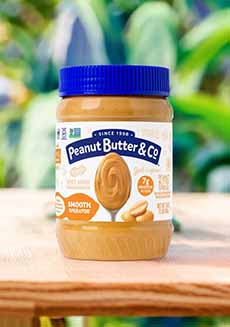
    Smooth Operator Peanut Butter
    [2] One of so many great flavors, Smooth Operator is the classic creamy PB.

    Jar Of Chocolate Peanut Butter
    [3] Chocolate peanut butter creates the bottom layer.

     
    Peanut Butter & Jelly Ice Cream Pops
    [4] Have an ice pop party!


    CHECK OUT WHAT’S HAPPENING ON OUR HOME PAGE, THENIBBLE.COM.


    Comments off

    Easy Edamame Recipe, Great Nutrition, & More

    A Bowl Of Spiced Edamame
    [1] These edamame are better than the ones at Japanese restaurants! Deft spicing makes the super-delish (recipe and photo © Hannah Kamkinsky | Bittersweet Blog).

    Rice With Edamame
    [2] We came across this side and it’s become a favorite. Here’s the recipe. You can make it with white rice, but brown rice delivers a better symphony of flavors. For a main course, top with chirashi or grilled fish (photo © Onolicious Hawaii).

    Bag Of Frozen Edamame
    [3] Edamame has become so popular, you can find it in most frozen food aisles (photos #3, #9, and #11 © Seapoint Farms).

    A Can Of Toasted Sesame Oil
    [4] We’re a big fan of La Tourangelle oils, but you can find a less expensive bottle from Whole Foods’ 365 Brand. Be sure you get toasted* sesame oil (photo © ChefShop).

    A Jar Of Shichimi Togarashi
    [5] While the exact ingredients can vary, shichimi togarashi, Japanese Seven Spice, typically includes red chile pepper, sansho pepper (Japanese chile pepper), sesame seeds, orange peel, ginger, nori (dried seaweed), and poppy seeds. You can blend your own with this recipe (photo © Oaktown Spice Shop).

    A Jar Of Shiitake Mushroom Powder
    [6] You can find shiitake powder at health food stores or online (photo © Orgfun | Amazon).

    Inari Sushi
    [7] You’ve heard of three-bean salad; this is three-bean inari sushi. The deep-fried tofu pouches (abura-age) are simmered in a sweet and savory broth, then stuffed with kidney beans, edamame, and great northern beans (photo © Eiliv Aceron | Pexels).

    Edamame - Soybeans On Bush
    [8] Edamame (soybeans) growing on the bush (photo © Dipak Shelare |YAYMicro | Panther Media).

    Green Salad With Edamame
    [9] Add edamame to your daily salad, be it green or tuna (photo © Vo Thuy Tien | Pexels).

    Grilled Salmon Salad
    [10] Top a bowl of greens with salmon, chicken, and the colors of the rainbow.


    Edamame (ay-dah-MOM-may)—young, green soybeans harvested before they fully mature (photo #7)—has a long history rooted in East Asian agriculture and cuisine, particularly in Japan, China, and Korea.

    In addition to their appearance in Asian restaurants in the U.S., they have become a fusion food.

  • Enjoy them in a mixed salad, stirred into grains (photo #2), as a snack with a cold beer (photo #1).
  • Add them to casseroles, soups, and pasta dishes.
  • Substitute them any place you’d normally use a pop of color from green peas—from potato salad to sautéed mushrooms.
  •  
    The recipe follows. Below you’ll find:

    > The history of edamame.

    > Why soybeans are a nutritional powerhouse.

    > The year’s bean holidays.

    > Head to the different types of beans: a photo glossary.

    > Here’s how to eat edamame (YouTube).
     
     
    RECIPE: SPICED EDAMAME

    Thanks to Hannah Kaminsky of Bittersweet Blog, whose recipe inspired this article.

    If you’re purchasing the Japanese ingredients for the first time, you’ll find many uses for them.
     
    Ingredients

  • 1 pound frozen edamame in pods (photo #3)
  • 2 teaspoons toasted sesame oil (photo #4)
  • 1-2 teaspoons shichimi togarashi (Japanese 7-spice, photo #5)
  • 1 teaspoon shiitake mushroom powder (photo #6)
  • 1/2-1 teaspoon coarse or flaky Salt
  •  
    Preparation

    1. BOIL the edamame in plenty of water for 4-5 minutes until tender. Drain thoroughly.

    2. TOSS with the sesame oil, shichimi togararshi, shiitake powder, and salt.

    3. ADJUST the seasonings to taste. We’ve enjoyed them at all temperatures: hot, room temperature, and chilled.

    Variation:

    4. TOSS the edamame into the air fryer for 8 minutes at 400°F until lightly charred around the edges. This extra step really takes the edamame to the next level!
     
     
    THE HISTORY OF EDAMAME

    Soybeans have been cultivated in China for more than 5,000 years. While they were and are primarily for their fully mature, dried form to make products like tofu and soy sauce, edamame, the immature green soyeans, likely originated as a seasonal, fresh preparation.

    And likely in Japan: References to eating green soybeans are sparse in ancient Chinese texts.

    The word edamame is Japanese. It translates to “stem beans”—the pods were traditionally boiled while still attached to the stem for easier handling and storage. (In English usage, the word is both singular and plural [like sushi]).

    Soybean cultivation in Japan is believed to have begun around the early Yayoi period, approximately 300 B.C.E. to 300 C.E. Yet, many centuries pass by before we hear of edamame.
     
    Edamame Appears In The Food Record

  • 13th Century: The earliest written reference to edamame in Japan dates to 1275 C.E., when the Buddhist monk NichiRen thanked a parishioner in a letter for offering edamame at a temple.
  • 17th Century: In Japan’s Edo-period (1603–1868), edamame became a common street food, sold on skewers. At home, it was boiled and served warm.
  • Late 19th/Early 20th Century: Edamame became a standard Japanese pub (izakaya) snack, enjoyed with a chilled beer.
  • Late 20th Century: As health food movements grew in the West, edamame spread beyond Asia. In the U.S.† it was valued for its nutritional value—high in protein, fiber, and essential amino acids.
  • Japanese restaurants gained popularity in the U.S. starting in the 1960s, with sushi gaining traction in the 1970s, and full integration into mainstream American dining by the 1980s–1990s.
  • Late 20th/Early 20th Century: By the 1990s and 2000s, frozen edamame became a supermarket staple in North America.
  • Crunchy freeze-dried shelf-stable versions appeared, marketed as a plant-based, low-carb snack. (They’re a great general garnish, and you can re-hydrate them for soups and salads.)
  • There are also vacuum pouches of pre-cooked, ready-to-eat soft, moist, beans to steamed edamame.
  •  
     
    Tofu Poke Bowl
    [11] Whether a green salad, grain bowl, or poke bowl, edamame adds lots of nutrition and bright color.

    NUTRITION: EDAMAME ARE GOOD FOR YOU!

    Edamame (young, green soybeans) are not only delicious and versatile—they’re also highly nutritious. They’re:

  • Nutrient dense: The food is highly nutritious relative to the number of calories in a given food.
  • High-quality plant protein and a complete protein, containing all nine essential amino acids. A cup of cooked edamame contains 18 grams of protein and 190 to 200 calories per cup of cooked, shelled beans.
  • Fiber-rich: 1 cup provides 8 grams of fiber—more than many other legumes—and helps promote digestion, regulate blood sugar, and support heart health.
  • Heart healthy: They’re packed with omega-3 fatty acids and isoflavones that may help lower LDL (“bad”) cholesterol, improve artery function, and reduce inflammation.
  • A good source of isoflavones (phytoestrogens), plant compounds that mimic estrogen in the body. They may alleviate hot flashes, support bone health, and reduce risk of hormone-related cancers.
  • Loaded with micronutrients: folate for cell division and fetal development, vitamin K for bone and heart health, iron for red blood cell production, magnesium and potassium for muscle and nerve function.
  • Supportive of brain health: Choline and omega-3 fatscontribute to memory and cognitive function, and even…
  • Aids in weight management: The high levels of protein and fiber increase satiety.
  •  
     
    A YEAR OF BEAN HOLIDAYS

  • January: National Bean Month
  • January 6: Dry Bean Day
  • January 9: National Cassoulet Day
  • April: National Soy Foods Month
  • April 20: Lima Bean Respect Day
  • July: National Baked Bean Month
  • July 3: National Eat Beans Day (or National Eat Your Beans Day)
  • July 13: Beans ‘n’ Franks Day
  • July 26: World Tofu Day
  • October: National Chili Month
  • October, 1st Week: National Chili Week
  • October 21: Garbanzo Bean (Chickpea) Day
  • December 3: National Green Bean Casserole Day
  •  
    Plus:
     

  • April 22: National Jelly Bean Day
  • April 26: National Bean Counter Day
  • July 31: National Jump For Jelly Beans Day
  • August 22: Never Bean Better Day‡
  • October 1: World Vegetarian Day
  • November 1: World Vegan Day
  •  
     
    ________________
     
    *Toasted sesame oil is made from roasted seeds, and has a richer, nutty flavor and a darker color than regular sesame oil, made from raw seeds. Toasted sesame oil has a lovely aroma and is used primarily as a finishing oil or for adding flavor to sauces and dressings (we like to use 2/3 EVOO and 1/3 toasted sesame oil in a vinaigrette). Regular sesame oil has a neutral flavor and a higher smoke point, making it useful for general cooking and frying.

    The history of Japanese cuisine in the U.S. moved outside of Japanese-American enclaves and into the mainstream in the 1950s, with interest from returning American servicemen who had been stationed in Japan. Teppanyaki, exemplified by Benihana, founded in 1964 in New York City, introduced theatrical cooking to Americans. Other restaurants opened introducing sukiyaki and tempura.

    In the 1960s and 1970s, sushi bars began to appear in major U.S. cities. Sushi gained popularity among foodies, and the rise of health-conscious eating of more fish attracted others.

    In 1971 Nissin Foods introduced packaged ramen to the U.S. market, and by the late 1970s, the inexpensive and filling instant ramen had become a staple food among students.

    In the 1980s–1990s, sushi restaurants and Japanese fast-casual dining grew rapidly, expanding beyond cities to suburbs, shopping malls, and airports. Dishes like teriyaki, miso soup, and udon noodles became mainstream.

    In the 2000s, grab-and-go sushi began to appear in supermarkets, and authentic ramen shops began opening in major U.S. cities. Poke bowls, sashimi-inspired but created in Hawaii, appeared, as did ice cream mochi, invented in California as an Americanization of the Japanese rice dough sweet.

    Social media brought us sushi burritos and ramen burgers)Japanese fare is now a staple in America, at prices from fast food to high-end omakase sushi experiences costing several hundred dollars.

    ‡This has nothing to do with beans. The holiday was named for a hospital therapy dog named Bean, and celebrates all canine colleagues who give us a lift.


    CHECK OUT WHAT’S HAPPENING ON OUR HOME PAGE, THENIBBLE.COM.


    Comments off

    Vinho Verde For National Wine Day, A Light, Refreshing White

    May 25th is National Wine Day: a day to try something new. Have you had Vinho Verde lately (pronounced VEEN-yo VAIR-day, Portuguese for green wine, i.e. young wine)?

    A green wine is one released from three to six months after the grapes are harvested. They may be red, white or rosé, and they are usually consumed soon after bottling.

    These wines are meant to be enjoyed young, typically within two to three years of the vintage date. Unlike many wines that improve with age, these fresh, vibrant wines will not.

    The wine doesn’t have a green tint; “green” is an industry term that refers to a wine’s youthful, fresh character.

    It’s a summer standard—great for the outdoors, from patio to pool to picnic. It’s a perfect sipping wine and apéritif.

    Just remember that it needs to be served well-chilled, ideally between 45°F-50°F. The crispness and gentle effervescence becomes more pronounced at lower temperatures.

    > The history of Vinho Verde is below.

    > So are food pairings.

    > The year’s red wine holidays.

    > The year’s white wine holidays.
     
     
    WHAT IS VINHO VERDE?

    Vinho Verde comes from the Minho region in northwestern Portugal, a lush, mountainous area known for its abundant rainfall and granite soils.

    In fact, the Vinho Verde D.O.C. (Controlled Denomination of Origin) is Portugal’s largest wine region (photos #9 and #10).

    This terroir produces light, crisp wines with naturally high acidity and lower alcohol content—typically ranging from 8.5% to 11.5%, compared to the 12%-15% found in most other wines.

    The white wines are a pale straw color with bright acidity, subtle fruit flavors, and often a subtle effervescence that’s more of a light tickle on the tongue than the pronounced bubbles you’d find in sparkling wines (some producers do make fully sparkling wines).

    The slight tickle is called frizzante, and it’s from residual carbon dioxide retained from fermentation. It gives the wine a lively character.

    The white Vinho Verde wines are made from indigenous Portuguese grape varieties including Alvarinho, Loureiro, Trajadura, Arinto, and Azal. Many producers create blends using several of these grapes.

    And the prices are great!

    Entry level wines ($8-$12), which are widely available in the U.S., include brands like Casal Garcia, Gazela, and basic Aveleda bottlings. Despite the low prices, quality is generally reliable since the D.O.C. regulations require standards to be maintained.

    Mid-range wines ($12-$18) include premium bottlings from established producers like Quinta da Aveleda’s reserve wines, better Broadbent selections, and some single-estate wines. They deliver more complexity and concentration.

    Premium-range wines ($18-$30) showcase single-varietal Alvarinho wines instead of blends. These wines deliver greater depth, structure, and aging potential—Vinho Verde at its highest level. Look for producers like Anselmo Mendes, and Quinta de Santiago, and Quinta do Soalheiro.

    Ultra-premium wines ($30-$60) are Alvarinho wines from renowned producers or special vineyards. Often from old vines or exceptional vintages, these bottles are in limited supply. If you see one, grab it and let it age to experience the region’s ability to produce serious contenders that maintain their essential character.
     
    Red Vinho Verde

    It’s easy to think of red Vinho Verde as a new style, but red wines were actually produced in the region long before the whites. In fact, red grapes dominated the region from the beginning of Vinho Verde production.

    In medieval times, the region’s farmers primarily grew red grape varieties like Borraçal, Espadeiro, and Vinhão. These wines were the everyday table wines for local consumption—light, acidic, and meant to be drunk young with simple meals.

    The shift toward white Vinho Verde began in the mid-20th century as export markets developed. International consumers had greater interest in crisp white wines, leading many producers to replant their vineyards with white grape varieties.

    Today, red Vinho Verde is somewhat of a specialty product, readily available within Portugal but limited in export.
    International availability is much more limited.

    Brands like Aphros, Aveleda and Quinta da Raza appear sporadically. Red Vinho Verde is lighter than most red wines and not as universally appealing as the white versions.
     
    Other Green Wines

    Green and green-style wines from other areas include:

  • France: Muscadet from the Loire Valley.
  • Germany: Kabinett Riesling from the Mosel.
  • Italy: Frascati from Lazio.
  • Italy:Vermentino from Liguria and Sardinia.
  • Spain: Txakoli (chah-ko-LEE) from the Basque region.
  •  
    What all green wines have in common is their emphasis on freshness over power, food compatibility over standalone complexity, and immediate drinking pleasure over aging potential.
     
     
    crostini with ricotta and peaches
    [11] For casual sipping, serve fruit, seafood, or vegetable crostini with Vinho Verde. Here, fresh peach slices top ricotta (photo © Good Eggs).
     
     
    VINHO VERDE & FOOD PAIRINGS

    Vinho Verde’s crisp acidity and light body make it very food-friendly.

  • The wine’s natural acidity cuts through rich foods.
  • subtle fruit flavors enhance lighter fare.
  •  
    In addition to Portuguese fare, pour a glass with American favorites:

    Seafood Pairings

  • Anything grilled, from swordfish to sardines.
  • Anything raw: ceviche, clams and oysters on the half shell, poke, sushi/sashimi, tiradito.
  • Fritters: crab cakes, salmon cakes, salt cod fritters.
  • Seafood salads: octopus salad, salmon/salmon Caesar.
  • Smoked fish: particularly salmon or trout.
  •  
    Summer Salad Pairings
    Put citrus, herbs, or mild cheeses in your salad, such as:

  • Arugula salad with lemon vinaigrette.
  • Caprese salad with fresh basil.
  • Escabeche.
  • Niçoise salad.
  • Shrimp Louie.
  • Thai salads (glass noodle salad, green papaya salad, spicy shrimp salad); Vietnamese grilled shrimp vermicelli salad.
  •  
    Appetizer/First Course Pairings

  • Bruschetta.
  • Gazpacho.
  • Vietnamese spring rolls.
  •  
    Cheese Pairings

    Vinho Verde is an ideal pairing with fresh, mild varieties like burrata, goat cheese, mozzarella, and ricotta.

    The wine’s acidity complements the milky flavors and creamy textures without overwhelming their delicate freshness.
     
     
    THE HISTORY OF VINHO VERDE

    The origins of wine in the region date to the Roman era, when vineyards were first established in this verdant area between the Minho and Douro rivers.

    However, the distinctive wine-making style we recognize as Vinho Verde began to emerge during the medieval period.

    By the 12th century, local farmers had adapted their viticulture to the region’s unique climate and topography, learning to work with the terroir: the granite soil, abundant rainfall, the cool breezes from the Atlantic Ocean, and so forth.

    The wine’s naturally high acidity and lower alcohol content made it ideal for daily consumption by working people, and wouldn’t impair farm laborers during their workday. (Remember that beer and wine were drunk because water sources were often contaminated.)
     
     
    Vinho Verde In The 20th Century

    The 20th century brought significant changes that made improvements in the wine.

  • Traditional grape varieties like Azal and Pedernã gradually gave way to higher-quality varieties like Alvarinho and Loureiro.
  • Modern winemaking techniques replaced rustic methods. The wine’s original slight effervescence—a byproduct of incomplete fermentation—became a deliberately choice.
  •  
    In 1908, the Minho region (image #9) was legally demarcated, making it one of Portugal’s first officially defined wine regions.

    The Comissão de Viticultura da Região dos Vinhos Verdes was created in 1949 to oversee quality and authenticity. Vinho Verde became a protected designation of origin (denominação de origem controlada, or D.O.C.) in 1984.

    The wine’s international reputation grew significantly in the latter half of the 20th century, particularly as global wine markets opened to Portuguese exports:

  • Following the 1974 Carnation Revolution military coup that toppled the Estado Novo, a fascist dictatorship, and ushered in a period of transition to democracy.
  • Subsequent admission to the E.U. in 1986.
  •  
    Today, Vinho Verde is one of Portugal’s most successful wine exports, along with Espumante, Madiera, and Port.


    Mussels & Vinho Verde
    [1] Vinho Verde, a light, refreshing white wine, is a perfect pairing with summer seafood. Here’s the recipe for these mussels in white wine sauce (photo © Eyre Peninsula Seafoods.

    A Dish Of Salmon Ceviche
    [2] Salmon crudo with Vinho Verde (photo © Bordeaux Magazine).

    Bottle Of Quinta Aveleda Vinho Verde
    [3] Quinta da Aveleda produces one of the most widely available and reliable Vinho Verdes, a classic example of the style with bright citrus notes and gentle effervescence (photos #3 an #4 © Grapes and Grains).

    A Bottle Of Casal Garcia Vinho Verde
    [4] Casal Garcia is another classic and affordable Vinho Verde. The entire category is approachable without breaking the bank.

    Bottle & Glasses Of Vinho Verde
    [5] single-varietal Alvarinho wines from producers like Quinta do Soalheiro or Anselmo Mendes showcase the complexity within Vinho Verde, offering more concentrated flavors while maintaining the style’s characteristic freshness.

    Vinho Verde & Tapas
    [6] Hop on the high-end tinned seafood trend to present a mini-buffet with Vinho Verde (photo © Foods & Wines From Spain).

    Wine & Sushi
    [7] Vinho Verde is a quality companion to sushi, sashimi, crudo, and poke (photo © Lognetic | iStock Photo).

    Chardonnay King Crab Legs
    [8] Whatever your seafood of choice, serve it with Vinho Verde (photo © The Palm | Facebook).

    Vinho Verde Region Of Portugal
    [9] The Minho region of Portugal, home to Vinho Verde D.O.C., is in the northwest portion of Portugal (photos #9 and #10 © Rimontgó Wineries).

    Close Up  Map Of The Vinho Verde Region
    [10] Close-up on the sub-regions.


    CHECK OUT WHAT’S HAPPENING ON OUR HOME PAGE, THENIBBLE.COM.


    Comments off

    Why Is Devil’s Food Cake One Of The Greatest Chocolate Cakes?

    On May 19th we celebrate National Devil’s Food Cake Day, perhaps our favorite type of chocolate layer cake.

    This tasty article shares:

    > How is Devil’s Food Cake different from other chocolate cakes?

    > The history of Devil’s Food Cake.

    > The top 12 iconic chocolate cakes from the U.S. and Europe.

    Plus, links to:

    > The history of cake and a photo glossary parade of cakes.

    > The 55 cake holidays in the U.S.A.
     
     
    WHAT MAKES DEVIL’S FOOD CAKE DIFFERENT

    A specific combination of characteristics give Devil’s Food Cake (photos #1 and #2) its specialness.

  • Chocolate intensity: Devil’s Food has a more intense chocolate flavor than other chocolate layer cakes, often achieved by using both cocoa powder and melted chocolate, or by adding coffee which enhances the chocolate flavors.
  • Moisture: It contains more fat than conventional chocolate layer cakes, usually from additional butter and/or egg yolks, which contribute to its signature moistness and richness.
  • Texture: Devil’s Food typically uses a combination of baking soda (leavening) and acidic ingredients (buttermilk, sour cream) that creates more carbon dioxide during baking. This creates a lighter texture.
  • Balance: The cake isn’t too rich. Rather, it has both airiness from the carbon dioxide and a subtle tanginess from the acidic ingredients that balance the sweetness.
  •  
    So from whence did this magnificent chocolate cake arrive? And is it related to Angel Cake?
     
     
    THE HISTORY OF DEVIL’S FOOD CAKE

    Angel Food Cake had been around for three decades when Devil’s Food Cake debuted at the turn of the 20th century. It was developed as a richer, more indulgent chocolate cake and named as a contrast to the lovely but lean Angel Food Cake.

    The contrasting names reflect their opposite characteristics.

  • Angel Food Cake is “heavenly”: light (airy), white (color), and fat-free (lean).
  • Devil’s Food Cake is “sinful”: buttery (rich), dark (color), and chocolaty (indulgent).
  •  
    The first printed reference to Devil’s Food Cake is a recipe that appeared in Mrs. Rorer’s New Cook Book, published in 1902.

    The cake was created during a time when cocoa powder was becoming more accessible to average American households, thanks to improved processing methods developed in the late 19th century (the history of cocoa powder).

    Cocoa powder imparts a more intense and concentrated chocolate flavor than chocolate, often leading to a richer and darker cake. It also influences the texture, delivering a moister and more tender crumb.

    Mrs. Rorer’s recipe used chocolate and had a less intense chocolate flavor than cocoa-powder-centric modern versions, but it established the name and concept.

    She also used boiled icing (photo #11 and footnote*), rather than the chocolate frosting and ganache that have since replaced it.

    The name itself seems to have been deliberately created (presumably by Mrs. Rorer) as a counterpoint to the already popular Angel Food Cake, which had been around since the 1870s.

    Food historians have uncovered pre-1902 recipes for chocolate cakes with similar ingredients, but they weren’t specifically called Devil’s Food Cake.

    Around the same time as the cookbook was published, Devil’s Food recipes began appearing in women’s magazines and community cookbooks across America.

    Within a couple of years (1905-1906), the cake had gained significant traction. By the 1920s, it was firmly established in the repertoire of American cakes.
     
     
    The Earliest Devil’s Food Recipes

    Original recipes often used melted chocolate rather than cocoa powder.

  • Many early versions included coffee to enhance the chocolate flavor—a technique that continues in chocolate cakes.
  • The recipes also used baking soda, activated by buttermilk or sour milk, creating a distinctive reddish hue (our mother did this, making a recipe called Red Devil’s Food Cake that frankly is a more devilish hue than cakes made without it).
  • Early recipes were less sweet than modern versions, which highlighted the complex flavors of the chocolate. With the varieties of single origin chocolate available today, chocolate connoisseurs are encouraged to try this.
  •  
     
    Devil’s Food Cake Evolves

    Over the decades, home economists at companies like General Mills and Pillsbury refined recipes to work reliably with their flours and other ingredients to generate consumer excitement.

    Betty Crocker Devil’s Food Cake Mix was introduced in 1956, helping to standardize what Americans expected Devil’s Food Cake to taste like—and making it easy to bake one any time.

    Devil’s Food became a popular birthday cake choice (it certainly was ours!), and a featured dessert at restaurants across America.

    It became a classic American dessert.
     
     
    Devil’s Food In The 21st Century

    Recipes have adapted to different dietary interests: gluten-free versions using almond flour, alternative sweeteners, plant-based egg substitutes, and alternative fats instead of butter (avocado oil, coconut oil, olive oil).

    Connoisseurs have sought more complex chocolate flavors, using single-origin cacao and higher-percentage cacaco chocolate. Some bakers add miso or tahini can for an umami hit that complements the chocolate flavor profile.

    Flavor enhancements have turned the traditional hint of coffee into pronounced espresso; or added spices (cardamom, chile, cinnamon) or finishing salt (sea salt, smoked salt).

    Alcohol has been worked into recipes, from spirits (Bourbon, rum, Tequila) to liqueur (Amaretto, Grand Marnier, Kahlúa), to red wine.

    Some replace the traditional chocolate filling with trending flavors like lavender, matcha, and salted caramel—and even mousse and black cherry (shades of Mousse Cake and Black Forest Cake!).

    Similarly, the chocolate frosting has been replaced with other flavors. (Personally, we replaced the chocolate frosting with shiny chocolate ganache or glaze a decade ago.)

    Finally, there’s the fun of added crunch. But that’s food for another article.


    THE ICONIC CHOCOLATE CAKES

    What are the must-try chocolate cakes in addition to Devil’s Food Cake?

    For this selection, the cake itself has to be chocolate, not a yellow cake with chocolate filling/icing such as Dobos(h) Torte, Opera Cake, and Smith Island Cake.

    American Classics

  • Chocolate Cheesecake: Chocolate variations of cheesecake began appearing in the 1930s, first swirls and then cocoa-infused fillings. A 1949 issue of Better Homes & Gardens contains a chocolate cheesecake recipe made with cocoa and cream cheese, baked in a graham cracker crust, like today’s popular versions (photo #3).
  • German Chocolate Cake: This is a lighter-in-flavor chocolate cake with coconut-pecan frosting (photo #4). “German” is not its origin; Baker’s German’s Sweet Chocolate was created by in Massachusetts by Sam German.
  • Mississippi Mud Cake: A rich, dense chocolate cake topped with mini marshmallows and chocolate frosting (photo #5).
  • Red Velvet Cake: Only lightly chocolate-flavored from cocoa, its distinctive red color originally came from beets (photo #6). Most recipes now use red food color. Cream cheese is the frosting of choice.
  • Texas Sheet Cake: A “short” chocolate cake baked (about 2″ high) baked in a sheet pan, it’s topped with warm poured chocolate frosting, and often garnished with pecans.
  •  
    European Classics

  • Black Forest Cake (Germany): Layers of chocolate sponge filled whipped cream dotted with Kirsch-marinated cherries, usually with a white frosting garnished with shaved chocolate and more cherries on top (photo #7).
  • Chocolate Génoise (France): This light and airy French-style sponge cake is used to create layer cakes. It’s often soaked in flavored syrups or liqueurs, and frosted with buttercream.
  • Chocolate Guinness Cake (U.K.): Popularized by British food writer Nigella Lawson, this rich, moist chocolate cake is made with Guinness stout. The beer adds moisture, depth of flavor, and a slight malty, almost coffee-like taste to the cake. It’s often frosted with cream cheese or chocolate ganache.
  • Chocolate Lava Cake (France†): Typically individual-size chocolate cakes baked in a ramekin with a molten chocolate center that “erupts” when cut into (photo #8).
  • Chocolate Mousse Cake (France): A chocolate cake layer is topped with dark, milk, and/or white chocolate mousse, delivering lots of rich chocolate flavor and the contrast of dense cake with airy mousse.
  • Chocolate Olive Oil Cake (Greek-inspired): This chocolate cake uses olive oil instead of butter, which makes it moister.
  • Flourless Chocolate Cake (Middle European): This dense, fudgy cake is made without flour, often substituting ground nuts flour (photo #9 and footnote‡). It evolved from traditional European tortes. Sachertorte (created in 1832) uses very little flour and is considered a precursor.
  • Sachertorte (Austria): This famous Viennese chocolate cake has an apricot jam filling and dark chocolate glaze (photo #10).
  •  
     
    __________

    *Boiled icing, also called boiled frosting or Italian meringue, is a cake frosting made by slowly pouring hot sugar syrup over stiffly beaten egg whites. This creates a fluffy, silky, and stable frosting (photo #11). It’s also called 7-minute frosting due to its quick preparation time.

    > Here’s the recipe.

    > The difference between frosting, icing, and glaze.

    Is lava cake American or French? It’s complicated! The cake called lava cake, molten chocolate cake, or molten lava cake was introduced to America by Jean-Georges Vongerichten, the famous French-American chef who claims to have invented it in 1987 at his New York City restaurant JoJo. He explained that he accidentally undercooked some chocolate sponge cakes, and when he cut into them, they had a liquid center. He refined his “mistake” into a wildly popular international hit.

    However, in 1981 Michel Bras, another world-famous French chef whose restaurant Laguiole in southern France has received three Michelin stars since 1999, had created a similar dessert in 1981 called coulant au chocolat (“flowing chocolate). It featured a ganache center that would melt when the cake was heated.

    Jacques Torres, the renowned French pastry chef, maintains that the lava cake is simply a new presentation of fondant au chocolat, a classic French dessert that has existed for much longer.

    Fondant au chocolat (“chocolate fondant”) dates to the 1950s or earlier. It’s a dense, moist chocolate cake with a soft, almost fudge-like interior—though not necessarily molten.

    The word fondant in French means melting or melt-in-the-mouth, but this refers to the soft texture and not a runny center.

    But outside of France, some restaurants and recipes misuse the term to describe lava cakes.

    Regardless of who deserves credit for the original invention, lava cake became extremely popular in the 1990s and early 2000s, spreading from high-end restaurants to chain restaurants and even frozen food sections of grocery stores. Today, it’s considered a classic chocolate dessert worldwide.

    As of this writing, all three chefs are still hard at work. Maybe a Zoom call to talk it out? The Nibble will be happy to moderate.

    Alternatives to flour in flourless cake: Ground nuts are most common, but otheringredients can provide the structure in flourless cakes, starting with additional chocolate (or cocoa powder) and eggs (very rich!) or whipped egg whites (for the most classic result). Small amounts of arrowroot or cornstarch can also stabilize the cake’s texture.

    Ground seeds (pumpkin, sesame, sunflower) can replace ground nuts, as can desiccated coconut or coconut flour. Chickpea flour or black bean purée create dense, fudgy textures.

    Additional options include breadcrumbs, ground dried dates or other dried fruits, ground rolled oats, and seed butters (pumpkin, sesame/tahini, sunflower).


    Devil's Food Cake
    [1] We celebrated by baking this Devil Food’s Cake recipe from Ashley, the Baker By Nature extraordinaire. We deemed it “as good as Mom’s (photos #1, #2, and #3 © Baker By Nature).

    A Slice Of Devil's Food Cake
    [2] Yes, it’s rich. Pour yourself a glass of milk!

    Slice Of Chocolate Cheesecake
    [3] Also try Ashley’s chocolate cheesecake. Here’s the recipe.

    German Chocolate Cake
    [4] German Chocolate Cake is made with a special kind of chocolate invented at Baker’s Chocolate Company by Sam German in 1852. It has more sugar than semi-sweet chocolate, and the goal was to simplify baking by providing the chocolate and sugar in one. The German Chocolate Cake recipe didn’t appear until 1957, submitted to the Dallas Morning News by a Mrs. George Clay. (photo © Kraft).

    Slices Of Mississippi Mud Cake
    [5] Mississippi Mud Cake is a fudgy chocolate cake that’s baked, topped with mini marshmallows, and then baked again to help them adhere. A generous dose of chocolate frosting is poured over to coat the marshmallows. Here’s the recipe. Not to be confused with Missippi Mud Pie, a chocolate cookie crust layered with brownie and chocolate mousse or custard, served with whipped cream or ice cream(photo © Tastes Better From Scratch).

    A Slice Of Red Velvet Cake
    [6] Red velvet cake has been around since the start of the 20th century, but it didn’t become a national craze until 1989, when the groom’s cake in the film “Steel Magnolias” was red velvet—and shaped like an armadillo! (photo © King Arthur Baking)

    Black Forest Cake
    [7] Black Forest Cake, Schwarzwälder Kirschtorte in its original German, incorporates the Morello cherries and brandy made from them (Kirsch) from the Black Forest region of Germany. Here’s the recipe (photo © Kitchen Stories).

    Chocolate Lava Cake
    [8] Chocolate Lava Cake, with the “lava flow” (photo © Stock Cake).

    Flourless Chocolate Cake
    [9] Flourless Chocolate Cake, dense, delicious, and gluten-free (photo © Harry & David).

    A Slice Of Sacher Torte Chocolate Cake
    [10] Sachertorte, the toast of Vienna. Here’s the recipe (photo © Jernej Kitchen).

    Angel Cake With Boiled Icing
    [11] Boiled icing, also called Italian meringue and 7-minute frosting. Here’s the recipe (photo © Sweet and Savoury).


    CHECK OUT WHAT’S HAPPENING ON OUR HOME PAGE, THENIBBLE.COM.


    Comments off

    Chopped Salad Sandwich Recipes & History For National Salad Month

    May is National Salad Month, and if you haven’t yet tried a chopped salad sandwich, this is the time!

    How would our culture evolve at seemingly warp speed if not for TikTok? One of the foods that has viraled into our lives is the chopped salad sandwich, which appeared a couple of years ago and quickly became a thing.

    Just as with a conventional chopped salad, each bite delivers a delightful blend of flavors and textures.

    You don’t have to start with a conventional salad—say, a Chef Salad or a Greek Salad.

    If you prefer, you can take many popular sandwich fillings—BLT, club, falafel, ham and cheese, hoagie, po’ boy, Reuben, turkey and Swiss—add enough veggies, chop the ingredients, and bind with your favorite dressing.
     
     
    THE KEY TO SUCCESS IS AN EXTRA-FINE DICE

    Dressing serves as the binding agent, but if you use a thin dressing (e.g. vinaigrette instead of mayo), you need a stronger bread.

    The viral sandwiches are on hero rolls, but we prefer ours on crusty baguette or rustic loaves (for crunch), focaccia or naan (for sturdiness).

    While we enjoy pita pockets, be had to search for thicker ones so the dressing different drip through.

    > The history of the chopped salad is below.

    > The history of salad.

    > The history of the sandwich.

    > The different types of sandwiches: a photo glossary.

    > The 25+ sandwich holidays.

    > The 40+ salad holidays.
     
     
    WHAT WE’VE MADE SO FAR

    It’s easy to turn your favorite salad into a chopped salad sandwich. Finely dice your favorite ingredients—largely veggies and proteins, but nuts and fruits (dried or fresh) and other crunch (e.g. Chinese noodles) work, too.

    Thus far, we’ve turned these salads into chopped salad sandwiches (we use a mezzaluna rocker, photo #8):

  • Asian Chicken Salad
  • Cobb Salad or Chef Salad (see the differences below)
  • Greek Salad
  • Salmon Caesar Salad
  • Falafel Salad—chopping the balls of falafel instead of placing them whole inside the pita is an improvement, adding falafel flavor to each bite.
  • Next up we’re planning a Mexican chicken salad with tomatoes, bean, corn, and tortilla strips, using the Cheesecake Factory’s recipe.
     
    Allow us to note that all of the traditional “salad” sandwiches—chicken salad, crab salad, egg salad, shrimp salad, tuna salad—can be chopified by adding more vegetables—the ones you’d receive if you ordered the salad on a platter instead of a sandwich.

    You can invent your own chopped salad sandwich too, and that’s the fun of it. We had the remnants of a Mediterranean dinner in the fridge, so created our own Mediterranean chopped salad sandwich with:

  • Proteins: lamb, graviera (a sheep’s milk cheese).
  • Veggies: fennel, fresh basil, pickled red onions, purple cauliflower, radicchio.
  • Fruits: figs, Halkidiki and Kalamata olives†, pepperoncini.
  • Dressing: yogurt, EVOO, pomegranate balsamic vinegar.
  • Bread: ciabatta.
  •  
     
    THE HISTORY OF THE CHOPPED SALAD

    The ancient Romans made a forerunner of the modern chopped salad called acetaria (their word for salad, derived from acetum, Latin for vinegar). An assortment of raw vegetables were cut into small pieces and dressed with vinegar, oil, and herbs.
     
     
    The Modern Chopped Salad: Born In The U.S.A.

    The modern chopped salad began to appear in the early 20th century. Beginning in the 1920s, versions of the Italian Antipasto Salad (photo #4) began to appear on menus of Italian-American restaurants in New York, Chicago, and Philadelphia, cities with large Italian immigrant populations.

    Taking the ingredients off the antipasto platter, as it were, the Antipasto Salad was (and is) a mix of cured meats, cheeses, and vegetables, all cut into bite-sized pieces and dressed with olive oil and vinegar.

    But it was a Beverly Hills restaurateur who created the dish that engendered the spread of chopped salads nationwide, helping to establish chopped salad as a restaurant staple.

    It was created by Jean Leon (né Lluís Ferreny Anguera), the founder of La Scala restaurant in Beverly Hills, California. The eponymous La Scala Salad (photo #5) was on the menu when he opened the original La Scala restaurant in 1956 (it’s still there, in a different location).

    Leon had emmigrated from Aragon, Spain. His restaurant quickly became famous among Hollywood celebrities and elites, and the La Scala chopped salad became one of his signature dishes.

    It was its own version of the antipasto salad, featuring finely diced lettuce, salami, mozzarella cheese, and garbanzo beans (chickpeas) with a distinctive vinaigrette dressing.

    It was chopped so finely that it could be eaten with a spoon, which was part of its appeal: It allowed celebrities to eat salad neatly without worrying about being photographed with lettuce hanging from their mouths.

    The salad was widely copied in restaurants across the country and is considered one of the pioneering versions of the modern chopped salad.

    The Cobb salad, debuting in 1937, certainly is a chopped salad (photo #7) although it was never marketed in those terms. Still, it contributed to the format’s popularity with its aesthetic appeal of rows of finely diced ingredients.

    By the 1980s and 1990s, chopped salads had become increasingly popular in American restaurants, particularly in delis and Italian-American establishments.

    The early 2000s saw a major boom in chopped salad chains like Chopt and Sweetgreen, which made customizable chopped salads. Thusly, the chopped salad became lunch staple.

    What’s next? With today’s global cuisine influences and the availability of specialty ingredients, there’s no stopping the opportunity to create vibrant variations.
     
     
    Predecessor Sandwich Inspiration

    We don’t want to close without a shout-out to sandos that appeared long before chopped salad sandwiches (and long before the word sando, for that matter, which first appeared in print in the U.S. in 1965):

  • Bánh mì (Vietnam): All the veggies and meats of choice, but sliced instead of chopped.
  • Chopped cheese sandwich (New York City): chopped ground beef and onions with melted cheese, served on a hero roll.
  • Grinder/hero/hoagie/sub (U.S.): different layers of bold bold flavors, sliced.
  • Muffuletta (New Orleans): chopped olive salad atop layers of meats and cheeses.
  • Shawarma/döner kebab: veggies are wrapped in flatbread with shaved meat.
  •  
     
    ________________

    *The difference between Chef Salad and Cobb Salad: They have more similarities than differences. For starters, both include lettuce (usually iceberg or romaine), tomato, and hard-boiled eggs. The meats, cheeses, other veggies, and dressings differ. Both are plated with the other ingredients on top of the greens. Chef salad is sometimes tossed.

    > Meats: Chef has ham, turkey, and/or roast beef; Cobb has grilled/roasted chicken and bacon.

    > Cheese: Chef has Swiss or Cheddar), Cobb has blue cheese.

    > Other Veggies: Chef has cucumbers, Cobb has avocado.

    > Dressing: Chef has Thousand Island, Ranch, or vinaigrette; Cobb has blue cheese, Ranch, or vinaigrette.

    Yes, olives are fruits, not vegetables. They are the fruit of the olive tree. Not all fruits are sweet: Chiles are also fruits.


    CHECK OUT WHAT’S HAPPENING ON OUR HOME PAGE, THENIBBLE.COM.


    Chopped Chicken Salad Sandwich
    [1] This Chopped Chicken Salad Sandwich has bacon and ranch dressing—a nice switch from mayo. Here’s the recipe (photo © Eat Like Erin).

    Italian Chopped Salad Sandwich
    [2] An Italian Chopped Salad Sandwich can be your version of a chopped hoagie Here’s the recipe (photo © Bellyful).

    Chopped Cuban Sandwich
    [3] A Chopped Cuban Sandwich. Here’s the recipe (photo © I Am Homesteader).

    Antipasto Salad Platter
    [4] One of the early chopped salads was the antipasto salad. Here’s a recipe (photo © DeLallo).

    La Scala Chopped Salad
    [5] Dating to 1956, the La Scala Salad from Los Angeles spread the popularity of chopped salads. Here’s the recipe (photo © Cucina By Elena).

    Classic Chef Salad
    [6] The classic Chef Salad. Here’s the recipe (photo © The Stay At Home Chef).

    Cobb Salad Platter
    [7] The classic Cobb Salad. Here’s the recipe (photo © Ain’t Too Proud to Meg).

    Chopped Salad
    [8] If you don’t use a mezzaluna, it’s an eye opener. Be sure to get one with a double blade (photo © Chef Master | Amazon).


    Comments off

    The Nibble Webzine Of Food Adventures


    © Copyright 2005-2026 Lifestyle Direct, Inc. All rights reserved. All images are copyrighted to their respective owners.