THE NIBBLE BLOG: Products, Recipes & Trends In Specialty Foods


Also visit our main website, TheNibble.com.

The Most Popular Julia Child Recipes To Celebrate Her Birthday

Cassoulet With Chicken, Sausage, &  Bacon
[1] Cassoulet. Here’s a recipe (photo © Reserve Media).

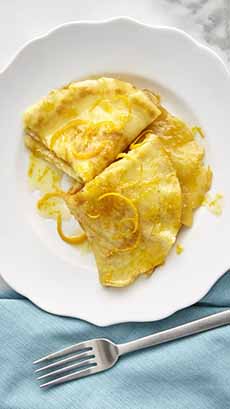
Crepes Suzette
[2] Crêpes Suzette. Here’s a recipe (photo © Betty Crocker).

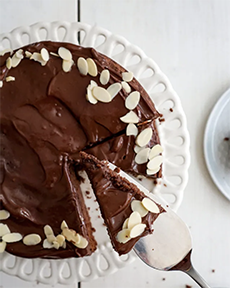
Reine de Saba Chocolate Cake Recipe
[3] Reine de Saba cake. Here’s the recipe (photo © ).

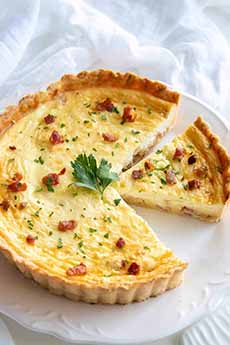
Quiche Lorraine Recipe
[4] Quiche Lorraine. Here’s a recipe (photo © Natasha’s Kitchen).

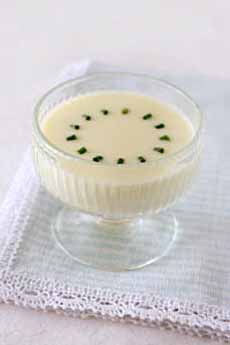
Vichyssoise Chilled Soup
[5] Vichyssoise. Here’s a recipe (photo © Umami Information Center).


August 15th is Julia Child’s birthday. Julia Carolyn McWilliams was born on August 15, 1912, in Pasadena, California. She dies a few days short of her 92nd birthday, on August 13, 2004, in Montecito California.

From a well-to-do family, she lived a life of privilege. She graduated from Smith College in 1934 and moved to New York City, where she worked as a copywriter in the advertising department of W. & J. Sloane, a fine furniture store.

In 1942, after the U.S. entry into World War II, she joined the Office of Strategic Services (OSS)—after finding that, at 6’2″, she was too tall to enlist in the Women’s Army Corps (WACs) or in the U.S. Navy’s WAVES.

While posted to Ceylon (now Sri Lanka) she met Paul Cushing Child, also an OSS employee, and the two were married in 1946. Paul, who had lived in Paris as an artist and poet, was known for his sophisticated palate and introduced his wife to fine cuisine.

And so begins the legend.

The State Department assigned Paul to Paris, and Julia enrolled in Le Cordon Bleu cooking school. She joined the women’s cooking club, Le Cercle des Gourmettes, where she met Simone Beck, who was writing a French cookbook for Americans with her friend Louisette Bertholle.

Beck invited Child to work with them to give the book the right appeal to Americans. The result: the iconic Mastering The Art Of French Cooking, published in 1961, with 524 recipes which became so popular that the publisher released a second, equally weighty Volume II in 1970.

In 1951, Child, Beck, and Bertholle had begun to teach cooking to American women in Child’s Paris kitchen, calling their informal school L’école des Trois Gourmandes (The School of the Three Food Lovers). When Child returned to the U.S., she continued her teaching and had a show on the local public television station.

In the 1970s and 1980s, she was the star of television programs, including Julia Child & Company, Julia Child & More Company, and Dinner at Julia’s. In the process, she not only expanded the awareness of French cuisine, but taught French cooking to enthusiastic fans nationwide—becoming an award-winning national treasure.

Here’s more about her life.

So what are the most popular Julia Child recipes?
 
 
THE MOST POPULAR JULIA CHILD RECIPES

There’s no single list, of course, but here’s one from Southern Living magazine, “10 Essential Julia Child Recipes Everyone Should Master.” In alphabetical order, they are:

  • Boeuf Bourguignon
  • Cassoulet (photo #1)
  • Chicken Waterzooi
  • Coq a Vin
  • Crêpes Suzette (photo #2)
  • French Baguette
  • Quiche Lorraine (photo #4)
  • Tarte Tatin
  • Vichyssoise (photo #5)
  • Vinaigrette
  •  
    We’ve made most of them but for two: French Baguette and Chicken Waterzooi, the latter of which we’d never heard of (etymology: water (“water”) +‎ zooi (“something boiled”).
     
     
    Chicken Waterzooi

    It turns out that the name and the recipe are Flemish, a wine-accented Belgian stew originally made with fish, but subsequently of chicken.

    chicken nestled in a silky sauce of cream and egg yolks. It’s

    Julia swapped the fish for chicken and layered the chicken with vegetables, all simmered in chicken stock and vermouth. “Chicken Waterzooi is undoubtedly one of Child’s most underrated recipes (if not for the fun name alone),” says Southern Living.

    Here’s the recipe, which she gave to The New York Times in 1987.

    The Times commented:

    “It is easy weeknight cooking: the dish can be assembled in the morning before work, or even the night before. Then, in the evening, simmer it for about half an hour, and then use the cooking liquid to make a light but creamy sauce. Serve with potatoes or good bread.”
     
     
    Reine de Saba Cake

    And how about a birthday cake for Julia?

    The Reine de Saba cake (Queen Of Sheba) is one of the first French cakes that Julia Child ever ate (photo #3). She could not help but fall in love with the rich, chocolate cake, so sophisticated compared to American cakes [source].

    The chocolate was combined with ground almonds, rum, and meringue, and topped with a chocolate ganache and an optional decoration of almond slices.

    Here’s the recipe.

    Happy Birthday, Julia!


    CHECK OUT WHAT’S HAPPENING ON OUR HOME PAGE, THENIBBLE.COM.


    Comments off

    Ice Cream & Fudge Creamsicle-Flavored Recipes For National Creamsicle Day

    What do you do on National Creamsicle Day, August 14th? Make a Creamsicle-inspired recipe, combining orange and vanilla flavors into formats beyond the original Creamsicle ice cream pop.

    The original and still beloved, a childhood flavor of ours, is a vanilla ice cream pop covered with orange sherbet.

    We often combine a scoop of vanilla ice cream and a scoop of orange sherbet into a simple, heavenly, dessert.

    But for those who like a more complex recipe, we’ve got seven of them below (cheesecake, ice cream cake, milkshake, and more).

    Our legal department would like us to note that while “Creamsicle” may seem like a generic term, it is, along with Popsicle®, Fudgsicle®, and Yosicle®, a registered trademark of the Unilever Group of Companies and can only be used to identify the frozen confection products of Unilever.

    That means only Unilever can sell anything by those names. But to identify recipes with the combination of orange and vanilla on our little website, we have some editorial license.

    > The history of the Creamsicle.
     
     
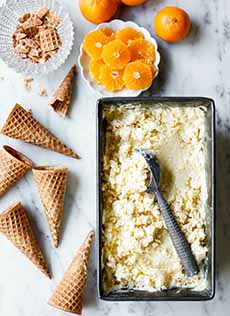
    RECIPE #1: CREAMSICLE ICE CREAM

    This is a non-dairy recipe, made with coconut milk instead of dairy milk.

    Thanks to Fruits From Chile for this delicious ice cream. Chile’s seasons are the opposite of North America’s, so their orchards are bursting with fruit while ours are hibernating.
     
    Ingredients

  • 3 navel oranges
  • 3 cups (or two 13-ounce cans) full fat, canned, unsweetened coconut milk
  • Pinch of salt
  • ½ cup golden agave nectar
  • 2 teaspoons vanilla extract
  • For serving: sliced pinwheels of clementines + crushed sugar cones
  •  
    Preparation

    1. CUT the peels from the oranges, then slice the orange flesh into thick rounds. Place the rounds on a baking sheet and freeze for 1 hour.

    2. PLACE the frozen oranges, coconut milk, salt, agave, and vanilla extract in a food processor or a sturdy blender such as a Vitamix. Blitz until the ingredients are fully combined.

    3. TRANSFER the liquid to a freezer-proof container. Cover and freeze until set. Before serving…

    4. LET the ice cream thaw at room temperature for 5-10 minutes before scooping. Serve in bowls with slices of clementine and crumbled sugar cones.

    Can you scoop it directly into cones? Sure!
     
     
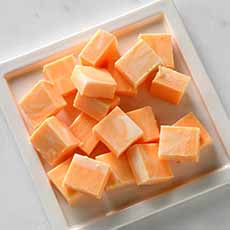
    RECIPE #2: CREAMSICLE FUDGE

    This easy recipe for marbled orange fudge, from Diane Wampler of Morristown, Tennessee, came to us via Taste Of Home.

     
    Ingredients

  • 1-1/2 teaspoons plus 3/4 cup unsalted butter, divided
  • 3 cups sugar
  • 3/4 cup heavy whipping cream
  • 1 package white baking chips (10 to 12 ounces—we used Guittard white chocolate chips)
  • 1 jar (7 ounces) marshmallow creme
  • 3 teaspoons orange extract
  • 12 drops yellow food coloring
  • 5 drops red food coloring
  • Optional: 1 teaspoon orange zest
  •  
    Preparation

    1. GREASE a 13×9-inch pan with 1-1/2 teaspoons butter; set aside.

    2. COMBINE the sugar, cream, and remaining butter in a large heavy saucepan. Cook and stir over low heat until the sugar is dissolved. Bring to a boil; cook and stir for 4 minutes.

    3. REMOVE from the heat; stir in the chips and marshmallow creme until smooth. Remove 1 cup of the mixture and set aside.

    4. ADD the orange extract and food coloring to the remaining marshmallow mixture; stir until blended. Pour into the prepared pan.

    5. DROP the reserved marshmallow mixture by tablespoonfuls over the top. Cut through with a knife to swirl (if you’re not sure how to do this, here’s a video). Cover and refrigerate until set.

    6. CUT into squares.
     
     
    MORE CREAMSICLE RECIPES

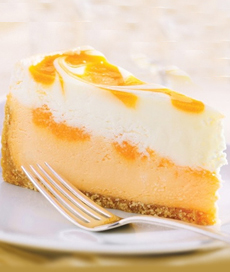
  • Creamsicle Cheesecake
  • Creamsicle Cocktail
  • Creamsicle Ice Cream Cake
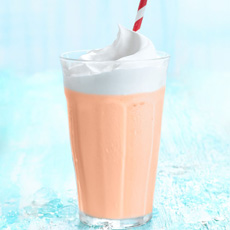
  • Creamsicle Milkshake
  • Creamsicle Shortcake
  •  

    Creamsicle Ice Cream Recipe
    [1] Creamsicle-style ice cream, combining the classic duo of orange and vanilla (recipe and photo © Fruits From Chile).

    Creamsicle Fudge Recipe
    [2] Creamsicle Fudge (photo © Taste Of Home).

    The Original Creamsicle Pop
    [3] The original Creamsicle (photo © Unilever).

    Creamsicle Cheesecake Recipe
    [4] Cheesecake lovers: Here’s a Creamsicle Cheesecake. Here’s the recipe (photo © Sweet Street).

    Creamsicle Ice Cream Cake Recipe
    [5] How about a Creamsicle Ice Cream Cake? Here’s the recipe (photo © Life, Love And Sugar).

    Creamsicle Milkshake Recipe
    [6] Cool off with a Creamsicle Milkshake. Here’s the recipe (photo © Williams Sonoma).


    CHECK OUT WHAT’S HAPPENING ON OUR HOME PAGE, THENIBBLE.COM.


    Comments off

    Rose Prosecco History, Food Pairings & Cocktails For National Prosecco Day

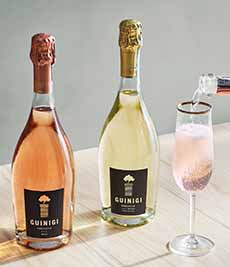
    Bottles Of Guigini White & Rose Prosecco
    [1] Guinigi classic bianco (white) and rosé Prosecco. An Italian label, Guinigi Wines were introduced in September 2020. The portfolio of wines, both sparkling and still, honors the Italian heritage of 3 Badge proprietor and fourth-generation vintner, August Sebastiani (all wines © Guinigi except as noted).

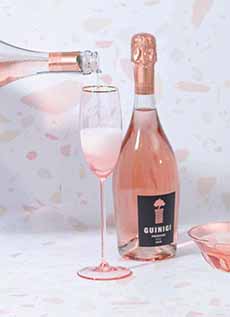
    Rosato Prosecco - Pink Prosecco Wine (Bottle & Glass)
    [2] This is the second year that rosé Prosecco has been available (all photos © Guinigi Wines).


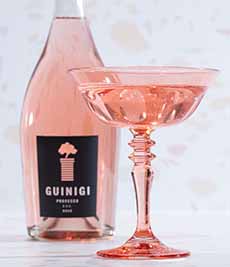
    [3] The retro coupe glass is popular in some parts, but most authorities recommend that sparkling wines be served in flutes, tulip glasses, or standard white wine glasses, where the tall, slender shape keeps the bubbles from escaping.


    [4] The Torre Frizzante Cocktail (recipe below), the “sparking tower” referring to La Torre Guinigi (photo #7).

    Spritz Lucchese Cocktail Made With Guinigi Prosecco
    [5] The Guinigi Spritz Lucchesi (recipe below).


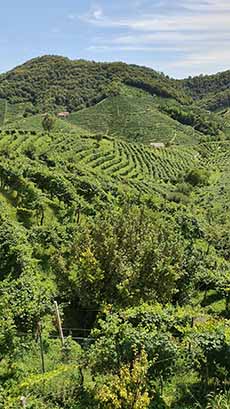
    [6] The Guinigi vineyards in Treviso (photo © Jonas Van der Wende | Unsplash).

    La Torre Guinigi
    [7] La torre Guinigi in Lucca, Italy (photo courtesy H005 | Wikipedia).


    Prosecco is an ideal sparkling wine for summer: light, aromatic, crisp, and affordable. National Prosecco Day, August 13th, is a day to head to the store and buy a bottle or two. In addition to serving as a delightful aperitif or mixed into cocktails (recipes below).

    Fans love Prosecco for its fizzy bubbles, fruit nuances, light body, and affordable price points. Many of us love it year-round—on its own and as the base for a Bellini or Mimosa and instead of the much more expensive Champagne in a Champagne Cocktail or a French 75.

    The United States remains the leading Prosecco export market, and Prosecco rosé was expected to account for 10% of the half-million bottles of Prosecco produced in 2021 according to the New York Times—an impressive feat considering the Italian wine authorities only deemed it an official wine category in 2020.

    > The history of Prosecco.
     
     
    PROSECCO FOOD PAIRINGS

    Prosecco is sweeter than Champagne, and pairs well with most foods as long as they’re not heavy, such as grilled meats, roasts, and stews. It can be enjoyed throughout the meal. Consider:

  • Appetizer bites, from prosciutto-wrapped dates to stuffed mushrooms.
  • Asian dishes, including spicy ones.
  • Avocado salad or stuffed avocado.
  • Caprese salad.
  • Cheese plates: goat cheese and other light cheeses, Emmentaler, Parmesan, and others, with fresh fruits and roast nuts.
  • Chicken and turkey, roasted or grilled.
  • Cured meats.
  • Desserts: crème brûlée, fruit salad, lemon tart, lighter cakes, and pastries.
  • Fish and shellfish, including smoked salmon and sushi.
  • Pasta dishes with lighter sauces.
  • Pizza: frutti di mare, Margherita, marinara, Neapolitan, vegetable, and other lighter toppings.
  • Roasted vegetables.
  • Risotto: seafood or vegetable
  •  
    > The history of Prosecco.

    > The history of Prosecco rose is below.
     
     
    WHAT IS PROSECCO ROSÉ

    We tasted our first bottle of rosé Prosecco last year on this very holiday. That’s because, in the world of Prosecco, the rosé version appeared for the first time just last year (more about that below).

    Rosé wines are called pink wines in the U.K. and elsewhere, rosato in Italian, and rosé, is the French term.

    What exactly is Prosecco rosé? It’s a new combination of two classics, Prosecco and rosé. Otherwise stated, it’s the rosé version of white Prosecco, just as rosé Champagne is the rosé version of classic Champagne.

    Prosecco rosé was born, officially, in May 2020, when the Prosecco Denomination of Controlled Origin (DOC) Consortium, which manages all Prosecco production, updated its rules for production, authorizing the new style of wine.

    The Italian Ministry of Agricultural, Food, and Forestry Policies’ National Wine Committee also approved new guidelines for the blend.

    Prosecco rosé became official as of January 1, 2021. Previously, the red Pinot Noir grape was allowed in the production of white Prosecco, but only the flesh (which is white) and not the skin (which is red and used during the phase called skin contact to make all rosé and red wines).

    To be considered Prosecco rosé:

  • The wine must come from the Valdobbiadene region in Veneto, Italy, home to Prosecco and a defined D.O.C.* region.
  • The wine must be produced in the same area where the grapes are grown.
  • It must contain 85-90% Glera grapes and 10-15% Pinot Noir grapes, like the classic white Prosecco D.O.C.
  • The wine must have a second fermentation of at least 60 days.
  • Prosecco Rosé must be a vintage-dated wine, i.e., the grape harvest year must appear on the bottle’s label. You will see the word Millesimato†, followed by the year of the harvest (the vintage).
  • It must be certified as D.O.C. by displaying the standard blue label that is applied from the cork to the top of the glass of the bottle and also includes the serial number.
  • Like white prosecco, the rosé can be made in different sweetness categories: Brut Nature (Bone Dry), Extra Brut (Very Dry), Brut (Dry), and Extra Dry (Medium Dry).
  • It must be a spumante, a fully sparkling.
  •  
    Prosecco rosé was launched in Italy and the U.K. in the fall of 2020, and the first bottles appeared in the U.S. in December of 2020, just in time to usher in 2021.
     
    How Is The Flavor Different From White Prosecco?

    Prosecco rosé has the same style as the white Prosecco i.e., light and fruity. Since there is skin contact with the Pinot Noir grapes, the rosé version has not only a delicate pink color, but some of the delicate fruit flavors of Pinot Noir.

    As a comparison:

  • Guinigi Prosecco blanco (white) has delicate notes of apple, white peach, citrus fruits, acacia, and wisteria.
  • Guinigi Prosecco rosé adds a soft pink hue, which beautifully frames its elegant sparkle against notes of blood orange citrus, wild strawberry, and floral peach blossom.
  • Both Guinigi white and rosé Prosecco wines, made with Glera grapes grown in Italy’s hilly northeastern province of Treviso (photo #6), glimmer with fine and persistent bubbles.
  • The Pinot Noir was harvested in Friuli, known for its mild climate and mineral-rich clay soils, great for Pinot Noir.
  •  
    But you don’t have to be a wine connoisseur to enjoy each sip of these lovely wines.

    Here’s a tip: Stock up on the rosé Prosecco for Valentine’s Day.
     
     
    PROSECCO COCKTAIL RECIPES

    Prosecco can be substituted for Champagne or any other sparkling wine in cocktails. Here are two created by the mixologists at Guinigi Prosecco, a leading producer.

    You can make these with either the white or rosé Prosecco.

    Both the name “Guinigi” and the label art are inspired by La Torre Guinigi, a historical landmark in the town of Lucca, Tuscany, where ancestors of the Sebastiani family resided. Built in the Middle Ages, the Romanesque fortification overlooks the city.
     
     
    RECIPE #1: GUINIGI TORRE FRIZZANTE (SPARKLING TOWER)
     
    Ingredients Per Drink

  • .5 ounce St. Germain Elderflower Liqueur
  • Guinigi Prosecco
  • Garnishes: lemon twist, rosemary sprig
  •  
    Preparation

    1. POUR the elderflower liqueur into the bottom of a flute. Fill with prosecco. Give it the lightest stir with a swizzle stick.

    2. garnish with a lemon twist and rosemary spring and serve.
     
     
    RECIPE #2: GUINIGI SPRITZ LUCCHESI
     
    This cocktail is named for the Villa Guinigi, located on the hills overlooking the medieval city of Lucca. It is part of the Associazione Ville e Palazzi Lucchesi.

    Ingredients Per Drink

  • 1.5 ounce La Pivon Vermouth Rojo
  • Guinigi Prosecco
  • Garnish: orange twist or slice
  •  
    Preparation

    1. FILL a coupe glass with ice, and add the vermouth.

    2. FILL with Prosecco and garnish with an orange twist or slice.

     
    ________________

    *Italy’s denominazione di origine controllata (DOC, designation of origin) system, introduced in 1963, is based on the French model, but goes one step further: It specifies not only the production area and methods for each wine, but also guarantees the quality standard of certain wines which pass a government taste test.

    Denominazione di Origine Controllata (DOC), and the higher-level Denominazione di Origine Controllata e Garantita (DOCG), together are called Denominazione d’Origine Protetta (DOP, protected origin). These label classifications help consumers understand the quality of the wine they are buying and where it came from.

    Some classifications can be found on the label of the bottle. All DOCG wines and some DOC wines will have a paper band containing a serial number that covers the cork or wraps around the neck of the wine bottle.

    Here’s more about Italian wine classifications.

    †The French word millesime (millesimato in Italian) means a great vintage. In Champagne, a vintage year can be declared when the grapes reach a certain level of ripeness. In the Valdobiene, in the production of Prosecco, it simply refers to a particular year.


    CHECK OUT WHAT’S HAPPENING ON OUR HOME PAGE, THENIBBLE.COM.


    Comments off


    © Copyright 2005-2026 Lifestyle Direct, Inc. All rights reserved. All images are copyrighted to their respective owners.