THE NIBBLE BLOG: Products, Recipes & Trends In Specialty Foods


Also visit our main website, TheNibble.com.

It’s National Hot & Spicy Day: Why Hot & Spicy Foods Are Hot

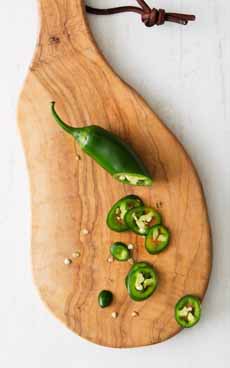
Sliced Jalapeno Chile Peppers
[1] Chile peppers contain capsaicin, a chemical compound that burns (photo of jalapeño chiles © Good Eggs).

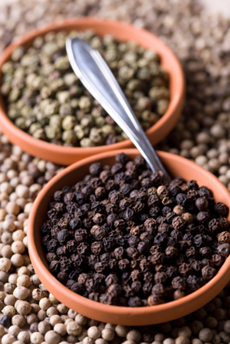
Black and White Peppercorns
[2] In peppercorns, the heat chemical is piperine (photo iStock Photo).

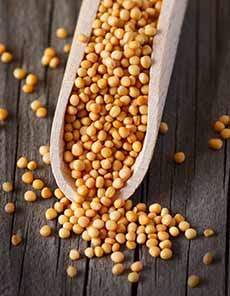
Yellow Mustard Seeds In A Scoop
[3] Yellow mustard seeds. When mustard seeds are crushed, the heat is released (photo © Hillshire Farm | Facebook).

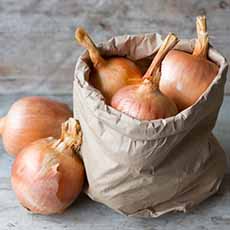
A Bag Of Yellow Onions
[4] Yellow onions have the most sulphur, and thus the most burn (photo © Good Eggs).


August 19th is National Hot & Spicy Day. What makes foods hot and spicy? Why do some people temporarily cough, sneeze, sweat, or even tear up?

The heat comes from specific chemical compounds that bind to special receptors on the tongue, lips, and other parts of your mouth. These activated sensory neurons then send signals to your brain saying you’ve encountered something burning…and voilà, you experience heat or a burning sensation.

  • In black pepper, the compound is piperine.
  • In chiles, a.k.a. chile peppers, the chemical compound is capsaicin.
  • In ginger, it’s gingerol, which tastes hot when you have it fresh at a sushi bar, although it’s only about one thousandth as hot as capsaicin. The heat mellows a bit when cooked, but becomes more intense when ginger is dried.
  • In mustard and horseradish, it’s a compound called sinigrin which is a glucosinolate, a sulfur-containing compound found in cruciferous vegetables.
  • In onions, that eye burn is caused by sulfur. Yellow onions have the highest sulfur content of all the onions [source]. Just as different chiles have different levels of capsaicin, different onions have more heat than others.
  •  
    All of these compounds elicit a sensation of burning pain by selectively activating sensory neurons that convey information about noxious stimuli to the central nervous system.
     
    If consuming these foods causes pain, then do people continue to eat them?

    First, different people have different sensitivities to the compounds, and some enjoy the burn.

    Second, the painful sensations on the tongue cause the brain to release endorphins and dopamine, which are “feel good” chemicals can that give a feeling of exhilaration. At least, that’s what this source says. Personally, we’ve never felt exhilaration—only burn.
     
     
    What if you want to eat hot and spicy foods but don’t want the pain?

    Federica Genovese, a neuroscientist at the Monell Chemical Senses Center in Philadelphia, says that you can train your body to temper these reactions by eating spicy food more often [source].
     
     
    Would you rather have an antidote to the heat?

    Don’t grab a glass of water! Because capsaicin is oil-based, drinking water will just spread the capsaicin around your mouth, creating even more burning.

    Capsaicin and other heat-mongers are hydrophobic, fat-soluble compounds that dissolve in fat and oil.

  • Have dairy products. Yogurt is the best, followed by sour cream and cottage cheese. They are acidic, and milk-based foods also contain a protein called casein, which can help break down the capsaicin. (Plant-based milks don’t work here.)
  • Drink something acidic. Capsaicin and other heat-generating compounds are alkaline molecules that can be neutralized with an acid: lemonade, limeade, orange juice, or tomato juice.
  • Have some peanut butter. The oil acts as a salve to the burning. If you’re headed to a spicy meal, you can bring a small amount of PB (it comes in squeese-packs) to dull your pain. At home, can also swirl some olive oil or other culinary oil around your mouth.
  •  
    If there’s nothing else, grab some bread. It’s not nearly as good as the other options but can help to suck up some of the capsaicin in your mouth [source].
     
     
    > 18 Ways To Spice It Up

    > The different types of chiles.

    > The different types of peppercorns.


    CHECK OUT WHAT’S HAPPENING ON OUR HOME PAGE, THENIBBLE.COM.


    Comments off

    Goat Cheese & Potato Pizza Recipe For National Goat Cheese Month

    We adore fresh goat cheese, and finally, for National Goat Cheese Month (August), we made this delicious pizza recipe.

    We had it for lunch with a glass of Sauvignon Blanc, but a beer or a light red wine (Beaujolais, Pinot Noir) would be equally fine.

    The thin crust and toppings create a very light pizza, so you can even serve it as a first course at dinner.

    Thanks to Janet Cooper-Bridge, The Army Mom, and the Idaho Potato Commission for the recipe.
     
     
    > The history of pizza.
     
     
    RECIPE: GOAT CHEESE, POTATO, & ONION PIZZA

     
    Ingredients

  • 3 Idaho® russet potatoes
  • 2 Idaho® red potatoes
  • 1 can (13.8 oz.) classic refrigerated pizza crust
  • ½ small red onion
  • 1 tablespoon finely minced shallot
  • 1 clove fresh garlic, minced
  • 4 tablespoon extra-virgin olive oil, divided
  • 1 teaspoon coarse sea salt
  • 8 springs fresh thyme, leaves removed from stems, divided
  • 3 ounces goat cheese (or more as desired—we used double that)
  • Cornmeal
  • Optional extra toppings:sliced prosciutto, crispy pancetta, blanched asparagus*
  •  
    Preparation

    1. PREHEAT the oven to 425°F. Lightly sprinkle a 12″x15” rectangular baking stone or baking sheet with cornmeal. Unroll the dough onto the baking stone or sheet.

    2. ROLL the dough to your desired preference. The example in photo #1 is rolled very thin for a very crisp pizza.

    3. LIGHTLY BRUSH the pizza crust with two tablespoons of olive oil and dot with the minced garlic and 1/2 of the fresh thyme leaves. Bake for 5 minutes. Remove the crust from the oven and set it aside, leaving the oven on.

    4. SLICE the red onion into thin, round rings beginning at the root tip and set aside.

    5. SCRUB the potatoes under cold running water. Cut lengthwise into very thin slices using a mandolin or knife.

    TIP: When cut potatoes cannot be used quickly, add fresh or concentrated lemon juice to the water, 1 teaspoon per gallon, to prevent discoloration.

    6. ARRANGE the cut potatoes in a single layer on a rimmed baking sheet, sprinkle with sea salt, and immediately cover with cold water (since the slices are thin, not much water will be needed). Bake for 10 minutes.

    7. CAREFULLY remove the baking sheet from the oven and carry it to the sink, draining the hot water. Transfer the potatoes to a bowl of cold water until ready to use. Then…

    8. REMOVE the potato slices from the cold water and place them onto paper towels. Pat both sides of the potatoes dry and immediately arrange them onto the pizza crust, overlapping the edges slightly in a shingled pattern.

    9. ARRANGE the red onion rings over the potatoes and sprinkle with the minced shallot. Dot the surface of the pizza with chunks of goat cheese.

    10. BAKE for 12-14 minutes or until the crust is a deep, golden brown. Remove the pizza from the oven and drizzle with the remaining olive oil. Sprinkle with remaining thyme leaves, cut into squares and serve.
     
     
    ________________

    *Add these to the pizza before it goes into the oven (step #9).


    Recipe For A Goat Cheese, Potato & Onion Pizza
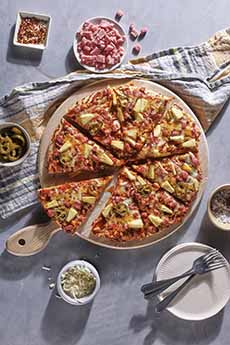
    [1] Goat cheese, potato, and red onion pizza (photo and recipe © Idaho Potato Commission).

    Plain and chive-accented fresh goat cheese logs.
    [2] You can use a plain goat cheese log or a flavored one, such as chive or pepper (photo © iGourmet).

    Basket Of Fresh Russet Potatoes
    [3] Russet potatoes, also known as baking potatoes (photos #3 and #4 © Potato Goodness).

    Raw Red-Skinned Potatoes
    [4] Red-skinned potatoes, often called red potatoes for short..

    2 Shallot Bulbs
    [5] Shallots also come in a red-skinned variety, red French shallots. Do these remind you of garlic bulbs? That’s because they’re members of the same family (photo © Good Eggs).


    CHECK OUT WHAT’S HAPPENING ON OUR HOME PAGE, THENIBBLE.COM.


    Comments off

    Introduction To Pinot Noir Wine For National Pinot Noir Day

    Pouring a glass of Pinot Noir red wine.
    [1] Getting ready to enjoy a glass of Pinot Noir (photo © Rebelle | NYC [permanently closed]).

    A glass of Pinot Noir at a vineyard.
    [2] Consider a wine vacation and the pleasure of tasting wine at the vineyard. This one is in the Okanagan Valley wine region in British Columbia, Canada, a perfect climate for growing Pinot Noir (photo © Kym Ellis | Unsplash).

    A specially shaped glass to enhance the flavors and aromas of Pinot Noir wine.
    [3] A glass especially shaped for Pinot Noir. The funnel-shaped bowl allows pinot noirs to breathe and the slightly flared rim properly funnels their unique aromas. These are from Crate & Barrel (photos #3 and #4 © Crate & Barrel).

    A Glass of Red Wine with a Washed Rind Cheese
    [4] Lighter red wines like Pinot Noir pair nicely with delicately flavored, washed-rind cheeses like Taleggio, and nutty, medium-firm cheeses like Gruyère (photo © Louis Hansel | Unsplash).

    Rack Of Lamb With Pesto & Red Wine
    [5] A glass of Pinot Noir is delicious with lamb (photo © DeLallo).

    A glass of red wine with a Surf & Turf dinner.
    [6] Pinot Noir with Surf & Turf (photo © Ocean Prime).


    Updated August 2026

    Most wine drinkers have their favorite varietals; one of ours is Pinot Noir (PEE-no-NWAR), the great red grape from the Burgundy region of France. All fans should pop open a bottle on August 18th, National Pinot Noir Day.

    In France, which names its wines by the regions they’re made in, it’s known as Red Burgundy. Elsewhere, the wine is named for the grape, Pinot Noir.

    The name of the grape derives from the French words for pine (pin) and black (noir), inspired by the tightly clustered, pine cone–shaped bunches of Pinot Noir grapes, and their purple-black color.

    Pinot Noir is the most planted varietal in the Champagne region of France.††.

    Below:

    > Why is Pinot Noir a great wine?

    > Where to start with Pinot Noir.

    > The world’s top Pinot Noir-growing regions.

    > Is it the world’s most finicky grape?

    > The history of Pinot Noir.

    > Other wines named “Pinot.”

    > The major red wines of the U.S. and France.

    Elsewhere on The Nibble:

    > The year’s 25+ red wine holidays.

    > The year’s 22+ white wine holidays.

    > The year’s 10+ Champagne and other bubbly/sparkling wine holidays.
     
     
    WHY IS PINOT NOIR A GREAT WINE?

    Pinot Noir holds a nearly mythical status among wine collectors, sommeliers, and critics, often referred to as the “holy grail” of wine. Although tasting a fine Pinot explains it all, these factors explain why it is such a great wine:

  • Elegant flavor. Many full-bodied red wines derive their power from bold tannins, high alcohol, and intense oak. Pinot Noir delivers equal or greater aromatic complexity while remaining light- to medium-bodied with bright, natural acidity. It offers a combination of power and finesse—often described as “an iron fist in a velvet glove.”
  • In its youth, the wind delivers fresh red fruit (cherry, cranberry, raspberry), subtle florals (rose petal, violet, ), and mineral undertones. At maturity, the wine evolves into a savory, non-fruit complexity, including forest floor (sous-bois), damp earth, black truffle, tea leaves, leather, and game. (If these descriptions don’t do anything for you, just taste the wine!
  • Exceptional food versatility. Due to its moderate tannins and high acidity, Pinot Noir pairs effortlessly with a wide range of foods. It works with everything from duck, pork, and salmon to roasted poultry, earthy mushroom dishes, and a variety of cheeses.
  • Exceptional terroir transparency. A feature appreciated by connoisseurs, Pinot Noir has thin skins and a delicate flavor profile, making it unusually sensitive to its environment. Unlike heavier, more tannic red grapes that can dominate the palate, Pinot Noir clearly shows its micro-terroir‡‡. Two vineyards just a few hundred yards apart in Burgundy can produce drastically different wines, allowing connoisseurs to explore subtle differences in soil composition, slope, elevation, and microclimate. (Don’t worry if this is not your aim; just enjoy the deliciousness of the wine.
  • Longevity and aging potential. Despite its lighter color and lower tannin levels compared to Cabernet Sauvignon or Syrah, the high natural acidity and complex phenolic structure of a well-made Pinot Noir allow it to age gracefully for decades, steadily developing deeper tertiary nuances as it ages in the cellar.
  •  
    Now For The Downside

    Pinot Noir is notorious for being the most temperamental and fragile grape to cultivate. It is prone to rot, frost damage, and mildew, and it requires precise, cool climates to ripen properly without losing its acidity. That means every harvest of Pinot Noir faces more potential challenges than other grapes.

    Because of these challenges of terroir (for example, in a particularly rainy season, rain gets into the thin skins and creates diluted wines), there are few areas capable of consistently producing great Pinot Noir.

    Those with great terroir for Pinot include Burgundy’s Côte d’Or, select parts of Oregon’s Willamette Valley, California’s Russian River Valley and Santa Rita Hills, and Central Otago in New Zealand).

    The top estates in top vintages produce high-quality wines, but they are fewer bottles available, they’re highly sought after, and (you can guess what’s coming) they’re expensive.

    But you can find good wines whatever your price range.
     
     
    WHERE TO START WITH PINOT NOIR

    If you’re not an experienced Pinot Noir taster, it’s easy to start. Pinot Noir is approachable when young: dry with delicious fruit flavors (typically cherry and raspberry), and soft tannins.

    It pairs with just about anything you’d want to eat with red wine, from classic pairings. While we mentioned them above, here they are to inspire your Burgundy menu:charcuterie, cheeses, chicken, duck, lamb, rabbit and other game, salmon and other fatty fish including tuna, mushrooms, pasta, pork, turkey, stews, veal—even beef, burgers, and pizza.

    You can also raise a glass of Pinot Noir with non-spicy Asian cuisine. Red wine drinkers can enjoy it with sushi and sashimi dishes.

    You can even enjoy it with dark chocolate!

    Ask your wine store clerk for recommendations, and consider a gathering where a group can taste several different regions, or several wines from the same region, to compare.
     
     
    THE WORLD’S TOP PINOT NOIR-GROWING REGIONS

    Pinot Noir is one of the six “noble grapes” (cépages nobles) that have long been considered to have the potential to produce great wines: Cabernet Sauvignon, Chardonnay, Merlot, Pinot Noir, Riesling, and Sauvignon Blanc.
     
    Pinot Noir grapes are grown around the world, mostly in cooler climates.

    Beyond the Burgundy region France, Pinot Noir has been transplanted and thrived in:

  • Oregon: the Willamette Valley.
  • California: the Carneros, Central Coast, Sonoma Coast, and Russian River AVAs†.
  • South Africa: the Elgin and Walker Bay wine regions of the Mornington Peninsula.
  • Australia: the Adelaide Hills, Great Southern, Tasmania, and Yarra Valley.
  • New Zealand: the Central Otago, Martinborough, and Marlborough wine regions.
  •  
    There are also smaller regions making fine Pinot Noir wines, including Argentina, Austria, Canada, Chile, Germany, Italy, the Long Island AVA† in New York State, Moldova, the U.K., Slovenia, Spain, and Switzerland [source].

     
    In the Champagne region of France, Pinot Noir is the most planted varietal (the others are Chardonnay and Pinot Meunier).

    All of the areas where Pinot Noir grapes are grown have cool and humid climates, the perfect conditions for growing the superior Pinot Noir grapes.

    The grape also does its best in well-drained, stony, or chalky soils.
     
    A Bottle Of La Tache Burgundy Wine
    [7] Our favorite Burgundy is La Tache, from a great French vineyard. Thirty years ago we could afford to lay down a few bottles—but not since (the current vintage is around $6,000 per bottle). But the memories remain (photo © The Nibble).
     
     
    THE WORLD’S TOP MOST FINICKY GRAPE?

    Pinot Noir is a difficult grape to grow, susceptible to rot because of those tightly-packed grape clusters. Beyond rot, the thin skins of the varietal make it susceptible to other infections and diseases. And the varietal has low yields.

    After a successful harvest in the vineyard, there’s a further challenge in the winery.

    The low levels of phenolic compounds in the grape produce mostly lightly-colored, medium-bodied and low-tannin wines that can often go through phases of uneven and unpredictable aging [source].

    So why do winemakers grow this difficult grape, putting their livings at stake when a mediocre harvest limits saleability?

    Because when the factors work, the wines are splendid.

  • When young, the wines tend to have red fruit aromas of cherries, raspberries, and strawberries.
  • As the wine ages, it can develop more vegetal and “barnyard” aromas that make the wine more complex and a unique delight.
  •  
    Clusters Of Pinot Noir Grapes On The Vine
    [8] You can see the distinct, tightly packed cylindrical shape of the Pinot clusters, approximating the pine cone shape that gave the grape its name. The characteristic dark purple to nearly black color signifies that the grapes have reached full ripeness (photo © Abynaya | Pexels).
     
    Beyond red wine, Pinot Noir grapes are also used in regular and Blanc de Noir Champagne, in sparkling white wines such as the Italian Franciacorta, and in English sparkling wines.
     
     
    Why Is A Red Wine Grape Used In White Wines?

    The flesh of most wine grapes is white (the exception is teinturier grape*, whose flesh and juice are both red in color).

    It’s only the skins that have different colors. So the juice pressed out of red grapes is the same color as juice pressed from white grapes. The difference is skin contact.

    To make red and rosé wines, the pressed juice rests in a vat with the pressed skins, allowing the anthocyanins—antioxidant pigments present in the skins—to transfer their color to the juice.

    As with any varietal, the wines will have different attributes based on both their terroir‡‡ and the stylistic preferences of the winemaker.
     
    Pinot Noir Vineyard
    [9] A Pinot Noir vineyard at Three Feathers Estate in the Willamette Valley of Oregon, one of the world’s top Pinot-growing regions (photo © Three Feathers Estate).
     
     
    THE HISTORY OF PINOT NOIR

    The Pinot Noir grape may be only one or two generations removed from Vitis sylvestris, the original European wild grape.

    Records date to before the first century C.E., when the Romans, invading the part of Gaul that is now the Burgundy region of France, noticed the Gallic tribes drinking wine made from a native, wild grape that we now call Pinot Noir.

    The Romans delighted in the wine and cultivated the grape for more than 300 years during their occupation of the territory.

    The vineyards subsequently came under the control of the nobility, and then the Benedictine monks of the Catholic Church. Because they believed that Pinot Noir grapes produced the best wine, Pinot Noir became the official wine used in the sacrament of Communion. That greatly expanded the wine’s visibility and popularity.

    The Burgundy region was divided into church-owned vineyards and remained under the control of the monks until the French Revolution in 1789, when the vineyards were seized and distributed to local families.

    But before that came a breakthrough in viticulture: The Benedictine monks, specifically the Cistercians who had branched off, were the first to realize that grapes grown in different areas produced different wines.

    They came to the conclusion that not all vineyards were created equal, and that different grape varietals did better in different regions. This tenet that helped to create superior wines from then onward [source]. This subsequently led to the concept of terroir‡‡.
     
     
    OTHER WINES NAMED PINOT

    “Pinot” refers to a family of related grape varieties, both red and white, all with that tightly-packed pine cone-shaped clusters. The main varieties are (in alphabetical order):

  • Pinot Beurot, a traditional name for Pinot Gris, especially in Burgundy.,
  • Pinot Blanc, a white grape producing fresh, rounded, apple- and pear-flavored white wines.
  • Pinot Chardonnay, an old synonym once used for Chardonnay. The “Pinot” was dropped, and Chardonnay is not generally classified as a true Pinot variety today‡‡‡.
  • Pinot Grigio, the Italian name for Pinot Gris. Although the grape is the same, due to different terroir the wines are often lighter, drier, and more citrusy.
  • Pinot Gris, a grayish-skinned grape producing white wines that can range from crisp and mineral to rich and slightly honeyed.
  • Pinot Meunier, a dark-skinned red grape used heavily in Champagne blends. It contributes fruitiness, roundness, and approachability; it is also made into still wines.
  • Pinot Nero, Italian for Pinot Noir.
  • Pinot Noir, a red grape producing light- to medium-bodied red wines with red-fruit, floral, earthy, and savory notes; also widely used in Champagne and other sparkling wines.
  • Pinotage, a South African red grape created by crossing Pinot Noir with Cinsault. As the offspring of a Pinot Nor parent, it’s a different variety.
  •  
     
    THE MAJOR RED WINES OF THE U.S. & FRANCE
     
    Comparison chart of different types of red wine.
    [10] A comparison of the different red wine varietals (chart © The Nibble).
     
     
    ________________

    *The flesh is red due to anthocyanin pigments that are not just in the skin, but within the pulp of the grape berry itself. Here’s more about it and a list of wines made with teinturier grapes.

    **Great cheese pairings: goat cheese, smoked cheese, semi-hard cheeses like Cheddar or Gouda, nutty cheeses like Gruyère, lighter blue cheeses, lighter washed rind cheeses like Taleggio, and sheep’s milk cheeses are all delicious with Pinot Noir.

    An American Viticultural Area, or AVA, is a type of appellation of origin used on wine labels. An AVA is a delimited grape-growing region with specific geographic or climatic features that distinguish it from the surrounding regions and affect how grapes are grown. Here’s more about it.

    ††Champagne has four main styles: Blanc de Noir, made from Pinot Noir grapes; Blanc de Blanc, made from Chardonnay grapes; Assemblage/Traditional Blend, a blend of both; and Rosé Champagne, typically made by blending Chardonnay with Pinot Noir (and/or Pinot Meunier) to create its pink color. The third principal grape in Champagne is Pinot Meunier, an optional blending grape in many Champagnes, including some rosés (but not permitted in a true Blanc de Blancs, which has only white grapes). Its proportion varies by cuvée—around 15%–20% in some examples—and it contributes fresh fruit, roundness, and approachability to the blend. Producers may adjust or omit it depending on the house style and the character of the vintage.

    Currently, some wine writers are questioning this classification. Five of the noble grapes are French, and one, Riesling, is German, though it’s also grown in Alsace. The phrase “cépages nobles”) originated in France, and that hierarchies like the can be limited in perspective. Plus, the classification was created before these grapes were planted all over the world. The quality of the grapes grown elsewhere is often not the same as the quality of the same grapes grown in France’s best vineyards. Here’s more about it.

    ‡‡Terroir, pronounced tur-WAH, is a French agricultural term referring to the unique set of environmental factors in a specific habitat that affects a crop’s qualities. These include climate, elevation, proximity to a body of water, slant of the land, soil type, and amount of sun. These environmental characteristics give the wines produced from these grapes a unique character.

    ‡‡‡In France, Chardonnay was formally distinguished from Pinot Blanc in the late 19th century; the modern spelling “Chardonnay” was formally agreed in 1896. Yet “Pinot Chardonnay” remained in use for decades afterward. In the U.S., “Pinot Chardonnay” was still a normal label term in the 1930s through 1950s. By the 1960s and 1970s, as California Chardonnay plantings and consumer awareness expanded, Chardonnay increasingly became the standard standalone name.
     

    CHECK OUT WHAT’S HAPPENING ON OUR HOME PAGE, THENIBBLE.COM.


    Comments off


    © Copyright 2005-2026 Lifestyle Direct, Inc. All rights reserved. All images are copyrighted to their respective owners.