THE NIBBLE BLOG: Products, Recipes & Trends In Specialty Foods


Also visit our main website, TheNibble.com.

RECIPE: Colorful Beet Dip


A colorful and yummy beet dip. Photo
courtesy Dole.com.


We love beets in every form: baked, Harvard, pickled, beet ravioli, steamed beats, soup (borscht is Russian beet soup), in gourmet appetizer recipes, in green salads, with goat cheese and endive…even beet ice cream (substitute beets in a strawberry ice cream recipe) and beet cake (food trivia: the original—and best—red velvet cake recipes got their red hue from beets, not food color).

You can even enjoy beet juice in cocktails: a beet Martini or this beet Mojito, for example.

Now, here’s another way to enjoy beets: as a dip with crudités or a bread spread. The recipe is courtesy Dole Foods.

It’s a beautiful color for Easter or any other festive occasion.


BEET DIP & SPREAD

Ingredients

  • 1/2 pound red beets (1 large), peeled and coarsely chopped
  • 1 large scallion, chopped
  • 1/4 cup (packed) chopped fresh spinach
  • 8 ounces nonfat cream cheese
  • 2 teaspoons freshly squeezed lemon juice
  • 1/4 teaspoon salt
  • 2 teaspoons snipped chives
  •  
    Beet dip with cucumber ribbons on skewers. Photo courtesy Dole.com.
     
    Preparation

    1. PULSE beets in bowl or food processor wuth scallion and spinach, until finely chopped.

    2. ADD cream cheese, lemon juice and salt, and process until well-blended, leaving some texture in dip. Transfer to bowl and stir in chives.

    3. SERVE as a dip with crudités or as a spread on toasted french bread.


    Comments off

    PASSOVER RECIPE: Charoset, An Apple Chutney


    Charoset, an apple chutney that’s a
    traditional Passover dish. Photo courtesy
    BeeRaw.com.
      Passover, the holiday that commemorates the liberation of the Jews from bondage in ancient Egypt more than 3,300 years ago, begins this evening. One of the symbolic foods on the Passover seder plate is charoset (also spelled charoseth, charoses or haroseth), a name that comes from the Hebrew word for clay.

    Why clay? It represents the mortar that Israelites used while enslaved as builders by the Egyptians.

    A kind of apple chutney of sorts, charoset is eaten during the seder with matzoh and fresh-grated horseradish. It is delightful as an accompaniment to roasted meats at any time; we enjoy it year-round on matzoh or toast.

    This recipe, which you can whip up in 15 minutes, is courtesy of Bee Raw Honey, a purveyor of artisan honeys. They recommend their orange blossom honey in this recipe; but you can use what you have on hand.


    You can enjoy the charoset immediately, but ideally let it rest in the fridge for an hour or longer to allow the flavors to meld. The yield is approximately 4 cups.

    CHAROSET RECIPE

    Ingredients

  • 1 cup walnuts, toasted
  • 1/2 cup fresh lemon juice
  • 1/4 cup red wine
  • 1/4 cup oange blossom honey
  • 1 teaspoon lemon zest, grated
  • 1/2 teaspoon ground cinnamon
  • Kosher salt
  • 2 crisp apples, roughly chopped into bite-size pieces
  •  
    Preparation

    1. HEAT oven to 350°F. Spread the walnuts on a baking sheet and toast in the oven for 8-10 minutes. Toss occasionally and watch carefully; remove the walnuts when they are fragrant. Let cool, then roughly chop.

    2. COMBINE the lemon juice, wine, honey, lemon zest, cinnamon and ¼ teaspoon salt.

    3. MIX the apples and walnuts with the liquid mixture in a large bowl; toss to combine. Chill until ready to serve.


    Comments off

    TIP OF THE DAY: Small But Tasty Red Meat Dishes

    Americans love their red meat, despite the pleadings of medical professionals, nutritionists and environmentalists to eat less of it. The research record is clear:

    Among many studies, the largest one, conducted by Harvard University, proved that the more red meat you eat, the greater your risk of dying and of developing heart disease, cancer and diabetes.* And the more animals raised to meet the insatiable appetite for red meat, the more environmental pollution.

    Red meat is:

  • Cholesterol-laden
  • Higher in calories than other proteins
  •  


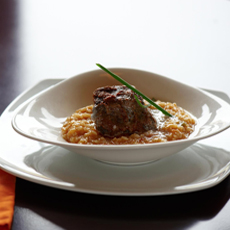
    Place a smaller piece of red meat on a larger bed of grains or vegetables. Photo courtesy MalaysianKitchenNYC.com.

  • Often hormone- and antibiotic laden (except organic meat)
  •  
    Want to know more? Read this article.

    But there is a compromise, reflected in today’s tip:

    Just cut down on your portion size. Limit the portion to three ounces—three slices—and fill out the dish with grains or vegetables.


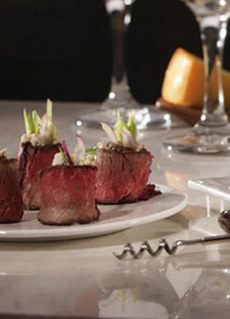
    Eat less red meat by enjoying it in roll-ups. Photo courtesy Snake River Farms.N
     

    Any beef dish can be turned into a smaller portion—and by using herbs, spices and other seasonings, the meat can be even more flavorful.

    Place a couple of slices of broiled red meat or a large chunk of stewed meat atop barley, beans, brown rice, mashed cauliflower or potatoes, quinoa, a rice or pasta salad, vegetable purée (broccoli, carrots, cauliflower or other favorite) or other base. Another easy way to use less meat is in a veggie-laden stir-fry.

    Look for recipes that don’t require large hunks of meat; for example, lettuce wraps or the beef rolls in the photo, which are filled with cucumber matchsticks and mushrooms. There are options in many cuisines, such as the popular Japanese dish, beef negimaki: broiled strips of beef marinated in teriyaki sauce and rolled with sautéed scallions (you can substitute spinach).

    Whichever recipes you prefer, smaller portions of red meat are better for you and Planet Earth.

     
    Let’s return to the Harvard study. The researchers emphasized that they are not stating that Americans should stop eating red meat (good luck with that one!). But they do encourage individuals to use other protein options more frequently.

    They specifically note that “We estimated that substitutions of one serving per day of other foods (including fish, poultry, nuts, legumes, low-fat dairy, and whole grains) for one serving per day of red meat were associated with a 7 percent to 19 percent lower mortality risk.”

    You can have your red meat and eat it too—just eat less of it. That’s no beef.

    *A number of studies have evaluated the impact of eating red meat on health and lifespan, but one of the largest and longest was conducted by a research team at Harvard School of Public Health and published in March 2012 in the Archives of Internal Medicine. Data was collected on 83,644 women from the Nurses Health Study and 37,698 men from the Health Professionals Follow-up Study, and the investigators were interested in how much meat each of these adults consumed over a 22-year to 28-year period.
      

    Comments off


    © Copyright 2005-2026 Lifestyle Direct, Inc. All rights reserved. All images are copyrighted to their respective owners.