|
Quick: What’s a rosé wine?
It’s a type of wine that gets some of its rosy color from contact with red grape skins, but not enough to qualify it as a red wine.
It can be made anywhere in the world, from almost any grape (or a mix of different grapes); it can be made as a still, semi-still or sparkling wine.
Depending on the grape, terroir and winemaking techniques, the color can range from the palest pink to deep ruby red to hues of orange or violet; and in styles from bone dry Provençal rosé to sweet White Zinfandel and other blush wines from California.
It may be the oldest style of wine, as it is the most easiest to make with the skin contact method.
And it’s popular.
According to Nielsen, premium imported rosés (those priced at $12 or more per bottle) grew by 39% in volume and 48% in dollar value in 2013, capping nine straight years of double-digit growth.
In sum, a glass of chilled rosé is now hot.
HOW IS ROSÉ MADE?
Surprise: Most wine grapes have clear juice, regardless of the skin color. The pink color in rosé—and the color of red wines—is obtained through skin contact. This means letting the crushed grape skins and fresh juice (which is called the “must”) of black-skinned grapes (a.k.a. purple or red grapes) rest together in a vat.
The longer that the juice is left in contact with the skins (typically one to three days for rosé), the more color is extracted and the more intense the color of the final wine. When the color is the right shade for the brand, the must is then pressed and and the skins are discarded.
The winemaker drains the juice from the skins and proceeds to make the wine in the same way most whites are made (cool fermentation and, for rosé, no oak).
ROSÉ VS. BLUSH WINE
In the 1980s, American winemakers began using the term “blush wine” to sell their pink wines. The reasons:
White Zinfandel had become enormously popular (at one point it was the largest-selling wine in America), and there weren’t enough Zinfandel grapes grown to meet demand. Winemakers needed to use other grape varieties, and could no longer call the product “White Zinfandel.”
No one was buying, or showing an interest in, rosé at the time, while blush wines flew off of the shelves.
|
|

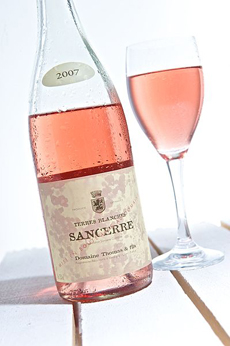
[1] Rose is the perfect summer wine (photo by Thor | Wikimedia).
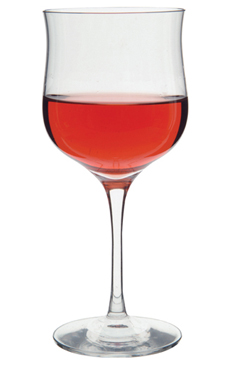
[2] You don’t need a special glass, but using a nice one will enhance your drinking pleasure (photo © Corks and Caftans).
|