THE NIBBLE BLOG: Products, Recipes & Trends In Specialty Foods


Also visit our main website, TheNibble.com.

It’s National Chardonnay Day, The Most Popular White Wine

May 27th is National Chardonnay Day, and International Chardonnay Day is celebrated on the Thursday before the last Monday in May. That may sound complex, but it’s the Thursday before Memorial Day. So…time to open a bottle!

Chardonnay is the world’s most popular white wine: a dry, medium- to full-bodied wine with moderate acidity and alcohol levels. It can be grown in a variety of climates.
 
 
THE STYLES OF CHARDONNAY

Between the terroir and the winemaker, Chardonnay can have different personalities.

  • Chardonnay can be crisp, clean, and minerally like Chablis, or rich and oaky like Mersault.
  • It can be light and elegant, or full-bodied and buttery.
  • It can have notes of apple and lemon or “tropical fruits” like papaya and pineapple.
  • In cool climates such as Chablis and the Carneros AVA of California, Chardonnay has more noticeable acidity and the flavors of green plum, apple, and pear.
  • In warmer areas of the New World, including Australia and the Marlborough region of New Zealand), the flavors become more citrus, peach, and melon.
  • In very warm locations, such as the Central Coast AVA of California, more fig and tropical fruit notes such as banana and mango appear.
  • If it’s aged in oak, it can have hints of vanilla or butterscotch.
  • Fat, rich, oaky styles with higher alcohol can handle heavier cream sauces and grilled meats with higher fat content. The key is to match the wine’s weight with the weight of the food.
  • Wines that the winemaker has put through malolactic fermentation tend to have softer acidity and fruit flavors, with a buttery mouthfeel and hazelnut notes. The malolactic is a secondary fermentation that transforms tart malic acid into softer lactic acid. Or, as one of our wine experts notes, “Think green apples to cream.”
  •  
    So there’s a perfect Chardonnay for every palate and every food pairing.

    > The history of Chardonnay is below.

     
    CHARDONNAY & FOOD PAIRING

    Due to the wide range of styles, Chardonnay can be paired with a diverse spectrum of food types.

    Thanks to La Crema, maker of great California Chardonnay, for these tips:

    DO Pair Chardonnay With:

  • Buttery, creamy, or mild dishes.
  • Meaty fish (halibut, cod) and shellfish (lobster, shrimp, crab, scallops).
  • Subtly flavored, simply seasoned poultry, pork, and veal dishes.
  • Dishes that have a silky texture, such as risottos and cream-enhanced soups, sauces and pastas.
  •  
    Pairings By Style

  • Oaky Chardonnay with foods that have toasty flavors, toasted nuts, savory pastry crusts, grilling or smoking.
  • Crisp, delicate Chardonnay with simply flavored, simply prepared foods, such as raw bar shellfish, baked fish, or poultry with butter and herbs.
  • Crisp, higher-acid Chardonnay with tomato-based dishes and items featuring sweet onions.
  • Crisp, delicate Chardonnay with mild, semi-soft cheeses, including goat cheese.
  • Moderately oaked Chardonnay with buttery and creamy cheeses, Gouda, Gruyère, and Alpine-style varieties.
  • Heavily oaked Chardonnay with smoked fish, spicy southeast Asian cuisine, and garlic.
  • Heavily oaked Chardonnay with the big flavors of Asiago, Cheddar, Fontina, Havarti, Parmesan, and washed-rind cheeses.
  • Ripe Chardonnay—with sweetness from warmer clients—with ingredients such as corn, butternut squash, sweet potatoes, and foods that are caramelized from roasting or grilling, like crisp-skinned roast chicken.
  • Older, more mellow Chardonnay with more earthy dishes, like mushroom soup and aged cheese.
  •  
    DON’T Pair Chardonnay With:

  • Aggressively seasoned food. Avoid fresh or dried chilies and super spicy dishes, including much of Chinese, Indian, and Southeast Asian fare.
  • Bitter foods: bitter greens and vegetables, and spices like turmeric—they’ll make the wine taste sour.
  • Acidic foods, such as raw tomatoes, olives, capers, ceviche, and tangy vinaigrettes and sauces.
  • Pungent or high-acid cheeses. Avoid funky, washed-rind cheeses (taleggio, Époisse) and aged goat and sheep’s cheese.
  •  
    DO & DON’T Temperatures

  • Don’t serve Chardonnay too cold; the cold dulls its pairing powers.
  • The best temperature range is 50°–55°F, which can be achieved by two hours in the fridge or 30–40 minutes in an ice-water bath in an ice bucket.
  • Remove the bottle from the ice bucket or refrigerator 15 to 20 minutes before pouring.
  •  
    There’s enough to know about Chardonnay to fill several books—and quite a few have been written about it.
     
     
    CHARDONNAY HISTORY

    The Chardonnay grape, a green-skinned white wine grape, originated in the Burgundy region of France, and Chardonnay from Burgundy is the world’s most expensive. It is the grape that makes the great Burgundies Chablis, Meursault, Montrachet, and Pouilly-Fuissé.

    Chardonnay is also one of two primary base grapes for the sparkling wines of Champagne, along with Pinot Noir and the blending grape, Pinot Meunier.

    The grape takes its name from a commune (small town or village) in the Mâconnais region of southern Burgundy, which today makes relatively simple, inexpensive Chardonnays.

    The name of the town derives from cardonnacum, the “place full of thistles.” The commune recently celebrated its thousandth anniversary

    From there, Chardonnay most likely was then spread throughout France by Cistercian monks.

    The grape reached its apex when it moved north to Burgundy, where the cooler climate and the overall terroir were perfect to elevate the complexity of the grape.

    The earliest recorded reference to Chardonnay occurs in 1330. Cistercian monks built stonewalls around their Clos de Vougeot vineyard in Burgundy, exclusively planted with Chardonnay grapes [source].
     
    A Great Cross-Breeding

    Chardonnay is a crossbreed. Many centuries ago, growers in the Chardonnay area created the Chardonnay grape by crossing their local Pinot Noir grape with Gouais Blanc (Heunisch), a white grape thought to have brought by the Romans from Croatia.

    It was widely cultivated by peasants in eastern France [source], and the wine immediately became a local favorite.

    But it wasn’t until the 14th century when the Cistercian monks popularized it to make their wine in Burgundy [source].

    It has long been the second-most-planted white wine grape in France.*


    White Wine Burgundy
    [1] Puligny Montrachet, one of the great white Burgundies, is made from 100% Chardonnay grapes (photos © Christies).

    Chardonnay With Pasta Frutta di Mare
    [2] Chardonnay is the most-planted white wine grape in California (photo © La Crema Chardonnay).

    Marcassin Estate Chardonnay White Wine
    [3] Marcassin is the most expensive California Chardonnay, made by a great winemaker, Helen Turley, in very small amounts, in the Burgundy style. It costs hundreds of dollars per bottle (photo © Cult Wine).

    Cheese Plate & White Wine
    [4] California Chardonnay with a cheese plate (photo © California Wine Institute).

    Sashimi & White Wine
    [5] Chardonnay pairs well with sushi and sashimi (photo © Pampano | NYC).

    Chardonnay King Crab Legs

    [6] In fact, Chardonnay is a popular choice with all fish and shellfish—here with King Crab legs (photo © The Palm | NYC).

    Chardonnay Grapes
    [7] Chardonnay grapes (photo © Erin Malone | California Wine Institute).

     
    Chardonnay Today

    While there were several claims to Chardonnay’s “true” origins, modern DNA fingerprinting by Dr. Carole Meredith at the University of California, Davis, has finally identified Chardonnay as the cross between the Pinot Noir and Gouais Blanc grape varieties.

    If you’ve never heard of Gouais Blanc, it’s because it’s nearly extinct grape.

    Wine made from Gouais Blanc was not well liked even back in the day. It has been actively dug up over the centuries, its vineyards replanted with other varieties, leading to its now “nearly extinct” situation [source].

    But we are grateful that it was around when needed to create one of the great wine grapes of the world.

    Chardonnay, Gamay Noir, and many other classic varieties† can be traced back to this cross of Pinot and Gouais Blanc.

    Today Chardonnay is planted the world over. In the U.S., the grape is grown in Northern California, Washington State, and Oregon—the three largest plantings in the U.S.—New York State, Texas, and Virginia.

    Chardonnay is the most widely planted white variety in California, on a par with the plantings of Cabernet Sauvignon.

    Wine trivia: Ampelography is the field of botany concerned with the identification and classification of grapevines. Traditionally this was done by comparing the shape and color of the vine leaves and grapes; however, the field has been revolutionized by DNA fingerprinting.
     
    ________________

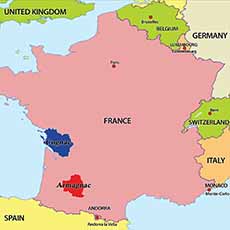
    *The most planted white wine grape in France is Ugni Blanc, an Italian grape from Tuscany, where it is known as Trebbiano. It largely used to make brandy in the Cognac and Armagnac regions of France.

    †Grape varieties that trace back to Gouais Blanc and Pinot include Aligoté, Aubin vert, Auxerrois, Bachet noir, Beaunoir, Dameron, Franc noir de la Haute, Saône, Gamay blanc Gloriod, Gamay noir, Knipperlé, Melon, Peurion, Romorantin, Roublot and Sacy. That’s a lot of relatives! [source]


    CHECK OUT WHAT’S HAPPENING ON OUR HOME PAGE, THENIBBLE.COM.


    Comments off

    Eggfruit a.k.a. Canistel, A Fruit For National Egg Month


    [1] Eggfruit (or egg fruit, eggfruits, or canistel), whole and halved (photo © Bfaast).


    [2] Purée the flesh to enjoy as a pudding, topping or sauce, or make curd with the recipe below (photo © Hannah Kaminsky | Bittersweet Blog).

    Scooping An Eggfruit
    [3] You can also simply scoop out the insides and enjoy the creamy flesh (photo © Urban Tropicals).

    Eggfruit Growing On Tree
    [4] You can grow your own eggfruit tree (photo © Bfaast).

    Eggfruit - Canistel On The Tree
    [5] If you’re lucky enough to have your own tree (photo © Urban Tropicals).

    Eggfruits - Canistel
    [6] As a hand fruit, simply pick up a piece and take a bite (photos #6 and #7 © Maui Seed).

    Eggfruit - Canistel
    [7] As a breakfast fruit, enjoy it with your morning coffee, or slice into a fruit salad.

    Lemon Curd Tart
    [8] You can spoon the curd recipe below into tart or tartlet shells (photo by Hannah Kaminsky | The Nibble).


    May is National Egg Month, and some eggs really do grow on trees, says our colleague Hannah Kaminsky of Bittersweet Blog.

    But they’re not eggs from chickens, ducks, geese, ostrich, or any other bird—or roe from fish, for that matter.

    Rather, they’re eggfruit (or eggfruits), otherwise known as canistel. Still relatively unknown beyond tropical climates, these teardrop-shaped drupes* originated in Central America and have spread to the U.S., now grown in Florida, Hawaii, and Southern California.

    So as we come to the end of National Egg Month, allow us to introduce you to eggfruit.

    We have ways to eat them and a recipe for eggfruit curd below, but first:
     
     
    WHAT IS EGGFRUIT?

    The pulp of the eggfruit/canistel fruit (Pouteria campechiana), also known as yellow sapote and cupcake fruit, has a dense, cake-like texture similar to the yolk of a hard-boiled egg.

    Eggfruit do not, however, taste anything like eggs.

    The flavor of the fruit is delicious, sweet, and somewhat like that of a candied sweet potato. The flavor is rich and is reminiscent of egg custard. The best varieties have a creamy, mousse-like texture. The bright-orange fruit is naturally low in fat.

    Canistel varieties come in many different shapes and sizes. There are long and skinny varieties, short and fat varieties, varieties as large as your head, as small as a tangerine, and everything in between.

    Cut through the thin skin to reveal a hard pit (or up to six pits—be careful with your teeth if you decide to bite into it) much like that of an avocado. The pit is surrounded by creamy, slightly crumbly flesh with a downright uncanny resemblance to hard-boiled egg yolks.

    It’s certainly an unusual experience, says Hannah. “There’s nothing else quite like it in the animal or vegetable kingdom.”

    Well…it does have relatives. Eggfruit is a member of the Sapote family, many species of which produce edible fruits, including sapodilla, star-apple, shea nuts (used to make shea butter), and the nuts of the argan tree, used to make argan oil.

    In its own genus, Pouteria, are “siblings” abiu, lúcuma, and mamey sapote. So, while Pouteria campechiana may be part of a family that’s exotic to Americans, it’s a valuable source of food in other parts of the world.

    Canistel is an evergreen tree native to Central America and northern South America. It’s cultivated in Belize, El Salvador, Guatemala, and southern Mexico.

    Showing its popularity, it’s cultivated in other countries around the world, including Australia, Brazil, Cambodia, Costa Rica, Dominican Republic, India, Indonesia, Nigeria, Philippines, Sri Lanka, U.S., and Vietnam.
     
     
    EGGFRUIT VS. EGGS

    The temptation to draw comparisons to conventional eggs is irresistible. Such gorgeous golden meat, rich in beta-carotene, is good for more than just boosting eyesight and immunity.

  • Eggfruit are ideal for baking since they retain their dense, thick texture, working quite a bit like…eggs.
  • That means pumpkin pies, cheesecakes, ice cream, and even eggnog are quite delicious with this plant-based swap.
  •  
    “When I got my hands on eggfruit for the first time,” says Hannah, “I was eating my way through Hawaii. The fruit was then not available on the mainland, but as it’s now grown in the U.S., I hope that more people will be fortunate enough to try its unique flavor for themselves.”

    You can buy eggfruit online, you can buy eggfruit trees to grow your own backyard (if you live in warmer climate zones), and you can even buy seeds to sprout your own trees.

  • Buy fruits in from Miami Fruit.
  • Buy fruits from Urban Tropicals.
  • Buy a 3-foot tree.
  • Another source to buy a tree.
  • Buy seeds to grow your a tree from scratch.
  •  
     
    EATING EGGFRUIT

    Eggfruit may be enjoyed from breakfast through dessert.

    For breakfast: Smooth, spreadable, or spoonable like custard, you can spread it on toast, or use it as a topping for French toast, pancakes, and waffles.

    For a snack: As a hand fruit; simply seasoned with salt, pepper, and a squeeze of lime; in a smoothie.

    For dessert: Purée it as a topping or sauce for pound cake, ice cream or sorbet; a pudding; a filling for cupcakes and cookies; a fruit curd (a recipe follows); a mixed fruit salad.


    RECIPE: EGGFRUIT LEMON CURD

    Hannah Kaminsky’s recipe substitutes eggfruit for the conventional citrus curd. You can make any curd with this recipe: grapefruit, lemon, lime, orange, strawberry, yuzu, etc.

    Smooth, spreadable, or spoonable like custard, this rich lemon curd is an ideal introduction to eggfruit. You’ll fall in love after one batch, assures Hannah.

    If you can, she says, stock up on eggfruit whenever you see them, since they’ll go fast once you taste just how versatile they are.

    You’ll typically find unripe eggfruit in the store that’s still hard and slightly green. Let it sit on the counter to ripen. It could take as long as 10 to 14 days, so be patient.

    Unripe eggfruit is incredibly astringent and bitter—not good to eat. When ripe, it should be soft but not mushy, yielding easily to a knife.

    Then, it can be stored whole for 1 to 2 months in the fridge, or mashed and frozen for 6 to 8 months.
     
    Ingredients For 1-3/4 Cups

    Cook time is 9 minutes, and additional time is 2 minutes. For a variation, you can add up to 1/2 cup of seedless fruit purée, like strawberry, raspberry, or peach.

  • 1 medium eggfruit
  • 3/4 cup granulated sugar
  • 2 tablespoons butter, melted
  • Zest of 2 lemons
  • 2/3 cup lemon juice
  • 1 tablespoon potato starch
  • 1/2 teaspoon vanilla extract
  • 1/4 teaspoon salt
  •  
    Preparation

    1. PEEL and pit the eggfruit, placing the flesh in a blender. Add all the remaining ingredients and thoroughly purée, pausing to scrape down the sides of the canister as needed.

    2. TRANSFER the mixture to a medium-sized microwave†-safe bowl. Microwave on 100% power‡ for 4-1/2 minutes, uncovered. Whisk vigorously until smooth and microwave again on 100% power for 4 1/2 minutes more. The curd should be thick and glossy.

    3. WHISK vigorously for another minute to make sure there are no lumps. Transfer to a glass jar, let cool completely and store in the fridge. Enjoy chilled.
     
     
    ________________

    *In botany, a drupe (or stone fruit) is an indehiscent fruit in which an outer fleshy part (exocarp, or skin, and mesocarp, or flesh) surrounds a single shell (the pit or stone of hardened endocarp with a seed (kernel) inside. Flowering plants that produce drupes include cashew, coffee, jujube, mango, olive, most palms (including açaí, date, sabal, coconut, and oil palms), pistachio, white sapote, and all members of the genus Prunus, the “stone fruits,” that include the almond, apricot, cherry, damson, peach, nectarine, and plum. [Here’s more about drupes.

     
    †If you don’t have a microwave, you can cook the curd over the stove in a medium saucepan. Just stir gently and continuously so it doesn’t stick or burn on the bottom.

    ‡This recipe was tested on a 1,000-watt microwave; timing may vary if you have a more or less powerful model. Always keep a close eye on the mixture while cooking.


    CHECK OUT WHAT’S HAPPENING ON OUR HOME PAGE, THENIBBLE.COM.


    Comments off

    Blueberry Cheesecake Ice Cream Pops For National Blueberry Cheesecake Day

    It’s National Blueberry Cheesecake Day, and here’s a twist: Blueberry Cheesecake ice cream pops made with goat cheese, a.k.a. chèvre.

    Bright berries, a hint of lemon and vanilla, creamy goat cheese, and a crumble of graham crackers make these ice cream pops a tasty treat for young and old alike. You can swap the blueberries for any berry you like.

    This recipe was sent to us by Vermont Creamery, created by Alanna Taylor-Tobin, a pastry chef, food photographer, videographer, and award-winning cookbook author.

    For many more delicious recipes, check out her blog, The Bojon Gourmet.

    > There are more blueberry cheesecake recipes below.

    > The history of blueberries.

    > The history of cheesecake.
     
     
    RECIPE: BLUEBERRY CHEESECAKE ICE CREAM POPS

    You’ll need ice pop molds for the recipe. Note that we said ice pop, not Popsicle. Popsicle® is a trademark for a specific type of ice pop.

    Popsicle® is a trademarked name owned by Unilever’s Good Humor Division (here’s the history of the Popsicle and the Creamsicle®).

    Everything else should be called by the generic term, “ice pop” (with no dairy component) or “ice cream pop” (with dairy).
     
    Ingredients For The Blueberry Layer

  • 1 1/2 cups fresh (or frozen, thawed) blueberries
  • 1/2 medium lemon, zest
  • 2 tablespoons lemon juice
  • 3 tablespoons organic granulated sugar (more if your berries are on the tart side)
  • 1/3 cup water
  •  
    Ingredients For The Cheesecake Layer

  • 3 ounces Vermont Creamery Classic Goat Cheese softened
  • 3 ounces cream cheese, softened
  • 1 cup whole milk
  • 1/2 teaspoon vanilla paste or extract (or seeds from 1/2 vanilla bean)
  • 1/2 medium lemon, zest
  • 1 tablespoon lemon juice
  • 6 tablespoons organic granulated sugar
  • 1/3 cup graham crackers, crumbled
  •  
    Preparation

    1. COMBINE the blueberries, lemon zest, lemon juice, sugar, and water in a medium saucepan. Bring the mixture to a simmer over medium heat and cook, stirring occasionally, until the juices are reduced by half and bubbling thickly, 5-10 more minutes. Let cool to room temperature, then purée smooth. You should have about 1 scant cup.

    2. COMBINE the goat cheese, cream cheese, milk, vanilla, lemon zest, juice, and sugar in the pitcher of a blender, and purée smooth.

    3. DIVIDE the blueberry purée among 10 (3-ounce) ice pop molds. Gently pour the cheesecake layer over the blueberry layer, leaving a scant half-inch of space at the top. Use a chopstick to swirl the layers together slightly.

    4. CRUMBLE the graham crackers on top of the cheesecake layer and press the crumbles into the mixture so they stay put when frozen. Place the ice pop sticks in the molds and freeze until solid, for several hours or overnight.

    5. REMOVE the pops from the molds and enjoy or store airtight for up to two weeks.
     
     
    MORE BLUEBERRY CHEESECAKE RECIPES

  • Blueberry Purée For Cheesecake & Other Desserts
  • Easy Blueberry Cheesecake Topping
  • July 4th Blueberry Cake Decorations
  • No Bake Blueberrry Cheesecake
  • More Blueberry Recipes
  •  
    Plus

  • Tip: Defrosting Frozen Blueberries
  •  

    Blueberry Cheesecake Ice Cream Pops
    [1] Today’s recipe: Blueberry Cheesecake Ice Cream Pops (photo © Bojon Gourmet | Vermont Creamery).

    Vermont Creamery Goat Cheese
    [2] The recipe uses both cream cheese and goat cheese (photo © Vermont Creamery).

    Blueberry Cheesecake Ice Cream Pops
    [3] A related recipe using vanilla yogurt instead of goat cheese and cream cheese. Here’s the recipe (photo © A Healthy Life For Me).

    Blueberry Cheesecake Pops
    [4] Vegan blueberry cheesecake pops. Here’s the recipe (photo © Heart Of A Baker).


    CHECK OUT WHAT’S HAPPENING ON OUR HOME PAGE, THENIBBLE.COM.


    Comments off

    Iced Coffee Recipes For National Iced Coffee Day

    Iced Coffee Recipes
    [1] Milk? Half-and-half? Light cream? Take your pick (photo © Pariwat Pannium | Unsplash).

    Black Iced Coffee
    [2] Or, simply enjoy a tall glass of black iced coffee (photo © Peet’s Coffee).

    Iced Coffee Recipes With Whiskey
    [3] Consider adding a splash of spirits (photo © Misunderstood Whiskey | Unsplash).


    We’re always surprised when we see people on the street carrying iced coffee on the coldest days of winter. Brrr: Don’t below-freezing temps require hot coffee? You may not have to wait until May 25th, National Iced Coffee Day…but how about waiting until spring?

    Not a chance: Cold coffee consumption will overtake hot coffee by 2030, predicts Peter Giuliano, executive director of the Coffee Science Foundation, the research arm of the Specialty Coffee Association.

    Starbucks already reports that cold beverages dominate its portfolio; they make up 74% of total beverage sales, with much of that demand credited to the success of the company’s cold brew, nitro cold brew, and iced shaken espresso.

    More evidence comes from the National Coffee Association, which reports that cold-coffee beverage consumption is up 23% since January 2021 and up 60% since their first poll in January 2014.

    This significant shift in American coffee culture is remarkable when you consider how deep the rituals run around a steaming cup of morning joe,” writes Katie Ayoub in the professional chef’s website, Get Flavor.

    Coffee shops and restaurants alike now have their eyes out for innovations on their cold coffee menus: new drinks and flavor combinations that make their coffee offerings stand out in a sea of competition.

    At home, we vary our iced coffee with:

  • Different roasts.
  • Different sweeteners and syrups.
  • Different milks.
  • Spirits, from liqueurs to liquors.
  •  
    What about you?

    > Check out our iced coffee tips.

    > The history of coffee.

    > The different types of coffee.
     
     
    ICED COFFEE RECIPES

  • Iced coffee recipes: Elegant Iced Coffee, Icy Mocha Rocaccino, Iced Coffee With Coffee Cubes, Chocolate Espresso Rush
  • Banana Iced Coffeee
  • Café Liégeois (With Ice Cream)
  • Thai Iced Coffee
  •  


    CHECK OUT WHAT’S HAPPENING

    ON OUR HOME PAGE,

    THENIBBLE.COM.


    Comments off

    A Delicious Asparagus Pizza Recipe For National Asparagus Month

    May is National Asparagus Month, and May 24th is National Asparagus Day. We’ve got an asparagus pizza recipe that’s almost guilt free: lots of fresh veggies and a whole-wheat crust.

    You can bake it in the oven or grill it.

    > The history of asparagus.

    > More asparagus recipes.
     
     
    RECIPE: ASPARAGUS & LEEK PIZZA

    Prep time is 15 minutes, cook time is 15 minutes. Thanks to Colavita for the recipe!
     
    Ingredients For 4 Servings

  • 1 recipe whole wheat pizza dough
  • Cornmeal for dusting
  • 1 bunch of asparagus (feel free to mix green and white varieties)
  • Fresh thyme, chopped
  • 1 pound lightly salted mozzarella cheese
  • Optional: grated parmesan cheese
  • 1-2 lemons
  • Colavita Extra Virgin Olive Oil
  • 2-3 leeks, sliced and rinsed well
  • Salt and freshly-ground black pepper
  •  
    Preparation For Baking

    1. HEAT the oven to 500°F. If using a pizza stone, allow the stone to heat up along with the oven for a half hour before baking on it.

    2. STRETCH out the dough on a cornmeal-dusted peel (see footnote† for substitutes) to about 10-12” in diameter, and brush the top with olive oil.

    3. PEEL the asparagus: Hold a single asparagus spear at the base and lay it flat on a cutting board. Cut and discard the tough end. Using a vegetable peeler (a Y-shaped peeler works best…you could also try a mandoline, but be careful of your fingers), run the peeler lengthwise down the asparagus, creating long shavings. Repeat with the remaining stalks. Your strips will be all different sizes, but that just adds to the texture (and fun!).

    4. PLACE the asparagus peelings in a bowl and toss with olive oil, salt, pepper, and freshly chopped thyme.

    5. CLEAN the leeks thoroughly by rinsing them with water. It’s easiest if you chop them first (you’ll only be using the white ends), so you can rinse all the nooks and crannies free of dirt.

    6. HEAT a skillet on the stovetop over medium heat. Pour in 1 tablespoon of olive oil. Place the chopped leeks in the skillet, and sauté until wilted, about 5 minutes.

    7. ADD the shaved asparagus, and sauté for about 3 minutes, allowing the flavors to combine.

    8. DOLLOP the mozzarella along the surface of the stretched-out pizza dough. You can also grate some Parmesan cheese over the mozzarella.

    9. DISTRIBUTE the shaved asparagus and leek mixture over the top of the cheese. Sprinkle on a bit more fresh thyme.

    10. DRIZZLE with olive oil and season with salt and pepper.

    11. SLIDE the pizza onto the stone in the oven and bake for 8-10 minutes. Remove from the oven and squeeze some fresh lemon juice over the top of the pizza before serving.
     
     
    Preparation For Grilling

    This pizza is fantastic when grilled. If you’d like to grill this pie, heat up your grill and oil the grate.

    Before you begin, it’s handy to have a few things in place:

  • Position all of the toppings in bowls alongside the grill. It may be necessary to pull up a small table next to the grill for this purpose.
  • Make sure the cheese is sliced and waiting on a dish, as is the leek and asparagus mixture.
  • Have some extra olive oil handy, along with the chopped thyme, salt, pepper, and lemon.
  • It’s also a good idea to have some tongs and oven mitts at the ready (things get hot) and a platter or cutting board for your finished pizza.
  •  
    1. INSTEAD of dusting a peel with cornmeal, brush both sides of the stretched-out pizza dough with olive oil.

    2. PLACE the stretched-out dough (without toppings!) directly onto the grill grate, and close the lid. Let it bake for about 2 minutes (this goes very quickly!).

    3. OPEN the lid and using the tongs, flip the crust to the other side. Starting with the cheese, place all the toppings on the pizza as neatly and quickly as possible. Don’t forget the seasonings! Close the lid and allow to bake for another 2-3 minutes.

    4. REMOVE the pizza from the grill (use the tongs) and place it onto a serving platter. Squeeze fresh lemon juice over the top. Serve.
     
     
    ________________

    *Make crispy fried leeks from the green leek tops—a delicious garnish. Heat a small saucepan with olive oil over medium-high heat. Drop in a piece of leek, and when it bubbles and floats to the surface, add the rest and fry for a couple of minutes until crisp. Remove with a slotted spoon and serve on top of burgers, main proteins, salads, soups, etc.


    Asparagus Pizza Recipe
    [1] Asparagus and leek pizza (photos #1 and #5 © Colavita).

    Basket Of Asparagus For Asparagus Pizza
    [2] Fresh spring asparagus (photo © Zoe Schaeffer | Unsplash).

    Leeks For Asparagus Leek Pizza
    [3] Most people use just the white part of leeks and throw away the green tops, which are flavorful and full of vitamin C. See how we use them in the footnote* below (photo © Good Eggs).

    Fresh Thyme Sprigs For Asparagus Pizza
    [4] Fresh thyme (photo © Karolina Grabowska | Pexels).

    Colavita  Extra Virgin Olive Oil
    [5] Brush the pizza crust with extra virgin olive oil.

     
    †If you don’t have a pizza peel, substitute: (1) a rimless cookie sheet, (2) an upside-down rimmed baking sheet, (3) a cutting board or serving platter, (4) a stiff piece of cardboard, or (5) parchment paper.


    CHECK OUT WHAT’S HAPPENING ON OUR HOME PAGE, THENIBBLE.COM.


    Comments off

    The Nibble Webzine Of Food Adventures
    RSS
    Follow by Email


    © Copyright 2005-2026 Lifestyle Direct, Inc. All rights reserved. All images are copyrighted to their respective owners.