THE NIBBLE BLOG: Products, Recipes & Trends In Specialty Foods


Also visit our main website, TheNibble.com.

TIP OF THE DAY: The Different Types Of Paring Knives

Every cook needs a paring knife. With its short blade and sharp point, a paring knife affords angles and control that larger knives can’t provide.

This all-purpose kitchen knife, similar in shape to a small chef’s knife, is most often used with fruits and vegetables. It can carve, chop, core, de-stem, peel and slice easily. It also makes delicate cuts for garnishes.

It’s the go-to tool when you need control for delicate work like removing the ribs and seeds from chiles. Yet it can also be used to devein shrimp and even bone pieces of chicken.

The blades of paring knives typically range from two to four inches. They can be smooth or serrated.

And the tips of the knives, straight or curved, are each designed for a different situation:

  • Spear Point Paring Knife. The most common and versatile design (and the one most frequently found in stores), the spear point can be used to perform any kind of paring work. Every kitchen needs one.
  •  
    Peeling an apple is easier with a bird’s beak paring knife. Photo by Elvira Kalviste | THE NIBBLE.
     

  • Bird’s Beak Paring Knife. The bird’s beak shape makes it easier to peel round fruits, such as oranges and tomatoes. It has the best angle to remove the peel, and is easy to maneuver.
  • Sheep’s Foot, French Point or Flat Paring Knife. This style is ideal to slice and chop small items: garlic, ginger, herbs and onions, for example.
  • Serrated Edge Paring Knife. This paring knife has a smooth, straight blade and a curved point. It is used to slice larger fruits and vegetables. The blade is often longer: five inches.
  •  
    If you’d like to work with the different shapes, chef Michelle Bernstein has licensed her name to a line from Fagor that includes a four-piece paring set: one of each style of paring knife. The knives have plastic handles and knife sheaths and are available in three colors: blue, lemon lime and red.

    You can find them on Amazon.com.
      

    Comments off

    EVENT: Project Runway Designers & The Pillsbury Bake-Off


    Finalists in the Pillsbury Bake-Off apron
    competition. Photo by Diane Bondareff | AP
    Images.
     

    The 45th Pillsbury Bake-Off has announced the 100 finalists who will compete for the $1 million grand prize in March 2012. You can check out the finalist recipes at Bakeoff.com.

    The winning bakers will be wearing winning aprons as well. Three designs have been created by former Project Runway Designers: Althea Harper (finalist, Season 6), Kara Janx (Season 2) and Carol Hannah Whitfield (finalist, Season 6) (designs shown left to right in the photo).

    You can vote for your favorite apron design until October 17th at Facebook.com/Pillsbury.

    Hopefully, Pillsbury will make the winning apron available to the rest of us. It may be our one shot at owning a garment by a Project Runway designer. (We want Carol Hannah’s apron!)

     
    Update: October 18, 2011. The winning apron is Althea Harper’s!

    Feel like baking? See our Cookies, Cakes & Pastry Section and pick a recipe.


    Comments off

    PRODUCT: Peanut Butter Cup Ice Cream

    Given how many people enjoy PB, there’s a paucity of peanut butter ice cream out there.

    We could make it, of course. But for instant gratification, we buy Reese’s Peanut Butter Ice Cream Cups: peanut butter ice cream in a chocolate cup.

    Or, to be accurate, it’s milk chocolate flavored coating,* made with vegetable oil instead of cocoa butter, so the coating will adhere better to the ice cream. Some “coatings” don’t taste like real chocolate. This one is so good, we didn’t notice the difference.

    Most PB ice creams have a lighter PB flavor. The peanut butter flavor in Reese’s† ice cream is intense and satisfying, a replication of the Reese’s Peanut Butter Cup.

    Look for the bright orange box in your grocer’s ice cream freezer.

    The product is certified kosher (dairy) by KOF-K.
    Ways To Enjoy Peanut Butter Ice Cream
    If you can find a quart of peanut butter ice cream—or want to make your own—here are some of our favorite serving suggestions:

  • Under a layer of hot fudge, topped with sliced bananas and/or honey-roasted peanuts or candied peanuts
  • Topped with shaved chocolate for a more elegant dessert (top with a bit of crème fraîche for a tart counterpoint)
  • Rimmed with drops of grape jelly
  • With peanut butter cookies, brownies or cake
  •  
    Intense peanut butter ice cream in a chocolate cup. Photo courtesy Reese’s.
  • In a peanut butter ice cream pie (make or buy a chocolate cookie crust, fill the crust with ice cream and garnish with chopped honey roasted or candied peanuts and the chocolate of your choice—shaved, chocolate sauce, etc.)
  • In a peanut butter banana milkshake or smoothie
  •  
    Love to create complex desserts? Try this cutting edge peanut butter cake and ice cream recipe—an award winner.

    *To be called “chocolate,” the product must be made with cocoa butter. When the less expensive vegetable oil is substituted for cocoa butter—whether to save money or to make the product function better, as in the case of chocolate-coated ice cream bars—the product must be referred to as a coating, and as chocolate-flavored instead of “chocolate.”

    †Reese’s candy is made by Hershey. The ice cream is made by license to Unilever.


    Comments off

    TIP OF THE DAY: Best Water For Tea


    The source of the water changes the flavor of the tea. Photo by A.G. Photographer | CSP.
      This tip is for people who love fine tea and drink it straight—no milk, no sweetener, no lemon.

    It comes from Sebastian Beckwith, owner of In Pursuit Of Tea in the TriBeCa neighborhood of New York City. Just as water imparts flavor nuances to everything—from pizza crusts and bagels to Scotch—it makes a difference when brewing a cup of tea.

    “Recently I’ve been experimenting with water for brewing my tea,” writes Sebastian. “It’s fascinating how different the same tea can taste when brewed with different waters. Each water draws distinct characteristics out of the leaves, and one type of water is not necessarily better than another.

    For instance, many people warn against using distilled water, believing that the lack of minerals results in a flatter taste. I find, though, that some teas shine when prepared with it.

    For today’s tip, I chose three types of water: a reverse-osmosis filtered water that we use here in the shop; a soft, slightly acidic spring water; and a distilled water. We tasted them with a sencha (green) tea and an oolong tea, using the same parameters for each water.”


    Sencha Water Test

  • Process: 3g sencha green tea was steeped with 100cc water at 170°F for 75 seconds.
  • Results: For this classic Japanese green tea, the reverse-osmosis water brewed a distinct texture, with more pronounced tannins but still well balanced. The spring and distilled waters both had a rounder taste, with the spring water producing a slightly sweeter flavor. As the tea cooled, it was interesting to note that the spring water held up the best, maintaining a delicate, soft sweetness.
     
    Oolong Water Test
  • Process: 1.7g Phoenix Honey oolong tea was steeped in 100cc water at 205°F for 75 seconds.
  • Results: The differences in waters used to brew this Chinese oolong were even more marked: The spring water yielded a more rosy colored cup, with a woody, sweet, full flavor and lingering fragrance. The reverse osmosis has a nice ephermal sweetness up front, but the taste of the distilled was flat, with much of the fragrance dampened.
     
    Water is crucial to making a good cup of tea, so play around with different types (tap, filtered, bottled) and see what you like best.

    More About Water & Tea

  • How To Brew The Perfect Cup Of Tea
  • Tea Glossary: The Different Types Of Tea
  • Water Glossary: Types Of Water
  •   

    Comments off

    HALLOWEEN: Cocktail Drinks For A Spooktacular Party

    You don’t have to throw a monster mash for Halloween. Inviting friends for Halloween-themed cocktails—costumes optional—will do just fine.

    Here are our choices for a creaky cocktail party menu:

    Bloody Cocktails

  • Blood Orange Cocktails
  • Bloody Vampire Cocktail
  • Bloody Eyeball Martini & Bleeding Brain Martini
  •  
    Pick Your Favorite “Spirit” Cocktails

  • Halloween Brandy Cocktails
  • Halloween Gin Cocktails
  • Halloween Kahlúa Cocktails
  • Halloween Vodka Cocktails
  •  
    What To Serve With The Cocktails

  • Spooky Halloween Cheeses
  • Spookadillas (Halloween quesadillas)
  •  
    More Halloween recipes will be arriving later this week.

     
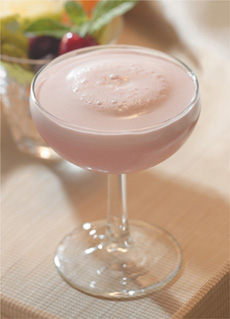
    This Bloody Vampire Martini is a citrus Martini
    with blush of “blood” and an impaled cherry.
    Photo courtesy Betty Crocker | General Mills.
     

    For Ambiance: Halloween CDs

  • The classics: Monster Mash, Ghostbusters, The Addams Family theme, Martian Hop and more; or this CD which includes The Reaper, Time Warp, Monster Mash, Ghostbusters and Witch Doctor
  • Halloween Music Collection by Midnight Syndicate
  • How can you pass up 100 Halloween Hits?
  •   

    Comments off

    The Nibble Webzine Of Food Adventures


    © Copyright 2005-2026 Lifestyle Direct, Inc. All rights reserved. All images are copyrighted to their respective owners.