THE NIBBLE BLOG: Products, Recipes & Trends In Specialty Foods


Also visit our main website, TheNibble.com.

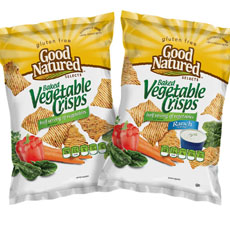
PRODUCT: Good Natured Vegetable Crisps

vegetable-crips-2-bags-herrs-230
A new way to eat your veggies! Photo courtesy Herr Foods.
  Americans love salty snacks, as evidenced by the never-ending stream of new chips on the market.

From Herr’s, an estimable regional potato chip producer, comes a tasty new line in their Good Natured Selects series of baked crisps: gluten-free veggie chips called Vegetable Crisps, in Original and Ranch.

In addition to flavor and crunch, they contain a half serving of your DV of vegetables in every ounce serving, which includes 35% of your DV of vitamins A and C.

Real bell peppers, carrots and spinach in each chip deliver vitamins, with a flavor profile and texture that will please the most invelterate junk food lover (and those who’d like something better, too).

Similar to other crunchy snacks, they’re 110 calories per one-ounce serving.


Made from the finest all-natural ingredients, the chips contain no artificial ingredients or preservatives, no satuarated fat or trans fat. They’re certified kosher, OU(D).

For the veg-averse, eating veggies will never taste better.


Comments off

TIP OF THE DAY: Fun With Asparagus

It’s asparagus season: The bright green stalks are at their freshest, most flavorful and affordable. In addition to the familiar green, look for purple and white asparagus.

In the April-June window of fresh American-grown asparagus, you can simply steam fresh stalks to al dente—so tasty they don’t even require butter or lemon mayonnaise.

Low in calories, asparagus are a dieter’s delight. Plan how you’ll enjoy asparagus season in new and different ways.

Sure, it’s delicious for

  • Breakfast: in an omelet, frittata, scrambled eggs, poached eggs or as a side with Eggs Benedict.
  • Lunch: added to a salad, a conventional sandwich or a wrap; make a salad with sliced beef or lamb; asparagus soup.
  • First Course: asparagus with red grapefruit; asparagus with bacon or pancetta*.
  • Dinner: An asparagus salad with your protein (here, Greek style with feta, kalamata olives, mint and red onion); grilled salmon with asparagus and pineapple salsa; scallops with asparagus and morels.
  •    
    asparagus-crudites-kaminsky-230
    You don’t even have to cook. Just lightly steam asparagus in the microwave for a minute or more. Photo © Hannah Kaminsky | BittersweetBlog.com.
  • Sides: grilled asparagus (recipe with mushrooms and shaved Parmesan), grilled rack of asparagus, sweet and spicy asparagus; stir-fried; pickled asparagus.
  • Or, make asparagus Pasta, pizza or risotto.
  •  
    *Cook the bacon, then use the drippings to moisten the asparagus. Top with cut or crumbled bacon, and sprinkle with optional grated Parmesan.


    crostini-asparagus-kaminsky-230
    Crostini, topped with hummus and sliced asparagus. Photo © Hannah Kaminsky | BittersweetBlog.com.
     

    ASPARAGUS FOR SNACKING OR HORS D’OEUVRE

  • Snack on plain, steamed asparagus for a delicious low-calorie snack. You can mix yogurt and Dijon mustard or use balsamic vinaigrette if you need a dip.
  • Include asparagus in a crudités platter (for uncooked asparagus, look for the thinnest ones; or blanch thicker ones).
  • Add asparagus to a snacking plate of hummus or other spreads and dips, charcuterie, cheese, gherkins and/or olives with crackers or breads.
  • Make asparagus crostini, with either hummus or grated cheese.
  •  

    HOW TO BUY ASPARAGUS

    Select bright green asparagus with closed, compact, firm tips and smooth, tender skin. Try to find even-size spears. Size is measured by diameter, and ranges from small (3/16 inch) to jumbo (7/8 inch).

    The tenderness of the asparagus relates to color, not size. The greener (or whiter for white asparagus) the spears, the more tender they’ll be.

     
    Fat spears are just as tender as thin ones; the only difference is that the ends of fatter asparagus are woodier at the cut end.

    With very thin asparagus, you can often eat the last millimeter. If you’re concerned that they won’t be tender, cut them off and try them once they’re steamed. Then, toss them into omelets, rice, salads, etc. If they’re too tough to enjoy, you can use them in a purée, sauce or soup.

    Of course, you should cut off the dried out cut end before cooking.
     
    HOW TO PREPARE ASPARAGUS FOR COOKING

  • If the tips of the asparagus are slightly wilted, freshen them by soaking them in cold water.
  • Keep fresh asparagus moist until you intend to use it—in the fridge, wrapped in a damp paper towel inside a plastic bag.
  • The bottom of asparagus stalks are tough and should be trimmed before cooking. Using a vegetable peeler, first lightly strip off the bottom few inches of skin. Next, gently bend the bottom of the stalk until it snaps off. Don’t force it—it will naturally break in the correct spot.
     
    THE HISTORY OF ASPARAGUS

    The asparagus plant is a member of the lily family, Asparagaceae, which also includes agave. There are more than 300 species of asparagus, most of which are grown as ornamental plants.

    Asparagus were first cultivated more than 2,000 years ago in the eastern Mediterranean region.

    The ancient Greeks and Romans prized asparagus for its unique flavor, texture and alleged medicinal qualities. The vegetable gained popularity in France and England in the 16th Century; King Louis XIV of France enjoyed this delicacy so much that he had special greenhouses built to supply it year-round. Early colonists brought it to America.

    Asparagus is a perennial plant raised in furrowed fields. It takes about three years before the plants produce asparagus. The delicate plant needs a temperate climate and requires much hand labor in all phases of cultivation. The spears are cut by hand when they reach about 9 inches in length.

    Asparagus is nutritious: a good source of calcium, magnesium, vitamin B6 and zinc; and a very good source of copper, dietary fiber, folate, iron, manganese, niacin, phosphorus, potassium, protein, riboflavin, selenium, thiamin, vitamin A, vitamin C, vitamin E (alpha tocopherol) and vitamin K. It is very low in calories, and contains no fat or cholesterol.

    Eat up!
      

  • Comments off

    TRENDS: Restaurant Produce

    Many of us who love to cook get ideas from creative restaurant chefs. It’s their job to present new and different preparations to tempt customers.

    It could be as simple as produce (NB the onslaught of kale, first in restaurants, then in our homes). What’s next?

    Nation’s Restaurant News polled nearly 1,300 chefs in its annual What’s Hot survey. The chefs pointed to produce that distinguishes them from their competitors and gives them cred for sourcing specialty items. Here are what they see as the top produce trends for 2015.

    LOCALLY GROWN PRODUCE

    Consumers like to see locally grown produce on the menu. It shows support for the community, an appreciation for seasonality and reduction of carbon miles, the extra fuel required to the transport food from farther distances. It is the top trend noted by the chefs in the survey.

      chervil-bunch-www.herbtable.com-230
    Easy for home cooks: Try chervil instead of parsley. Photo courtesy HerbTable.com.
     
    ORGANIC PRODUCE

    Americans have growing awareness of the desirability of organic produce—fruits and vegetables raised without artificial pesticides or fertilizers. “Organic” on a menu is well received (even when consumers don’t buy organic produce for their own kitchens); and all-organic chains such as Sweetgreen are finding success.
     

    UNUSUAL HERBS

    It’s time to think beyond parsley. Chefs with classical French training are turning to chervil as a garnish, Mexican restaurants are wrapping more foods in hoja santa and Japanese chefs are using kinome, leaves of the sansho/Szechuan pepper plant.

     
    HEIRLOOM FRUIT

    Heirloom apples, grown from seeds that are passed down from generation to generation, are making a comeback. Heirloom foods fell out of favor because they are more difficult to grow, more expensive and/or other reasons that made farmers turn to other varieties—even if those varieties are less flavorful. You can look for heirloom varieties in your local farmers market. Ask the farmer to point them out.

     
    EXOTIC FRUIT

    Chefs have a growing interest in fruit that’s a little out of the ordinary. It could be açaí and goji berries added to fruit beverages and fruit salads, or desserts made with Asian pear or dragon fruit.

    What’s your favorite fruit or veggie trend?
      

    Comments off


    © Copyright 2005-2026 Lifestyle Direct, Inc. All rights reserved. All images are copyrighted to their respective owners.