THE NIBBLE BLOG: Products, Recipes & Trends In Specialty Foods


Also visit our main website, TheNibble.com.

PRODUCT: Ciao Bella Gelato & Sorbetto

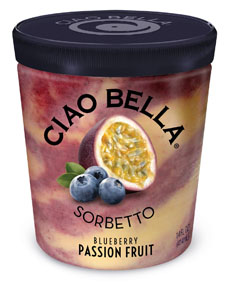
blueberry-passionfruit-pint-230
Blueberry and passion fruit unite in swirls
of sorbetto. Photo courtesy Ciao Bella.
  Ciao Bella, maker of premium gelato and sorbetto, recently introduced two new flavors, and sent us samples. We’re longtime fans of Ciao Bella. Before they hit the big time, they were a destination scoop shop in our town—way back in 1983.

So we weren’t surprised at how much we liked the new varieties, both comprising two swirled flavors:

  • Blueberry Passion Fruit Sorbetto swirls gentle blueberry sorbet with sweet-tart passion fruit. The result: a beautiful and refreshing dessert that tastes like summer.
  • Chocolate Mascarpone Gelato swirls sweet, rich double cream gelato with hearty milk chocolate gelato, creating perhaps the best chocolate and vanilla swirl ever.
  •  
    The flavors are available now at Whole Foods Market locations nationwide, $4.99 per 14-ounce container. For more information visit CiaoBellaGelato.com.

    We love ice cream and gelato* experience made us realize how truly wonderful a finet sorbet is. The emphasis is on “fine.”

     
    Because sorbet made with the best quality fruit can be transformative—the experience of soft, frozen fruit as opposed to a sweet, frozen dessert.

    While the gelato comforted us with its creaminess, the sorbetto woke our taste buds and made them dance. We felt not only happy, but lucky to be tasting such a wonderful incarnation of blueberries and passion fruit.

     
    *In the U.S., there is no federal standard for gelato, so anything can be called gelato. However, here’s the difference between American ice cream and Italian-style gelato.


    WHAT IS MASCARPONE

    Mascarpone is often refer to as Italian cream cheese; but please, don’t think of this rich, lush, soft fresh cheese as anything resembling a brick of foil-wrapped cheese† filled with gum.

    Made from cream, not milk, mascarpone is the richest fresh cheese, ranging in butterfat content from 70% to 75%. As points of reference:

  • A French double-crème Brie or Camembert has 60% to 75% butterfat.
  • French triple-crème cheeses must have a butterfat content of 75% or more.
  • Butter has a minimum of 80% fat in the U.S., 82% in France; going up to 86% for premium butters.
  •  
    Mascarpone is delicate in flavor, with a color not surprisingly like that of fresh cream. In the U.S., mascarpone is most often associated with desserts, especially the classic tiramisu or as a topping for berries.

      Mascarpone-230
    A dish of creamy mascarpone. Photo by Melody Lan | THE NIBBLE.
     
    But it can be used in savory recipes as well—pasta sauce, savory tarts/tartlets, stuffed chicken and tortas, among others. Wherever it goes, it adds to the creaminess and richness of the dish without overwhelming the taste.

    Pronounce It Correctly!

    Mascarpone may have the distinction of being the most misspelled and mispronounced cheese. Too many Americans call it “marscapone.”

    The correct pronunciation is mas-car-POH-neh. It is not, let us repeat not, mar-sca-POH-neh.

    The cheese is believed to have originated in the Lombardy region of Italy, in the late 1500s or early 1600s. Lombardy, in the northern part of the country (it includes the cities of Brescia, Cremona, Mantova, Milano and Sondrio), has a rich agricultural and dairy heritage.

    The name likely derives from “mascarpia,” the local dialect term for ricotta, because both ricotta and mascarpone are made by very similar processes. Mascarpone could have been a glorious accident in the preparation of ricotta. No cheese starter or rennet is used in its production; the moisture is drained from heavy cream using a small amount of citric acid and finely woven cloth.

    You can make it at home. Here’s a recipe.

    †Philadelphia Cream Cheese, for example, consists of milk and cream, whey protein concentrate, salt, carob bean gum, xanthan gum and cheese culture.
      

    Comments off

    RECIPE: Polenta Pesto Lasagna, Gluten Free

    Polenta-Pesto-Lasagna-saucesnlove-230
    [1] Lasagna that substitutes sliced polenta (gluten-free, made from corn) for wheat lasagna noodles (photo © Sauces’n Love).

    DeLallo Pesto
    [2] You can get a jar of pesto at any supermarket (photo © DeLallo).


    We love lasagna, and try most recipes we come across to see if they’re better than Mom’s.

    Here’s a vegetarian version with polenta and pesto (you of course can add sausage or other meat). Gluten-free polenta replaces the traditional wheat noodle lasagna.

    The recipe was created by Loretta Lamont for Sauces ’n Love, one of our favorite lines of Italian sauces, Loretta used Sauces ‘n Love marinara and pesto sauces.

    We made our own variation, sprinkling oregano over the ricotta layer and adding crumbled sausage over the second pesto layer.

    Prep time is 30 minutes, cook time is 20 minutes.
     
     
    RECIPE: POLENTA & PESTO LASAGNA

    Ingredients For 2 Servings

  • Pam or other cooking spray
  • 8 ounces ricotta cheese
  • 1 egg
  • 1/2 teaspoon garlic powder
  • Fresh-ground pepper to taste
  • 2 packages (18 ounces each) polenta, cut into 1/4” slices
  • 1 jar marinara sauce
  • 1 jar pesto sauce
  • Optional: oregano or sausage, thinly-sliced or crumbled
  • 1-1/2 cups mozzarella cheese, thinly sliced
  • 1 cup shredded Italian cheese blend (substitute shredded
    mozzarella)
  • Optional: 1/4 cup pine nuts
  •  
    Preparation

    1. PREHEAT the oven to 375°F. Spray a 11” × 7” baking dish with Pam.

    2. MIX the ricotta with the egg, garlic powder, pepper and 1/2 cup mozzarella.

    3. PLACE a little sauce on the bottom of the baking dish, topped with a single layer of polenta. Spread a layer of pesto on top of the polenta.

    4. SPREAD the ricotta over the pesto; sprinkle on the optional oregano or the sausage. Arrange the sliced mozzarella on top of the pesto. Add a layer of sauce on top of the mozzarella followed by another layer of polenta.

    5. TOP with the shredded Italian cheese and sauce Bake for 40 minutes. Top with the remaining cheese and pine nuts and broil until the cheese and nuts are browned. Let rest for 20 minutes before serving.

     
    WHAT IS POLENTA?

    Polenta is the Italian word for cornmeal as well as a cooked dish made from it. In the first two centuries of America, our diets contained much cornmeal—in bread, breakfast cereal (cornmeal mush is cooked polenta) and other recipes.

    In the 19th century, cornmeal was largely replaced by refined wheat flour. Polenta is also refined: It is degerminated cornmeal, with the germ and endosperm removed.

    Here’s a delicious polenta stack appetizer recipe, and more ways to use polenta.
      

    Comments off

    TIP OF THE DAY: Quinoa Fried Rice

    Fried rice is a typically made from leftover steamed rice, stir-fried in a wok with leftover vegetables and meats. This leads to countless variations, not just in China but throughout the Pacific Rim.

    There’s American fried rice (with sliced hot dogs, popular in Thailand), curry fried rice, Filipino garlic fried rice, Indonesian fried rice (nasi goreng), kimchi fried rice and much, much more. Take a look.

    Then, perusing some online photos from PF Chang’s, we found this photo of quinoa fried rice, topped with a fried egg. So today’s tip is:

    When you have leftover cooked grains of any kind, turn them into “fried rice.”

    Of course, you don’t need leftovers. You can cook the grains from scratch for the recipe. In addition to those you commonly cook, this is an opportunity to try something new from this list:

  • Barley
  • Buckwheat
  • Bulgur
  • Couscous
  • Farro
  • Kasha
  • Rice (black, brown, red, wild, white)
  • Quinoa
  •    
    quinoa-fried-rice-pfchangs-230

    Have “fried rice” topped with an egg for breakfast, lunch or dinner. Photo courtesy PF Changs.


    RECIPE: QUINOA FRIED RICE

    If you want to serve a cooked egg on top of the quinoa, you can opt to leave out the raw eggs that get scrambled into the grain at the end. We prefer using both.

    You also can add leftover corn, beans, or what-have-you. If the item is soft (cooked zucchini, e.g.), add it at the end to warm it, without cooking it further.

    And of course, dice any leftover meat or seafood and add it at the end, also to warm.

    Ingredients For 3 Servings

  • 2½-3 cups cooked* quinoa or other grain
  • 1½ tablespoons teriyaki sauce
  • 2½ tablespoons soy sauce
  • ¾ teaspoon sesame oil
  • 1 tablespoon olive oil, divided
  • ¼ small onion, chopped
  • 2 carrots, peeled and chopped
  • 3 scallions, chopped and divided
  • 3 garlic cloves, minced
  • ½ teaspoon fresh ginger, minced
  • 1 tablespoon olive oil
  • 2 eggs, raw
  • ½ cup peas, fresh, cooked or frozen/thawed
  • Optional: 3 eggs, cooked
  •  
    *If cooking from scratch for this recipe, cool the grain to room temperature, or preferably overnight in the fridge.


    quinoa-methylsoy-wiki-230
    Quinoa grows in black, red and white varieties. Above, raw white quinoa seeds. Photo by Methyl Soy | Wikimedia.
     

    Preparation

    1. MIX the sauce: Combine the teriyaki sauce, soy sauce and sesame oil in a small bowl. Set aside.

    2. FRY or poach the eggs and keep warm.

    2. HEAT ½ tablespoon of the olive oil in a large sauté or frying pan over a high heat. Add onion and carrots and cook for two minutes.

    4. ADD 2/3 of the scallions, the garlic and the ginger to the pan. Cook for another two minutes. Add the rest of the olive oil and the quinoa. Stir-fry about two minutes.

    5. ADD the sauce and stir-fry until incorporated, about two minutes. Make a well in the center of the quinoa; add the raw eggs and stir to scramble.

    6. ADD the peas and stir until they are warmed through. Top with the optional fried/poached egg, garnish with the remaining scallions and serve.


    Comments off


    © Copyright 2005-2026 Lifestyle Direct, Inc. All rights reserved. All images are copyrighted to their respective owners.