|
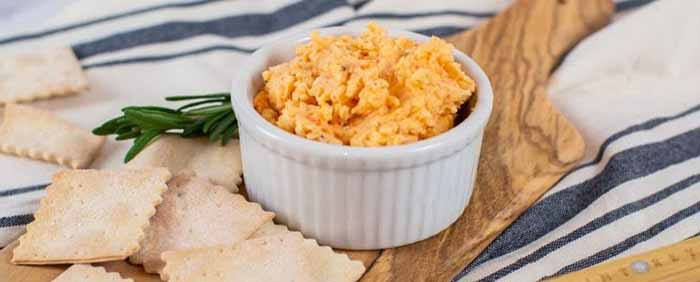
Although it was invented “up North,” pimento cheese is known as a Southern specialty, along with barbecue, catfish and hush puppies, grits, red velvet cake, and sweet tea. Yet, according to a Southern culinary historian, the soft cheese and red bell pepper spread is a Northern invention.
The recipe to make your own pimento cheese is below, following the history of pimento cheese.
October 11th is Southern Food Heritage Day. April 9th is National Pimento Cheese Day.
But we love pimento cheese so much, we’re happy to celebrate it most days.
Below:
> The history of pimento cheese
> Ways to serve pimento cheese at every meal.
> Recipe: Make pimento cheese at home.
> Ways to elevate your recipe.
> Pimento vs. pimiento.
> The history of pimentos.
> The difference between bell peppers and pimentos.
Elsewhere on The Nibble:
> The history of cheese.
> The different types of cheese: a photo glossary.
> The history of chile peppers.
> The different types of of chile peppers: a photo glossary.
> The year’s 30 cheese holidays.
THE HISTORY OF PIMENTO CHEESE
Today’s combination of grated Cheddar cheese, mayonnaise, seasonings and finely diced red pimento (the Americanized spelling of the Spanish pimiento, red bell pepper) started in the North as a cream cheese-based spread.
It blended the newly-introduced blocks of cream cheese with canned pimentos, newly imported from Spain.
The two ingredients may have been first combined by home economists, women who developed new recipes, and other tips for homemakers that were eagerly read in books, magazines, newspapers, and on product labels.
In the 1870s, New York State farmers began to make a soft, unripened cheese modeled after the French Neufchâtel cheese.
Within a few decades, a recipe for cream cheese appeared, made by mixing cream into the Neufchâtel curd. The new soft cheese was molded into small wood block forms.
Because the city of Philadelphia had a reputation for fine food, a New York-based manufacturer, Phenix Cheese Company, named its product Philadelphia Brand Cream Cheese.
It was the leading brand then as now (J.L. Kraft and Bros., established in 1909, acquired Phenix Cheese Company in 1930; the company is now called Kraft Foods Group).
Philadelphia Brand actually sold two kinds of flavored cream cheese in addition to the original plain: Chive and Pimento.
All three were staples in our home.
Alas, Philadelphia Pimento Cream Cheese was discontinued a few years ago in favor of a dozen more modern flavors, including Blueberry and Spicy Jalapeño.
It seems that today’s consumers would rather have Garden Vegetable Cream Cheese than Pimento. Chive has survived as Chive & Onion.
April 9th is National Pimento Cheese Day (as declared by The Fresh Market in 2016).
The Pimento Cheese Sandwich Takes Hold
The cream cheese/pimento spread became a standard on tea sandwiches, and spread (no pun intended) from the tea party set to the working class.
It found its way onto lunch carts, along with the egg salad and ham and cheese sandwiches; and into sandwich shops and diners.
The first printed recipe unearthed so far is in Good Housekeeping magazine in 1908, for a sandwich filled that blended softened cream cheese, minced pimentos, mustard, and chives.
The following year, the Up-to-Date Sandwich Book published a simpler version: Neufchâtel cheese with chopped pimentos and a bit of salt on lightly buttered white bread.
Before World War I, dozens of similar recipes appeared in magazines and cookbooks.
Soon after World War I, southern farmers began growing pimentos. Locals mixed the canned domestic pimentos with grated Cheddar instead of cream cheese, which was then less available in the southern states.
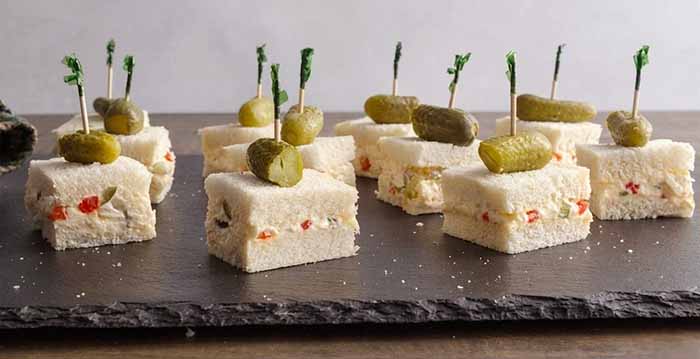
In the South, pimento cheese remains a choice on tea room menus, sliced into triangles; and as a finger sandwich with cocktails.
Commercial brands of pimento cheese can be found in most supermarkets, to be spread on crackers at home. Every home cook has his or her favorite recipe.
The contention among Cheddar fans whether to use yellow or white cheddar, or a combination of the two.
Some people like their pimento cheese creamy, with hand-grated cheese and extra mayonnaise, while others prefer a drier, chunkier spread blended in a food processor.
Some family recipes require a specific kind of mayonnaise or hot sauce. Additional ingredients can range from grated onion to ketchup to Worcestershire sauce
HOW TO SERVE PIMENTO CHEESE AT EVERY MEAL
#1: PIMENTO CHEESE FOR BREAKFAST
If you want a taste of the original pimento cheese, you’ll have to blend your own diced pimentos into cream cheese.
But if you want to embrace Southern-style pimento cream cheese, here’s how to do it, along with a recipe to make your own Cheddar-based pimento cheese:
Breakfast tortilla: Warm a corn tortilla in a skillet or the microwave. Spread with pimiento cheese and top with two fried eggs and salsa. Optional garnishes: chopped green onions, sliced black olives, chopped fresh herbs.
Cheese omelet
Toast spread (bacon optional)
Poached eggs on pimento cheese toast
#2: PIMENTO CHEESE FOR LUNCH & DINNER
Baked potato/stuffed potato or sweet potato
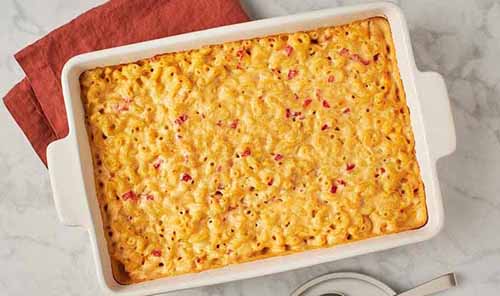
Macaroni and cheese (photo/recipe below
Potatoes gratin
Quick fondue

[9] How about pimento mac and cheese? Here’s the recipe (photo © Taste Of Home).
#3: PIMENTO CHEESE FOR HORS D’OEUVRE & SNACKS
|
|
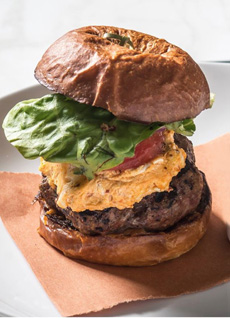
[1] The pimento cheeseburger served at Gardenia restaurant in New York City’s Greenwich Village (photo © Gardenia).
[2] Don’t forget the hot dog, here topped with pimento cheese and some fresh jalapenos (photos #2 and #3 © Birdie’s Pimento Cheese).
[3] A pimento cheese and bacon sandwich on a biscuit.
[4] A pimento cheese quiche (photo © Callie’s Hot Little Biscuits | Facebook).
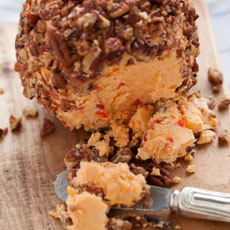
[5] Party perfect: a pimento cheese ball Here’s the recipe. (photos #5 and #8 © Wisconsin Cheese).
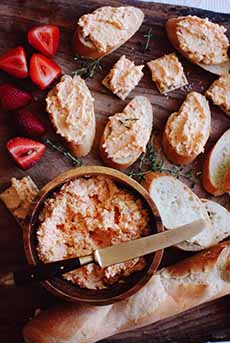
[6] With wine, beer or cocktails: pimento cheese and crackers, toasts or sliced baguette. Here, we used artisan nut bread (photo by Katharine Pollak | © THE NIBBLE).
[7] Pimento cheese with crudites (photo © 33 Greenwich | NYC [now closed])
[8] For entertaining or snacking: a crock of pimento cheese and sliced baguette or toasts.
|
|
Crudité dip (add more milk, cream, or mayo to thin to the desired consistency)
Cracker/toast/crostini spread
Deviled eggs (mix with the yolks)
Stuffed celery
Stuffed cherry tomatoes or baby potatoes
RECIPE: PIMENTO CHEESE SPREAD
The original pimento cheese was made with Philadelphia cream cheese (photo #10). You can find recipes made with Cheddar, Cheddar-cream cheese blends, and other cheeses. Being from New York, the capital of cream cheese, our mother made “the original.”
This recipe is southern-style with Cheddar, but you can try Dolly Parton’s cream cheese-based pimento spread whenever you like.
Ingredients
1-1/2 cups mayonnaise
1 jar (4 ounces) diced pimiento, drained
1 teaspoon Worcestershire sauce
1 teaspoon finely grated onion
1/4 teaspoon cayenne (ground red pepper)
1 block (8 ounces) extra-sharp Cheddar cheese, finely shredded
1 block (8 ounces) sharp Cheddar cheese, shredded
Preparation
1. COMBINE the mayonnaise, pimiento, Worcestershire sauce, onion, and cayenne in a large bowl. Stir in the cheese.
2. CHILL in the refrigerator to let the flavors meld. Serve at room temperature. The spread can be stored in the fridge for up to 1 week.
Recipe Variations
To elevate pimento cheese beyond the traditional base of cheddar, pimento, and mayonnaise, you can incorporate ingredients that introduce complexity through umami, heat, or texture.
CAROLINA STYLE: Add 1/4 cup diced olives and jalapeños.
CREAMY: Make the spread creamier by blending in 4 ounces of cream cheese.
HOLIDAY: Add 1/4 cup cranberry sauce (preferably whole cranberry sauce).
MEXICAN: Add 1 tablespoon chipotle in adobo sauce, drained; or 1 teaspoon dried chipotle. Adjust quantity to taste.
ONION: Add finely-diced red onion and fresh parsley to taste.
SMOKY: Add 1/4 cup cooked bacon, drained and crumbled.
SALTY: Bits of crisped-up country ham or prosciutto:for a salty crunch.
SWEET & TANGY: Add some pickle relish. Start with a heaping tablespoon, drained.
GOURMET: Scroll below the photo.
[10] Here’s Dolly Parton’s pimento cheese recipe. Note that she prefers a base of cream cheese instead of Cheddar (photo © Taste Of Home).
THE GOURMET TOUCH: WAYS TO ELEVATE THE RECIPE
UMAMI: Drizzle aged balsamic or hot honey over the top (or swirling it in) balances the fat of the cheese with sweetness and acidity. While a dash of Worcestershire—made from anchovies—is traditional, adding a drop of high-quality fish sauce like colatura di alici can deepen the savoriness.
GOURMET CHEESE: Swap out (or supplement) the Cheddar with smoked Gouda to add a wood-fired depth,; Manchego provides a nutty, buttery finish.
PICKLED/BRINED: Castelvetrano olives pair beautifully with Cheddar. Pickled jalapeños or pepperoncini bring a bright, vinegar-forward heat that cuts through the creaminess of the mayo. Some chefs use the seeds from pickled okra for a unique texture and a sharp pop of vinegar. And how about Gourmet versions mix in pickled ramps?
.
AROMATICS & SPICES: Substitute the raw garlic with smashed roasted garlic cloves; used Spanish pimentón (smoked paprika) for a rich, smoky aroma and a vibrant orange hue; and most easily, add finely minced dill or chives for a garden-fresh lift that lightens the heavy profile of the dip.
TEXTURE: Crushed, toasted pecans is a classic Southern touch; as a garnish, salt-and-vinegar or kettle-cooked chips.
Tip for Consistency: If you’re using “wet” ingredients like olives, be sure to pat them thoroughly dry before folding them in.
PIMENTO VS. PIMIENTO
You’ll see both spellings on cans and jars and in recipes. Are they both correct?
In most culinary contexts, they refer to the same sweet, heart-shaped red pepper, but there is a notable linguistic divide depending on where you are.
“Pimiento” is the original Spanish spelling, the word for “pepper,” while “pimento” is an English loanword. In the U.S. and Europe, “pimiento” is often used to describe the specific variety of mild red pepper (Capsicum annuum) used for stuffing olives or making pimiento cheese.
“Pimento,” without the “i”, is an English loanword variation. Just to complicate things…
In many parts of the world, and particularly the Caribbean island of Jamaica, “pimento” refers to allspice (Pimenta dioica), which is a dried berry rather than a vegetable.
[11] Growing pimentos (Gemini Photo).
THE HISTORY OF PIMENTO
First, let’s blame Christopher Columbus. Columbus got lost and ended up renamed everything incorrectly. See the *footnote for the fun facts.
The Great Misunderstanding
In 1492, as every schoolchild knows, Columbus sailed west in search of the East Indies hoping to get hold of their lucrative black pepper (Piper nigrum). When he inadvertently arrived in the Caribbean and tasted the local spicy fruits (chile peppers are fruits), he believed he had found what he was looking for.
He called them “pimienta,” the Spanish word for peppercorn.
Similarly, he mis-named chilis, the Aztec (Nahuatl) word for what we call chiles/chilis/chillies, peppers.
While chile peppery were a completely different genus (Capsicm) unrelated to peppercorns (Piper), the name stuck.
Eventually, the Spanish distinguished between the two:
Pimienta: Black peppercorns.
Pimiento: The larger, fleshy capsicums (bell peppers and pimientos).
The history and more continue below the photo.
[12] Wonderful with beer, wine, and cocktails. Treat yourself to an order from one of our favorite cheesemakers (photo © Point Reyes Farmstead Cheese Co.).
Pimientos Go Global
When Spanish explorers returned home with the fruit, farmers selectively bred the peppers to be sweeter and milder, eventually creating the “pimiento” we know today: low in heat (capsaicin) but high in sugar and aroma.
By the 18th century, pimientos were being used to stuff olives to balance the saltiness of the olive. Initially done by hand, the process was mechanized in the early 20th century by using a pimiento-flavored gel or paste to ensure uniform strips.
Pimiento Cheese Is Born
In the late 1800s, canned pimientos were imported to the U.S. from Spain. When they were paired with New York’s newly invented cream cheese, a domestic classic was born.
Over time, American English dropped the “i,” and “pimento cheese” became the standard American spelling.
BELL PEPPERS VS. PIMENTOS: THE DIFFERENCE
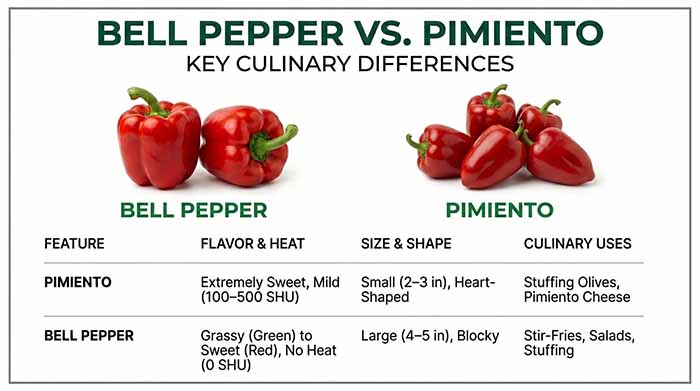
While bell peppers and pimientos are both members of the species Capsicum annuum, they have distinct differences in flavor, texture, and heat levels. Both are excellent for both cooking and eating raw.
Flavor and Sweetness
Pimientos are significantly sweeter and more aromatic than bell peppers. While a red bell pepper is sweet, a pimiento has a deeper, more succulent flavor profile.
Bell Peppers, red bell peppers especially, but also the newer orange, purple, and yellow, are sweet and fleshy, making them crunchy when raw.Green bell peppers, which are actually unripe (they’ll turn red), have a more vegetal taste and can be slightly bitter when eaten raw.
Heat Level (Scoville Scale)
Even though both are considered ““sweet” chile peppers, they sit on different rungs of the Scoville Scale:
Bell Peppers rank at 0 (zero) SHU (Scoville Heat Units). They are the only members of the capsicum family that contain no capsaicin, the active compound in chiles that produces a hot, pungent sensation by activating TRPV1 receptors.
Pimentos rank between 100 and 500 SHU. While this is extremely mild (a jalapeño is 2,500+ SHU, for example, and here is how the others rank), they technically have a “tiny kick” that bell peppers lack.
Gemini Chart.
________________
*Columbus’s journals and maps are famous for a re-naming thing. In addition to renaming pimiento and chiles, here are the other significant things he renamed or misnamed:
People and Lands: His most famous error was calling the indigenous Lucayan, Taíno, and Arawak peoples Los Indios “Indians.” He died still largely convinced he had reached the eastern shores of India. The very first island he reached was known as Guanahaní by the native Lucayans. Columbus immediately renamed it San Salvador (“Holy Savior”). He renamed the island of Xaymaca (which meant “land of wood and water”) Santiago, after Saint James. Fortunately for modern travelers, the original Arawak name outlasted his, eventually becoming Jamaica. He sighted the island the native Taíno called Borikén and christened it San Juan Bautista. While the island is now Puerto Rico, the name he gave it survives as the name of its capital city, San Juan.
Geographic Features: Because of his geographical confusion, he called the entire Caribbean archipelago the Indies. Later, after the error was realized, the name was modified to “West Indies” to distinguish them from the “East Indies” in Asia. After a violent clash with the Ciguayo people who refused to trade their weapons, Columbus named their inlet Xamaná (often modernized as Samaná) the Golfo de Las Flechas (“Bay of Arrows”). He often named islands based on the day he saw them or in honor of religious icons. Dominica was named for Sunday (Dominica in Latin), and Trinidad was named for the Holy Trinity.
Other Flora and Fauna When Columbus encountered Caribs smoking pipes, he allegedly thought the pipe itself was called a tavaco. The name eventually shifted to describe the plant being smoked, giving us the word tobacco. He named Costa Rica the “Rich Coast” under the assumption that the gold ornaments worn by the locals meant the land was filled with gold mines (the gold had actually been imported).
From the perspective of indigenous studies, he is often termed a “toponymic colonizer.” A toponym is a place name. By systematically stripping away names like Guanahaní or Xamaná and replacing them with San Salvador or Golfo de Las Flechas, he was practicing “symbolic dispossession.” Renaming is not a neutral act; it is a way to overwrite an existing culture’s map with your own.
CHECK OUT WHAT’S HAPPENING ON OUR HOME PAGE, THENIBBLE.COM.
|