THE NIBBLE BLOG: Products, Recipes & Trends In Specialty Foods


Also visit our main website, TheNibble.com.

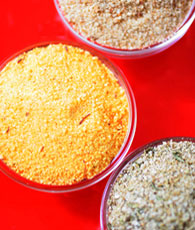
TIP OF THE DAY: Blend Your Own Seasoned Salt

If you shake salt on your food, one of the easiest ways to add more flavor is to use a seasoned salt. Why not add other seasonings at the same time?

Perhaps that’s why Lawry’s Seasoned Salt, created in 1938 to season the prime rib served at Lawry’s restaurant in Beverly Hills, has remained a prominent fixture on the spice rack in many households.

The blend of salt, herbs and spices (garlic, onion, paprika and turmeric, plus sugar—here’s the copycat Lawry’s Seasoned Salt Recipe) adds more flavor than salt alone.

Home cooks found that it worked on everything, from breakfast eggs to any grain, protein, starch or vegetable.
 
BUYING FLAVORED SALTS

Over the last decade, numerous specialty food artisans—Urban Accents, Saltworks and quite a few other—have created collections of seasoned salts, with a base of sea salt. Even McCormick has joined in, with 11 McCormick sea salt grinders from Chipotle to Sweet Onion.

   
/home/content/p3pnexwpnas01_data02/07/2891007/html/wp content/uploads/salts ritrovo 230w

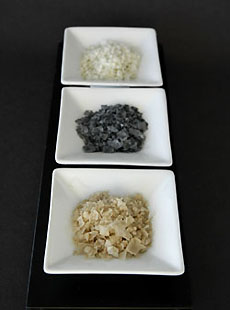
Casina Rossa seasoned sea salts from
Italy—Porcini, Saffron, Edible Flowers,
and others, are available from Seasoned
Sea Salts
. Photo by Naheed Choudhry |
THE NIBBLE.

 
The Urban Accents blends tend to mirror popular cuisines: Caribbean, Indian (curry and mango), Mediterranean, Provençal (herbes de Provence), Spanish (smoked paprika).

The Fusion line of sea salts from Saltworks goes farther, with gourmet salts such as Black Truffle, Espresso, Ginger, Lemon, Lime, Maple, Matcha, Merlot, Sriracha, Sundried Tomato, Vanilla and White Truffle.

But at $15 or so per 3.5-ounce jar (more for pricier items like porcini and truffle), you might want to try blending your own with what you have on hand.

We’re addicted to truffle salts, and to Casa Rossa’s saffron salt. A pinch of salt lets us enjoy these two favorite flavors in everything from scrambled eggs to mashed potatoes and vinaigrette.

Unfortunately for us, it’s so costly to purchase dried saffron or truffles—two of the priciest ingredients in the world—that there’s no money to be saved by blending our own.

But there’s much more to blend than saffron and truffles.


/home/content/p3pnexwpnas01_data02/07/2891007/html/wp content/uploads/beauty 230
Coarse sea salt as a base for your seasoned
salts. Photo by Dhanraj Emanuel | THE NIBBLE.
  START BLENDING!

It takes just five minutes to blend salt, herbs and spices in a spice grinder. You can make them on an ad hoc basis, or make larger batches to store and use as needed.

Pick A Salt

If you don’t have sea salt on hand, start with kosher salt or table salt. After you get the hang of blending, you can try more exotic salts, such as:

  • Fleur de sel or sel gris from France
  • Black lava or red alaea salts from Hawaii
  • Pink Himalayan or kala namak salts from India
  • Smoked salt
  •  
    See our Salt Glossary for the different types of salts.
     
    Pick Your Seasonings

     
    Start with flavors you use in daily cooking: basil, chipotle, oregano, paprika, parsely, whatever. Pick as many as you like, although when starting out, limit your blends to salt plus four or five herbs/spices.
     
    You can also add ground pepper, although if you’re making enough to store, you may want to add it freshly ground. You can also add a pinch of white or brown sugar.
     
    Some basic blends to try:

  • Basic Seasoned Salt: salt plus garlic powder, onion powder and paprika
  • Lemon Pepper Salt: salt plus dried lemon peel and ground pepper
  • Rosemary Salt: salt plus garlic and rosemary
  • Celery Salt: salt plus dried celery leaves and celery Seeds (so much better than off-the-shelf celery salt!)
  • Hot & Smoky Salt: smoked sea salt plus ancho chiles and smoked paprika
  • Wild Mushroom Salt: salt plus dried chanterelles, dried porcinis, tarragon and white pepper
  •  
    Then, decide on ratios: which flavors do you want to be dominant, which flavors should be background hints.

    Start with twice as much salt as other flavors, and even less of hot flavors. You may find, after making different blends, that you’re using less salt and more herbs/spices.
     
    RECIPE: SAMPLE FLAVORED SALT BLEND

    Ingredients

  • ½ cup salt
  • ¼ cup each garlic and onion powders
  • ¼ cup ground black pepper
  • 2 tablespoons chili powder, chipotle, red pepper flakes, etc.
  • 3 tablespoons paprika
  • 2 tablespoons dried parsley
  •  
    Preparation

    1. COMBINE the ingredients in a mixing bowl and stir until well-combined. Working in batches, add the blend to a spice grinder and process into a fine powder. If you don’t have a spice blender, you can try a regular blender.

    2. STORE the salt in an airtight container. Store away from heat and light (as all herbs and spices should be stored!).
     
    If you want to make other blends but already have too much of homemade seasoned salt on hand, give it as gifts!
      

    Comments off

    FOOD FUN: Ice Cream Bar Trifle

    There are only a few days left of this year’s National Ice Cream Month. Here’s something a bit off the beaten track: an ice cream trifle. Is it a form of ice cream sundae or a variation of ice cream cake? Make it and take a vote.

    Trifle is an English dessert dish made from layers of custard, diced fruit, syrup or fruit juice and cubes of sponge cake, topped with whipped cream. It was traditionally served in a footed glass bowl.

    In QVC chef David Venable’s recipe, below, ice cream bars replace the custard and chocolate-covered pretzels replace the fruit and caramel takes over for the syrup.

    Adapt the recipe as you like, for example, trading the pretzels for sliced strawberries, and exchanging the chocolate cake for pound cake or ladyfingers. Instead of caramel, we tried a version with custard sauce (crème anglaise).

    David used Klondike bars in this recipe, easy to chop because there’s no stick. We prefer Magnum ice cream bars: better quality ice cream and chocolate coating, more flavor choices.

       
    /home/content/p3pnexwpnas01_data02/07/2891007/html/wp content/uploads/Klondike Bar Triffle qvc 230
    Ice cream bar trifle: Is it a jumbo ice cream
    sundae or a different approach to ice cream
    cake? Photo courtesy QVC.
     
    RECIPE: ICE CREAM BAR TRIFLE

    Ingredients

  • 3 packages frozen double-chocolate cake (10.8 ounces each) cut into 1″ pieces; we substituted fresh chocolate loaf cakes
  • 6 ice cream bars, each cut into 6 squares
  • 8 ounces dark chocolate-covered pretzels
  • 12 ounces caramel sauce
  • 16 ounces whipped cream or frozen topping
  •  

    /home/content/p3pnexwpnas01_data02/07/2891007/html/wp content/uploads/magnum almond icecreamBar 230
    Our favorite ice cream bar: Magnum. Photo courtesy Unilever.
      Preparation

    1. CUBE the cake first, then the ice cream bars. If using a fresh cake, freeze it first; it will be easier to cut. Freeze the cubes separately until ready to assemble.

    2. CRUSH the chocolate-covered pretzels gently into smaller pieces. Don’t over-crush—you want small pieces, not dust. Reserve 2 ounces to decorate the top of the trifle.

    3. PLACE 1/3 of the chocolate cake squares into a large trifle dish. Place 1/3 of the ice cream bar cubes on top, followed by 1/3 of the crushed chocolate-covered pretzels. Drizzle 1/4 of the caramel sauce over the pretzels and top with a 1/3 of the whipped cream. Repeat this order two more times, finishing with the whipped cream.

    4. ADD the rest of the caramel sauce and top with the reserved crushed chocolate-covered pretzels. Freeze immediately. David suggests that before serving, you should let the trifle sit at room temperature for 3–4 minutes so the cake can thaw slightly. We like eating frozen cake (especially in small cubes), and brought the trifle straight to the table.


    Comments off

    Mexican Street Food In Your Home: Elote & Esquites Grilled Corn Recipes

    Updated July 2026

    May 28th is National Something on a Stick Day, June 11th is National Elote Day, and July is National Corn Month.

    So today’s vote goes to elote (eh-LOW-tay), the Mexican version of corn on the cob, a popular Mexican street food, and equally popular made at home.

    Elote is the word for corn in the Nahuatl language of the Aztecs (the Spanish word for corn is maíz).

    The ears of corn are roasted or boiled in the husk, then husked and served on a stick with condiments.

    Instead of being slathered in butter only and served with corn holders American-style, elote condiments in addition to butter include chili powder, crumbled cotija cheese (and/or feta in the U.S.), lemon or lime juice, mayonnaise, sour cream (crema in Mexico), and salt.

    Chili powder and lime juice get the number one spot in Mexico, butter and cheese in the U.S.

    Elote is also made at home, where corn holders often replace the stick. (In our household, fingers replace the corn holders and the stick.)

    In some areas of Mexico, the cooked kernels are cut into a bowl, topped with the same condiments and eaten with a spoon. This dish is called esquites, and while some may find it less fun than food-on-a-stick, we’re on the Team Esquites.

    Not only is it neater to eat, but you can top your bowl with every condiment. Try to do that on a stick, and you may find yourself holding a condiment landslide.

    Below:

    > Is elote “corn porn?”

    > Recipe: elote or esquites with vegan cashew sauce.

    > Recipe: elote or esquites with conventional toppings.

    > Fusion recipe: Japanese elote.

    Elsewhere on The Nibble:

    > Host a DIY elote party bar.

    > The different Hispanic cheeses.

    > Fusion recipe: Italian elote.

    > The history of corn.

    > The history of elote.

    > The year’s 25+ Mexican and Tex-Mex food holidays.

    > The year’s 17 corn holidays.
     
     
    OPINION: IS ELOTE “CORN PORN?”

    Our colleague Hannah Kaminsky created what she calls “corn porn.”

    “The simplest elements of a meal,” says Hannah, “those unassuming side dishes that are all too often overshadowed by flashier, more expensive or more complex main dishes, serve up far more nuance than they’re given credit for. A perfect example of this is the humble ear of corn.

    “As summer marches on and those golden yellow kernels swell larger, juicier and sweeter underneath the hot sun, truly sumptuous fresh corn is a rare treat despite its ubiquity. A whole world of flavor can be found within those pale green husks, just beyond the tangled forest of corn silk, if only one knows how coax it out.

    “Finesse is the key to letting such a pared-down dish shine, accentuating the inherent flavor of is base ingredients without covering them up with a heavy-handed smattering of seasonings. Elote, served up either straight on the cob or sheared off and mixed up in the trolelotes presentation, is worth getting excited about.”
    ízquitl, toasted corn.)
     
    This variation is called esquites (or ezquites—photo #2) in southern and central Mexico, and troles or trolelotes in the north. The word esquites comes from the Nahuatl word ízquitl, which is pronounced iz-KEE-tay and means toasted corn.

    A vegan, Hannah eschews the butter, cheese, mayonnaise and sour cream used to bind the seasonings. Instead, she created the vegan sauce recipe below and serves the corn esquites-style, as kernels in a bowl.
     
     
    RECIPE #1: ELOTE OR ESQUITES WITH VEGAN CASHEW SAUCE

    Hannah created this variation with vegan cashew sauce.

    But you can serve the original condiments—butter, cotija cheese (substitute feta or use both), chili powder, lemon or lime juice, mayonnaise and sour cream—which are all available in conventional and vegan varieties. Just skip to Step 4.

    Ingredients For 6-8 Servings

  • 8 ears sweet corn, husked
  • 2 tablespoons olive oil
  • 1 cup raw cashews
  • 1 clove garlic, roughly chopped
  • 1/4 cup lime juice
  • 3 tablespoons nutritional yeast (vegan) or crumbled cotija or queso fresco cheese
  • 1 teaspoon light agave nectar
  • 1 teaspoon smoked paprika
  • 1/2 teaspoon cayenne pepper
  • 1/2 teaspoon salt
  • 1/2 cup water
  • 1/4 cup fresh cilantro, minced
  • Optional garnish: chili powder
  • Unconventional garnishes: diced jalapeños, pepitas
  •    
    Elote Grilled Corn

    [1] Make elote at home (photo © Good Eggs).

    Elote On A Stick

    [2] Elote is grab-and-go street food—on-a-stick. At home, you can use as many different garnishes as you like. Here’s the recipe (photo © Mexico In My Kitchen).

    Esquites Corn Salad

    [3] Esquites, a Mexican corn salad that is essentially, elotes off-the-cob (photo © Shop Cook Serve).


    [4] Esquites are a neater way to serve corn on the cob (photo © Goya).

    Cilantro & Lime Wedges
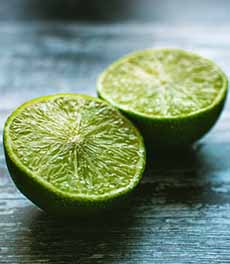
    [5] Cilantro and lime, accents that provide part of the signature flavor (photo © Lindsay Moe | Unsplash).

     
    Preparation

    1. SOAK the cashews for 3 hours and thoroughly drain them.

    2. MAKE the sauce. Place the cashews, garlic and lime juice in a food processor and pulse to combine. Pause to scrape down the sides of the bowl with a spatula so that the nuts are fairly well broken down. Add the nutritional yeast, agave, paprika, cayenne and salt, pulsing to incorporate.

    3. DRIZZLE in the water, allowing the motor to run slowly to blend thoroughly. The sauce should still be a bit coarse in texture, and the small pieces of cashew that remain will emulate the traditional curds of cotija cheese.

    4. COOK the corn on a hot grill, or indoors on a large griddle over high heat. Depending on the size of your cooking surface, you may need to work in batches since the corn must make full contact directly with the surface. Lightly brush the corn with oil and grill the corn until lightly charred, turning as needed. This process should take approximately 10 minutes, but let the color of the corn serve as your guide. Set aside to cool.

    5. CUT the kernels off the corn cobs and place them in a large bowl. Pour the cashew sauce on top and mix thoroughly. Add the fresh cilantro, tossing to combine. Divide the corn into 6 to 8 cups or bowls and top with a sprinkle of chili powder.
     
     
    RECIPE #2: TRADITIONAL ELOTE

    Ingredients

  • Base binder: mayonnaise or 50/50 mix of mayo and sour cream (Mexican crema)
  • Crumbled Cotija cheese (subsitute feta, grated Parmesan, or queso fresco)
  • Chili powder or Tajín seasoning,
  • Finished with a squeeze of fresh lime juice and a dash of hot sauce.The classic combination of toppings includes:The Creamy Base: Mayonnaise
  • Sticks, or good old corn holders
  •  
    Preparation

    1. BRUSH the base onto the grilled ears of corn and roll the in the crumbled cheese. Sprinkle with spices. Squeezed lime juice over the corn, and optional hot sauce.
     
    Esquites Corn Salad
    [6] Esquites are a tasty side dish. If you want a more substantial (but not traditional) variation, use them to top rice or other grains. Or make a more general corn salad by adding black beans, diced red onion, diced tomatoes, even olives (photo © Goya).
     
     
    RECIPE #3: FUSION FOOD, “JAPANESE ELOTE”

    Here’s a fusion food: Mexican elote made with Japanese condiments. For four ears of corn, mix:

  • 4 tablespoons unsalted butter, room temperature
  • 2 tablespoons white miso paste
  • Chopped chives (takes the place of traditional cilantro)
  • 1 teaspoon shichimi togarashi (substitute red pepper flakes)
  • Lime wedges for serving
  •  
    Preparation

    1. MIX the butter and miso paste and slather it on the hot corn. Sprinkle each ear with chives and shichimi togarashi. Serve with lime wedges.
     
    Italian Elote Corn On The Cob
    [7] Italian-style elote with basil pesto mayonnaise and Parmesan replacing cotija, and sweet golden balsamic vinegar. Here’s the recipe (photo © DeLallo).


    CHECK OUT WHAT’S HAPPENING ON OUR HOME PAGE, THENIBBLE.COM.


    Comments off


    © Copyright 2005-2026 Lifestyle Direct, Inc. All rights reserved. All images are copyrighted to their respective owners.