THE NIBBLE BLOG: Products, Recipes & Trends In Specialty Foods


Also visit our main website, TheNibble.com.

PRODUCT: Nonni’s Salted Caramel Biscotti

“Our new exciting flavor!” proclaims biscotti-maker Nonni’s, and they are right.

Nonni’s Salted Caramel Biscotti are a real find for the sweet tooth. Chunks of actual caramels are embedded in the biscotti, complemented by a quality chocolate dip and drizzle and a counterpoint of sprinkled sea salt.

One might think that was good enough, but there’s better news: Each biscotto is only 100 calories—a number for which we were grateful after polishing off half a box.

There’s a down side, of course: We enjoyed the Salted Caramel Biscotti so much, we couldn’t stop at one.

The company helps you with portion control, though: Each box contains eight individually wrapped biscotti.
If you can’t find the biscotti locally, you can buy them on Amazon.com:

  • Six boxes, $32.98, about $5.50 per box.
  • A bigger bargain is this case of 12 boxes for $41.88, about $3.50 per box.
  •  
    Bet you can’t eat just one of Nonni’s delectable salted caramel biscotti. Photo by Elvira Kalviste | THE NIBBLE.


    One box, eight delightful biscotti. Photo
    courtesy Nonni’s.
     

    What will you do with 12 boxes? Give them as special Halloween gifts or stocking stuffers.

    But once you taste them, we think you’ll keep them all. They’re a great excuse to host a coffee klatsch.

    Check out the history of biscotti and Mario Batali’s anisette or amaretto biscotti recipe.
    Find more of our favorite cookies and cookie recipes.
      

    Comments off

    TIP OF THE DAY: Make Peanut Brittle

    Americans have grown accustomed to a sweet dessert after dinner, or a baked treat as a snack with a cup of coffee.

    Instead, consider a couple of pieces of peanut brittle. They deliver sweetness, satisfying crunch and protein-packed peanuts. This recipe has a hint of coffee to complement your cup of joe.

    The prep time is 20 minutes, cook time 15 minutes, for a yield of ten 1/4-cup servings. And for those who don’t like corn syrup: This peanut brittle recipe is made without corn syrup.

    Switch It Up

  • You can make chocolate brittle by replacing the coffee with 2 tablespoons of baking cocoa.
  • You can substitute another nut to make almond brittle, macadamia brittle, pecan brittle, pistachio brittle or walnut brittle.
  • After you taste the first batch, you can adjust the sweetness the next time. (We typically use less sugar.)
  •  
    You can also make batches as hostess/host gifts.

     
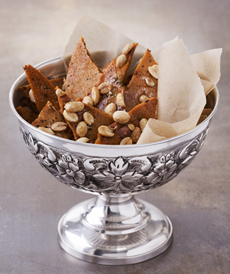
    It’s easy to make your own peanut brittle. Recipe and photo courtesy Nescafé.
     
    If you don’t want to make your own, head over to BrittleBrothers.com, where Grandma’s secret recipe is made into cashew brittle, peanut brittle and pecan brittle, sold in bags and tins for gifts and party favors.

    COFFEE PEANUT BRITTLE RECIPE

    Ingredients

  • Wax paper or parchment paper
  • Nonstick cooking spray
  • 1 tablespoon instant coffee granules
  • 1 teaspoon baking soda
  • 1/4 teaspoon kosher salt
  • 1 cup granulated sugar
  • 1/4 cup water
  • 1/4 teaspoon cream of tartar
  • 1 tablespoon butter
  • 1 cup dry roasted peanuts or other nuts
  •  
    Preparation

    1. PREPARE. Line a large baking sheet or tray with wax paper; spray lightly with nonstick cooking spray.

    2. COMBINE. Mix the coffee granules, baking soda and salt in small bowl; set aside. Combine sugar, water and cream of tartar in medium, heavy-duty saucepan. Stir with wooden spoon over low heat until sugar is dissolved, occasionally brushing down sides of pan with wet pastry brush if needed.

    3. BOIL. Bring the mixture to a boil over medium-high heat. Cook, stirring occasionally, for about 6 minutes or until the mixture is a light brown color. Remove from heat; add butter and coffee mixture (mixture will foam) and stir quickly to combine.

    4. POUR & COOL. Pour mixture onto the prepared baking sheet. Tilt the sheet to spread the mixture evenly (it should spread to roughly 12 x 9-inches in diameter). Quickly sprinkle with peanuts. Cool completely, about 30 minutes.

    5. CRACK. Break the brittle into pieces. Store in an airtight container at room temperature for up to 1 week.
    Find more of our favorite candy products and recipes.


    Comments off

    A Buttermilk Biscuit Recipe For National Biscuit Month


    [1] Mmm, hot biscuits (photo © Robyn Mac | Fotolia).

    2 Buttermilk Carton
    [2] See what to do with leftover buttermilk, below (photo © Wisconsin Cheese).

    Buttermilk For Buttermilk Biscuits Recipe
    [3] If you only need a bit, you can make your own buttermilk. See how in the footnote† below (photo CCO Public Domain).

    Glass Of Buttermilk With Cilantro
    [4] You can enjoy a glass of buttermilk plain, or with some fresh herbs like cilantro, dill, or parsley (photo CCO Public Domain).


    [5] A jar of Sarabeth’s preserves is a treat for biscuits and a welcome small gift. Here, peach apricot preserves (photo © Sarabeth’s).


    Centuries ago cooks discovered that the acid in buttermilk reacts with baking soda to produce carbon dioxide bubbles. Buttermilk became a must-have ingredient to create light, tender, highest-rising biscuits, bread and muffins, pancakes, and layer cakes.

    It’s Sunday and September is National Biscuit Month. What more worthy activity is there than baking a batch of biscuits for breakfast, lunch, or dinner?

    Up until the mid-20th century, many families who had cooks (or very energetic moms) looked forward to hot buttermilk biscuits at the breakfast table.

    This recipe, from specialty food doyenne Sarabeth Levine, goes equally well with fresh butter or with Sarabeth’s delicious jams and preserves (we’re particularly fond of her blood orange marmalade).

    Do you remember this tongue-twister from childhood: A batch of biscuits/a batch of mixed biscuits/a biscuit mixer? Say it several times quickly.

    Then, check out this recipe and whip up some fragrant, tender biscuits.

    > May 14th is National Buttermilk Biscuit Day.

    > The history of biscuits and the difference between biscuits and rolls.
     
     
    SARABETH’S BUTTERMILK BISCUITS

    Did you know that you can make buttermilk from regular milk, just by adding lemon juice or vinegar? See the instructions in the footnote† below.

    Ingredients For 16 Biscuits

  • 3¼ cups unbleached all-purpose flour
  • 2 tablespoons superfine sugar
  • 1 tablespoon plus 2 teaspoons baking powder
  • 1/8 teaspoon fine sea salt
  • 12 tablespoons (1½ inch sticks) unsalted butter, chilled, cut into ½ inch thick cubes
  • 1½ cups buttermilk
  •  
    Preparation

    1. PREHEAT. Position a rack in the center of the oven and preheat to 400°F. Line a half-sheet pan with parchment paper.

    2. SIFT & MIX. Sift together the flour, sugar, baking powder, and salt in the bowl of a heavy-duty stand mixer. Attach the bowl to the mixer and fit with the paddle attachment. Add the butter. Mix on low speed until the mixture resembles a coarse meal with some pea-size pieces of butter. Add the buttermilk, mixing in just until the dough barely comes together.

    3. KNEAD. Scrape the dough onto a lightly floured surface and knead a few times until the dough is smooth. Sprinkle the top of the dough with flour and roll it out to ¾ inch thick or slightly thicker.

    4. CUT. Using a 2-¼ inch fluted biscuit cutter (you can substitute a round cookie cutter), dipping the cutter into flour between cuts, cut out the biscuits and place 1 inch apart on the pan. Gently press the scraps together (do not overhandle the dough). Repeat rolling and cutting.

    5. BAKE. Bake until the biscuits are well risen and golden brown, 18 to 20 minutes. Serve hot or warm. To reheat the biscuits, wrap them in aluminum foil and bake in a preheated 350°F oven for about 10 minutes.

     
    WHAT TO DO WITH LEFTOVER BUTTERMILK

    Many people who buy buttermilk for baking lament that it only comes in quarts, not pints. A cup is generally enough for any recipe. Buttermilk is expensive.

    But you don’t need to waste the leftover buttermilk.

    Drink It

    If you like yogurt or kefir, buttermilk has similar flavors. If you don’t like yogurt, you have friends who might appreciate the buttermilk.

    Freeze It

    In our recent article on other things to do with your ice cube tray, we suggested freezing buttermilk.

  • Measure how many tablespoons of liquid go into each compartment of your ice cube tray (you don’t need to fill the compartments to the brim, as with ice cubes).
  • Then, fill with the leftover buttermilk. When the milk is frozen, remove the cubes to a plastic freezer bag and mark the tablespoon equivalent on the bag.
  • The next time you need buttermilk for a recipe, it defrosts easily on the counter or in the microwave. Four tablespoons equal 1/4 cup, so you may want to freeze in two-tablespoon portions.
  •  
    Substitute It

    Buttermilk can also be substituted for whole milk or skim milk in many recipes, from baked goods, frozen desserts, and puddings to sauces and soups.
     
    Use It In A Marinade Or Breading

    The acidic properties of buttermilk make it a tenderizing and flavorful marinade. Hunters soak fresh venison in buttermilk overnight to reduce the gamy taste.

    Also use it to adhere to the breading for fish, meat, and poultry.


    Try Other Recipes

    There are scores of recipes where buttermilk’s richness is welcome.

  • For breakfast: biscuits, breads, muffins, scones, pancakes and waffles, soda breads and quick breads.
  • For dinner: baked chicken, baked fish (recipe in footnote) fried chicken.
  • For dessert and snacks: banana bread, cookies, cobblers, coffee cake, pies, pound cake, salad dressing. You can bake fish fillets in buttermilk.
  •  
     
    BUTTERMILK: JUST 80 CALORIES

    Unlike butter, for which it is named, buttermilk is low in calories. Like nonfat milk, nonfat (skim) buttermilk has 80 calories per cup and the same amount of protein, calcium, other minerals, and vitamins as conventional milk.

    __________________________

    *BAKED FISH RECIPE. Ingredients for two portions: 1 pound cod or other white fish fillets, 1/2 cup sherry, 1/2 pound sliced fresh mushrooms, 1 tablespoon fresh chopped dill, 1 cup buttermilk (regular or nonfat), salt, and freshly ground pepper to taste. Preparation: Preheat the oven to 350°F degrees. Add the sherry and mushrooms to a saucepan and cook over medium heat, stirring occasionally, until the sherry has evaporated. Place the fillets in a single layer in a baking dish and top with the mushrooms. Sprinkle the dill, salt, and pepper. Pour the buttermilk over the fillets and bake for 20 minutes until the fish flakes easily with a fork. Vary the spices to your liking: for example, lemon or orange zest or chili flakes for heat.

    HOMEMADE BUTTERMILK RECIPE. For 1 cup of buttermilk, combine 1 tablespoon of white vinegar or lemon juice with enough whole milk to measure 1 cup.


    CHECK OUT WHAT’S HAPPENING ON OUR HOME PAGE, THENIBBLE.COM.


    Comments off

    TIP OF THE DAY: How To Cook Your Steak The Way Steakhouse Chefs Do It


    Those who like their meat rare to medium
    rare should choose filet mignon. Photo
    courtesy MackenzieLtd.com.
     

    Yesterday we discussed the best cuts of steak to choose at a steakhouse. What if you want to grill at home?

    Whether at home or at a restaurant, how rare or well done you like your meat can impact your choice of cut. As meat cooks, the fibers break down: That’s why medium-well-done meat is easier to chew than rare meat of the same cut. However, the more done the meat, the less juicy it is.

    Some of the tougher cuts, like hanger steak, can’t be cooked rare: You need to go with medium to avoid the chewiness.

  • If you like rare meat should consider filet mignon, the tenderest cut, or rib eye, the second most tender cut.
  • If you prefer a medium doneness, go for a porterhouse or sirloin.
  •  
    Want to know how steakhouse chefs cook steak? Chef Arturo McLeod of Benjamin Steak House suggests grilling times and techniques for the perfect steak:

    GRILLING TIMES FOR STEAK

    In general, medium rare is considered to deliver the best flavor. However, your preference also depends on the size and thickness of the steak.
     
    Filet Mignon

    Filet mignon is best served rare or medium rare.

  • Rare: Grill 3 minutes on each side.
  • Medium Rare: Grill 4 minutes on each side.
  • Medium: Grill 7 minutes on each side.
  •  
    Porterhouse

    Porterhouse is best served medium rare to medium.

  • Medium Rare: Grill 8 minutes on each side.
  • Medium: Grill 10 minutes on each side.
  •  
    Rib Eye

    Rib eye is best served medium rare.

  • Medium Rare: Grill 8 minutes on each side.
  • Medium: Grill 10 minutes on each side.
  •  
    Sirloin

    Sirloin is best served medium rare to medium.

  • Medium Rare: Grill 8 minutes on each side.
  • Medium: Grill 10 minutes on each side.
  •  

    WHERE TO BUY, WHAT TO BUY

    For USDA prime beef, opt for the best local butchers rather than chain grocery stores, says Chef McLeod. Some grocery stores don’t even carry choice, the second best grade of beef (see the different USDA grades of beef). You won’t know unless you ask.

    Request aged beef; however, not all butchers and stores sell aged beef. Call around to see who has it in your area; or order it online from companies like Allen Brothers.

    Most butchers don’t carry the same quality of meat as a top steakhouse. Even thought they might like to, only 3% of the typical steer is USDA prime, and top restaurants compete that small amount of meat.

    Chef McLeod advises to buy porterhouse or New York strip steaks: They’re the better offering at your local butcher.

    Before you buy, he advises:


    Porterhouse: filet mignon and sirloin, separated by a T-shaped bone (hence, its other name, T-bone steak). Photo courtesy AllenBrothers.com.


  • Check the color. Make sure the beef is red throughout entire cut (grass fed beef will be darker in color.
  • Check for consistent marbling throughout. This indicates a steak that will be tender and juicy.
  •  
    HOW TO COOK YOUR STEAK

  • ROOM TEMPERATURE. Bring the meat to room temperature before cooking so the meat will cook evenly. Otherwise, the outside will cook faster than the inside. If you want to trim the fat before cooking, do so while the meat is cold.
  • BROILER. Use your broiler instead of the stove top to simulate restaurant grills. To finish in the oven as steak houses do, preheat the oven to 450°F for thinner steaks, 500°F for thicker steaks. Use a grill pan that can go into the oven.
  • SALT. Lightly season the meat with kosher salt.
  • COOK. Cook under the broiler according to the times above, but save the final two minutes per side for oven finishing.
  • TURN. Turn the steak with tongs instead of a fork. A fork pierces the meat and juices will run out.
  • BUTTER. Add a pat of unsalted butter to the bottom of pan and insert the pan into the oven.
  • OVEN. Place the grill pan in the oven for two minutes; turn with tongs and cook for the final two minutes.
  • JUICES. Save the natural pan juices and drizzle them over meat. Serve.
  •  
    If you have questions for Chef McLeod, use the Contact Us link on this page.

    Check out the many cuts of beef in our Beef Glossary.


    Comments off

    TIP OF THE DAY: How To Choose Your Steak


    Rib eye or ribeye: the best combination of
    beefiness and tenderness. Photo courtesy
    Allen Brothers, a NIBBLE Top Pick Of The
    Week
    .
      Some people have a “signature steak.” At a steakhouse, our brother always chooses filet mignon; his friend Robert always orders the porterhouse; When we recently ordered a hanger steak, our brother taste it an declared it too chewy.

    Chewy, juicy, flavorful: What’s your preference? We asked Chef Arturo McLeod of Benjamin Steakhouse in New York City and White Plains New York—someone who has perhaps eaten as much steak as anyone—for an expert point of view.

    His immediate preference: “Porterhouse steak, for sure. Comprising both the strip sirloin and the filet mignon, the Porterhouse is the ‘King of the T-Bones‘— the best of both worlds.

    Benjamin Steakhouse offers six cuts of dry-aged beef, from 36-ounce porterhouses to top sirloins to juicy and tender rib eyes to succulent filet mignon. This is part one of a two-part article. Tomorrow: how to buy and cook the best steak.

    WHICH CUT IS RIGHT FOR YOU?

    In alphabetical order, we present the chef’s choices: the four most popular steakhouse cuts:

     
    Filet Mignon

    Of all the prime cuts, filet mignon has the least marbling. This means that it is leaner and does not have as much flavor as the other cuts. But is also incredibly tender, with almost a buttery texture. Because this cut is so thick, it also takes the longest to prepare, especially when ordered medium-well to well-done. (Editor’s Note: Well done filet mignon? Say it isn’t so!)

    Porterhouse

    The most popular cut at Benjamin Steakhouse, the porterhouse includes the filet and the sirloin, with the T-bone in the middle (it’s also called a T-bone steak). The Porterhouse is best served simply, grilled with just a dusting of kosher salt. The largest cut, it can be divided among two, three, or four people—or one extremely hungry carnivore.

    Porterhouse is the ideal meat for grilling because the center bone conducts heat in the middle of the meat. This enables the steak to cook more evenly and prevents the meat from drying out and shrinking during cooking. For people who don’t like to struggle with the bone: At Benjamin Steakhouse, the porterhouse is served pre-sliced and presented on a piping hot platter, so that it literally sizzles as it is being served.


    Rib Eye

    Of all the cuts on the menu, the rib eye steak has the most marbling, which means it is fattier but also has the most flavor. It is this marbling that makes the rib eye the richest and beefiest cut. At Benjamin Steakhouse, it is also served on the bone.

    Sirloin

    Sirloin has medium marbling, so it still delivers a nice, juicy flavor. The flavor is not as robust as the rib eye, but it is much easier to trim. There are no large pockets of fat, making it an easy-to-cook, easy-to-eat cut.

    Benjamin’s serves the sirloin on the bone, which helps it to cook more evenly. Chefs and customers alike agree that any steak cooked on bone—even though it’s on the side, not in the center as with porterhouse—produces a more flavorful piece of meat.


    Porterhouse: Combining filet mignon and sirloin, it’s the best of both worlds. Photo courtesy Allen Brothers.


    Check out the many other cuts of beef in our Beef Glossary.
     

    IS AGED STEAK WORTH THE EXTRA MONEY?

    The best steakhouses use only USDA prime beef, carefully dry-aged in specially built aging boxes. The beef is chilled to a precise temperature and humidity level, for a minimum of 28 days.

    The dry-aging process enhances the flavor of the steak over time, as moisture evaporates from within the beef. It also tenderizes the beef by allowing the tissues to break down.

    This is a time-consuming, and therefore expensive, undertaking, but for a good reason: The key effect of the dry aging process is the concentration of flavor. Dry aged beef needs to be seasoned only with kosher salt, to allow the well developed flavors of the steak to shine.
      
    TOMORROW: Grill your own steak with Chef MacLeod’s advice on buying and cooking.


    Comments off

    The Nibble Webzine Of Food Adventures
    RSS
    Follow by Email


    © Copyright 2005-2026 Lifestyle Direct, Inc. All rights reserved. All images are copyrighted to their respective owners.