THE NIBBLE BLOG: Products, Recipes & Trends In Specialty Foods


Also visit our main website, TheNibble.com.

TRIVIA: For National Popcorn Month

For National Popcorn Month, here’s some trivia from The Popcorn Factory, based on a survey conducted online by Toluna Quick Surveys:

  • Favorite Flavor: Caramel corn is favored 2:1 over the second most popular flavor, cheese. If you add in the Butter Almond Toffee flavor (caramel and almonds), its 3:1. Here are the stats: Caramel 19.82%, Cheese 9.91%, White Cheddar 9.91%, Butter Toffee Almond 8.27% and Butter 8.17%.
  • Pronunciation: 27% say caramel in three syllables—car-a-mel—while 44% pronounce it car-mel. Really, people? Look it up: it’s pronounced as it’s spelled: car-a-mel. Carmel is a city in Monterey County, California. Clint Eastwood was the mayor, 1986-1988.
  • Sharing: 76% like to share their popcorn, 24% like to snack alone.
  •  
    The favorite time to eat popcorn:

      Caramel Corn
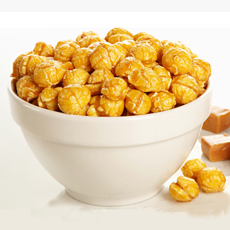
    Caramel corn is the #1 flavor. Photo courtesy The Popcorn Factory.
  • While watching a movie, 65%
  • As an after-dinner snack, 11%
  • While relaxing or participating in a hobby, 6%
  • At a social event, 2%
  • As a special reward, 2%
  • With a meal, 1%
  • Other, 3%
  •  
    Check out the history of popcorn, an all-American snack. Air-popped without butter, it’s a low-calorie, high-fiber whole grain snack. You can add a bit of plain or flavored olive oil, and all the herbs and/or spices you like.


    Comments off

    TIP OF THE DAY: 21 Ways To Use Beets

    4 Colors Of Beets: Red, White, Orange, Purple
    [1] Beets are most familiar in a reddish-purple hue, but are also available in different shades of red, orange, white, yellow, even red with a red and white bullseye pattern inside, called chioggia [KYO-gee-a] beets (photos #1 and #4 © Quinciple).

    Sliced Chioggia Beets In A Bowl
    [2] Chioggia beets (photo by
    Woodley Wonderworks | CC-By-2.0 License).

    /home/content/p3pnexwpnas01_data02/07/2891007/html/wp content/uploads/roasted orange beets salmon silkroadtavern 230
    [3] Roasted salmon on a bed of beets (photo © Silk Road Tavern | NYC [since closed]).

    Roasted Red, Yellow & Orange Beets
    [4] Roasted beets, easy and delicious, with chimichurri sauce.

    Beet Guacamole With Tortilla Chips
    [5] Beet guacamole (photo © Colette | Food Deco).

    roasted-beet-salad-orange-goat-cheese-ws-230
    [4] Roasted red and yellow beets with goat cheese. Here’s the recipe (photo © Williams Sonoma).

      Beets are one of those ‘em or hate ‘em foods. But they’re so delicious, we can’t understand the haters.

    July 9th is National Beet Day, but we enjoy beets year-round. We eat the edible roots, and the greens are also delicious—just sauté or steam them. For fall, Valentine’s Day, or the holidays, the colors are perfect.

    The availability of fresh, cooked, and canned beets makes it easy to incorporate beets into any meal. And unlike many canned or precooked vegetables, the flavor and texture are pretty close to fresh-cooked beets.

    Today’s tip comes from Oldways, a not-for-profit whose mission is “to guide people to good health through heritage”: healthy eating and healthy foods that “have the power to improve the health and well-being of all of us.”

    Along that line, beet roots deliver fiber, folate, manganese, and potassium; the beet greens pack vitamins A, C and K.

    The history of beets is below.
     
     
    BEETS FOR BREAKFAST

    While it’s not a conventional breakfast ingredient, beets add vivid color, flavor and nutrition to:

  • Avocado toast: add sliced beets.
  • Bagel: with smoked salmon, cream cheese and sliced or julienned/matchstick beets. Add fresh dill for perfection!
  • Omelet: with diced or julienned beets.
  • Vegetarian “Eggs Benedict”: substitute a beet slice for the Canadian bacon.
  • Yogurt or cottage cheese: top with a small dice or blend with beets and fresh dill.
  •  
     
    BEETS FOR LUNCH

  • Salad: add to side salads and luncheon salads (our favorite: beets, goat cheese and toasted walnuts on arugula or mesclun, and “purple potato salad”—the beets impart a swirl of color).
  • Sandwich: sliced plain or pickled beets on the sandwich, in a wrap or as a side.
  • Sandwich spread and more: blend horseradish and cooked grated beets into Greek yogurt to create a spicy sandwich spread, dip, or sauce for fish and meats.
  • Soup: hot or cold borscht.
  •  
     
    BEETS FOR DINNER

  • First course: sliced oranges and beets on a bed of lettuce with vinaigrette or a drizzle of basil olive oil, or this beautiful galette.
  • Salad: grate over a green salad with finely sliced red onion and a red wine vinaigrette, add to a fall salad with roasted squash and fennel (recipe).
  • Garnish: add sliced, diced or in matchsticks, beets add pizzazz.
  • Beet mashed potatoes: recipe.
  • Grains: stir chopped roasted beets, crumbled feta and finely chopped beet greens into cooked farro, quinoa or brown rice; drizzle with extra virgin olive oil and lemon juice.
  • Roast vegetables: beets with carrots, parsnips, sweet potatoes, turnips, with fresh rosemary, crushed garlic, and extra virgin olive oil.
  • Sautéed beet greens: cook in olive oil with sliced onions, crushed garlic, red pepper and a pinch of chili flakes and salt.
  • Braised: cook sliced beets, sliced red cabbage and beet greens with a bit of apple cider vinegar and caraway seeds.
  • Cheese plate: pickled beets as a cheese condiment
  •  
    You can add beets to breakfast bars, brownies, energy bars, sangria, smoothies. You can even make beet ice cream and a vegan beet “cheesecake.” See beautiful recipes at LoveBeets.com.
     
     
    BEET HORS D’OEUVRE & SNACKS

  • Bruschetta: layer sliced beets on sliced baguette, top with Brie or other cheese, heat to slightly melt the cheese, garnish with fresh herbs.
  • Dip: blend beets into mayonnaise, plain yogurt or sour cream, with fresh dill;* or this beet dip and spread, or blend into white bean dip.
  • Beet hummus: recipe with pepper and recipe with ginger.
  •  
     
    THE HISTORY OF BEETS

    The modern beet (its botanical name is Beta vulgaris) evolved from wild sea beet, which grew wild in places as wide-ranging as Britain and India to Britain.

    The wild sea beet was first cultivated in the eastern Mediterranean and Middle East—although only the leaves were eaten! (Even today, beet greens are delicious. Don’t throw them away: Sauté them.)

    In early times, the medicinal properties of the root (the red bulb) led that portion to be used to treat a range of ailments from constipation, fevers, skin problems and wounds.

    The Romans cultivated beets; early recipes included cooking beets with honey and wine (that’s still a good recipe today). Apicius, the renowned Roman gourmet, included a beet broth recipe in his cookbook as well as beet salad with a dressing of mustard, oil and vinegar.

    The original beet roots were long and thin like carrots. The rounded root shape of today was developed in the 16th century and by the 18th century was widely cultivated in Central and Eastern Europe. Many classic beet dishes originated in this region, including borscht.

    In 19th century England, beets’ dramatic color was popular to brighten up salads and soups. The high sugar content made it a popular ingredient in cakes and puddings.

    Today there are many varieties of beets in sizes both large and small, including chioggia (with red and white concentric circles), orange, white and yellow. Look for these specialty beets in farmers markets.
     
     
    _______________

    *Or stir grated cooked beets, garlic, fresh dill or thyme, salt, pepper, and a squeeze of lemon juice into Greek yogurt.


    CHECK OUT WHAT’S HAPPENING ON OUR HOME PAGE, THENIBBLE.COM.


    Comments off

    PRODUCT UPDATE: Gluten Free Comfort Food

    Blake's Chicken Pot Pie

    blakes-pkg_Chicken_Pot_Pie-230sq
    This gluten-free chicken pot pie will please many. Photos courtesy Blake’s All Natural.


    BLAKE’S GLUTEN-FREE CHICKEN POT PIE & SHEPHERDS PIE

    With the fall season, the gluten-freer’s thoughts turn to comfort foods—which usually mean soups, hearty stews, pot pies, mac and cheese and heaping dishes of pasta.

    This is also, as it turns out, one of the most challenging categories in the gluten-free realm. Most of the hot comfort foods contain noodles or crusts of some kind, and substitutions are not easily made.

    Enter Blake’s All Natural, an 80-year old family firm that was acquired by ConAgra in May 2015. Most of the line is conventional, but there’s a GF version of their most popular item, Chicken Pot Pie; as well as Shepherds Pie, which is naturally GF (the crust is made from mashed potatoes instead of grain).
     
    Blake’s Chicken Pot Pie

    I tasted their Chicken Pot Pie in a bit of a fever, recalling happy afternoons spent at my Gram’s where my favorite treat was classic pot pie. Grandmas know what makes a child’s heart go pitter patter. Hence my bar for Chicken Pot Pie is quite high, attached as it is to golden memories.

    Blake’s did not let me down. You can taste the quality and the care.

    The filling is delicious! You can taste the distinct flavors, yet also appreciate the blended sauce and the good crust, which is the hallmark of a top pot pie. There was a little too much sauce for my liking (not atypical in store-bought pot pies), but I relished the classic pot pie flavor.

     
    There are no chemicals, no antibiotics, no wheat. Bonus: The pot pie is also microwavable

    The brand makes both all-natural and organic products. With the gluten-free pot pie, the vegetables and crust are organic. The chicken is not, although it is natural (antibiotic free), and quite tasty!

    I was surprised that I actually preferred the cornmeal crust variety of the two options. The brown rice crust was a bit sweet and shortbread-y (I prefer buttermilk-y/salty flavor notes), whereas the cornmeal crust was hearty, had better body and just enough salt.
     
    Blake’s Shepherds Pie

    Next I tried the Shepherds Pie, made with organic corn and organic mashed potatoes.

    As with the pot pie, the veggies are organic but the beef is not. (Although organic meat is important to many, it would raise the price beyond where enough consumers are flexible. Hence the balance between organic and natural ingredients.) The beef was perfectly spiced and tasted of a high quality, so I added points back for flavor. I liked it even better than the pot pie.

    My recommendation: Absolutely give Blake’s a try! Their products are great cool- and cold-weather comfort food options, a great convenience when you don’t have time to make your own. That goes for the “regular” line, too.

    You can also send a GF gift box, containing four gluten-free pot pies and four shepherds pies.

    Discover more at BlakesAllNatural.com.

    —A review from Georgi Page, Gluten Free Specialist


    LUCY’S COOKIES

    It was 2010 when we first selected Lucy’s Gluten Free as a Top Pick Of The Week, followed by a product update in 2011. The brand continues to treat consumers new gluten-free baked treats.

    This year, the new GF treat is Triple Chocolate Brownie Crisp, the first flavor of Lucy’s new brownie line to hit shelves. It’s made with chocolate chips, 72% dark chocolate chunks and cocoa powder (comprising the “triple chocolate”), plus Madagascar vanilla.

    A cross between a chewy brownie and a crunchy cookie, Triple Chocolate Brownie Crisp is a symphony of deep, rich chocolate flavor. A serving size of three crisps contains just 100 calories.

    As with all Lucy’s products, Triple Chocolate Brownie Crisp is allergy friendly: no gluten or wheat, dairy milk, butter, eggs, casein, peanuts or tree nuts.

      triple-chocolate-brownie-crisp-230
    There are three types of chocolate in Lucy’s Triple Brownie Crisp. Photo courtesy Dr. Lucy.
     
    The line is also Non-GMO Project Verified, certified vegan, and certified kosher (pareve) by Star K.

    Brownie Crisp is currently available in a 4.5-ounce pouch size and a 1.25-ounce grab ‘n go individual bag.

    Continued thanks to Lucy’s founder and chairman, Dr. Lucy Gibney, for showing that allergen-free can also be delicious. Discover more at DrLucys.com.
      

    Comments off


    © Copyright 2005-2026 Lifestyle Direct, Inc. All rights reserved. All images are copyrighted to their respective owners.