THE NIBBLE BLOG: Products, Recipes & Trends In Specialty Foods


Also visit our main website, TheNibble.com.

TIP OF THE DAY: Cake & Cupcake Frosting Idea

You’re making cake or cupcakes. You need to decide on the frosting.

Should it be chocolate, vanilla, mocha or another flavor?

Should it be cream-cheese based or buttercream?

Should it be penuche frosting, made with brown sugar?

Why decide on one, when you can have two?

Thanks to Yummy Cupcakes in Los Angeles—one of our favorite cupcake bakeries anywhere—for the suggestion that you can use two types of frosting on one cake or cupcake.

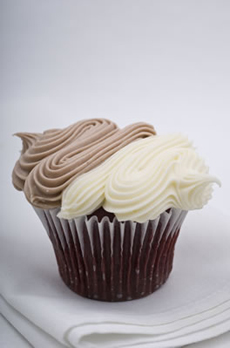
The red velvet cupcake in the photo is crowned with both cocoa and vanilla cream cheese frostings. The duo adds even more excitement to an already exciting treat.

So don’t be single-minded: Enjoy two frostings.

Another benefit of two frostings: You get to lick two bowls!
Find more of our favorite cake and cupcake recipes.

 
A red velvet cupcake frosted with half cocoa cream cheese frosting and half vanilla cream cheese frosting. Photo courtesy Yummy Cupcakes.


Comments off

RECIPE: Fish Ceviche (Consider Trout!)


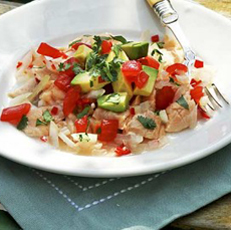
Trout ceviche. Photo courtesy
ILoveBlueSea.com
 

Ceviche, raw fish or shellfish cured by acidic citrus juice, has been popular in Latin America for many centuries. In the early 1500s, the Spanish conquistadors wrote of an Inca dish of raw fish marinated in chicha, a fermented maize beer that dates back some 2,000 years.

The concept evolved into ceviche (pronounced say-VEE-chay) (here’s the history of ceviche). There is something about fresh, homemade ceviche that is refreshing and satisfying, as well as low in calories and healthful (here’s why ceviche is so good for you).

We love the tangy twist of lime, the briny hit of fish or seafood, the sprightly cilantro and creamy avocado.

Throughout South America, the mix of fish or seafood changes depending on the local catch and regional preferences.


This recipe can be used with any fish or seafood. It is courtesy of chef Giovanna Garcia and I Love Blue Sea, an e-tailer of premier seafood, where the team enjoys their ceviche with raw tuna or trout.

The recipe is so easy to make, you’ve just got to try it. Warning: You may become a ceviche addict.


TROUT CEVICHE/FISH CEVICHE RECIPE

Ingredients

  • 1 pound fresh rainbow trout
  • 6 limes, juiced
  • 1 small white onion, diced
  • 1 red bell pepper, seeded and diced
  • 1 cup grape tomatoes, halved
  • 1 jalapeño, seeded and minced
  • 1 avocado, diced
  • 1 handful of cilantro, chopped
  • Sea salt and pepper, to taste
  •  

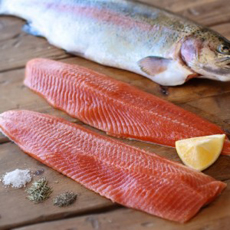
    MacFarland Springs Trout. Photo courtesy I Love Blue Sea.


    Preparation

    1. CUT trout into pieces and place in a glass dish or bowl. Cover trout with lime juice and let sit in refrigerator for at least an hour. Mix the rest of the ingredients in a large bowl.

    2. DRAIN the lime juice from the fish and add to the bowl. Toss to combine.

    3. TASTE and season with sea salt and pepper.

    4. SERVE with crackers or tortilla chips, in a lettuce cup or with mixed greens.
    Here’s THE NIBBLE’s ceviche recipe for mixing and matching your favorite ingredients into your dream ceviche.

    Find more of our favorite fish recipes.


    Comments off

    TIP OF THE DAY THANKSGIVING: Mini Tartlets Instead Of Pies

    No one is hungry at the end of Thanksgiving dinner, but everyone wants that piece of pumpkin pie or pecan pie—or both.

    Here’s a solution: Instead of a pie, serve mini tartlets. One mini tartlet can satisfy, for a fraction of the tummy space and calories of a piece of pie or full-size tart.

    While many sources do not make this distinction, a tart is different from a tartlet, which is different from a mini tartlet. The difference is the size; to call everything a tart or every individual size a tarlet is ambiguous.

  • TART. A tart is a multi-portion dessert, made in a fluted pan with a removable bottom, typically 8, 9, 10 or 11 inches in diameter. The sides are thicker than a pie and the tart can stand on its own outside of the pan; hence the removable bottom that allows the tart to be removed to a serving plate. As with a pie, it is sliced into individual portions. (More on the difference between pies and tarts.)
  •  
    These mini tartlets are made in a phyllo crust instead of the conventional shortbread crust. Photo courtesy MyRecipes.com; here‘s the recipe.
  • TARTLET. A tartlet is an individual-size tart, typically 4 to 4.75 inches in diameter. The bottom may or may not be removable.
  • MINI TARTLET. A mini-tartlet is a bite-size tartlet, approximately 1.75 inches in diameter, made in mini tartlet pans. The bottom is not removable but it’s easy to lift out the pastry.
  •  
    The same pans can be used to make quiche.

    Our favorite holiday time-saver is to use two NIBBLE Top Picks Of The Week: the delicious mini tartlet shells from Clearbrook Farms filled with the wonderful pecan-pie-in-a-jar from San Saba River Pecan Company. (This is also one of our favorite party favors and small gifts—we order it by the case.)

    You can also fill the mini-tartlets with pumpkin, apple or other favorite.

    If you want to make your mini tarts from scratch, here are two recipes:

  • Pecan Sweet Potato Tartlets
  • Pecan Cream Cheese Mini Tartlets
  •   

    Comments off

    TIP OF THE DAY: Certified Angus Beef


    Certified Angus Beef and the CAB Logo. Photo courtesy Certfied Angus Beef, LLC.


    Chef Johnny Gnall went “back to the farm” recently, to observe the production of Certified Angus Beef. His report follows. If you have questions or ideas for other articles, email Chef Johnny.

    I was recently invited with other journalists to spend a few days in Wooster, Ohio, home to the headquarters of Certified Angus Beef, LLC (CAB), to get an in-depth look at Angus production.

    From birth to butcher block, CAB takes great care to ensure that their Certified Angus cattle, and the beef they produce, meet rigorous standards and are handled properly, humanely and safely.

    Angus is a breed of cattle;* there is much Angus meat to be had in grocery stores and restaurants. But 51% of Angus genes is all that’s required to call beef Angus or Black Angus There are no other standards that ensure flavorful meat, humanely produced.

    Hence the formation of the nonprofit CAB, which aims to educate consumers and chefs about the Certified Angus Beef™ trademarked brand and how its ranchers strive to keep the bar high on the Angus production.


    While there is plenty of less responsible beef production in America and elsewhere, there are also plenty of dedicated people, ranches and organizations with a mission to provide the alternative: cattle that are humanely raised, healthful and ultimately sustainable for man and beast.
     
    WHAT IS CERTIFIED ANGUS BEEF?

    Only 12% of all Angus cattle make the cut to become Certified Angus Beef, after passing through a set of stringent criteria. From feed, to age, to marbling, the beef that gets the CAB stamp gives consumers the assurance that what they are eating is of high quality in both tenderness and flavor.

    Visiting one of the CAB ranches outside Wooster, we observed firsthand the time, cost, and human care that goes into the ranching of Certified Angus Beef cattle. The feed, health and overall comfort of the animals are carefully monitored.

    After all, happy cattle make tasty steaks. If you’d like to see the operations for yourself, there are CAB ranches in all 50 states. Head to the organization’s website to find a ranch in your area.


    While at CAB headquarters, we had time to play around in the food lab. The first step was getting our hands dirty breaking down sides of beef (taking a hacksaw to a cow carcass was a new experience for me).

    Once we butchered some specific cuts, we traded butcher coats for chef coats and took the beef to the kitchen. In particular, we were working with the subscapularis muscle, commonly called Vegas steak, and teres major, commonly called bistro filet or hanger steak.

    HOW TO COOK VEGAS STEAK

    The Vegas steak is similar in shape to a Flatiron steak, but smaller; very thin and lean, it can easily get tough if not cooked properly. This is why there were a number of high-profile chefs in our group: It was their job to experiment with the cuts and find out which cooking methods worked best to bring out optimal flavor and tenderness.


    Angus cattle. Photo by Scott Bauer | US Agricultural Research Service.


    With the Vegas Steak, the chefs tried oil and butter basting, stir frying, even wrapping the beef in caul fat.

    But in the end, the only successful foil to the toughness was marinating the steak and cooking it sous vide (pronounced soo VEED).

    While most home cooks won’t have access to a sous vide water bath (THE NIBBLE has two of them!), marinating the steak overnight with some acid and fat (try olive oil, red wine, garlic and rosemary), then giving it a two-to-three-minute sear on each side, should do the trick.
    HOW TO COOK BISTRO STEAK/HANGER STEAK

    As for the teres major (which is cheaper than genuine tenderloin and still quite tender), try rubbing it with a paste made of chopped herbs, room temperature butter, kosher salt and fresh cracked pepper, then searing and roasting it. You’ll get a lovely, aromatic crust.

    Both of these cuts are currently under-marketed, which means if you can get them, they will be cheaper than other, more popular steaks. Keep an eye out for them, and if you visit a real butcher shop (independent butchers are a disappearing lot of craftsmen), ask about them.

    See all the cuts of beef in our Beef Glossary.

    ASK & YOU SHALL RECEIVE

    Ask your butcher about the recommended methods of cooking for any cut you buy, as well as where your steak came from.

  • If the butcher doesn’t have answers when you ask, make sure he/she gets them for you; it’s your right as a consumer.
  • Look at the brands of beef you buy. While much beef is generic (non-branded) as it helps to know which brands have which standards.
  •  
    Educate yourself; the information is out there. It’s something of importance that we can all sink our teeth into.
     
    *Angus cattle are a breed native to the counties of Aberdeenshire and Angus in Scotland. They are known as Aberdeen Angus in most parts of the world. In the U.S., they are frequently crossbred with Hereford cattle, retaining the black color. They can legally be called Angus if 51% or more of the genes are Angus.


    Comments off

    PRODUCT: Sam Adams Utopias 10th Anniversary


    It’s rare, it’s expensive, it’s exciting: Samuel
    Adams Utopias. Photo courtesy Boston
    Brewing Company.

      Boston Beer Company has launched its 10th anniversary batch of Samuel Adams Utopias, a barrel-aged, limited edition, limited release brew. Only 15,000 bottles have been made.

    At a suggested retail price of $160, you probably can’t give it as a gift to all your beer-loving friends; but connoisseurs of craft beer will really appreciate a taste. Buy a bottle and invite them for a sip.

    This is no burger-and-pizza beer. Utopias is best enjoyed at room temperature in a snifter, as an after dinner drink like port or cognac. In fact, company founder Jim Koch considers Utopias to be on a par with the very best ports, cognacs and sherries.

    Packaged in a brew-kettle-style decanter, Utopias contains between 28% and 30% alcohol by volume (ABV). The purpose is not to break the beer alcohol barrier, says Koch, but “to make a wonderful, unique beverage.”

     
    THE BIRTH OF A BEER

    The concept for Utopias developed 20 years ago, as the company sought to push the boundaries of ABV by creating a triple bock beer, with more intensity and alcohol than double bock beer. (Dopplebock is German for extra-strong, a beer of about 7.5% alcohol by volume, or stronger, and commercial beers had not been made beyond a ceiling of 14%).

    In addition to higher alcohol, the flavors of Utopias are greatly deepened by wood aging. The barrels used for aging are considered an ingredient, and individual barrels are hand-selected as carefully as hops, for flavor level. After years of experimentation with different woods (bourbon barrels, scotch barrels, etc.), the brewers decided that rum barrels provide the most desired flavors for this beer.

    The 2012 tenth anniversary blend includes beer from the original barrels of 20 years ago, the 1999 millennium bottling and other years. Koch finds flavors of vanilla, fig, cocoa, wood, dark fruits like raisins and bright fruits cherry and raspberry.

    The flavor is not just unlike any other beer; it’s unlike any other beverage in the world.

    Here’s a video of Boston Brewing Company founder Jim Koch discussing Utopias.


    Comments off

    The Nibble Webzine Of Food Adventures
    RSS
    Follow by Email


    © Copyright 2005-2026 Lifestyle Direct, Inc. All rights reserved. All images are copyrighted to their respective owners.