|
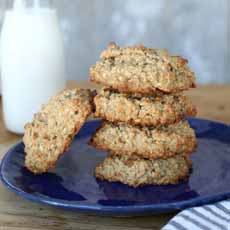
[1] Quaker’s most popular recipe is for its Vanishing Oatmeal Cookies (photos #1, #2, and #3 © Quaker Oats).

[2] What great-great grandmother would have purchased.
[3] Today’s canister reminds us that oatmeal is a heart-healthy food.
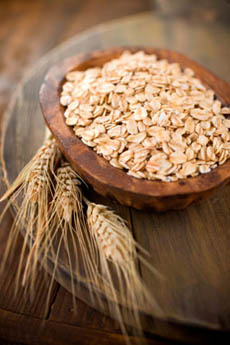
[4] Milled oats, ready for oatmeal and baking (photo © Kelly Cline | iStock Photo). |
|
National Oatmeal Cookie Day is April 30th. You can celebrate by baking Quaker’s famous Vanishing Oatmeal Cookies. The recipe is below.
Enjoy them as a snack, turn them into ice cream sandwiches, serve them as the base of a “rustic” sundae, topped with ice cream and chocolate sauce.
Below:
> America’s favorite oatmeal cookie recipe.
> The history of Quaker Oats and the Vanishing Oatmeal Cookie recipe.
> More ways to use oatmeal cookies.
Elsewhere on The Nibble:
> The history of cookies.
> The history of oats, from prehistory to the present.
> The year’s 44 cookie holidays.
> The different varieties of of cookies: a photo glossary.
> The year’s 44 cookie holidays.
> The year’s 8 oatmeal holidays.
> The year’s 10+ raisin holidays.
RECIPE: QUAKER VANISHING OATMEAL COOKIES
Prep time is 20 minutes, and cook time is 8 minutes.
Ingredients For 4 Dozen Cookies
1/2 cup (1 stick) plus 6 tablespoons butter, softened
3/4 cup firmly packed brown sugar
1/2 cup granulated sugar
2 eggs
1 teaspoon vanilla
1-1/2 cups all-purpose flour
1 teaspoon baking soda
1 teaspoon ground cinnamon
Optional: 1/2 teaspoon salt
3 cups Quaker Oats (Old Fashioned or Quick Oats, uncooked)
1 cup raisins
Optional: 1 cup chopped nuts
Raisins substitute/addition: 1 cup dried cherries, cranberries or diced mixed fruit
Raisins substitute/addition: 1 cup semisweet chocolate chips; omit the cinnamon
Preparation
1. PREHEAT the oven to 350°F. In a large bowl, beat the butter and sugars with an electric mixer on medium speed until creamy. Add the eggs and vanilla; beat well. Add the combined flour, baking soda, cinnamon, and salt; mix well. Add the oats and raisins; mix well.
2. DROP the dough by rounded tablespoonfuls onto ungreased cookie sheets. Bake 8 to 10 minutes or until light golden brown. Cool 1 minute on cookie sheets; remove to a wire rack. Cool completely. Store tightly covered.
3. HIGH ALTITUDE ADJUSTMENT: Increase the flour to 1-3/4 cups and bake as directed.
For Bar Cookies
1. PRESS the dough onto the bottom of an ungreased 13 x 9-inch baking pan. Bake 30 to 35 minutes or until light golden brown. Cool completely in the pan on a wire rack.
2. CUT into bars. Store tightly covered. Yield: 24 bars.
Tips From Quaker
Use an empty Quaker Oats canister as the “gift box” for cookie gifting.
For the holidays, consider making Oatmeal Gingerbread Cookies.
|
THE HISTORY OF QUAKER OATS
One hundred years ago, Quaker introduced the now-iconic cylinder package for Old Fashioned Quaker Oats. The cylindrical package was a first in the industry. While the packaging design has been updated, the round canister can still be found on store shelves today.
The Quaker Mill Company of Ravenna, Ohio, was founded in 1877 by Henry Parsons Crowell, who purchased the bankrupt Quaker Oat Mill Company there.
Canned foods were a hot new trend in 1915, and Crowell noticed the public’s growing appetite for colorful, conveniently sized packaging. He began to sell his oats in distinctive round cardboard cartons. At the time, many groceries, including cereal grains, were sold in bulk from barrels.
Today, The Quaker Oats Company sells more than 350 million pounds of oatmeal annually, and some 120 million canisters are produced at its Cedar Rapids plant. A food conglomerate headquartered in Chicago, it has been owned by PepsiCo since 2001.
Quaker also lays claim as the first to feature a recipe on packaging: Oatmeal Bread, in 1891. In 1908, the brand introduced the first cookie recipe on a package: Oat Cakes.
In 1922, the company introduced Quaker Quick Oats, one of America’s first convenience products. It can be swapped for Quaker Old Fashioned Oats in baking recipes.
In 1966, Quaker Instant Oatmeal pouches debuted to help people keep pace with a busy, on-the-go lifestyle. Cup packaging debuted in 2000, to portable eating even easier. Earlier this year, Quaker launched Quick 3-Minute Steel Cut Oats.
The History Of The Quaker Vanishing Oatmeal Raisin Cookies
As previously noted, the first-ever oatmeal cookie recipe to appear on the company’s package was in 1908: Oat Cakes.
Those first oatmeal cookies were dry and hard with no sweetener—more like crackers than cookies.
The precursor of today’s Vanishing Oatmeal recipe, a sweet oatmeal cookie, appeared on the packages sometime between 1910 and 1917.
After the 1929 stock market crash, when Americans needed a sweet treat, Quaker’s Oat[s] Macaroons appeared, the first oatmeal drop cookie (so-called because spoonfuls of dough were dropped onto cookie sheets and baked—here are the different types of cookies). Like macaroons, they contained almond extract—no raisins (here’s the recipe).
The company has continued to keep up with the times, creating breakfast bars, no-bake bars, and different styles of oatmeal cookies to meet consumer preferences. Here are more historical notes, and a link to all Quaker recipes.
The Vanishing Oatmeal Raisin Cookies recipe, above, remains a consumer favorite. As of 2015, it’s been on the Old Fashioned Oats canister for 20 years.
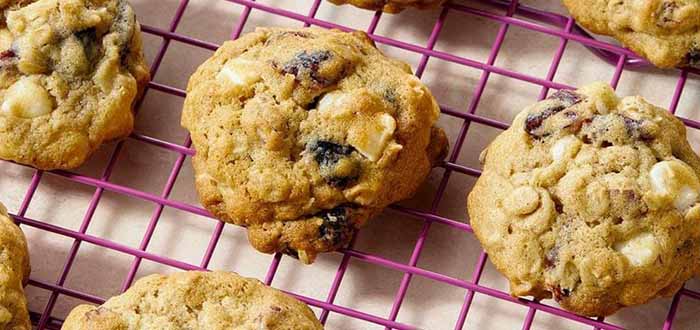
[5] Don’t like raisins? Swap in dried cherries or cranberries. This recipe also includes white chocolate chips (photo © Taste Of Home).
MORE WAYS TO USE OATMEAL COOKIES
Breakfast/Brunch
Breakfast “Cereal”: Crumble pieces as a substitute cereal, topped with cold milk.
French Toast: For a crunchy, spiced crust, crush the cookies into fine crumbs, dip the bread into the egg custard, then press both sides into the cookie crumbs before griddling.
Yogurt Parfait: Roughly chop or pulse the cookies and layer with yogurt and fresh berries.
Baking
Apple Crisp Topping: For a much better texture than a standard flour-and-butter topping, crumble cookies over the fruit during the last 15 minutes of baking.
Cake Pop Bites: Pulse the cookies into crumbs and mix with enough softened cream cheese to form a dough. Roll into balls, chill, and optionally dip in dark chocolate. Enjoy as “truffles” or add lollipop sticks.
Pie or Cheesecake Crust: Bind crushed oatmeal cookies with melted butter and press into a pan. This is especially good crust with apple galette or pumpkin pie.
Desserts
Bread Pudding: Replace half of the bread in a bread pudding recipe with chunks of oatmeal cookies. They will soften but remain distinct, adding pockets of butter and spice to the custard.
Cookie Butter: Blend the cookies in a high-speed blender until smooth, with a neutral oil, a splash of milk, and a pinch of salt. Spread on biscuits, crackers, muffins, toast, or plain cookies.
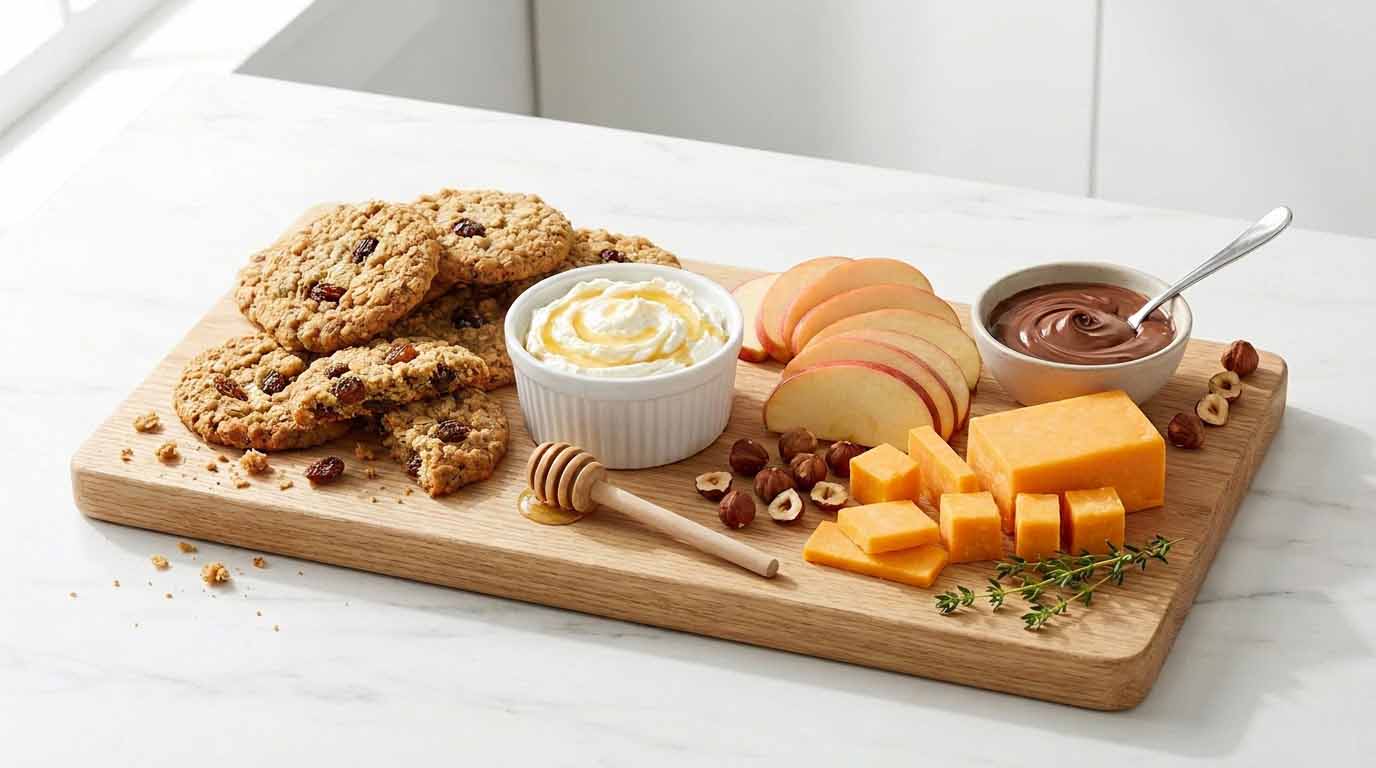
Dessert Board: Use the cookies as crackers on a dessert board. Photo #6, below, shows them paired with whipped honey goat cheese, sliced apples, sharp cheddar cheese, and a chocolate-hazelnut dip. You can also include flatbread or savory crackers.
“Tiramisu”: Instead of ladyfingers, briefly soak oatmeal cookies in strong coffee or espresso and layer them with mascarpone cream. You can also add a coffee liqueur to the soaking liquid.
Mains
Chili Thickener: Many award-winning chili recipes add body with “secret” ingredients like cocoa powder, cornmeal (masa harina), molasses, or finely ground crackers. The oats and brown sugar in [the ground] oatmeal cookies add a touch of sweetness and round out the heat of the chile peppers. Whisk in 1/2 cup of fine oatmeal cookie crumbs in the last 30 minutes of cooking. They may become your own secret ingredient.
[6] Add oatmeal cookies instead of—or in addition to—crackers on a dessert board. (photo: The Nibble).
CHECK OUT WHAT’S HAPPENING ON OUR HOME PAGE, THENIBBLE.COM.
|