THE NIBBLE BLOG: Products, Recipes & Trends In Specialty Foods


Also visit our main website, TheNibble.com.

TIP OF THE DAY: Make Chicken Or Turkey Stock

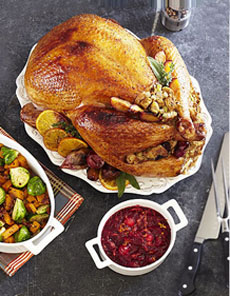
Thanksgiving Turkey
Enjoy your feast, but don’t toss the carcass.
Use it to make stock! Photo courtesy Sur La
Table
.

  Plan ahead: Don’t throw away that turkey carcass. Or the roast chicken* carcass. Or those tops, root ends and stems from trimming vegetables. Save the vegetable trimmings from the week’s meals: carrot tops, celery ends, fennel fronds, herb stems, kale stalks, leek tops, scallion ends, etc.

Check the freezer for herbs and vegetable scraps you may have tucked away.

Use all of it to make a delicious batch of chicken or turkey stock, which you can then turn into cooked grains, sauces, soups, stews and other preparations.

RECIPE: CHICKEN STOCK OR TURKEY STOCK

Ingredients

  • 2 bay leaves
  • 1 head garlic, unpeeled, cut in half
  • 1 large onion, unpeeled, cut in half
  • Chicken or turkey carcass
  • Vegetable trimmings† or 1-2 carrots, 3-4 stalks of celery
  • Parsley and thyme (leftover stems are fine)
  •  
    *Or duck, game hen, quail or any poultry carcass. You can blend them together into one stock as needed.
    †Check the freezer for herbs and anything else you might have tucked away to prevent spoiling.
     

    Preparation

    1. COMBINE all the ingredients in a stock pot (6-8 quarts for a turkey, 4-6 quarts for a chicken) and cover them with water plus one inch. If the carcass doesn’t fit in the pot, use poultry shears to cut it into pieces that do. Don’t salt the water; stock should be unsalted to accommodate any recipe. Place the top on the pot.

    2. BRING to a boil and reduce the heat to a simmer. Cook for minimum of 90 minutes, or up to 3 hours. Once or twice during the simmering, remove the cover and skim off the frothy scum that’s formed on the top of the broth. Add more water if it boils away; the bones should always be covered. When the broth has turned a golden brown color and is rich in flavor…

    3. REMOVE the pot from the heat. As soon as it’s comfortable enough to handle, strain the broth and discard the solids. If it isn’t clear enough for you, strain it again through cheesecloth.

    4. FREEZE the chicken broth in portion-sized containers. We like ice cube trays (once frozen, store the cubes in a freezer bag); or in half pint or pint storage containers. If you have a short-term use for it, you can refrigerate the stock for up to a week.
     
    Tips

  • A stock pot with a pasta strainer insert is ideal for this purpose.
  • If you don’t want to “watch the pot,” you can use a slow cooker on a low setting.
  •  

    USES FOR STOCK

    Instead Of Water

  • Grains: rice (plain or in risotto), quinoa, couscous and other dishes
  • Soups: use as much stock as you have, then fill in with water
  • Vegetables: steaming and boiling
  •  
    Instead Of Butter And/Or Cream

  • Gravy
  • French sauces, such as bercy and velouté
  • Mashed potatoes
  • Polenta
  • Purées: use stock to smooth out a bean or vegetable purée
  • Sautés: add some stock and use less butter or oil
  • Soups, from wintry butternut squash soup to summer gazpacho
  • Stuffing, dressing and other savory bread pudding recipes
  •  
    Instead Of Wine

  • Deglazing the pan for sauce
  • Marinades
  • Any recipe that requires wine
  •   Chicken Stock
    Take pride in your homemade stock. Photo courtesy Good Eggs | San Francisco.
     
    THE DIFFERENCE BETWEEN STOCK & BROTH

  • Broth is a finished soup; stock is an ingredient.
  • Broth has a higher proportion of meat.
  • Because stock is made largely from the bones, it contains more gelatin, which gives it a richer mouthfeel.
  • Stock is not salted. Since it is an ingredient, it combines with whatever seasonings the recipes call for.
  •  
    What about bouillon?

    The terms bouillon and broth are used interchangeably, though not correctly.

    Bouillon is always served plain (with an optional garnish), whereas broth can be made more substantial with the addition of a grain (barley, rice, etc.) and vegetables.


    Comments off

    RECIPE: Make & Bring Sweet & Savory Nut Clusters

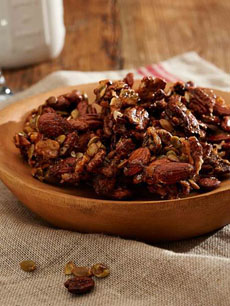
    Homemade Nut Clusters
    Sweet and savory nut clusters, with pumpkin
    seeds added for the holidays. Photo courtesy
    QVC.
     

    If you’ve been invited to Thanksgiving but not asked to contribute, you may still want to bring a gift that isn’t a bottle of wine.

    Something like these Sweet & Savory Nut Clusters from QVC’s chef David Venable can be a gift to the hosts be enjoyed later. Package them in a decorative tin or jar.

    Or, they can be served with after-dinner coffee by those who are too stuffed for pie.

    For any occasion, they can be served with a slice of Gorgonzola as the cheese course, or as a garnish for a green salad along with crumbled Gorgonzola.
     
    RECIPE: SWEET & SAVORY NUT CLUSTERS WITH
    GORGONZOLA

    Ingredients For 8-10 Servings

  • 1-1/2 cups raw pecan halves
  • 1 cup whole raw almonds
  • 1-1/2 cups raw walnut halves
  • 1/2 cup raw pumpkin seeds
  • 1 egg white, lightly beaten with 1 tablespoon water
  • 1/4 cup light brown sugar
  • 1-1/2 teaspoons fine sea salt
  • 1/2 teaspoon coarse-ground black pepper
  • 1/4 teaspoon cayenne pepper
  • 1-1/2 teaspoon chopped fresh rosemary
  • 1/4 cup honey
  • Optional: Gorgonzola or other blue cheese
  • Optional: green salad with vinaigrette
  • Preparation

    1. PREHEAT the oven to 325°F. Line a cookie sheet with parchment paper.

    2. TOSS the pecans, almonds, walnuts, and pumpkin seeds with the beaten egg white in a large bowl, until coated.

    3. COMBINE the brown sugar, sea salt, black pepper, cayenne pepper and rosemary in another bowl and toss with the nuts until evenly coated. Pour in the honey and fold until coated.

    4. SPREAD the mixture out on the prepared cookie sheet. Bake for about 20 minutes, or until toasted. Serve as desired.
      

    Comments off

    TIP OF THE DAY: Reuse Citrus Rinds As Mini Bowls

    As you cook your way through the holidays, consider saving the shells (whole rinds) of halved, juiced lemons, limes, oranges and grapefruit. You can repurpose them as mini serving bowls—for sides, desserts, condiments and more.

    First, use a serrated grapefruit spoon or other implement to scrape out the empty juice sacs—but leave the white pith intact.

    Then cut a tiny slice off from what will become the bottom of each “bowl,” so it will sit flat on a plate. Place the empty shells in the freezer; when frozen, store them in freezer bags. Then, for a festive meal, take them out and use them for:

  • Condiments
  • Cranberry sauce
  • Dipping sauce
  • Relish
  • Rice or mashed potatoes, with a topping
  • Salsa
  •  
    Our favorite use is dessert, specifically:

  • Fruit salad
  • Sorbet
  •  
    For cold foods, you don’t have to wait for the shells to defrost. Scooping sorbet into frozen shells, for example, keeps it from melting more quickly. Check out yesterday’s recipe for Meyer Lemon Sorbet.

     
    WHAT TO DO WITH A LEFTOVER HALF LEMON OR LIME

    Freeze the entire half, or cut it into quarters.

  • You can defrost a piece when you need juice.
  • You can also freeze the juice alone, ideally, in ice cube trays, so you can defrost only what you need.
  • After the citrus pieces or juice cubes freeze, store them in a heavy-duty freezer bag.
  •  
    Freeze individual slices.

  • Cut into slices about 1/4-inch thick and freeze them for garnishing.
  • First freeze them on a cookie sheet so the slices don’t stick together; then store them in freezer bags.
  • For a glass garnish, cut a slit into the slice before freezing. You can then place the frozen slice onto the rim of the glass, without waiting for it to thaw.
  •  
    TRIVIA


    Citrus Cups

    panna-cotta-swirlsandspice-230

    ikura-qoo-boo-230

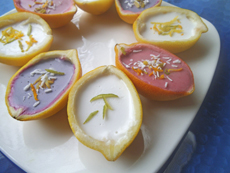
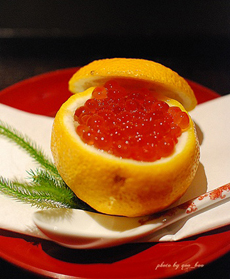
    TOP PHOTO: Fruit salad. Cut the fruit as fine as it needs to be to fit nicely into the shell. Photo courtesy Elegant Affairs Caterers. MIDDLE PHOTO: These are panna cotta, but could as easily be sauces or sides. Photo courtesy Swirls And Spice. BOTTOM PHOTO: Stuffed with rice and topped with salmon caviar. Photo courtesy Qoo’s Life.

     
    Botanically, citrus fruits are berries with leathery rinds. In botany this type of berry is called a hesperidium.

    The great botanist Carl Linnaeus (1707 – 1778) bestowed the name Hesperideæ to the order the contains the Citrus genus. It’s an allusion to the the Hesperides, nymphs who in Greek and Roman myth guarded a blissful garden of golden apples.

    From Sweden, Linnaeus was a botanist, zoologist and physician. He laid the foundations for taxonomy, the modern biological naming system for describing species (taxa in Latin). Many of his writings were in Latin, as was custom among scientists of the time. Latin was a common language among educated Europeans, so no matter what one’s native language, one could read the works of others in Latin.


    Comments off


    © Copyright 2005-2026 Lifestyle Direct, Inc. All rights reserved. All images are copyrighted to their respective owners.