THE NIBBLE BLOG: Products, Recipes & Trends In Specialty Foods


Also visit our main website, TheNibble.com.

TIP OF THE DAY: Soba Noodles & Soba Noodle Salad Recipe


[1] Cold soba noodles typically are served on a flat plate like pasta; but here, they’re swirled into a stylish dome (photo © Lulu Durand | iStock Photo).


[2] Hot soba ingredients with fried tofu cubes and edamame are American-inspired (photo © Sun Basket).
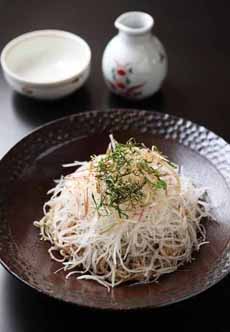

[3] A classic preparation: cold soba noodles topped with shredded daikon (suzushiro) (photo © Soba Yamagata).
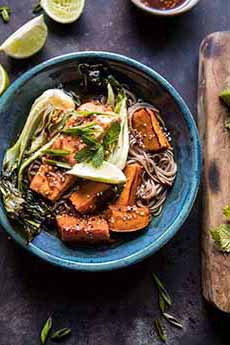

[4] Hot soba noodles topped with salmon, sweet potatoes, baby bok choy, scallions, black and white sesame seeds (photo © Vital Choice | Facebook).


[5] Serve soba noodles as a side, instead of rice or pasta. Here, it’s served with slices of panko-coated fried chicken roll, stuffed with asparagus and carrots (photo © Between The Bread).


Uncooked soba (buckwheat) noodles (photo © Maria Lapsha | Fotolia).


Unless you live in an area with good Japanese restaurants, it may be difficult to find a dish of soba noodles. But if you check in a natural foods market or online, you should be able to pick some up and cook your own. Soba noodles can be enjoyed so many ways, hot or cold. You can even set them out as a buffet, with pick-your-own toppings (see hiyashi soba, below.)

Soba dishes are appealing party fare, from bowls of noodle soup meant to be slurped with gusto, to a mix-your-own cold soba noodle salad with four, six or more optional ingredients with which to customize one’s dish.

Soba is the Japanese word for buckwheat; the thin noodles are made from buckwheat flour. As with all pasta, soba noodles can be served warm or chilled (think cold sesame noodles and pasta salad). Here are some popular recipes ideas

> A full recipe for soba noodle salad with tofu is below.

> Also below is the history of soba noodles.
 
 
HOT SOBA NOODLE DISHES

  • Soup: A bowl of dashi broth, filled with soba, is typically topped with sliced green onion and a tempura shrimp; add a fried egg, sunnyside up, and you’ve got tsukimi tororo. You can customize the dish with mushrooms, nori strips (seaweed) and/or western ingredients such as kale or spinach.
  • Stir fry: Topped with a stir fry of baby bok choy, bell peppers, green onions, snow peas and a protein (chicken, fish/seafood, tofu).
  • Fish dishes: Seared ahi tuna with a sesame crust (recipe) or miso-poached cod are wonderful on a bed of soba. Asparagus or snow peas add complementary color and flavor.
  • Vegetarian: Kake soba is the simplest hot soba, noodles topped with thinly sliced scallion (sometimes a slice of kamaboko, fish cake). Kitsune soba is topped with aburaage (deep-fried tofu). Nameko soba is topped with nameko mushrooms. Sansai soba (“mountain vegetables soba”) is topped with sansai, or wild vegetables, such as warabi, zenmai, and takenoko. Tanuki soba substitutes tenkasu, crunchy bits of leftover fried tempura batter. Tororo soba is topped with purée of yamaimo (Japanese yam). Vegetable tempura is a popular topping. Wakame soba is topped with wakame seaweed.
  • Poultry: Kamo nanban opped with duck meat and negi. Tsukimi soba is topped with a raw egg, which poaches in the hot soup.
  • Pork: Karē nanban is hot soba (or udon) noodles in curry flavored broth topped with chicken/pork and thinly sliced scallion.
  • Seafood: Shrimp tempura soba is a favorite. A cheaper version is kakiage soba, fried shrimp bits. Nishin soba is topped with cooked migaki nishin (dried herring).
  •  
     
    COLD SOBA NOODLE DISHES

  • Hadaka soba (naked soba): a dish of plain cold soba.
  • Hiyashi soba: One of our favorite ways to enjoy soba is this “mix your own” concept served with dishes of optional ingredients. These mix-ins or toppings can include fresh cilantro, green onion slices (scallions), natto (fermented soybeans), nori strips, okra slices, oroshi (grated daikon radish), tororo (purée of yamaimo—Japanese yam), nattō (sticky fermented soybeans), okura (fresh sliced okra), and of course, a pitcher of dashi. You can add some optional heat, such as minced bird’s eye chile. Add a fried egg, sunnyside up, and you’ve got yakisoba. Add slices of chicken or pork, and you can set the ingredients out for a buffet lunch or brunch.
  • Mori* soba: Plain chilled soba noodles served on a flat basket or a plate.
  • Seiro* soba: Soba served on a square or rectanagular bamboo mat (seiro) instead of the round zaru basket.
  • Soba maki: Maki sushi made of cold soba wrapped in nori dried seaweed.
  • Soba salad: Cold soba noodlesand vegetables with sesame dressing. This is a modern, fusion salad and mostly found outside Japan.
  • Soba salad, cold soba mixed with vegetables and sesame oil-soy sauce dressing is a contemporary fusion concept served outside Japan. House Foods, makers of premium tofu and organic tofu, has provided the recipe below, which uses traditional Japanese ingredients.
  • Zaru* soba: Mori soba topped with shredded nori seaweed, served on a zaru basket.
  •  
    You can create fusion food with western ingredients: hard-cooked egg, julienned ham, and cheese, strips of roast pork or poultry, leeks or red onions instead of scallions, sliced red radishes…anything goes.

    In fact, one conceit for a soba noodles party is to have each guest bring a creative ingredient to mix in.
    ________________

    *Mori soba, seiro soba, and zaru soba are similar but for the serving plate or basket.
    ________________


    RECIPE: SOBA NOODLE SALAD WITH TOFU

    Add optional asparagus and/or snow peas, diagonally cut, for another dimension of flavor. Adjust the ingredients to suit your taste. For example, we prefer more red bell pepper and green onions on the salad, and less sugar in the dressing.

    Ingredients For 6 Servings

  • 1 block extra firm tofu (14 ounces), drained, patted dry and cut into ½ inch strips
  • 8 ounces soba noodles, uncooked
  • 1 medium cucumber, cut into 1/8-inch-thick julienne strips
  • 1 medium red bell pepper, julienned
  •  
    For The Dressing

  • 1/3 cup rice vinegar
  • ¼ cup lime juice
  • 2½ tablespoons sesame oil
  • 2 tablespoons soy sauce
  • 3 teaspoons sugar
  • 2 tablespoons ginger, minced
  • 2 tablespoons green onions (scallions), minced
  • 2 tablespoons toasted sesame seeds (method below)
  •  
    Preparation

    1. TOAST sesame seeds: Heat a small skillet over medium heat. Add sesame seeds; cook and stir for 2 minutes or until golden brown and fragrant. Immediately remove seeds from hot pan to avoid over-toasting.

    2. COOK noodles in a large pot, following package directions. Drain and rinse well under cold water. Set aside and refrigerate.

    3. SPRAY oil on a nonstick pan and grill tofu. Set aside and refrigerate.

    4. WHISK together the dressing ingredients.

    5. TOSS together noodles, cucumber, red bell pepper, and optional asparagus and/or snow peas.

    6. Add tofu strips and mix well.


    SOBA NOODLES HISTORY

    The tradition of eating soba originates from the Tokugawa Period of Japan, also called the Edo Period, from 1603 to 1868 C.E. Every neighborhood had one or two soba establishments, many also serving saké, where locals would stop for a casual meal.

    At that time, the well-to-do population of Edo (ancient Tokyo) was more susceptible to beriberi than the rural poor, due to their high consumption of white rice, from which the nutrients are removed with the bran. Low thiamine (vitamin B) consumption leads to beriberi, and it was discovered that the disease could be prevented by regularly eating thiamine-rich buckwheat [source].

    Previously, people ate buckwheat in the form of dumplings or mixed with glutinous rice to make rice cakes.

    Innovations made it easier to eat soba transformed into long, thin soba noodles. Using a blend of 80% buckwheat with a filler of 20% wheat made the noodles resilient and easy to slurp down. This became Edo’s famous 2:8 soba.

    Soba restaurants proliferated, and the noodles became so popular that merchants and samurai families would pay to have soba restaurants delivered to their homes.


    Soba noodles became a daily part of life. It was Edo-era fast food for the busy people of Edo. Convenient, inexpensive, light on the stomach, filling, versatile with a choice of toppings, and importantly, nutritous, a bowl of soba was an is a well-rounded meal. 


    That Tokyo was close to key buckwheat producing areas like Nagano and Niigata helped the dish flourish.

    The Japanese word soba means buckwheat, in particular, buckwheat noodles. It is an abbreviation of the full name of buckwheat, soba-mugi, which means “edgy wheat.”

    Soba is traditionally eaten on New Year’s Eve in most areas of Japan [source]. Soba noodles have long symbolized longevity: “the thinner; the longer” in shape, the better.


    CHECK OUT WHAT’S HAPPENING ON OUR HOME PAGE, THENIBBLE.COM.


    Comments off

    TIP OF THE DAY: Easy Asparagus Recipes


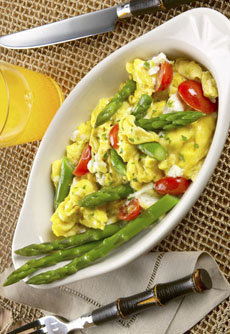
    Toss asparagus into everyday favorites, from
    eggs to pasta and rice. Photo courtesy
    California Asparagus Commission.
     

    Low in calories, delicious, and as inexpensive as they’re going to get: This is the season to have as much asparagus as you desire. Incorporate them into everyday dishes such as eggs and pasta, or make something more special-occasion like risotto. Steam them for a snack. Whatever you do, cook them al dente rather than soft.

    Adding asparagus to a recipe is easy: Just grill, sauté, steam or stir-fry the spears.

    For pasta and risotto: For a seasonally exciting change, cut asparagus into bite-size pieces, sauté or steam and mix into cooked pasta, risotto or plain rice. You can use the pasta sauce of your choice, or simply toss with good olive oil and Parmigiano-Reggiano cheese. For more complexity, combine asparagus with mushrooms and/or other green vegetables, including broad beans, broccoli, green beans, spinach and spring peas.

    For eggs: Mix al dente cooked and cut spears into omelets or scrambled eggs, or add whole spears to Eggs Benedict, between the Canadian bacon and the eggs.

    For salad: Add asparagus to your favorite salad recipe, or create a composed salad of asparagus, beets, hard-cooked eggs, mozzarella and any other appealing ingredients.

     
    Here are more luscious, easy recipes for asparagus season:

  • Steamed Asparagus: Enjoyed plain, with a squeeze of lemon or lime or with a pinch of plain or flavored salt, this may be the simplest way to serve asparagus. It’s deeply satisfying and very low in calories: 3 to 5 calories per spear, depending on size; 33.5 calories per cup.
  • Flavored Mayonnaise: In centuries past, asparagus would be coated with a rich Hollandaise sauce—egg yolks and butter, a cardiologist’s nightmare. Today, you can cut the cholesterol in half with a mayonnaise (egg yolks and olive or other oil): a dab of aïoli (garlic mayonnaise), lemon mayonnaise or other flavored mayonnaise does the trick. You make or buy flavored mayonnaise, or can flavor store-bought mayonnaise with minced garlic, lemon or orange zest, or herbs (recipe).
  •  

  • Grilled Asparagus:. Parmesan, olive oil and lemon are wonderful with asparagus. Grill or dry-griddle the spears on both sides until nicely marked. Serve with lemon juice and three times as much olive oil (in essence, a lemon juice vinaigrette). Season with sea salt and freshly ground black pepper to taste, then grate or shave Parmesan over the asparagus. To grill in foil: Wrap the asparagus in a foil parcel with some bits of butter, a squeeze of lemon juice, salt and pepper; we use white wine instead of the lemon juice, and chervil, mint or tarragon. Place the parcel on the grill for 15-20 minutes.
  • Melted butter: The British alternative to French Hollandaise: simple melted butter. But there’s no reason to go simple: Try a compound butter recipe. Mint butter or chervil butter are especially delicious with asparagus. If you’re not up to making compound butter, just add the herbs: a sprinkling of snipped fresh herbs makes everything taste better.
  •  
    Grill or steam asparagus and braid them with strips of smoked salmon or prosciutto: a stunning first course. Photo courtesy Payard | New York City.
     

  • Vinaigrette: Hot or chilled, asparagus and a Dijon vinaigrette are a lovely match. You can steam the spears on the stove over boiling water; we use the microwave. For the vinaigrette, whisk together 3 tablespoons of extra virgin olive oil, a tablespoon of red or white wine vinegar and a teaspoon of Dijon mustard, with sea salt and freshly ground black pepper to taste. Before you serve, sprinkle chopped fresh herbs on top. Chervil is particularly delicious with asparagus, but you can also use basil, mint or parsley (flat leaf).
  • Sriracha Sauce. If you like heat, add some sriracha (Thai hot sauce), other hot sauce or some crushed chili flakes to your mayonnaise, melted butter or vinagrette.
  • Bacon or Pancetta: Bacon lovers can add it to cooked asparagus. Cook the bacon, then use the drippings to moisten the asparagus (let your conscience guide you to the amount). Top with cut or crumbled bacon, and feel free to sprinkle with grated Parmesan.
  • Asparagus Soup: Whether you like a vegetarian soup, a cream soup, a purée or other style, hot or chilled: Make it with fresh asparagus. It‘s a memory you’ll carry with you until next year’s asparagus season.
  •  
    ASPARAGUS TIP

    The thickness and size of the spear has nothing to do with the tenderness of the asparagus. Tenderness is a function of how the plant was grown and how fresh it is—the longer the time since harvest, the less tender.

    However, the bottom of the stalk, where it is cut from the ground, is tough. It should be removed before cooking.
      

    Comments off

    TIP OF THE DAY: How To Use Stale Donuts


    Turn stale donuts into a trifle. Photo courtesy
    MonutsDonuts.com.
     

    What happens when you find yourself with a dozen stale donuts? We received two large boxes and forgot to freeze the leftovers. When we returned to them two days later, they were stale.

    Smart money might say: through them out or feed them to the birds. We thought: How many ways can we repurpose these donuts?

    First: If the donuts are not rock-hard, there are ways to revive them. The first is 20 seconds in the microwave; the second is to place two slices of white bread in a plastic bag with the donuts for several hours or overnight. The moisture from the bread will transfer to the donuts. The dried bread that results can be turned into bread crumbs, croutons or toast.

    Or, turn your stale donuts into a different recipe entirely. Here are some suggestions for starters:


  • Donut Bread Pudding. Adapt this recipe for Krispy Kreme bread pudding. It uses 18 donuts; but you can cut it down.
  • Cake Ball Truffles. For this snack or dessert, crumble the donuts and add enough milk to make a dough. You can add a splash of your favorite liqueur, too. Scoop large teaspoonfuls and shape into balls. Place them on parchment-lined cookie sheets for 2+ hours; then roll in powdered sugar or cocoa or dip into melted chocolate.
  • Grilled Sandwich. Here, the donuts substitute for toast. Make a batter of eggs and milk (as if for French toast). Cut donuts in half, dip into batter and then grill in a pan, panini press or waffle iron. Fill with your favorite ingredients. Lots of lettuce and tomato will imbue the sandwich with some healthfulness. Here’s a Monte Cristo sandwich recipe—a French grilled ham and cheese with Gruyère and prosciutto on battered toast—from ThatsSoMichelle.com. Also see The Paula Deen, below.
  • Ice Cream Sundae. One of our favorite comfort foods is toasted pound cake topped with ice cream, dessert sauce and slivered almonds. Instead of the cake, substitute half a donut split horizontally and lightly toasted or grilled.
  •  

  • Parfait: Cut donuts into a small-to-medium dice (we think of them as donut croutons) and layer with ice cream in a goblet, parfait dish or sundae dish. You can also add a dessert sauce (caramel sauce, chocolate sauce, raspberry purée, etc.) to the layers.
  • The Paula Deen: “The Lady” is infamous for monster fat-and-calorie recipes; take a look at her top 10 most egregious recipes, including a photo that approximates the bacon cheeseburger between two glazed donuts. Here’s a “lite” version of that recipe: Split an unfrosted donut and grill with butter on the cut side. Put a burger and whatever fixings you like in between the donut slices.
  • Scrambled Eggs: If you normally have jam and toast with your eggs, the carbs even out when you substitute a toasted plain donut (slice horizontally before toasting). We enjoyed it with a side of scrambled eggs, although a runny yolk from a poached or fried egg would work, too.
  •  
    A Monte Cristo sandwich on a donut: Swiss cheese and prosciutto (but any ham an cheese will do). Photo courtesy ThatsSoMichelle.com.
     

  • Trifle: Cut the donuts into pieces and layer with fresh fruit; fruit yogurt, coffee yogurt or vanilla yogurt (yogurt is a substitute for the traditional custard sauce); and whipped cream. You also can sprinkle the layers with chocolate chips, coconut, granola, or other garnishes (kids will enjoy mini marshmallows, adults might prefer a splash of Grand Marnier). For a simplified version, dice the donuts into bite-size pieces and top with yogurt and fruit.
  •  
    There are other options we passed by, such as deep-frying the donuts and grinding them into flour for brownie batter. But don’t let that stop you.
      

    Comments off

    TOP PICK OF THE WEEK: Beanitos Bean Chips, Restaurant Style


    New restaurant style Beanitos are bean chips
    that look and taste like tortilla chips. Photo
    by Elvira Kalviste | THE NIBBLE.
     

    The chip choices in America are vast. We’ve got bagel chips, beet chips, cassava chips, chickpea chips (hummus chips and falafel chips), corn chips/tortilla chips, lentil chips ([apadums), lotus root chips, pita chips, plantain chips, potato chips, rice chips, salba (chia) chips, taro chips and other grain and veggie chips.

    Not to mention bean chips, a relative newcomer that’s packed full of bean fiber and protein.

    We’ve tried different brands, but our favorite by far is Beanitos. The newest flavor, and our Top Pick Of The Week, is Restaurant Style Beanitos.

    Unlike the rest of the line, which has rich bean flavor, Restaurant Style Beanitos look and taste like restaurant-style tortilla chips.

    Why make bean chips that taste like tortilla chips?

    It’s a super-popular flavor, and bean chips pack more fiber and protein. If you want deep bean flavor, check out the other flavors at Beanitos.com.

    Read the full Beanitos review.

     
    FIND ALL OF OUR FAVORITE SNACKS IN THE NIBBLE’S GOURMET SNACKS SECTION.


    Comments off

    TIP OF THE DAY: A Goat Cheese Crottin For Dessert

    Sophisticated diners don’t indulge in sweet desserts on a daily basis. Instead, they finish the evening meal with cheese; perhaps with some fruit, but often just with a knife and fork. While we love all cheeses, a mild, creamy goat cheese is always a perfect choice for us.

    The next time you’re near a cheese store or the cheese department of your market, pick up a crottin, a small goat cheese (often two inches in diameter) shaped like a drum (it’s the signature goat cheese shape of France’s Loire Valley).

    Crottins are typically served with a mesclun salad (mixed baby greens), lightly dressed in vinaigrette, as a way to end the meal. It can be divided between two people or eaten as a single portion.

    Use whatever greens you have on hand. We prefer to serve goat cheese with with a Champagne, sherry or white vinegarette and good olive oil or an olive oil/nut oil mix (hazelnut oil and walnut oil are absolutely delicious). Other special salad mixes to serve with crottin or other goat cheese:

  • Arugula, sliced apple or pear and pistachio nuts
  •  

    Crottins are generous individual portions. If you just want a bite of cheese, split a crottin in two. Photo of aged crottin by Elvira Kalviste | THE NIBBLE.

  • Baby spinach, orange segments and grape tomatoes
  • Endive, radicchio and toasted walnuts
  •  
    There’s no need to serve bread or crackers with the cheese. But if you want to, consider raisin, raisin-walnut or semolina, lightly toasted.


    A fresh crottin drizzled with honey and
    topped with chopped walnuts. We’d like to
    add some dried cherries! Photo courtesy Vermont Creamery.
     

    TURN THE CROTTIN INTO “CHEESECAKE”

    If you want more of a dessert, simply dress up the crottin. You can use individual crottins or slice a goat cheese log or round to create a dessert that’s essentially a deconstructed cheesecake.

  • Sauce. Drizzle honey, maple sugar or maple syrup over the top of the cheese. You can also use a fruit syrup, melted jelly or a dab of preserves,
  • Nuts. Sprinkle with chopped almonds walnuts, pecans or pistachios. Toasting the nuts adds a dimension of flavor (how to toast nuts).
  • Fruit. You can add a fruit element—dried blueberries or cherries, chopped apricots or dates, or a small dice of fresh strawberries, one blackberry or raspberry, melon or anything you have at hand.
  • Fresh herbs. Use ‘em if you’ve got ‘em: a rosemary plume, a chiffonade of basil or a scattering of anything minced to add color to the plate.
  • Bread. For an optional finishing touch, head to the bread group: graham crackers; toasted raisin, semolina or walnut bread; wheatmeal biscuits or other crackers. Almondina biscuits and biscotti also work for us. Assembling a lovely dish is often a function of looking through the fridge and cupboard to see what’s waiting for you.
  •  
    Find more delicious recipes with goat cheese at VermontCreamery.com, a spectacular producer of irresistible goat cheeses. They’ve been a NIBBLE Top Pick Of The Week (here‘s the original review), and continue to delight us with wonderful new products. Look for them at the store: You’ll be delighted with anything you buy.

    Brush up on the different types of cheeses in our Cheese Glossary.

    Find more of our favorite cheeses in our Gourmet Cheese Section.


    Comments off

    The Nibble Webzine Of Food Adventures
    RSS
    Follow by Email


    © Copyright 2005-2026 Lifestyle Direct, Inc. All rights reserved. All images are copyrighted to their respective owners.