|
Updated September 2026
We originally wrote this article to celebrate the Chinese New Year, a holiday that runs for 15 days. Our thought was a fried rice fusion of Chinese and American ingredients.
But any day of the year, it’s a great dish to make from leftovers, starting with leftover rice (or other grain). The beauty of fried rice is that it is very adaptable.
You don’t need to use classic Chinese ingredients. Pineapple-ham fried rice, apricot-almond fried rice…anything goes.
Why do you need leftover (or day-old) rice?
- Refrigeration dries out the grains and firms up their starches, which prevents the rice from clumping. The loss of surface moisture allows the rice to sear properly.
- Firm, dry grains stay separate in the pan and can absorb seasonings evenly without sticking together.
National Fried Rice Day is September 20th, but fried rice is a welcome dish any day of the year.
Below:
> In praise of fried rice.
> How to Americanize fried rice.
> How to make easy fried rice.
> The history of fried rice.
> The year’s 15 Chinese food holidays.
Elsewhere on The Nibble:
> The different types of rice: a photo glossary.
> The history of rice.
> The year’s 15+ rice holidays.
1. IN PRAISE OF FRIED RICE
Like chow mein, fried rice is perfect for those nights when you’re cleaning out the refrigerator and want to get rid of leftover meat and vegetables.
- As a side dish, fried rice is an alternative to steamed rice. The most basic dish consists of rice, chopped green onions and eggs, stir-fried in a wok with some oil, and optionally seasoned with soy sauce or sauce.
- Fried Rice becomes a main meal by adding meat, poultry, seafood and/or vegetables. At Chinese banquets, fried rice is often the last dish of the main meal, served right before the dessert course.
- The oil may be seasoned with aromatics such as garlic before the rice and other ingredients are stir-fried together in a wok.
- Popular vegetables include bean sprouts, bell peppers, broccoli, carrots, celery, corn, mushrooms and green peas.
- Seasonings include chiles, spices and soy sauce or oyster sauce, plus aromatics such as onions or green onions and garlic.
- And don’t knock pineapple! A can of pineapple cubes does wonders with leftover holiday ham.

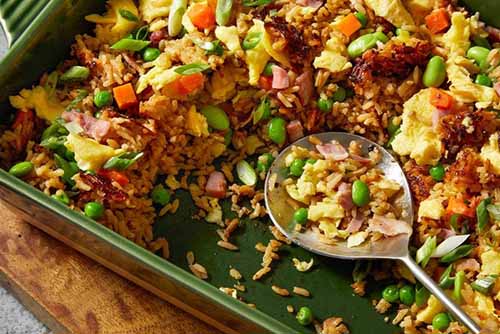
[6] Baked fried rice has all the flavor without the fuss. Here’s the recipe (photo © Taste Of Home).
2. HOW TO “AMERICANIZE” FRIED RICE
You forge a path by combining anything that appeals to you—not just traditional Chinese ingredients, but your favorites from any of the world’s cuisines.
- What’s in your fridge or pantry is unique to you. We found black beans, chicken sausage with apples, ham, hard-boiled eggs, pickled vegetables (including sweet gherkins), prosciutto and turkey. We even added orzo, tiny pasta shaped like grains of rice.
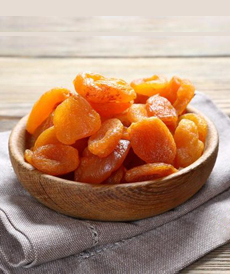
- Add nuts and dried fruits. Almonds or cashews, dried apricots or prunes are a nice touch. Cashews pair well with canned pineapple chunks. “Trail Mix Fried Rice” works, as does this recipe for Pork Fried Rice with Dried Apricots & Pistachios.
- Veggies can be the biggest “Americanization”: In addition to the popular Chinese ingredients, look at American produce. Cauliflower and roasted root vegetables go nicely. We added uncooked grape tomatoes at the very end of a recipe, and liked the freshness. Fennel and radicchio add a gourmet touch. Don’t rule anything out—with the possibility of beets, which can “bleed.” Kale fried rice, anyone?
- Use your favorite source of heat, from chopped jalapeños to sriracha sauce. Anchos and chipotles (smoked jalapeños) add smoky flavors. Default to fresh-ground black pepper or cayenne from your spice rack.
- Instead of using leftover white or brown rice, try saffron rice or a more exotic rice, such as black or red rice (here are the different types of rice). You can try any leftover cooked grain, from couscous to quinoa. It won’t be fried rice, per se; but it will be good!
- Consider a sauce or gravy. Fujian rice, a popular dish in China, is served with a brown sauce.
- Pick an interesting garnish. In China, popular garnishes include fried shallots, cilantro, parsley, sliced chiles, or carrots carved into flowers or other shapes. We especially like cilantro and parsley, as well as fresh basil. Fresh herbs bring brightness to the dish. But you can forge that path with other garnishes. We’ve used strips of pimento as well as citrus zest (any citrus works) and sliced black olives.
(continue below the photo)
|
|
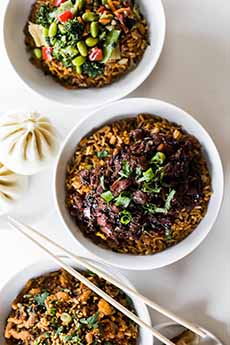
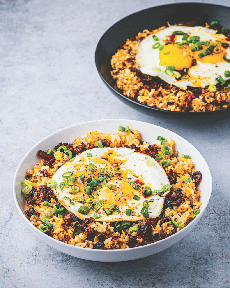
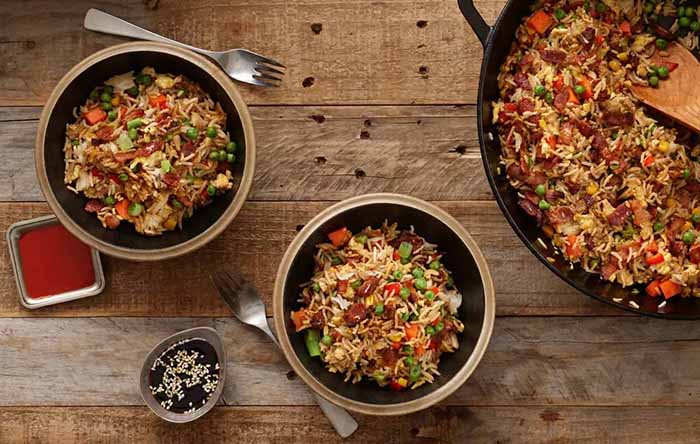
[1] Turn boring leftover rice into exciting fried rice, as a side or a main course (photo © Wow Bao).
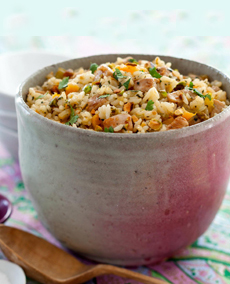
[2] This shrimp fried rice dish is made with brown rice and dried apricots, from California Rice Commission.
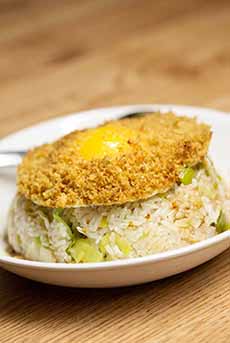
[3] There are numerous “breakfast fried rice” recipes that include an egg and sausage. Here’s a twist from Jean-George Vongerichten’s Spice Market in New York City (now closed). Leaving out soy sauce keeps the rice white. It’s topped with a fried egg garnished with crushed panko bread crumbs (photo © Spice Market).
[4] Fried rice with a poached egg and Chinese sausage at Onefold, a breakfast and lunch spot in Denver (photo © Onefold).
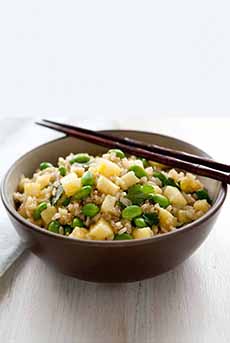
[5] This pineapple-ginger fried rice adds Japanese ingredients. Here’s the recipe, which incorporates edamame, miso, brown rice and cilantro (photo © Whole Foods Market).
|
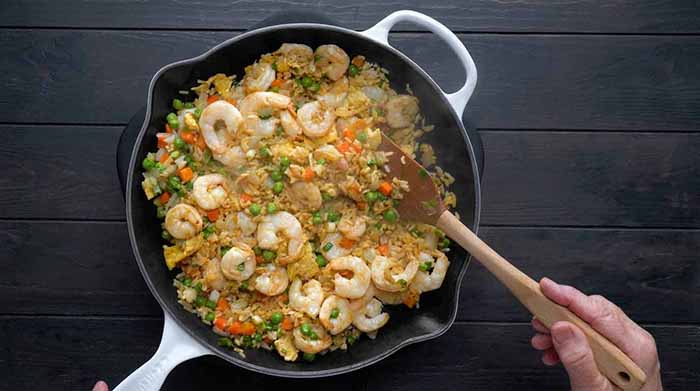
[7] You don’t need a wok; a skillet will do nicely. Here’s the recipe for this shrimp fried rice. We added almonds and pineapple (photo © Taste Of Home).
3. HOW TO MAKE FRIED RICE
The key to making good fried rice is to use rice that has been previously cooked. Day-old rice is fine, but rice that is two or three days old is even better. Older rice is dryer, ensuring that the dish will be neither wet nor mushy. Long grain rice, which is fluffier and less sticky than other types of rice, is ideal.
> Here’s a video of 10-minute fried rice.
Cooking the Eggs
There are two main techniques, and either is fine:
- Scramble the egg and mix it in with the rice during the final stage of cooking.
- Fry the beaten egg and cut it into strips to use as a garnish. We’ve happily substituted store-bought tamago, Japanese egg custard, for this.
Cook The Ingredients Separately
Each of the ingredients in fried rice is cooked separately and combined in the final stages of cooking. This is to maintain the distinct flavors of each. Simply remove each ingredient from the pan after you cook or heat it and set it aside while you cook the others.
Choosing The Seasoning
Some cooks use only a pinch of salt, believing that the flavor should come from the stir-fried ingredients. Others season the dish with soy sauce or oyster sauce. Thick soy sauce gives the rice a dark color. It’s really a matter of personal preference.
You Can Freeze Fried Rice!
Just reheat the frozen rice in a frying pan, or microwave it with a bit of broth (whatever you have—beef, chicken or vegetable).
No Wok Required!
Finally, you don’t need a wok! A deep skillet will do. We use this nonstick “wok pan” with a handle. We vastly prefer it to a conventional wok.
Thanks to Rhonda Parkinson of ChineseFood.About.com (now closed) for these tips on cooking fried rice.
4. THE HISTORY OF FRIED RICE
While the exact origins of fried rice are lost to history, it’s believed that it was invented sometime during China’s Sui dynasty (581-618 C.E.) in Yangzhou (Yangchow), a city in Jiangsu province on the eastern coast of China.
Yangchow fried rice is still the standard by which all other Chinese fried rice dishes are judged, the rice tossed with roast pork, prawns, scallions and peas. Here’s a recipe.
[8] How about bacon fried rice? Here’s the recipe (photo © Smithfield Foods).
CHECK OUT WHAT’S HAPPENING ON OUR HOME PAGE, THENIBBLE.COM.
|