THE NIBBLE BLOG: Products, Recipes & Trends In Specialty Foods


Also visit our main website, TheNibble.com.

TIP OF THE DAY: Make A Liqueur For Mom Or Dad

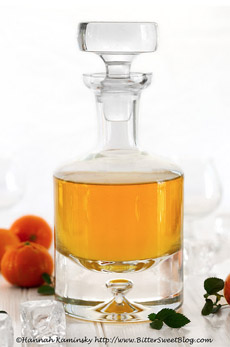
clementine-vodka-kaminsky-230
Home-infused clementine vodka. Photo ©
Hannah Kaminsky | Bittersweet Blog.
 

Our colleague Hannah Kaminsky of Bittersweet Blog has already made her Mother’s Day gift: which she calls climoncello (a rift on the lemon liqueur, limoncello).

You’ve got more than enough time to make your own liqueur for Mother’s Day or Father’s Day, in any flavor you choose. It simply requires a base spirit—vodka—plus fruit and sugar.

You don’t even have to buy fruit: You can use citrus peels leftover from other recipes, which is what started Hannah on this journey. You can save them up in a freezer bag, and make a mixed citrus if you don’t have enough of any one variety. You’ll also need a large infusing jar and a funnel.

Then, just cook it up and let the fruit or peel infuse for a month or longer. Hannah went on vacation, forgot about the steeping peels and ended up with a three-month infusion.

Here’s her easy recipe:

RECIPE: CLIMONCELLO, CLEMENTINE LIQUEUR

Ingredients

  • 14-15 clementine peels
  • 3-1/2 cups water
  • 2-1/2 cups granulated sugar
  • 1 (750-ml) bottle vodka*
  •  
    *Don’t buy the cheapest firewater like Everclear, but don’t buy premium brands, either. Hannah used Popov; we used Russian Standard and Absolut (and couldn’t tell the difference in the finished product).


    Preparation

    1. PLACE the peels, water and sugar in a medium saucepan over medium heat. Bring to a boil and cook just until the sugar has fully dissolved. Turn off the heat, cover with a lid and let cool to room temperature.

    2. TAKE a pestle or other blunt instrument and muddle/mash the rinds, bruising them to release more of the essential oils.

    3. ADD the vodka, give it a good stir and transfer the whole mixture, peels and all, into a large glass jar (be sure to save the vodka bottle for packaging the finished product, if you don’t want to buy a decorative bottle). Seal the lid tightly and stash it in a cool, dark place for 1-3 months. You’re likely to get even greater depth of flavor if you let it steep for an extra month or so. When the liqueur is ready, the liquid should be a golden orange color and smell of sweet oranges.

    4. STRAIN out and discard the peels, and transfer the liquor to an attractive glass bottle. Store in a cool, dark place for however long you can make it last. It should keep indefinitely, but you’ll no doubt want to enjoy it before too long.

      mint-liqueur-goodcocktails.com-230
    Homemade mint liqueur. Photo courtesy Good Cocktails.
     
    MINT LIQUEUR
    If you’d rather have mint or other herb liqueur than a fruit flavor, here’s a recipe from GoodCocktails.com. You can make basil, rosemary or anything you’d like.


    Comments off

    Beyond Egg McMuffin: Create Elevated Breakfast Sandwiches

    Homemade Egg McMuffin
    [1] A homemade version of the Egg McMuffin using a quality muffin, sausage patty (instead of Canadian bacon), Cheddar (instead of American cheese), and a runny sunnyside-up fried egg (instead of McDonald’s “over well”—photo © Steven Cordes | Unsplash).


    [2] How many different ways can you make a ham-and-egg breakfast sandwich? This version is from The Tuck Room Tavern in Los Angeles (photo © The Tuck Room).

    breakfast-sandwich-goat-cheese-melissas-230
    [3] Go beyond the Egg McMuffin and create your fantasy breakfast sandwich like this one (recipe below—photo © Melissa’s Produce).

    Banana Cream Pie Breakfast Sandwich
    [4] A “banana cream “pie” breakfast sandwich: Top a sweet bread—brioche, challah, Kings Hawaiian, cinnamon-raisin, or even banana bread—with cream cheese, mascarpone, or ricotta. Add bananas and an optional honey drizzle and nuts (photo © Schermer Pecans).


    [5] Caprese Breakfast Sandwich. Here’s the recipe (photo © Stella Cheese).

    toad-in-the-hole-melissas-230
    [6] Toad In The Hole is a British favorite (photo © Melissa’s Produce).

      Ask an American to name a breakfast sandwich and you might hear “bagel and lox”; but “Egg McMuffin” is more likely to be the answer.

    Before then, the term “breakfast sandwich” was not part of the vernacular.

    And popular as it is, the Egg McMuffin has not exactly spawned a major food trend in breakfast sandwiches beyond fast food emporia—but then, we haven’t looked on Tik-Tok. Even so…do foodies want an Egg McMuffin? Even on March 2nd, National Egg McMuffin Day?

    We think not. So today’s tip is: Elevate the breakfast sandwich!

    Create a signature breakfast sandwich! Get your friends to do the same, and you can get together for breakfast sandwich brunches.

    Below:

    > Mix-and-match ingredients for your breakfast sandwich.

    > The history of the Egg McMuffin.

    > Recipe: egg, goat cheese, and spicy honey breakfast sandwich.

    > Recipe: Hoppin’ Toad in the Hole, eggs, chiles, pepper jack cheese.
     
     
    Elsewhere on The Nibble:

    > The history of the breakfast sandwich.

    > The history of the sandwich.

    > The history of the English muffin.

    > The different types of sandwiches: a photo glossary.

    > The year’s 10 egg holidays.

    > The year’s 116 breakfast holidays.

    > The year’s 28+ sandwich holidays.
     
     
    BREAKFAST SANDWICH INGREDIENTS

    Peruse this list to put together your dream ingredients.

  • Bread: bagel, baguette, biscuits, brioche, challah, focaccia, toast of choice (rye, sourdough, whole wheat, etc.), roll of choice (note that we’ve deliberately excluded donuts and pancakes)
  • Eggs: fried, poached, scrambled, soft boiled, sliced hard boiled
  • Cheese: blue, Cheddar, goat, Gruyère, mozzarella, pepperjack, ricotta or other favorite
  • Meat: bacon types (including Canadian bacon and pancetta), chicken breast, chorizo or other sausage, ham, pork
  • Veggies: avocado, bell peppers (sautéed, grilled, diced fresh), fresh herbs, greens (sautéed arugula, broccoli rabe, kale, etc.), hash browns, jalapeños, onion (red or sweet), roasted poblanos, sprouts, tomato (fresh, sundried)
  • Condiments: aïoli, caramelized onions, chutney, extra virgin olive oil, gravy, honey, horseradish sauce, ketchup, mayonnaise, mustard-yogurt spread, pesto, salsa, sautéed peaches or other fruit, tomato sauce, vinaigrette
  •  
    You don’t need to include eggs or meat, as our first recipe demonstrates:
     
    Egg McMuffin
    [7] The OG: Egg McMuffin (photo © McDonald’s).
     
     
    THE HISTORY OF THE EGG McMUFFIN

    The Egg McMuffin was invented by a McDonald’s franchisee, Herb Peterson, who owned several locations in the Santa Barbara, California area. He created it in the late 1960s, and it was introduced officially in 1972.

    Peterson was fond of Eggs Benedict—eggs, Canadian bacon, and hollandaise sauce on an English muffin. He set out to develop a fast food version of it.
     
    Eggs Benedict
    [8] Eggs Benedict, the inspiration for Egg McMuffin. Here are recipes (photo © Blue Dog Kitchen | NYC).
     
    His first attempt used packaged hollandaise sauce, but that didn’t work. He replaced it with a slice of American cheese (already on hand for the cheeseburgers) and added Canadian bacon—and the Egg McMuffin was born.

    Peterson’s problem-solving skills engendered an important aspect of the Egg McMuffin: He needed to prevent the egg from splattering on the grill, and needed them to be perfectly round to fit the shape of the English muffin.

    He found a blacksmith who specialized in horseshoes, and commissioned a Teflon-coated ring for cooking the eggs. Then, he was off to the races!

    It was first sold “unoficially” at his Fairview Avenue location in Goleta, north of Santa Barbara.

    Peterson asked Ray Kroc, McDonald’s founder, to come to his franchise to see “something.” He wouldn’t say what it was, fearing Kroc might have dismissed the idea outright. In Kroc’s own words: “He didn’t want me to reject it out of hand, which I might have done, because it was a crazy idea—a breakfast sandwich.” But after tasting it, Kroc was sold (source: Reader’s Digest).

     
    The first corporate-authorized Egg McMuffin was served at a Belleville, New Jersey McDonald’s in 1972. McDonald’s officially launched its full breakfast menu nationally in 1977, featuring the Egg McMuffin along with hotcakes, sausage, scrambled eggs, hash browns, and Danish pastries.

    Today, breakfast foods account for about a third of McDonald’s total sales.

    The Egg McMuffin essentially created the breakfast sandwich category. Not surpringly, it boosted English muffin sales nationwide, NPR
     
     
    What About The Name?

    The name “Egg McMuffin” was coined by Patty Turner Peterson, Herb’s wife. Kroc credited the name with making the new item a must-try.

    Of course, she received no public acknowledgement and no compensation. It was extremely uncommon for spouses to receive separate compensation for informal contributions, even if they became iconic. Wives’ contributions in that era were not documented with the same thoroughness as their husbands’ achievements.

    Peterson himself received no additional compensation for the McMuffin. When franchisees or employees develop new products, the intellectual property typically belongs to the corporation (especially in the era before modern innovation incentive programs).

    Peterson himself coined McDonald’s first national advertising slogan, “Where Quality Starts Fresh Every Day.” That’s not too much of a surprise: Before becoming a franchisee, he was an advertising vice president at the agency that handled the McDonald’s account.
     
    Bagels & Lox
    [9] Our personal favorite breakfast sandwich: bagels and lox (photo © Abdallah Maqboul | Pexels).
     
     
    RECIPE #1: EGG, GOAT CHEESE & SPICY HONEY BREAKFAST SANDWICH

    This sandwich (photo above) will wake you up sweetly, with chile-infused honey.

    If you don’t want the heat of the chiles, substitute a bit of fresh-ground black pepper for the ground cayenne, and don’t use the final chile garnish.

    Prep time is 20 minutes, plus 4 hours to infuse the honey.

    Ingredients For 4 Servings

  • 8 ounces honey
  • 2 fresh cayenne chiles, stems and seeds removed, finely diced, divided (about 2 tablespoons)
  • 4 thick slices whole-wheat French bread
  • 2 tablespoons unsalted butter, divided
  • 1/2 cup creamy goat cheese (4 ounces)
  • 4 large eggs
  • Salt
  • Ground cayenne pepper or black pepper
  •  
    Preparation

    1. COMBINE honey and half of the cayenne chile in a glass container. Seal tightly and let sit 4 hours or overnight. Wrap and reserve remaining chiles in the fridge.

    2. TOAST bread; spread each slice with 1 teaspoon butter and 2 tablespoons goat cheese.

    3. HEAT the remaining 2 teaspoons butter in a large skillet over medium heat. Crack eggs into skillet; cook until yolks are set, about 1 to 2 minutes per side. Sprinkle with salt and cayenne pepper to taste.

    4. DRIZZLE each slice of toast with 2 tablespoons cayenne honey. Top with a fried egg; drizzle evenly with the remaining honey and garnish with the remaining fresh cayenne chiles.
     
     
    A related recipe is Toad In The Hole (photo #4), a British specialty that pan-fried day-old bread with an egg in the middle. The recipe’s colorful name no doubt appealed to children.

    With the added crushed chiles, this toad sure is hoppin’! If you don’t like the heat, leave off the chiles.
     
     
    RECIPE #2: HOPPIN’ TOAD IN THE HOLE

    Ingredients For 6 Servings

  • 6 one-inch-thick slices sourdough bread, toasted
  • 4 tablespoons (1/4 cup) unsalted butter
  • 2 dried de arbol chiles, stems and seeds removed, finely crushed
  • 6 large eggs
  • 1/2 cup (2 ounces) shredded pepper jack cheese
  •  
    Preparation

    1. CUT a 1-1/2-inch hole in the center of each slice of bread, using a small round cookie cutter or a juice glass.

    2. MELT 2 tablespoons butter over low heat in a large skillet. Add half of the crushed chile and cook until fragrant, stirring often, about 1 to 2 minutes.

    3. INCREASE heat to medium; arrange 3 bread slices in the skillet. Crack 1 egg into the hole of each slice, taking care not to break the yolks. Cook until eggs are just firm but the yolk is slightly runny, about 5 to 8 minutes.

    4. SPRINKLE evenly with cheese during the last 2 minutes of cooking. Remove from skillet and keep warm. Repeat procedure for the next three slices of bread.

    5. SPRINKLE with salt, pepper and paprika to taste. Serve.
     
    Croissant Breakfast Sandwich
    [10] Egg McMuffin croissant-style. Here’s the recipe (photo © Umami Girl).
     

    CHECK OUT WHAT’S HAPPENING ON OUR HOME PAGE, THENIBBLE.COM.


    Comments off

    HOLIDAY: National Egg Salad Week

    egg-ham-salad-davidvenableQVC-230
    Deviled ham-and-egg salad. Photo courtesy QVC.
      It’s National Egg Salad Week. Here’s a different way to enjoy “ham and eggs”—as deviled egg and ham salad.

    QVC’s chef David Venable sent this deviled egg and ham salad recipe as a way to use leftover Easter ham, but there’s no time like the present.

    You may like it so much that you’ll eagerly await Easter ham leftovers. According to David, it tastes so good that “no one will complain about day two, or even three, of leftovers!”

    RECIPE: DEVILED EGG & HAM SALAD

    Ingredients

  • 8 large hard-boiled eggs, chopped
  • 2 stalks celery, chopped
  • 8 ounces cooked ham, finely chopped
  • 1/3 cup mayonnaise
  • 2 tablespoons prepared yellow mustard
  • 1/2 teaspoon salt
  • 1/2 teaspoon ground black pepper
  • 4 tablespoons sweet pickle relish
  • 1/2 teaspoon paprika
  • 1 teaspoon apple cider vinegar
  • Preparation

    1. PLACE the eggs, celery, and ham in a large mixing bowl; set aside.

    2. MIX the mayonnaise, mustard, salt, pepper, pickle relish, paprika, and vinegar in a separate medium-sized bowl until fully combined.

    3. POUR the mayonnaise mixture over the eggs, celery, and ham and toss gently.
     
    MORE EGG SALAD RECIPES

    Here’s a wealth of egg salad recipes, including an ingredients template to make your own signature egg salad.


    Comments off

    TOP PICK OF THE WEEK: Chocolate Covered Figs (Higos)

    Higos (EE-gose) is the Spanish word for figs. Take just one bite of chocolate covered figs, and you’ll never forget the word. These bonbons are not broadly enjoyed in the U.S., but they should be.

    We can’t remember who sent us the box of ChocoHigos, but thank you so very much. We’d had bites of them at trade shows, but a whole box to ourselves was indeed a luxurious experience.

    ChocoHigos are figs enrobed with chocolate. This artisan confection is handmade in Aragón, Spain by brothers Fernando, Manuel and Pepe Caro, the third generation to prepare the family recipe.

    The sweet, plump Pajarero figs, from Extremadura in western Spain, are a thin-skinned, delicate variety that are smaller and sweeter than the varieties most common in the U.S., such as Black Mission, Brown Turkey, Calimyrna (Turkish) and Kadota.

    The figs are harvested, dried and then hand-dipped in the 68% dark chocolate also made by the Caros. The family recipe uses 100% Forastero cacao grown on the Costa de Marfil of the Côte d’Ivoire. The flavor is a perfect counterpoint to the figs: earthy with notes of cinnamon and clove.


    whole-box-230
    ChocoHigos: delightful fig bonbons. Photo by
    Elvira Kalviste | THE NIBBLE.


    The taste: sublime. Enjoy them after dinner with coffee, brandy or liqueur. Give them to foodie friends. A box of 10 figs, 4.94 ounces, is $9.89 on Amazon.com.

    Another fig confection from Spain is Rabitos. The recipe is a bit different: The figs are soaked in brandy, stuffed with a brandied chocolate ganache, and then enrobed in dark chocolate. We personally prefer ChocoHigos.


    pajarerero-figs-forevercheese-230
    Dried Pajarero figs. Photo courtesy Forever
    Cheese.
      HOW TO ENJOY CHOCO-HIGOS

  • With cheese, especially blue cheese and triple-crèmes.
  • With a cup of coffee or tea, as a snack or a mini-dessert.
  • With a glass of Port or late harvest Zinfandel.
  • As an anytime chocolate fix.
  •  

    A BRIEF HISTORY OF FIGS

    The fig was one of the first plants domesticated by man, roughly around 9000 B.C.E., in the Tigris-Euphrates Valley of Mespopotamia*. Easy to grow, nutritious and delicious, it quickly spread to other areas bordering the Mediterranean. Over time, new varieties were bred and cultivated.

     
    Figs came to America in the 1500s; by the 1700s, they were a major food crop planted by Spanish missionaries in settlements along the West Coast of Mexico and California. Figs came to America in the 1500s; by the 1700s, they were a major food crop planted by Spanish missionaries in settlements along the West Coast of Mexico and California.

    By the late 1800s, the commercial fig industry was well established in California’s Central Valley; along with Greece, Italy, Spain and Turkey it is one of the largest fig-producing regions in the world.

     
    *The modern area includes Iraq, Kuwait, the northeastern section of Syria, and portions of southeastern Turkey and southwestern Iran.


    Comments off

    TIP OF THE DAY: Crabtini, A Simple & Elegant First Course


    A delicious crabtini. Photo courtesy Ruth’s
    Chris Steakhouse.
     

    When you’re cooking a fancy dinner, there are tricks to shave time and effort. We typically do this by making first courses and desserts that are simple yet impressive.

    One of our go-to first courses is a slice of store-bought pâté with a lightly-dressed mesclun salad, cornichons, pickled onions and some halved grape tomatoes for color. Another is a crabtini.

    A crabtini is a crab cocktail served in a Martini glass. Thanks so much to Lynne Olver of FoodTimeline.org, whose research indicates that the originator of the concept appears to be Ruth’s Chris Steakhouse, circa 2005.

    The crabtini has inspired chefs to create even more elaborate preparations like this molded crab cocktail. But, seeking the quick and easy, we emulated Ruth’s Chris to make our own crabtini:
    RECIPE: CRABTINI

    Ingredients For 6-8 Servings

  • 1 pound lump or white crabmeat (types of crabmeat)
  • 1/2 cup capers, drained
  • 1/4 cup red onion, minced
  • 2 tablespoons parsley, chopped
  • Optional: 1/2 teaspoon Creole seasoning
  • Salt and pepper to taste
  • Herb vinaigrette (recipe below)
  • Romaine
  • Garnish: salmon caviar, red tobiko or tiny dice of
    red bell pepper; lemon or lime wedges
  • Preparation

    1. GENTLY toss the crab with capers, onion, parsley, Creole seasoning, salt and pepper and vinaigrette. Taste and adjust seasonings as desired.

    2. PLACE romaine leaves upright in a Martini glass. Place a mound of the crab salad in the glass.

    3. GARNISH with caviar and serve with lemon or lime wedges.
     
    RECIPE: HERB VINAIGRETTE

    Ingredients

  • 1/4 cup mixed leafy fresh herbs: basil, mint, parsley, tarragon
  • 1 clove garlic
  • 1/4 cup lemon or lime juice
  • 1/4 cup balsamic vinegar
  • 1-1/4 cups extra virgin olive oil
  • Salt and pepper to taste
  • A few shakes Worcestershire sauce
  •  
    Combine all ingredients in a food processor and blend. Taste and adjust seasonings as necessary.
     
    WINE PAIRING
    Enjoy your crabtini with a festive glass of sparking wine—another quick and easy way to add glamor to a simple course—or a clean, crisp dry white wine.


    Comments off

    The Nibble Webzine Of Food Adventures
    RSS
    Follow by Email


    © Copyright 2005-2026 Lifestyle Direct, Inc. All rights reserved. All images are copyrighted to their respective owners.