|
Giardiniera (jar-dih-NYAIR-uh) is an Italian word that means “from the garden.” In Italy, giardiniera has long been a way to preserve seasonal vegetables in vinegar for use during the winter.
Giardiniera is also called “sotto aceti,” which means “under vinegar,” a common term for pickled foods. It is often made with carrots, cauliflower, celery, onions and zucchini in red or white wine vinegar.
Veggies from the garden are pickled in vinegar, herbs and spices. In Southern Italy, olive oil can be added; Northern Italians seem to prefer a tangier, sharper vinegar brine.
Giardiniera is enjoyed regularly and is typically part of an antipasto.
Below:
> Many uses for gardiniera.
> A recipe to make your own.
GIARDINIERA COMES TO AMERICA
Italian immigrants brought giardiniera recipes to America in the late 19th and early 20th centuries. In Chicago, Italian-American communities transformed giardiniera into a spicy, oil-based relish rather than a purely vinegar-pickle vegetable.
They minced the vegetables more finely and added chile peppers or flakes for heat. “Chicago-style giardiniera” became a staple topping for Italian beef sandwiches, subs, pizza, sausages, and hot dogs.
The result is a pickled condiment used like other pickles on burgers, eggs and sandwiches, from the classic muffaletta of New Orleans to the Italian beef sandwich in Chicago to an everyday ham and cheese. (See more uses below.)
Today:
Italian style giardiniera is still widely eaten as an antipasto, with grilled meats, or alongside salads.
Chicago style giardiniera is a popular condiment for burgers, pasta, pizza, and sandwiches.
Variations now include mild to extra-hot blends made with chile peppers of different heat levels, and gourmet versions with artisanal oils.
Giardiniera adds crunch, tang, spice and often, heat, to perk up anything it touches. Low in calories and high in veggie nutrition, it’s a guilt-free addition.
Note: Chicago-style giardiniera is stored in oil (commercial brands often use a blend of olive and vegetable oils), which softens the heat and makes it more spoonable. It’s quite different from the crisp, vinegary Italian original.
USES FOR GIARDINIERA
Appetizer: Time to revive the antipasto plate and relish tray.
Bloody Mary: Stir some in and provide a cocktail pick to spear the veggies.
Condiment: Place a bowl on the table with the main course. Giardiniera is especially delicious with grilled foods and casual foods (burgers, franks, sandwiches).
Dip or Spread: Chop and mix into yogurt, sour cream, mayonnaise, or a combination.
Eggs: Fold into scrambled eggs and omelets; serve as a condiment with other egg dishes.
Pasta: Toss giardiniera with any cooked pasta; add to oven-bound stuffed shells or other baked pasta recipes, including lasagna.
Pizza: Spoon it on! If making a frozen pizza, spread giardiniera over the top before placing it in the oven so it bakes right.
Salads: Add giardiniera into a tossed salad, tuna or chicken salad, pasta salad or potato salad for instant punch and color.
Sandwiches: Add to grilled cheese, meatball, muffaletta, submarine, burger, hot dog, or any basic sandwich (photos #1, #3, #4).
Side: Make “Italian cole slaw” by mixing with shredded red cabbage.
RECIPE: MAKE YOUR OWN GIARDINIERA
Bell peppers, carrots, cauliflower, celery, hot chiles and pitted olives are common, but you can add whatever appeals to you, including non-traditional ingredients like mushrooms and okra.
There are mild and hot versions, the latter employing hot chile peppers.Enjoy it at home and bring a jar full as a house gift. After you make the first batch, you’ll be able to adjust the ingredients to create your ideal “signature” blend.
You can cut the vegetables as you like, from chunky to a more finely diced relish.
Note that if you use olive oil in the recipe, it will cloud up in the fridge. But will become clear again at room temperature.
Ingredients
2 cups water
1/4 cup table salt
1 cup small-diced carrots
1 cup cauliflower florets
4 to 8 Serrano chiles, sliced
2 cloves garlic, minced
1 stalk celery, diced small
1 red bell pepper, diced small
2 cups wine vinegar (red or white)
1 tablespoon dried oregano
1/2 teaspoon freshly ground black pepper
Plus your choice of additional ingredients, such as:
Fennel
Gherkins
Jalapeño chiles, sliced
Mushrooms
Okra
Olives, green and/or black olives, pitted and halved
Oil: canola, olive, soybean or vegetable
Pimento (roasted red bell pepper)
Spices: dill, parsley, red pepper flakes
Pepperoncini
______________
*Use good vinegar, and never distilled white vinegar.
|
|
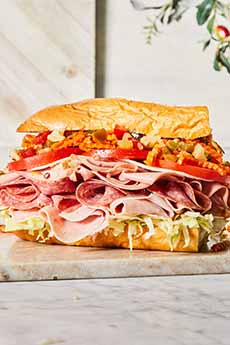
[1] An Italian hoagie will often feature giardiniera (photo © DeLallo)

[2] Giardiniera is made in mild and spicy versions (photo © DeLallo).
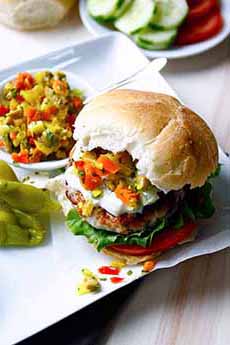
[3] Turkey burger with giardiniera (photo © DeLallo).
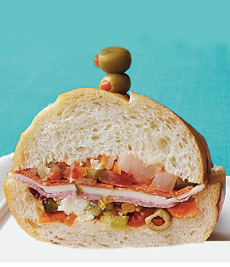
[4] A muffaletta sandwich with giardiniera. Here’s the recipe. Photo courtesy Pillsbury.
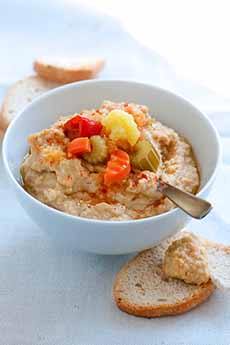
[5] Fusion food: hummus topped with giardiniera (photo © DeLallo).
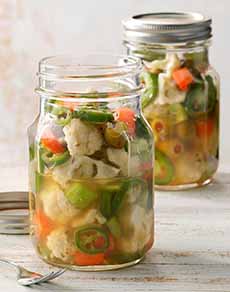
[6] Homemade Chicago-style hot giardiniera. Here’s the recipe (photo © Taste Of Home).
|