THE NIBBLE BLOG: Products, Recipes & Trends In Specialty Foods


Also visit our main website, TheNibble.com.

TIP OF THE DAY: Beer Glasses ~ Stout Glasses

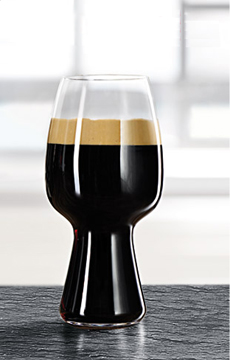
stout-glass-spielgau-230
Stout has never tasted better. Photo courtesy Spielgau.

  For decades, connoisseurs of fine wines and spirits have been able to enjoy them in glasses engineered by Riedel, to bring out every last nuance of flavor and aroma. If you’ve ever compared drinking a wine from the correct varietal-specific Riedel glass (Bordeaux, Brandy, Chardonnay, Tequila, etc.) and a generic wine glass, you know the results are amazing.

Last year right before Father’s Day, we featured the first variety-specific beer glass, an IPA glass from Spielgau, specially contoured to enhance the flavors and aromas of IPA beer.

This year, Spielgau—a 500 year-old company that was purchased by Riedel in 2004—adds the world’s first stout-specific glass. The company hopes to do for beer what its parent company has done for wine.

Stout is a heavier style of beer characterized dark color, malty flavor, and thick, foamy head. The wide mouth of the 21-ounce Spiegelau Stout glass is conducive to pouring a strong head, while the flared base helps focus the beer’s aromas, which can then emanate from the glass’s wide opening. (See the different types of beers.)


The stout glass was developed and tested with two American craft brewers of stout: Left Hand Brewing Company of Colorado and Rogue Ales of Oregon. A set of two glasses is $25 at SpielgauUSA.com. Branded versions of the glass with brewery logos are available through LeftHandBrewing.com and Rogue.com, respectively.


HOW THE SPIEGEL STOUT GLASS WAS DEVELOPED

Hundreds of glasses pulled from Spiegelau’s glassware archive were tested against a variety of the brewers’ own stouts to find the glass shape that had the most profound effect on the aromas and flavor profiles of each stout beer. After narrowing the options to a handful of shapes, Spiegelau’s German factory created six final prototypes for testing all stouts, varying by several millimeters in height, bowl width, angle and capacity.

After many deliberations, Left Hand Brewing Company and Rogue Ales separately and unanimously determined that the Prototype “C” stout glass delivered the optimal taste, aroma and mouth feel to enhance stout beers. The winning shape has:

  • A voluminous, open bottom glass base that drives beer and aromatic foam upward into the main bowl.
  • A wider, conical bowl that significantly amplifies aromas and also provides superior flow to mid palate, improving the taste, mouth feel and finish of complex stout beers.
  • A stark, angular shape and open base that create dramatic visual cascading effect into the glass as the beer is poured.
  • Ultra-pure quartz material, that makes for unsurpassed clarity and flawless, true color presentation of stout beer.
  •  
    So the next great gift for a beer lover: Spielgau stout glasses with a selection of artisan stouts.

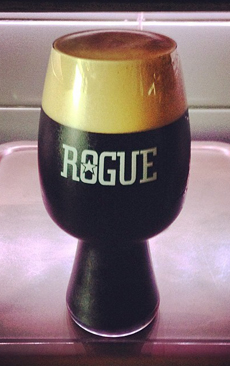
      rogue-stout-glass-proofbrewingco-230
    The two “developer” breweries offer branded versions of the stout glass. Photo courtesy Proof Brewing Co.
     

    ABOUT STOUT

    The darkest and heartiest of beers, a stout is top fermented and differentiated from a regular ale by its brown-black color, chocolate-coffee flavors and fuller body. This is achieved by brewing with barley that has been dark-roasted to the point of charring (think of espresso beans, compared to a medium-roast coffee). Stout is thus both darker and maltier than porter, has a more pronounced hop aroma, and may reach an alcoholic content of 6% to 7%.

    Stout originated in Ireland, where most traditional stouts are very rich, yet sharp and slightly bitter. Stout is well-paired with strong cheese and a spicy sausage such as andouille. There are different types of stout:

  • Chocolate stout is a sub-category that uses different malts for an even more pronounced chocolate flavor. These days, some brewers add actual chocolate into the brew, or brew over cacao beans, or both.
  • Coffee stout uses dark roasted malts to add a bitter coffee flavor. With the tandem growth of interest in microbrews and fine coffee, craft brewers have added specific ground beans to create, for example, “Breakfast Coffee Stout,” “Espresso Stout” and “Guatemalan Coffee Stout.”
  • Cream stout or milk stout is a style made sweeter with unfermentable lactose (milk sugar).
  • Dry stout or Irish stout is very dark and toasty or coffee-note style, exemplified by the world-famous Guinness.
  • Imperial stout, Russian stout or Russian imperial stout has more of a rich, roasted quality and a higher level of alcohol. These are potent beers that can be almost as thickly textured as liqueur. Examples include Samuel Smith’s Imperial Stout at 7% alcohol and Brooklyn Brewery’s Black Chocolate Stout, at 8.7% alcohol. The alcohol content of imperial stouts can go to 9% and 10%.
  • Oatmeal stout adds oatmeal to the mash, which gives a smoothness and creaminess to the stout. It has more restrained flavors and less alcohol than Imperial stout. Samuel Smith makes a benchmark oatmeal stout, with notes of fruit, licorice, chocolate and toffee.
  •   

    Comments off

    BOOK: Kitchen Survival Guide For Men

    save-the-males-230
    Save the males: Teach them to cook for
    themselves. Photo courtesy Save The Males
    Publishing.
     

    Chef Gordon Smith has cooked for royalty, celebrities, executives, and Olympic athletes. Now, in his mission to “save the males,” he tells men what they need to know to survive on their own—by cooking good food at home instead of resorting to less-good-for-you fast food and take-out.

    His book, Save the Males: A Kitchen Survival Cookbook, is a fun gift for single men as well as husbands, significant others and other men who have to fend for themselves in the kitchen, whether full-time or on occasion. It’s a practical culinary foundation for the novice and a great refresher course for any home cook.

    (If you’re buying the book on Amazon.com, note that there’s another book named Save The Males, about relationships. Don’t let it confuse you. The one you want is co-authored by Reparata Mazzola and Gordon Smith.)

    The underlying goal of “Save the Males” is fun, as Chef Gordon teaches readers how to switch from prepared foods to foods they prepare. An empty kitchen goes from foreboding to a place fragrant with delicious meals they cook meals for themselves, family and friends.


    Chef Gordon Smith is a regular guy who knows from experience that cooking improves one’s health and appearance (eat better!) as well as one’s sex life (a home cooked dinner is romantic!).

    Cooking for oneself is not only empowering; it could lead to a new hobby—or at least, it could get the man in your life to prepare dinner more often.

    And that’s the reason to give copies to dads, grads, brothers, sons and friends.
      

    Comments off

    Hummingbird Coffee Cake Recipe & Hummingbird Cake History

    The recipe for Hummingbird Cake, a southern tradition like Red Velvet Cake, was first submitted by a reader to Southern Living magazine and published in the February 1978 issue. Here’s that first printed recipe for Hummingbird Cake.

    There was no explanation of the name (we have it below), but Food Timeline cites a 1985 article in the Arkansas Gazette that says the cake also was called Cake That Doesn’t Last, Cake That Won’t Last, Granny’s Best Cake and Never Ending Cake. (We’re down with Hummingbird Cake.)

    Originally made as a layer cake (but also made into cupcakes), the batter includes bananas, crushed pineapple, and pecans or walnuts. The cake is filled and frosted with cream cheese frosting and typically topped with more chopped nuts. Think banana nut cake with pineapple and cinnamon.

    It’s popular for Mother’s Day, but why not make one for Dad?
     
     
    > The history of Hummingbird Cake is below.

    > The history of cake.

    > The different types of cake, in our Cake Glossary.
     
     
    RECIPE: HUMMINGBIRD COFFEE CAKE

    This recipe is by Annie for GoBoldWithButter.com. She adapted the layer cake into a brunch coffee cake.

    Annie writes: “This year I decided to put a brunch-worthy spin on this classic Mother’s Day cake. The banana, pineapple, and yogurt all ensure that this cake stays moist and tender. This cake is very simple to put together and is a lovely contribution for any brunch, Mother’s Day or otherwise.”

    She incorporated better-for-you ingredients, including whole wheat flour and low-fat yogurt. (It’s not a healthy recipe, but every little bit helps!)

    Ingredients For 1 Cake/16 Servings

    For The Cake

  • 8 tablespoons (1/2 cup or 1 stick) unsalted butter, at room temperature, plus more for preparing the pan
  • 1 cup all-purpose flour, plus more for preparing the pan
  • 1 cup whole wheat flour
  • 1 teaspoon baking powder
  • 1 teaspoon baking soda
  • 3/4 teaspoon salt
  • 1/2 teaspoon ground cinnamon
  • 1 cup sugar
  • 2 large eggs
  • 1 teaspoon vanilla extract
  • 1 teaspoon coconut extract (optional)
  • 1 cup low-fat plain Greek yogurt
  • 2 mashed bananas (about a scant 1 cup)
  • 2/3 cup shredded coconut
  • 1 cup finely chopped pineapple
  •  
    For The Glaze

  • 2 ounces cream cheese, softened
  • 2 tablespoons milk
  • 1/2 teaspoon vanilla extract
  • 3/4 cup confectioners’ sugar, plus more as needed
  •  
    For The Garnish

  • 1/3 cup shredded coconut
  • 1/3 cup coarsely chopped walnuts, macadamia nuts, or pecans
  •  
    Preparation

    1. PREHEAT the oven to 350°F. Thoroughly butter a bundt pan. Coat the inside with flour, tapping out the excess.

    2. COMBINE 1 cup all-purpose flour, 1 cup whole wheat flour, baking powder, baking soda, salt, and cinnamon in a small bowl. Whisk to blend; set aside.

    3. COMBINE butter and sugar in the bowl of an electric mixer. Beat on medium-high speed until light and fluffy, about 2-3 minutes. Mix in the eggs one at a time, blending well after each addition. Blend in the vanilla and coconut extracts. Beat in the yogurt until well incorporated.

    4. TURN the mixer to low speed and beat in half of the dry ingredients, mixing just until incorporated. Beat in the mashed bananas and then the remaining dry ingredients, again mixing just until incorporated. With a silicone spatula, gently fold in the coconut and chopped pineapple.

    5. TRANSFER the batter to the prepared Bundt pan and smooth it into an even layer. Bake, rotating halfway through baking until a toothpick inserted in the cake comes out clean, about 50-55 minutes. Let it cool for 20-30 minutes in the pan placed on a wire rack. Gently loosen the cake from the sides of the pan with a knife, and carefully turn it out onto the cooling rack. Allow the cake to cool completely.

    6. MAKE the glaze: Whisk together all ingredients in a small bowl. If the glaze is too thin, whisk in more confectioners’ sugar. If the glaze is too thick, whisk in additional milk 1 teaspoon at a time. Drizzle the glaze over the top of the cooled cake. Sprinkle with shredded coconut and chopped nuts for garnish. Let glaze set before slicing and serving.
     
     
    THE HISTORY OF HUMMINGBIRD CAKE

    Many people think of Hummingbird Cake as an invention of the southern U.S. But according to chef Jamie Oliver, “The giveaway to the Hummingbird cake’s birthplace…is in the key ingredients: bananas and pineapple.”


    hummingbird-coffee-cake-goboldwithbutter-230
    [1] Hummingbird Cake, a traditional southern layer cake, is reinterpreted as a coffee bundt cake. The recipe is below (photo © Go Bold With Butter).

    Hummingbird Cake
    [2] A classic Hummingbird Cake (photo © Allen Brothers).

    Hummingbird Cake
    [3] Whether you put them on top, around the side, and/or in the filling, pecans are a must. Here’s the recipe (photo © Southern Living).

    Slice Of Hummingbird Cake
    [4] You can make a simple two-layer cake. Here’s the recipe (photo © McCormick).

    Slice Of Hummingbird Cake
    [5] Or go fancy with four layers. Here are different ways to enjoy the flavors of Hummingbird Cake (photo © Southern Weddings).

    Swallow-Tailed Hummingbird
    [5] The swallow-tailed hummingbird, for whom Hummingbird Cake was named (photo © Dave Curtis | eBird | Macaulay Library).

     
    That says “Caribbean,” and the Humminbird Cake is believed to have been created in Jamaica, probably in the late 1960s.

    Originally, it was called the “Doctor Bird Cake,”, a nickname for a Jamaican variety of hummingbird called swallow-tailed hummingbird*.

    Why Doctor Bird? The bird probes flowers with its long beak, which inspired the original namer who thought it resembled a doctor inspecting a patient.

    In 1968, the Jamaican Tourist Board launched a marketing campaign to attract U.S. tourists. The press kits contained a few recipes from the island, including one for the Doctor Bird Cake.

    Over the next few years, similar recipes appeared in local papers and community cookbooks across the South under various different names, including “Cake That Doesn’t Last” (presumably because it’s so good, it quickly gets consumed.

    Most food historians agree the first printed recipe for Hummingbird cake was by one Mrs. L. H. Wiggin, who sent the recipe to Southern Living magazine, which published it in February 1978.

    But even before then, there are countless references to Hummingbird Cake in county fair reports and baking competitions across southern America.

    So who turned the doctor bird into the hummingbird? We have yet to uncover that tidbit of culinary history.
     
     
    ________________
     
    *The swallow tail hummingbird (Trochilus Polytmus and Eupetomena macroura), is one of the largest of the 320 species of hummingbirds. It lives only in Jamaica. [source].


    CHECK OUT WHAT’S HAPPENING ON OUR HOME PAGE, THENIBBLE.COM.


    Comments off

    FOOD 101: For National Comfort Food Day: What Is Comfort Food?

    Banana Pudding
    [1] Banana pudding is one of America’s favorite comfort foods. Here’s the recipe for this version (photo © M. Sheldrake | iStock Photo).

    Mackenzie-mac-cheese-230r
    [2] Mac and cheese: who resist (photo © Mackenzie Ltd).

    Fancy Chicken & Waffles
    [3] Fried chicken is a perennial favorite (photo © Honey Butter Fried Chicken | Chicago).


    December 5th is National Comfort Food Day.

    A tweet from FoodTimeline.org sent us to the site to drill down on the origins of comfort food.

    According to the site, the first record in print is in the magazine section of the Washington Post of December 25, 1977: “Along with grits, one of the comfort foods of the South is black-eyed peas.”

    Judith Olney’s book Comforting Food, published in 1979, began the discussion.

    There is no single definition or list of “comfort food.”

    Food psychologists note that provide solace and food feelings, and are typically items our loved ones cooked for us when we were children.

    Thus, favorite comfort foods are based on where you grew up and your heritage; for example, hush puppies or grits for Mississippians and bagels and lox or cheesecake for New Yorkers.

    Typically, comfort foods are:

  • Smooth & creamy (easy to chew and digest).
  • Carb intensive (give us energy).
  • Fondly remembered from childhood (good food memories).
  •  
     
    AMERICA’S FAVORITE COMFORT FOODS

    Here’s what comes up on the list of all-American comfort foods on About.com. In alphabetical order, we present what would be quite a buffet feast of the 25 top comfort foods:

  • Apple pie
  • Baked beans
  • Banana pudding
  • Beef stew
  • Brisket pot roast
  • Chicken and dumplings
  • Chicken pot pie
  • Chicken soup
  • Chili
  • Chocolate chip cookies
  • Corn on the cob
  • Fried chicken
  • Gelatin (Jell-O)
  • Green bean casserole
  • Hot dogs
  • Ice cream
  • Macaroni and cheese
  • Mashed potatoes
  • Meatloaf
  • Potato salad
  • Pumpkin pie
  • Shepherd’s pie
  • Spaghetti
  • Tomato soup
  • Tuna casserole
  •  
     
    Hey, what happened to grilled cheese and rice pudding?

    Is your favorite on the list?


    CHECK OUT WHAT’S HAPPENING ON OUR HOME PAGE, THENIBBLE.COM.


    Comments off

    TIP OF THE DAY: Save Those Orange Peels

    orange-peel-lolalovesgreen-230r
    Don’t toss the peel! Photo courtesy
    IdaLovesGreen.com.
     

    Some people prefer a banana, others an apple. Our go-to hand fruit is a bright, juicy orange. We eat enough of them to engender the question of how to repurpose the peel.

    Beyond zesting and making candied orange peel, we published a piece on what to do with leftover orange peels around the house.

    But with the arrival of warmer weather this spring, another use emerged. We found ourselves brewing lots of iced tea. One day, we were drinking a glass while peeling an orange.

    And then, like the apocryphal story of the boy with the chocolate running into the boy with peanut butter (voilà: peanut butter cups), we put the two together.

  • Brewing iced tea? Add the peels to steep with the hot water and tea. Result: a subtle orange flavor and aroma.
  • Drinking ready-made iced tea? Twist a piece of peel to release the oils and drop it into the glass. You can do the same with plain or sparkling water or a soft drink.
  • Not drinking anything at the moment? Freeze the peels until you need them.
  •  
    And of course, you can do the same with a cup of hot tea.
    Banana fans: Here’s what you can do with leftover banana peels.
      

    Comments off

    The Nibble Webzine Of Food Adventures
    RSS
    Follow by Email


    © Copyright 2005-2026 Lifestyle Direct, Inc. All rights reserved. All images are copyrighted to their respective owners.