THE NIBBLE BLOG: Products, Recipes & Trends In Specialty Foods


Also visit our main website, TheNibble.com.

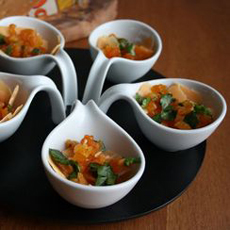
RECIPE: Apricot Cilantro Salsa


Seasonal apricot salsa brightens grilled
chicken or fish. Photo courtesy Landana
Cheese.


Salsa is simply the generic word for “sauce.” Many centuries before tortilla chips were invented, Aztecs and other Mesoamericans ground ingredients into sauces for meat and fish.

This salsa recipe was developed as a sauce for chicken or fish, as opposed to a dip for tortilla chips. It comes from Landana Cheese, a Dutch producer specializing in Gouda-style cheeses—hence the unusual addition of cheese. You can omit the cheese, and the salsa is just as good.

RECIPE: APRICOT CILANTRO SALSA FOR FISH & POULTRY

Ingredients

  • 5.3 ounces (150g) Gouda-style cheese, shaved (Landana used their 1000 Days aged Gouda)
  • 8 ripe apricots, halved and pitted
  • 6 cilantro sprigs
  • 1 teaspoon lime juice
  • 1 teaspoon grated lime zest
  • 1/2 teaspoon paprika
  •  

    Preparation

    1. CUT the apricots into a small dice. Remove the leaves of cilantro from the stems and mince them. Juice the lime and grate the zest.

    2. COMBINE the apricots, cilantro, lime juice and zest and paprika and allow the flavors to blend for a half hour or longer. Shave flakes from the cheese and divide them over appetizer spoons or appetizer dishes. Then divide the apricot-coriander salsa over the cheese.


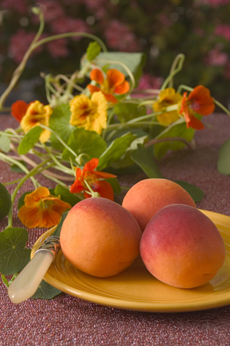
    IT’S APRICOT SEASON

    Fresh, ripe, California apricots are have a short peak season, and that season is now.

    Some 95% of the apricots grown in the U.S. come from California. More than 400 growers produce apricots from 21,000 acres of orchards in the San Joaquin Valley in central California, and in the northern part around San Francisco.

    Numerous apricot varieties grow in California, each with special characteristics. The most prevalent varieties are the Blenheims, Castlebrites, Pattersons and Tiltons. Growers continually experiment with new varieties that deliver sweeter, juicier flavor and/or process or ship with more longevity. Fruits are bred to do better in specific soils and microclimates.

    Apricots originated China. Cuttings were brought by caravan across the Persian Empire and planted in the Mediterranean, where they flourished.

    Spanish explorers get credit for introducing the apricot to the New World, and specifically to California, where they were planted in the gardens of Spanish missions. The first major production of apricots was recorded in 1792, in an area south of San Francisco.

      FrogHollow-apricots-230
    Organic apricots from Northern California’s Frog Hollow Farm.
     

    HOW TO FREEZE APRICOTS

    If you end up with a wealth of apricots, they can be frozen in sugar syrup, to be defrosted and enjoyed in the cold months when you need a bit of sunshine.

    1. COMBINE 2 cups sugar and 5 cups water. Add 2 ounces ascorbic acid for each 2-1/2 cups syrup.

    2. PLUNGE cleaned whole apricots into boiling water for about thirty seconds. Then peel, pit and halve or slice; place in the sugar syrup and freeze.

    3. DEFROST slowly in the fridge (the best way to retain flavor when defrosting just about anything).
      

    Comments off

    FOOD FUN: Donut Cake

    It’s the perfect celebration cake for a donut lover: a donut topped layer cake!

    This fun food was made at Duff’s Cakemix, a bakery café and do-it-yourself cake decorating studio in Los Angeles. The business is helmed by chef/co-owner Duff Goldman, TV’s Ace of Cakes.

    You can let your Inner Duff come out even if you’re nowhere near L.A. Simply head to the website and Facebook page for inspiration.

    Then, start mixing up your own food fun.

      donut-cake-duffscakemixFB-230
    Two favorites in one! Photo courtesy Duff’s Cake Mix | Los Angeles.


    Comments off

    TIP OF THE DAY: Honey & Food Pairings

    honey-colors-230-NHB
    Based on the plant from which the pollen is
    harvested, each varietal honey has a distinctive
    flavor and color. Photo courtesy National
    Honey Board.
     

    Mass produced “supermarket honey” is blended specifically to have a generic flavor. As with table sugar, it delivers a uniform, sweet, simple taste to consumers time after time.

    But raw varietal honey—varietal referring to the variety of plant from which it was derived—can be compared to wine, tea and coffee in its character and complexity. Different varietals produce different flavors (and colors, too).

    As wine aficionados pair different flavors of wines with specific foods, so do honey sophisticates. The pairings can be revelations, similar to discovering how well a fruity red wine goes with grilled salmon.

    The pairings below were developed by Zeke Freeman of Bee Raw Honey, using his American honey varietals. They just beg to be served at a honey-pairing brunch.

    You may find other pairings you like even better. Make a party of it!

    And check out the recipes at Bee Raw Honey, which recommend, among other ideas, blueberry honey for glazed carrots, buckwheat honey for salmon fillets and orange blossom honey for a chicken or turkey glaze.

    Basswood Honey

    Basswood honey is light in color, delicate and mild, with warm herbal notes and a clean finish.

  • Cheese Pairing: Fromage blanc
  • Fruit Pairing: Fresh green apples
  • Dairy Pairing: Vanilla ice cream
  • Tea Pairing: Mint and spice teas
  •  
    Black Sage Honey

    Golden in color, black sage honey is mild, with a mouth-warming hint of pepper and a smooth clean finish.

  • Cheese Pairing: Parmaggiano Reggiano
  • Fruit Pairing: Wine-poached pears
  • Dairy Pairing: Goat cheese ice cream
  • Tea Pairing: Black tea, especially Ceylon
  •  
    Blueberry Honey

    A medium amber in color, blueberry honey is strong and sweet, with earthy components.

  • Cheese Pairing: Stilton and other milder blue cheeses
  • Fruit Pairing: Lemon, melons
  • Dairy Pairing: Crème fraîche, sour cream, yogurt
  • Tea Pairing: Oolong tea
  •  
    Buckwheat Honey

    You can tell from the deep brown color that this honey is a different experience from the “simple sweetness” most people expect. Strongly-flavored like sorghum or molasses, this honey has hints of mossy earth, malty notes and less sweetness in general.

  • Cheese Pairing: Fresh goat cheeses, ricotta cheese
  • Fruit Pairing: Broiled grapefruit
  • Dairy Pairing: Greek yogurt
  • Tea Pairing: Elderflower tea
  •  

    Clover Honey

    Lighter yellow in hue, delicate, sweet and buttery, a top yellow clover honey can deliver warm undertones of cinnamon and nutmeg.

  • Cheese Pairing: Chevre
  • Fruit Pairing: Figs
  • Tea Pairing: Hot and iced chai
  •  
    Cranberry Honey

    True to its floral source, this medium amber honey has a delicate cranberry aroma and amildly tart flavor with subtle floral hints and a light, fruity finish.

  • Cheese Pairing: Gruyère
  • Fruit Pairing: Apples and tangerines
  • Tea Pairing: Chamomile tea, iced green tea
  •   butternut-squash-buckwheat-honey-beeraw-230
    Stout and complex buckwheat honey, with earthy notes like sorghum or molasses, pairs nicely with sweet butternut squash. Photo courtesy BeeRaw.com.
     
    Orange Blossom Honey

    The light amber color and subtle flavor notes of citrus are a hint that you’re enjoying orange blossom honey.

  • Cheese Pairing: Manchego and other aged sheep’s milk cheeses
  • Fruit Pairing: Lemon, lemonade
  • Tea Pairing: English Breakfast, Ceylon
  •  
    Raspberry Honey

    Light amber-hued raspberry honey is delicate and floral with a raspberry finish.

  • Fruit Pairing: Raspberries, peaches, pears
  • Dairy Pairing: Sour cream
  • Tea Pairing: English Breakfast, Earl Grey
  •  
    Sourwood Honey

    Sourwood honey is dark amber: highly floral, rich and buttery with a maple finish.

  • Cheese Pairing: Camembert and other bloomy rind cheeses
  • Fruit Pairing: Grilled peaches
  • Dairy Pairing: Clotted cream
  • Tea Pairing: Classic iced tea, strong green tea
  •  
    Star Thistle Honey

    One of the palest gold honeys, yet thick and creamy, star thistle honey has soft notes of cinnamon and a long, sweet finish.

  • Cheese Pairing: Fresh cheeses: chèvre, ricotta
  • Fruit Pairing: Oven-roasted apples, pears
  • Drink Pairing: Hot apple cider
  •  
    MORE ABOUT HONEY

    Honey was treated as a fine edible in ancient Egypt, with its terroir noted on each honey vessel. How did it become a product of simple, sticky sweetness?

    As with much of the food in our culture, our palates have become dulled by over-salted, over-sweetened, processed food. Since producing and harvesting honey is extremely labor intensive; one worker honey bee makes just 1/12 of a teaspoon of honey in her lifetime!

    So producers give most consumers what they want—an acceptable price, as opposed to superior quality. Some honey isn’t even 100% honey, but has been cut and extended with fillers to keep the price down.

    Pick up a copy of The Honey Connoisseur: Selecting, Tasting, and Pairing Honey, With a Guide to More Than 30 Varietals.

    And if you’re a honey fan, start to look at honey the way you look at wine: Spend less on the honey you use in baking or cooking, spend more on the honey you enjoy on a piece of toast.

    Each region is known for honey derived from their local crops: blueberry honey from Maine, lavender honey from Provence (France), orange blossom honey from Florida, sourwood honey from Georgia.

    Check out farmers markets and specialty food stores that let you taste different honeys. You’ll find herbal, floral, spicy, tart and other nuances that will sing to you.
      

    Comments off

    RECIPE: Frozen Peanut Butter Chocolate Pie

    Frozen-Peanut-Butter-Pie-slice-tieghen-gerarad-halfbakedharvest-230
    [1] If you’ve got four hours, you can make this today (photo © Tieghan Gerard | Half Baked Harvest.

    Oreo Cookie Baking Crumbs For Crusts
    [2] The crust is chocolate cookie crumbs (photo © Nabisco).

      There’s still time to make this Frozen Peanut Butter Chocolate Pie for dinner tonight!

    It was developed by Tieghan Gerard of Half Baked Harvest and published on our favorite PB recipe site, ILovePeanutButter.com.

    Prep time is 20 minutes, cook time is 10 minutes, plus 4 hours of freezing time.

    > July 23rd is National Peanut Butter & Chocolate Day.

    > January 23rd is National Pie Day.

    > July 7th is National Chocolate Day.

    > October 14th is National Dessert Day.

    > More peanut butter and chocolate recipes.
     
     
    RECIPE: FROZEN PEANUT BUTTER CHOCOLATE PIE

    Ingredients For 8 Servings

    For the Chocolate Crust

  • 2 cups chocolate cookie crumbs
  • 2 tablespoons brown sugar
  • 6 tablespoons salted butter
  •  
    For the Chocolate Fudge Swirl

  • ¼ cup unsweetened cocoa powder
  • 1/3 cup packed brown sugar
  • 2 tablespoons light corn syrup
  • 2/3 cup heavy cream
  • ¼ teaspoon salt
  • 3 ounces milk chocolate, chopped
  • 3 ounces good bittersweet or dark chocolate, chopped
  • 2 tablespoons unsalted butter, cut into small cubes
  • 2 teaspoons vanilla extract
  •  
    For the Filling

  • 1¾ cups creamy peanut butter (like Peanut Butter & Co.’s Smooth Operator)
  • 3 ounces cream cheese, at room temperature
  • 1½ teaspoons vanilla extract
  • 2 cups cold heavy whipping cream, divided
  • ¾ cups powdered sugar
  •  
    Plus

  • Optional garnish: peanut brittle (Tieghen used Peanut Butter & Co.’s Coconut Peanut Brittle)
  •  

    Preparation

    1. GREASE a 9-inch pie plate with cooking spray or melted butter.

    2. PLACE the chocolate cookie crumbs in a bowl. Add the honey and melted butter, and mix until thoroughly combined. Press the crumbs firmly into the prepared pie plate.

    3. MAKE the chocolate fudge swirl: Stir together cocoa powder, brown sugar, corn syrup, cream, salt, and half of the chopped milk chocolate. Place in a small saucepan and cook over medium heat, stirring, until chocolate is melted. Cook mixture at a low boil, stirring occasionally for 5 minutes. Remove the pan from the heat, add the remaining chocolate, butter and vanilla and stir until smooth. Any leftover sauce can be refrigerated in an airtight container. Reheat over low heat by stirring, or simply use the microwave.

    4. MAKE the filling: Add the peanut butter, cream cheese, vanilla extract, salt, and 1 cup of the heavy cream to the bowl of a stand mixer (or a large bowl and a hand mixer). Beat until smooth and creamy. Add the remaining 1cup of heavy cream and whip until the mixture is light and fluffy. Add the powdered sugar and whip until smooth, light, and fluffy.


    Frozen-Peanut-Butter-Pie-tieghen-gerard-halfbakedharvest-230r
    [3] It tastes as good as it looks (photo © Tieghan Gerard | Half Baked Harvest.


    5. ASSEMBLE: Drizzle the chocolate fudge sauce on the bottom of the pie. Add half the peanut butter filling and then drizzle with more fudge sauce. Add the remaining peanut butter filling, smoothing out the top to make an even layer. Drizzle with more fudge sauce.

    6. COVER and freeze for at least four hours or overnight. When ready to serve remove the pie from the freezer and top with 1 cup of coconut peanut brittle. Allow the pie to soften 5-10 minutes before serving.
     

    You can see photos of each stage of preparation here.


    CHECK OUT WHAT’S HAPPENING ON OUR HOME PAGE, THENIBBLE.COM.


    Comments off

    TIP OF THE DAY: Olive Oil Martini

    olive-oil-martini-foodista-230
    A slick of olive oil may seem unusual atop a
    Martini, but it adds a nifty layer of texture
    and flavor. Photo courtesy Foodista.com.
     

    Many people enjoy an olive or two in their Martinis. Whether you do or you don’t, try an Olive Oil Martini.

    It’s a relatively new concept developed by the Chile Olive Oil marketing folks, to create a new cocktail experience and showcase the high quality of olive oils from Chile.

    A drop of top-quality extra-virgin olive oil is floated atop the drink, adding a bit of fruity olive oil flavor and providing a balm-like slick to the lips.

    You can use any premium EVOO you have to mix up a special Father’s Day cocktail. Simply mix your favorite Martini recipe, and float a quarter-teaspoon of oil on top.

    Or, try this fusion of a Martini and a Margarita (via the Cointreau), a recipe from Chile Olive Oil:

     
    RECIPE: CHILEAN EXTRA VIRGIN OLIVE OIL MARTINI

    Ingredients For 1 Drink

  • 1 orange segment
  • 3-5 fresh basil leaves
  • 3 ounces vodka
  • 1/2 ounce dry vermouth
  • 1/2 ounce Cointreau or other orange liqueur
  • 1/4 ounce simple syrup
  • 1/4 ounce Chilean Extra Virgin Olive Oil
  •  
    Preparation

    1. MUDDLE the orange segment and basil leaves in a cocktail shaker.

    2. ADD vodka, vermouth, Cointreau, simple syrup and olive oil; then add ice and shake well.

    3. STRAIN into a martini glass and float a drop of Chilean extra virgin olive oil over the top.


    ABOUT OLIVE OIL FROM CHILE

    Chile’s unique geography provides valleys to successfully grow any olive cultivar under optimal growing conditions in a Mediterranean-like climate, with cold rainy winters and hot and dry summers.

    The country grows Arbequina, Arbusana, Barnea, Coratina, Empeltre, Frantoio, Koroneiqui, Leccino, Manzanilla, Picual and Racimo varieties. The summer heat lets the olives reach optimum maturity, with great fruit expression.

    Because of the quality imparted by the climate, the country produces extra virgin oil exclusively. There are no oils that have to be classified in lower rankings such as Virgin or the generic Olive Oil. (See the different types of olive oil.)

    Streamlined New World production enables the olives to go from tree to oil in less than twenty-four hours—important to preserve the qualities that enable the oils to be classified as extra-virgin. The olives are picked, cold-pressed and bottled right at the orchard, delivering great freshness.

      olive-and-co-chile-230
    There are scores of Chilean olive oil brands available in the U.S. Photo courtesy Olive Oil & Co. | Chile.
     

    As a result, Chilean oil has become well known around the world for its quality, racking up awards in internationally recognized olive oil competitions.
     
    EXTRA VIRGIN VS. VIRGIN OLIVE OIL

    Extra Virgins are the fruitiest, finest, most olive-y oils, and are priced at a premium. “Fruity” means that the oils have pleasant, spicy fruit flavors characteristic of fresh ripe or green olives. Ripe fruit yields oils that are milder, aromatic, buttery and floral.

    To be classified as Extra Virgin, the olive oil must have low acidity—a maximum free acidity of 0.8%. Anything higher is simply “virgin” olive oil—good enough for cooking but not for savoring.

    Chilean extra virgin olive oils have acidity levels as low as 0.2%! Discover more at ChileOliveOil.com.
     
    KNOW YOUR OLIVE OIL

    Check out these olive oil terms.


    Comments off

    The Nibble Webzine Of Food Adventures
    RSS
    Follow by Email


    © Copyright 2005-2026 Lifestyle Direct, Inc. All rights reserved. All images are copyrighted to their respective owners.