THE NIBBLE BLOG: Products, Recipes & Trends In Specialty Foods


Also visit our main website, TheNibble.com.

RECIPE: Ravioli Lasagna For National Ravioli Day

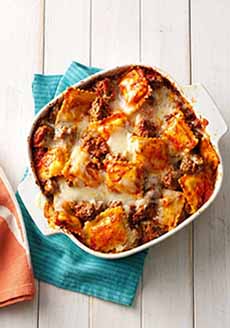
Beef & Sausage Ravioli
[1] This ravioli lasagna layers meat ravioli with slices of Italian sausage (photos #1, #2, #4, and #5 © Taste Of Home)

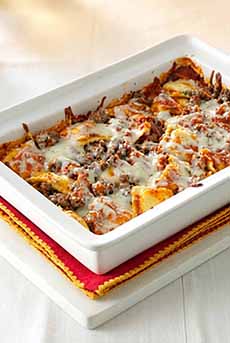
Pumpkin Ravioli Lasagna
[2] Cheese ravioli with sausage. You can top the ravioli with just about anything, from vegetables to strips of leftover meat or poultry.

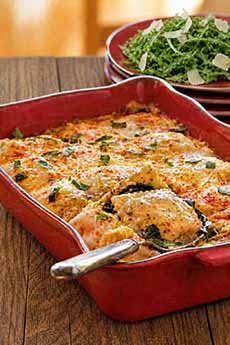
Ravioli Lasagna
[3] An evened-out ravioli top (here, spinach ravioli) makes the look like traditional lasagna (photo © The Nibble).

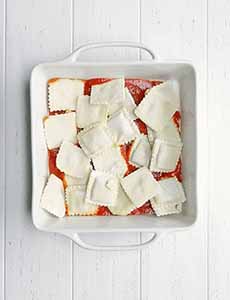
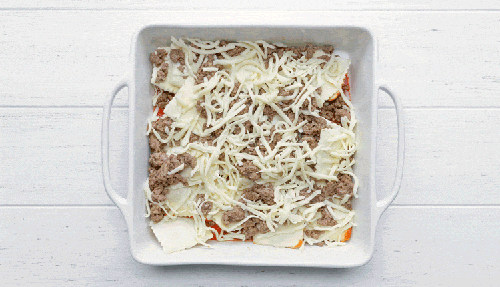
Uncooked Ravioli Lasagna
[4] Adding the layer of frozen ravioli.


Updated July 2026

March 20th is National Ravioli Day. July 29th is National Lasagna Day.

We like ravioli in any form, but have been especially delighted with ravioli lasagna.

Bless the person who first thought of the trick of using cooked ravioli instead of lasagna noodles. (Alternatively, you can use penne or other tube pasta, but ravioli supplies added filling.)

What looks like a complicated recipe couldn’t be easier when you use frozen ravioli (no cooking required) and store-bought pasta sauce.

Below:

> Ravioli lasagna recipe.

> The history of lasagna.

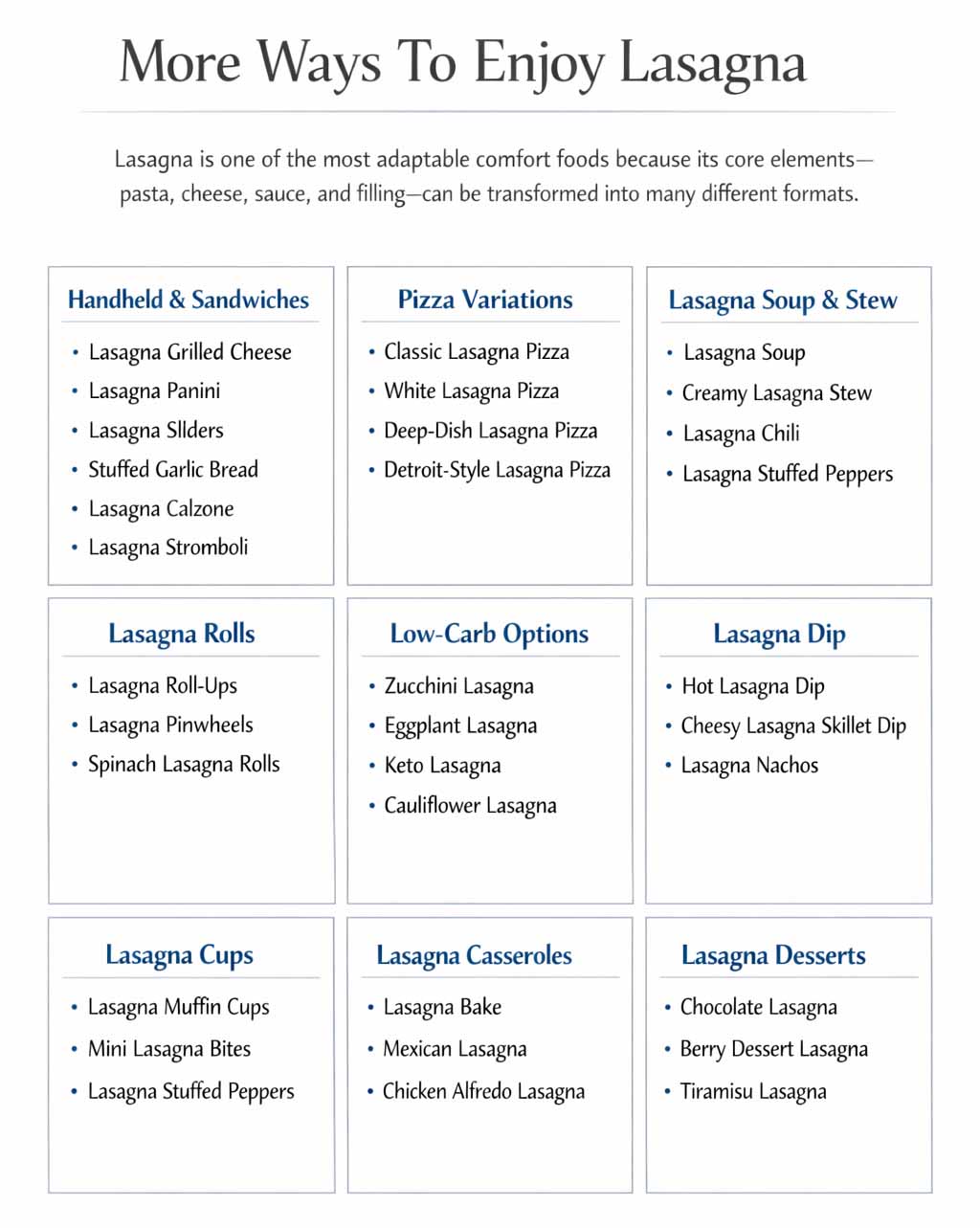
> More ways to enjoy lasagna.

Elsewhere On The Nibble:

> 18 more lasagna recipes.

> The history of ravioli.

> The history of pasta.

> The different types of pasta: a photo glossary.

> The year’s 20 pasta holidays.
 
Ravioli Lasagna
[5] Ready for the oven.
 
 
RECIPE: RAVIOLI LASAGNA

Prep time is 25 minutes, bake time is 40 minutes.

We adapted this recipe from one by Patricia Smith for Taste Of Home.

The recipe uses sausage or cheese ravioli and adds ground beef. But you can make vegetable ravioli, chicken ravioli, or anything you prefer. Here’s another Taste Of Home recipe for (here’s the Pumpkin Ravioli Lasagna (scroll down).

You can vary the recipe any way you like. For example:

  • Substitute ground chicken, turkey or textured vegetable protein (TVP) for the beef.
  • Add veggies via two layers of frozen, thawed spinach or kale (pressed dry), frozen peas or medley.
  • Substitute Alfredo sauce (cream sauce) for the tomato-based sauce.
  • Substitute vegetable ravioli for the meat or cheese versions.
  • We’ve even use ratatouille as the sauce, when we’ve made a large batch (pulse it into a chunky vegetable sauce.
  •  
    Ingredients For 6-8 Servings

  • 1 pound ground beef
  • 1 jar (28 ounces) spaghetti sauce
  • 1 package (25 ounces) frozen sausage or cheese ravioli
  • 1-1/2 cups (6 ounces) shredded mozzarella cheese
  • Dried herbs/spices: (chili flakes, garlic chips, oregano)
  • Optional garnish: minced fresh herbs (basil, parsley, thyme)
  •  
    Preparation

    1. PREHEAT the oven to 400°F. Cook the beef over medium heat in a large skillet, until it is no longer pink. Drain.

    2. LAYER in a greased 2-1/2-quart baking dish: 1/3 of the spaghetti sauce, 1/2 of the ravioli, 1/2 of the cooked beef, and 1/2 cup cheese. Repeat the layers. Top with the remaining sauce and cheese.

    3. COVER and bake for 40-45 minutes or until heated through.

     
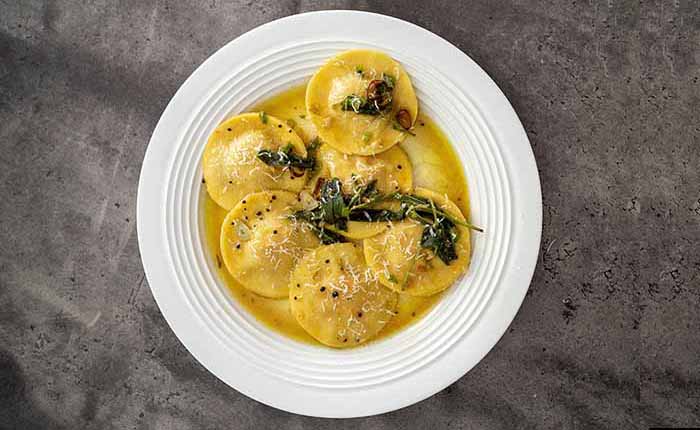
    Butternut Squash Ravioli
    [6] We love ravioli! Here, butternut squash ravioli in brown butter sauce with fried sage (photo © Yoav Aziz | Unsplash).
     
     
    THE HISTORY OF RAVIOLI

    China gets the credit for inventing not only strand pasta—thin chow mein noodles like Italian angel hair, chow fun noodles like Italian linguine, chow fun noodles like Italian pappardelle, and stuffed wontons like Italian ravioli.

    When it arrived Italy, stuffed pasta (another name for the category is pillow pasta) was served with Italian-style pasta sauces.

    Some food historians believe the name “ravioli” derives from the old Italian word riavvolgere, to wrap.

    Others believe that the dish was named after a 13th-century chef named Ravioli, who lived in the Republica di Genova (a.k.a. Genoa, today the Italian region of Liguria).

    While Chef Ravioli is credited with the invention of the stuffed pasta composed of two layers of thin pasta dough with a filling sealed between them, historians have not substantiated the story. The origin of the name “ravioli” remains uncertain.

    Interestingly, the Venetian Marco Polo, who brought the concept of stuffed pasta back from China, had subsequently become a soldier in Venice’s war with Genova. He was taken prisoner by Genova in 1296 and released in 1299, to return to Venice [source].

    Might a Chef Ravioli living in Genova at the same time he have heard about the stuffed wontons via someone who heard it from Polo? We can say with almost-certainty that we’ll never know!

    Here’s much more on the history of ravioli.
     
    Lasagna Chart


    CHECK OUT WHAT’S HAPPENING ON OUR HOME PAGE, THENIBBLE.COM.


    Comments off

    TIP OF THE DAY: Spring Artichokes & How To Steam Artichokes

    March 16th is National Artichoke Hearts Day, but today, the first day of spring, we take on the whole fresh vegetable, a spring arrival.

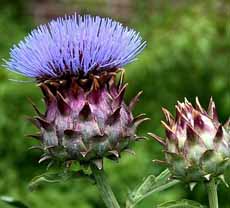
    The artichoke is actually a large flower bud. If left in the field, the fuzzy choke in the center becomes the blossom (photo #3), which is supported by the thick, spiny leaves.

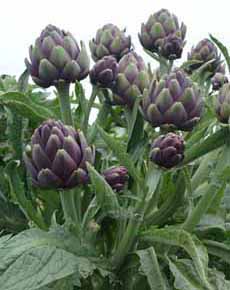
    The familiar globes are harvested prior to flowering (photo #4).

    The outer leaves, heart, and stem of the artichoke are equally (and similarly) tasty. The toughest outer leaves and the choke (the light, fibrous section on top of the heart) are discarded.

    A history of artichokes is below…

    > As are more artichoke recipes.
     
     
    RECIPE: STEAMED ARTICHOKES

    Artichokes can be braised, fried, grilled, roasted, or stewed; but to cook a whole artichoke, the technique is to steam.

    The process is actually very easy. All you need is a large pot and a steaming tray. Serve them as a first course, hot or cold, with your choice of dipping sauce.

    Our pasta pot fits six large artichokes. We like them large, as you get more to eat with the same amount of effort.

    While many retailers chop the stems off, we look for those with the longest stems. Surprise: The heart grows from the stem, and the stem tastes like the heart. Don’t throw them out: Enjoy them!

    Some people peel the stems first, as they do with asparagus. We find that most do just fine with some extra steaming. As a hedge, you can cut the stems and steam them separately, in case they need some extra time in the pot.

    Finally, artichokes have traditionally been served with the melted butter (with hot artichokes) and aïoli or vinaigrette (hot or cold artichokes), we find that most steamed vegetables are delicious without anything else.

    A large artichoke (162g, 5.7 ounces) has just 76 calories.

    Ingredients

  • Whole artichokes
  • Fresh lemon juice, plus wedges for serving as desired
  • Optional garnish: snipped parsley or other herb to scatter on plate
  • For dipping: aïoli (garlic mayonnaise), melted butter or vinaigrette
  •  
    Preparation

    1. PEEL off some of the tougher outer leaves. While some people undertake a severe removal, we recommend steaming more leaves rather than fewer. Steam the artichokes until you can easily pull off one of the outer leaves, and taste it. If it’s soft enough to scrape off with your teeth, you get more artichoke!

    2. With scissors, snip off the thorny ends of the leaves. This is the most time-consuming part of the preparation. (Our colleague Ruth, the consummate crafter, uses pinking shears.) With a sharp knife, cut the off top center of the globe—the small, thorny leaves that are inside the large ones.

    3. CLEAN by placing the globes upside-down in a large bowl of water with the lemon juice (to prevent browning until you’re ready to cook them). Parsley stems also prevent artichokes from browning (another reason to save those stems in the freezer). You do this part in advance. When ready to steam…

    4. FILL the pot with water up to the bottom of the steamer basket, and add a tablespoon of salt. Place the artichokes in the stem side up. This enables the steam to get into the interior leaves, and allows you to test for doneness.

    5. COVER the pot and bring it to a boil. Steam until the heart (the bottom of the artichoke where it connects to the stem) is tender when pierced with the tip of a paring knife, and inner leaves pull out easily, 25 to 35 minutes. Check in the latter half of steaming and add more water to the pot as necessary.

    6. SERVE hot or cold with a ramekin of melted butter or vinaigrette and a lemon wedge. Garnish with fresh herbs as desired.

    If the bottoms of the globe are level (i.e., no protruding stem), you can stand them up on a plate for presentation. Otherwise, present them on their side.
     
     
    A BRIEF ARTICHOKE HISTORY

    Artichokes are members of the thistle family native to the Mediterranean region, that are cultivated as food.

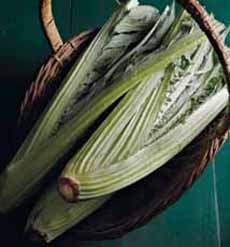
    They were bred from their lesser-known cousin, the cardoon (photo #5). The familiar globe artichoke, Cynara cardunculus var. scolymus, is a variation of Cynara cardunculus, the cardoon.

    Cynara is a genus of thistle-like perennial plants in the sunflower family. Cardoons are long, edible stalks that are similar in flavor to the artichoke stalks. The tops and flowers are also very similar. The difference is that the artichoke has an edible heart within the leaves on top.

    Artichokes were first cultivated thousands of years ago in Maghreb, the region of North Africa west of Egypt, where they still grow wild. They spread throughout the Mediterranean.

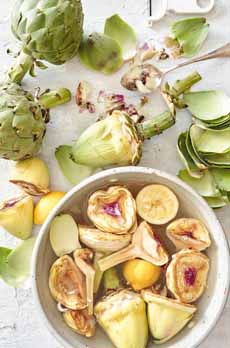
      Fresh Artichokes
    [1] Fresh artichokes from California, cut up for a recipe (photo © Good Eggs).

    Steamed Artichoke
    [2] Steamed whole and served with aïoli. Here’s the recipe (photo © Fine Cooking).

    Artichoke Flower
    [3] In the field, artichokes grow on long, thick stems (photo © Frieda’s Produce).

    Sangria Artichoke
    [4] A flowering artichoke (photo © Sierra Flower Finder).

    Cardoons
    [5] Cardoons, which look like celery (but are no relation), are the predecessor of the globe artichoke. There is no heart; the stem is what’s eaten (photo © Fine Cooking).


  • The earliest references to artichokes appear in the 8th century B.C.E. Both Homer and Hesiod, a Greek philosopher and naturalist, wrote of them as cultivated plants.
  • Theophrastus (371-287 B.C.E.), the successor to Aristotle, wrote of artichokes being grown in Italy and Sicily.
  • The Greek physician Pedanius Dioscorides (40-90 C.E.), a surgeon with the Roman army of Emperor Nero, wrote about artichokes at the time of Christ.
  •  
    Ancient Greeks and Romans considered artichokes a delicacy and an aphrodisiac. In the ensuing centuries, they were grown in Italy, France and other areas of Europe.

    They were among the fruits, vegetables, and animals brought to the New World by colonists. Martha Washington’s Booke of Cookery contains a 17th-century recipe entitled “To Make Hartichoak Pie.” In the early 1800s, French immigrants settling in the Louisiana Territory planted artichokes.

    In 1922 Andrew Molera, a landowner in the Salinas Valley of Monterey County, California, leased land to Italian immigrant farmers and encouraged them to grow the “new” vegetable, as artichokes were fetching high prices. [Source]

    Artichoke lovers: Give thanks to Mr. Molera for the popularity of artichokes in the U.S.
     
     
    MORE ARTICHOKE RECIPES

    Spinach and artichoke dip is one of the most popular dips in the U.S., so it’s surprising that we can’t find information on its origin. If you know it, please let us know.

    Our mom recalls that in the 1950s or 1960s, a recipe appeared on packages of dry soup mix and possibly a sour cream container.

  • Ways To Use Artichokes
  • Warm Artichoke Dip With Gorgonzola
  • Artichoke Dip With Sundried Tomatoes
  • Creamy Artichoke Dip With Gorgonzola & Fontina
  • Hot Crab & Artichoke Dip
  • Roast Leg Of Lamb With Stewed Artichokes
  •  
     

    CHECK OUT WHAT’S HAPPENING ON OUR HOME PAGE, THENIBBLE.COM.


    Comments off

    TIP OF THE DAY: Plate Decorating With Sauce

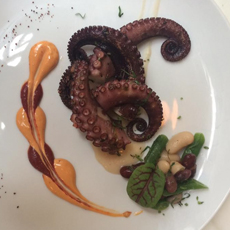
    Octopus With Swirled Sauce

    Lava Cake With Sauce

    Squeeze Bottles

    Dessert Sauce Squeeze Bottles
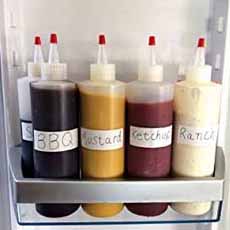
    [1] These “flowers” are simply polka dots pulled together with a toothpick (see the video below; photo courtesy Gardenia | NYC). [2] Any food that isn’t made in a sauce can be decorated (photo courtesy Shalit Foods). [3] Keep your favorite sauces in the fridge, ready to squeeze (photo courtesy Pure Joy Concepts). [4] You can buy sauces or make them (photo courtesy Melissa’s).


    When you get your food at a good restaurant and the chef has made beautiful chevrons, flowers or hearts from the sauce, are you impressed?

    If so, know that some of these are so easy, that all you need are a couple of squeeze bottles and a toothpick or skewer to make them at home.

    In fact, the hardest thing to do is to decide which sauces to use with your dish.

    So watch the video below, or plenty more on YouTube under “sauce decoration.”

  • Start with polka dots of sauce before moving into more complex designs.
  • Look for the color impact as well as the flavors when you select sauces.
  • The lists below are just guidelines. You can use whatever goes through a squeeze bottle (but steer clear of sauces with inclusions—bits of dill, mustard seeds, etc.).
  •  
    SAVORY SAUCES

  • Aïoli (garlic mayonnaise) or other flavored mayonnaise 
  • Alfredo (parmesan) or other cheese sauce
  • Barbecue sauce
  • Cream sauce (plain, basil, curry, ginger, tomato, wasabi, etc.)
  • Hoisin or plum sauce
  • Horseradish sauce
  • Lemon sauce
  • Mustard sauce
  • Ranch sauce
  • Sriracha sauce
  • Vegetable coulis*
  • Yogurt-based (e.g. garlic-yogurt sauce)
  •  
    SWEET SAUCES

  • Berry coulis*
  • Butterscotch/caramel sauce
  • Chocolate/white chocolate/mint chocolate sauce
  • Cinnamon sauce sauce
  • Coffee/mocha
  • Custard/crème anglaise
  • Honey or maple syrup
  • Kiwi coulis
  • Lemon or other citrus sauce
  • Mango coulis
  • Sweetened condensed milk
  • Yogurt-based (e.g. honey-yogurt sauce)
  •  
    ________________

    *Coulis (COO-lee) is a sauce made from puréed and strained vegetables or fruits (i.e., no seeds remain).

     
    This video shows three easy techniques for both sweet and savory sauces.


    Comments off


    © Copyright 2005-2026 Lifestyle Direct, Inc. All rights reserved. All images are copyrighted to their respective owners.