THE NIBBLE BLOG: Products, Recipes & Trends In Specialty Foods


Also visit our main website, TheNibble.com.

PRODUCTS: Green Sriracha & Japanese Spicy Mayo

musashi-green-sriracha-mayo-kalviste-230
Green sriracha and spicy mayo: Two
delicious new ways to heat things up. Photo
by Elvira Kalviste | THE NIBBLE.
  Sriracha, a hot sauce that originated in Thailand, has become mainstream in American supermarkets. It is used as a table condiment, a recipe ingredient and a flavoring for snacks like popcorn and potato chips. Conventionally made with red chiles, it has been given a color makeover with green serrano chiles by Musashi Foods.

Not surprisingly, it has a different flavor profile. Our resident sriracha expert says it has more of a flavor kick than his usual brand (Huy Fong, a.k.a. Rooster, Sriracha), with a heat that builds.

You can buy the 12-ounce squeeze bottle on Amazon for $6.99 with free shipping on orders over $35. So consider these attractive green bottles as stocking stuffers for your heat-loving friends.

Musashi Foods has also launched Japanese Spicy Mayo, the condiment used to make spicy rolls at sushi bars. It’s also delicious with crudités, eggs, fries, sandwiches and burgers, seafood and anywhere you’d like some heat in your mayonnaise. It’s the same price and delivery deal as the Green Sriracha, on Amazon.

(Note that you can make your own spicy mayo by mixing hot sauce into conventional mayonnaise. You can control the heat this way—Musashi’s mayo is pretty hot!)


WHAT IS SRIRACHA?

Sriracha, pronounced see-RAH-jah, is a Thai hot chili sauce. It is made from red chiles, distilled vinegar, garlic, sugar and salt; and is aged for three months or longer.

Unlike American hot sauces such as Tabasco, which are vinegar sauces that are infused with hot chiles, sriracha is primarily puréed chiles, making it a much thicker sauce.

The sauce is named after the coastal city of Si Racha in eastern Thailand, where it was first made and marketed. Different brands can be found in the Asian aisle of many supermarkets and in Asian groceries.

According to multiple sources, including an article in Bon Appétit, the sauce was made more than 80 years ago in by a local woman, Thanom Chakkapak. She initially made the condiment for her family, and then for friends, to enjoy with the local seafood (think of it as a much hotter counterpart to American cocktail sauce).

As is a common story in the specialty food business, they encouraged her to sell it commercially—and it became the best-selling chile sauce in Thailand. In 1984, Ms. Chakkapak sold her business to a major food company, Thai Theparos Food Products.

What’s the correct spelling: sriraja, si-racha, sriracha or siracha?

According to Andrea Nguyen, who wrote the article for Bon Appétit: Since Thailand does not adhere to one romanization system for Thai words, many variants have emerged, chosen by manufacturers who have created their own version of the original sauce.

However, the most commonly accepted spelling is sriracha.

ABOUT MUSASHI FOODS

Founded in 2013 in New York City by an entrepreneur with a passion for hot and spicy food and named for the famed Japanese Samurai, Miyamoto Musashi, Musashi Foods is a producer of premium Asian sauces made from the highest quality ingredients. For more information visit Musashifoods.com.
  

Comments off

TIP OF THE DAY: Apple Crisps Are Easy To Make

You may not make homemade pie because you don’t like crust that much—or just don’t like wielding it.

You can enjoy the same baked apple flavor with a betty or crisp (a.k.a. crumble). The differences, along with dough-topped variations such as cobbler, grunt, pandowdy and slump, are below.

BEST APPLES FOR BAKING

When you bake apples, you need a variety with balance of sweet and tart flavors and, more importantly, flesh that doesn’t become mushy when cooked. These include:

  • Braeburn, with firm flesh and spicy-sweet flavor, also great for applesauce.
  • Cortland, related to the McIntosh (which is better for applesauce), both an eating and baking apple.
  • Fuji, sweet and juicy, good for eating and baking.
  • Gala, great for eating and baking, is sweeter than other apples, so you can cut back on added sugar.
  • Granny Smith, one of the most popular eating and baking apples.
  •    

    Apple_Pear_Crisp-mccormick-230

    Apple crisp: With a crumb topping, it is easier to make than a pie. Photo courtesy McCormick.

  • Honeycrisp, an all-around apple we love for eating, with a crispness and firmness that works for baking.
  • Jonagold, a cross of the Jonathan and Golden Delicious varieties; also great for applesauce.
  • Melrose, a cross between Red Delicious and Jonathan varieties.
  • Newtown Pippin, crisp with sweet-tart flesh.
  • Rhode Island Greening, very tart and distinctively flavored.
  • Northern Spy, harder crunchy and a great baking apple.
  • Rome Beauty, mildly sweet and tart, with a milder flavor than others.
  • Winesap, a tart-and-spicy apple that was our Nana’s favorite for baked apples.
  •  

    apple-streusel-betty-crocker-230
    Apple crisp à la mode. Photo courtesy Betty
    Crocker.
      RECIPE: EASY APPLE CRISP

    Ingredients

  • 7 cups apples peeled cored and sliced (you can substitute Asian pears)
  • 1/4 cup lemon juice
  • 1 cup sugar
  • 1/2 teaspoon ground cinnamon
  • 1 cup water
  •  
    For the Cinnamon Topping

  • 1-1/2 cups all-purpose flour
  • 1 cup butter
  • 2-1/2 cups rolled oats
  • 1-1/2 teaspoons ground cinnamon
  • 1-1/2 cups brown sugar
  •  
    Plus

  • Optional garnish: crème fraîche, mascarpone, whipped cream or vanilla ice cream
  • Preparation

    1. PREHEAT oven to 350°F. Combine apples, lemon juice, sugar and cinnamon in a large baking dish. Pour water over apples.

    2. PREPARE the topping. In a separate bowl, using a fork, cut the butter into the other listed ingredients until the mixture resembles coarse crumbs.

    2. SPREAD the topping over fruit mixture. Bake in a 350°F preheated oven 50 minutes or until topping is golden brown. It’s that easy!
     

    CRISP, CRUMBLE, COBBLER, ETC.: WHAT’S THE DIFFERENCE?

    A crisp is a deep-dish fruit dessert made with a crumb or streusel topping and baked. Similar dishes include:

  • Betty, a crisp topped with buttered bread crumbs instead of streusel. Some later recipes substitute graham cracker crumbs.
  • Buckle, a baked, bottom cake-like layer with the fruit mixed in, topped with a crumb layer (alternatively, the cake, fruit and crumbs can be three separate layers).
  • Cobbler, with a pastry top instead of a crumb top. The pastry is dropped from a spoon, the result resembling cobblestones.
  • Crisp, baked fruit filling covered with a crunchy topping which is crumbled over the top.
  • Crumble, the British word for crisp.
  • Grunt, a spoon pie with biscuit dough on top of stewed fruit (fruit which is steamed, not baked).
  • Pandowdy or pan dowdy, a spoon pie with a rolled top crust that is broken up to allow the juices to come through.
  • Slump, another word for grunt, which can be baked or steamed, and can be made upside down.
  •   

    Comments off

    Medjool Dates, Nature’s Candy & The History of Dates

    Foodies who like lusciousness—not to mention fitness fans looking for a natural source of post-workout muscle recovery—may want to reach for one of the world’s oldest-cultivated fruits: Medjool dates.

    Dates are one of the first cultivated foods, and so naturally sweet that they’ve earned the nicknames “nature’s candy” and “the world’s first candy.”

    Sure, they’re delicious. But dates and other foods rich in potassium are linked to reduced exercise-induced muscle soreness and connective tissue damage, and enhanced athletic performance going forward. Nutritionists are touting the health and muscle-recovery capabilities of dates as a natural replacement for sports drinks and energy bars that are loaded with processed sugar.

    According to Elizabeth Somer, registered dietitian and author of Eat Your Way to Happiness and Eat Your Way to Sexy, dates are one of nature’s best recovery foods.

    “A serving of dates speeds recovery after exercise, replacing needed potassium and other electrolytes, and helping to restock glycogen stores,” explains Somer. “In addition, the potassium and manganese help balance blood-sodium levels that support muscle contraction, reduce fatigue, and stimulate recovery.”

    Who knew? We’ve been eating them plain and with cheese simply because we love them. But now, we’ll look at them as a guilt-free sweet snack! For those watching their sugar intake, Medjools rate low to low/medium on the Glycemic Index (GI).

    > February 4th is Medjool Date Day.

    > December 22nd is National Date Nut Bread Day.

    Below:

    > The history of dates.

    > How to buy dates.

    > How to enjoy dates, no cooking required.

    Elsewhere on The Nibble:

    > The year’s 80 fruit holidays.

    > The year’s 90 snack holidays.
     
     
    THE HISTORY OF DATES

    Among the sweetest fruits in the world, with a concentration of natural sugar that has earned them the sobriquet “nature’s candy,” dates are one of the earliest crops to be cultivated, in the Fertile Crescent between Egypt and Mesopotamia as early as 4000 B.C.

    Dates are the fruit of the date palm (photo below), a tree that thrives in desert conditions—including the Bard Valley of Southern California, which produces premium Medjools.

    Dates are prominent in the Abrahamic religions of Christianity, Islam, and Judaism, with date palms thought to be the original “apple tree” in the Biblical story of Adam and Eve.

    In Judaism, dates are considered one of the seven holy fruits, or seven species, and remain an important ingredient in Israeli cuisine.

    Silan, a syrup extract taken from dates, is thought to be the sweet component of the promised “land of milk and honey.” In Islam, the end of Ramadan may be celebrated by indulging in ma’amoul (buttery cookies with date stuffing).

    They continue to be an important crop for Iraq, Iran, the Arabian peninsula, and North Africa west to Morocco.
     
     
    Dates In The New World

    Since the early 20th century, dates also have been cultivated in southern California, Arizona, and Florida [source].

    Several varieties are easy to find in the U.S., but the best are Medjools, larger, plumper, moister, and more tender, with caramel notes. They are considered the best-tasting, most luscious dates in the world, and have long been called the “Fruit of the Kings.”

    You may also come across Deglet Noor, Halawy, and Khadrawy, all chewier varieties. We like them all but prefer the larger, softer Medjool.

    In addition to sweet recipes—cakes, compotes, cookies, fruit breads, ice cream, puddings, smoothies, etc.—dates add a sweet accent to braises and roasts and can be substituted for prunes. (Unless otherwise specified, date varieties are interchangeable in recipes.)

    One serving of Medjool dates (two whole dates) provides 8% of the daily recommended value (DRV) for potassium, 12% for dietary fiber, and 4% for magnesium, as well as important vitamins and minerals including calcium, copper, iron, magnesium, niacin, potassium, and vitamin B6.


    bowl-dates-beauty-230
    [1] A great anytime snack (photos © Bard Valley Medjool Date Growers Association).

    Stuffed Dates With Mascarpone & Walnuts
    [2] Stuff dates with your favorite soft cheese, a nut, and a garnish of thyme leaf. Drizzle with honey for a dessert plate (photo © Boba Jaglicic | Unsplash).

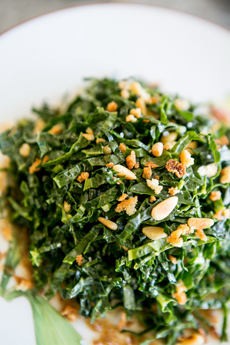
    Kale Salad Date Pureee
    [3] Kale salad with date vinaigrette: Mix pureed dates into vinaigrette, to taste (photo © Art De Fete)

    A Dish Of Date-Orange Ice Cream
    [4] Soften a pint of ice cream and mix in chopped dates and other ingredients from nuts to chocolate chips. Here’s the original from-scratch recipe by David Lebovitz (photo © Spice Islands).

     
    Medjool Date Palm Tree
    Here’s how the fruits grow on theMedjool date palm tree (photo Nepenthes | License CC-BY-SA-3.0).
     
     
    10 WAYS TO ENJOY DATES WITHOUT BAKING OR COOKING

    We’re content to eat them straight from the bag or box. But with just a bit more effort, you can have:

  • Blended: as a natural sweetener in a smoothie, or in energy bites (pulse pitted dates in a food processor with nuts, seeds, and a pinch of cocoa powder or shredded coconut until the mixture sticks together; roll into small balls).
  • Cheese & Dates: Pair with your favorite cheese(s). We personally like dates with goat cheese and blue cheese.
  • Charcuterie Boards: Add with dried apricots, walnuts, and pecans.
  • Chocolate Dipped: Dip them into melted chocolate as a quick “fondue,” or place on wax paper to cool.
  • Cocktail & Snack Bites: Wrap a pitted date in a thin slice of prosciutto or Serrano ham.
  • Garnish: Chop dates into pieces and toss them atop your cereal, yogurt, or salad. With cereal, there’s no need to add sugar. With salad, our favorite pairing is arugula, toasted walnuts, and a balsamic vinaigrette.
  • Ice Cream: Soften a pint of ice cream and mix in chopped dates, nuts, chocolate chips, orange zest, crystallized ginger, mochi bits…whatever you have on hand.
  • Stuffed Dates: Slice a date lengthwise, remove the pit, and fill the cavity with any soft cheese or nut butter. You can top it with a single almond, walnut half, or a sprinkle of sea salt.
  • Spread: Blend pitted dates into a paste with a splash of water, a touch of vanilla extract, and a pinch of salt until smooth. Spread on apple slices, celery sticks, or crackers.
  •  
     
    HOW TO BUY DATES

    Harvesting dates from the palm tree is a labor-intensive process.

    Wind pollinates date palms naturally, but to ensure an adequate yield, the growers must pollinate each palm by hand.

    A worker may climb the same full-grown tree multiple times a day to trim sharp thorns, monitor air circulation, and ensure proper sunlight exposure so the dates can reach optimal size.

    The ripening dates are then covered with burlap bags or nylon netting for protection from birds and insects.

    Since dates don’t ripen simultaneously, this process is done repeatedly, picking fruits one by one until the harvest is exhausted. Think of all this the next time you bite into a delectable date!

    Dates are harvested according to stages of ripeness. Once fully ripened, they need to be picked: The longer they stay on the tree, the drier they become.

    Delicate, just-ripe dates are sold fresh at some farmers markets and Middle Eastern grocers, but they’re most commonly sold partially dried, often with the pit removed.

    Choose dates that are plump and glossy. They can look wrinkled, but shouldn’t feel hard. A thin coating of sugar on the outside is okay, provided it’s not crystallized. If the dates smell sour, pass them by.

    Like dried fruits, dates have a long shelf life and will keep at room temperature for about two months if sealed in plastic.
     
    Thanks to the Bard Valley Medjool Date Growers Association (BVMDGA), a consortium of family growers in the southwest, is responsible for more than 60% of the Medjool dates grown in the U.S. For more information, visit NaturalDelights.com.


    CHECK OUT WHAT’S HAPPENING ON OUR HOME PAGE, THENIBBLE.COM.


    Comments off

    GADGET: Olive Stuffer

    Olive connoisseurs: If you’re disappointed with the quality of commercial stuffed olives—rubbery blue cheese, cheap and fishy anchovies, chewy jalapeños—you can now stuff your own premium ingredients with the Swissmar Olive Stuffer.

    Anchovies, feta, garlic, goat cheese, pecans, plus fresh herbs: Have fun creating your own stuffed olive creations. The spring-loaded olive stuffer lets you fill large pitted olives with anything.

    Simply load the stainless steel device with the stuffing(s) of your choice, place the plunger into the pitted olive, and release.

    Buy it at Williams-Sonona.com for $14.65.

    If you don’t have an olive pitter, you should pick one up, too.

      olive-stuffer-WS-230

    Become a master olive stuffer. Photo courtesy Williams-Sonoma.


    Comments off

    FOOD 101: Food Fillers

    white-bread-Aaron-Bobrow-Strain-230
    Avoid puffy white bread, made with
    potassium bromate. And read this book!
    Photo courtesy Beacon Press.


    The website Healthcare Management Degree sent us the 411 on food fillers, and we’re happy to pass it on. You can also view it in infographic form.

    Their article, called “Food Isn’t Food Anymore: The Frightening World of Fillers,” explains the types of fillers found in prepared foods at grocery stores and restaurants. Fillers are also called additives. The goal of the fillers is to add a cheaper ingredient to a costlier one to help bulk up the weight of the food, thus lowering the overall cost.

    Fillers are mostly found in processed meats, and can lower the cost of meats by 10%-30%. The ground beef you buy likely contains filler, they write.

    While lowering the cost of food can sound like a great idea, here are the pros and cons of food fillers. This is not an exhaustive list, but highlights the most common fillers. And of course, not all brands use fillers: Read the nutrition label!

    CARRAGEENAN

    Carrageenan is a gel extracted from seaweed. It Is used as a thickening agent and emulsifier in dairy products such as chocolate milk, cottage cheese and ice cream. It is also injected into raw chicken and other meats to make them retain water, which makes the meat weigh more. You’re paying for water weight! (A similar trick is used to inject scallops with chemicals. Be sure that you are buying “dry” scallops, not “wet” scallops.)


    ISSUE: Seaweed generally has no adverse health effects, but it can trick the consumer into paying more.

    CELLULOSE

    Cellulose is a natural component of many plants. Much of the cellulose used as a food additive is derived from wood pulp, which is used in the production of paper! This cellulose is used in the manufacture of cereal, shredded cheese, salad dressing and ice cream. Cellulose appears in many high-fiber snacks, and eating organic won’t help you avoid it.

    Humans can’t digest cellulose, so adding it to food makes for a no-calorie, nonfat filler. Some may see that as a benefit.

    WHAT TO LOOK FOR: Ingredients like microcrystalline cellulose (MCC), cellulose gel, cellulose gum or carboxymethyl cellulose.


    OLESTRA

    Olestra is a fat substitute synthesized by Procter and Gamble in 1968; its chemical name is sucrose polyester. The human body can’t digest its large molecules, so Olestra contributes no calories. It now used in Fat Free Pringles and Frito-Lay Light chips.

    It can have a laxative effect. Products containing Olestra were originally required to warn customers of the risk of “loose stools.” Within 4 years of introduction, 15,000 people had called a hotline set up specifically to take adverse-reaction complaints; however, in 2003, the FDA removed the warning label requirement following lobbying by P&G.

    ISSUE: In addition to digestive issues, Olestra appears to interfere with the body’s absorption of critical nutrients such as beta-carotene and lycopene.
     
    POTASSIUM BROMATE

    Potassium bromate is a chemical compound that helps bread to rise quickly and puff up during baking. Bread made with potassium bromate is fluffy, soft and unnaturally white. It is found in supermarket and fast food breads.

      hot-fudge-sundae-230
    Wood pulp in your ice cream? Could be! Photo by Lauri Patterson | IST.
     

    If the bread is not baked long enough, or if too much potassium bromate is added before baking, the amount in the end product can be much higher than recommended. In 1982, Japanese researchers published the first study linking potassium bromate to thyroid and kidney cancer in mice.

    ISSUE: Potassium bromate is illegal in China, the European Union, Canada, Brazil and many other countries. But it is legal in the U.S.

    SOY

    Soy derivatives can be found filling a variety of foods, from frozen yogurt to ground beef, and are estimated to be in almost 60% of the processed food sold in supermarkets. In ground meats, soy acts as a cheap filler, lowering both the price and overall quality of the protein,

    Soy contains high levels of phytic acid, an anti-nutrient that actually eliminates important vitamins and minerals from the body.

    WHAT TO LOOK FOR: Soy is often listed as “vegetable protein.”
     
    THE FINAL WORD

    1. A good rule of thumb: The more ingredients are in a product, the less natural it is likely to be.

    2. Educate yourself on what you’re eating. Read those nutrition labels!


    Comments off

    The Nibble Webzine Of Food Adventures
    RSS
    Follow by Email


    © Copyright 2005-2026 Lifestyle Direct, Inc. All rights reserved. All images are copyrighted to their respective owners.