THE NIBBLE BLOG: Products, Recipes & Trends In Specialty Foods


Also visit our main website, TheNibble.com.

RECIPE: Halloween Sangria – Fall Sangria With Bourbon Sugar Rim

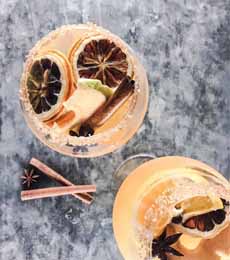
Halloween Sangria
[1] Halloween sangria substitutes beer for wine (photo © Sid Wainer).

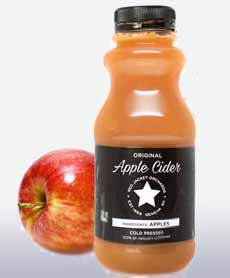
Red Jacket Apple Cider
[2] What’s the difference between apple juice and apple cider? See the answer below (photo © Red Jacket Orchards).
Orange Bitters

[3] Orange bitters are sold next to the Angostura bitters in most supermarkets. Or, make your own with this recipe from (photo © Red Jacket Orchards).


Here’s something different for Halloween: orange sangria. In this recipe, apple cider substitutes for the wine, and wheat beer substitutes for the club soda or sparkling water.

What’s the difference between apple cider and apple juice? The answer is below.
 
 
RECIPE: HALLOWEEN / FALL SANGRIA

Ingredients

  • 1-1/2 cups apple cider
  • 2 cups dried apples and oranges*
  • Optional: 6 dashes orange bitters
  • 2 shots bourbon
  • 3 bottles wheat beer, cold
  • Rim: whiskey smoked sugar or bourbon smoked sugar
  • Garnish: 1/2 moon sliced oranges (wheels sliced in half)
  • 2-3 cinnamon sticks and whole star anise
  • Ice cubes
  •  
    Preparation

    1. COMBINE the first four ingredients in a pitcher and refrigerate. When ready to serve…

    2. MAKE the rim on the glasses. Fill a shallow bowl with water, and another with the smoked sugar. Dip the rim of the glass 1/4 inch into the water, then twist in the sugar until coated.

    3. POUR the beer into the pitcher right before serving and stir once, gently, to combine. Add ice to the rimmed glasses, pour in the sangria and serve.
     
     
    APPLE CIDER VERSUS APPLE JUICE: THE DIFFERENCE

    Since Prohibition, which began in the U.S. (1920 – 1933), “cider” has referred to the unfermented, unpasteurized apple juice. If cider is made from another fruit, it must be called, e.g., pear cider.

    “Hard cider” is used to indicate the alcoholic beverage.

    In the U.K. it is the opposite, with “cider” indicating the alcoholic drink, for which special cider apples are used. Pear cider is called perry.

  • Hard cider is a fermented alcoholic beverage made from the unfiltered juice of apples. The alcohol content varies from a low 1.2% ABV‡ to 8.5% or higher—some imported ciders can be up to 12% ABV, an average level for table wines. It does not need to be refrigerated until the container is opened.
  • Fresh apple cider is raw apple juice, typically unfiltered. Thus, it is cloudy from the remnants of apple pulp. It is also typically more flavorful than apple juice—although of course, the particular blend of apples used in either has a big impact on the taste. It needs to be refrigerated.
  • Apple juice has been filtered to remove pulp solids, then pasteurized for longer shelf life. It does not need to be refrigerated until the container is opened.
  •  
    ________________

    *Don’t hesitate to buy a bottle of orange bitters. It perks up every drink, including mocktails, iced tea, soft drinks and club soda. If a drink is too sweet or needs something extra, a drop or two of orange bitters does the trick. The bitters provide an extra note of complexity: deep, citrusy, spicy flavor. Here’s a recipe to make your own.

    †You can buy smoked sugar on Amazon, or make your own by blending hickory smoke powder with coarse sugar (decorator’s sugar, sanding sugar). Other options include orange decorator’s sugar, in many stores for the Halloween season.

    ‡Alcohol by volume: the percent of alcohol in the bottled spirit, wine or beer.

    Comments off

    RECIPE: Caramelized Onion & Apple Galette

    This is such a nice fall recipe, we’ve made it several times—and we’re just a few weeks into fall.

    Savory and sweet combine in this galette: caramelized onions and apples.

    A galette (gah-LET) is a rustic, round, open-face pie, made without a pie pan. It is flat, with a turned-up crust that wraps around the filling to create a “dough pan.”

    Called crostata in Italian and rustic pie or rustic tart in English, the concept hails from the days before people had pie plates, and the days after that when only the kitchens of the wealthy had them.

    The precursor of the galette probably dates from the Neolithic Age, now called the New Stone Age, which lasted from about 10,200 B.C.E. to between 4,500 and 2,000 B.C.E. Thick cereal pastes—barley, oats, rye, wheat—were sweetened with honey and spread on hot stones to cook.

    This recipe comes from Good Eggs, and was inspired by Alice Waters’ onion tart recipe in The Art of Simple Food.

    Good Eggs adds this tip:

    To save time, take the semi-homemade route. Use ready-made pie dough for the crust. It’s the perfect base for the recipe, and you’ll still have the fun of shaping it.
     
     
    RECIPE: CARAMELIZED ONION & APPLE GALETTE

    Ingredients

  • 1 disk of pie dough, large enough for a 9” pie*
  • Flour for dusting
  • 4 tablespoons butter
  • 6 medium onions, peeled and thinly sliced
  • 3 sprigs of fresh thyme, plus extra for garnish
  • Salt to taste
  • 1 egg, beaten
  • ________________

    *If you’re using a frozen crust, it should be defrosted, but still cool.

      Caramelized Onion Galette
    [1] This savory-sweet galette can be served as a first course, with cocktails, or as a light lunch with a green salad. We served it for dessert with a cheese plate:a great idea (photo courtesy Good Eggs).

    Apples and Onions
    [2] Apples and onions make a savory-sweet pie (photo courtesy Cubit’s Organic Living).


    Preparation

    1. PREHEAT the oven to 375°F. Heat the butter in heavy-bottomed pot, add the onions and thyme sprigs; then sauté over medium heat until the onions are caramelized, about 20 to 30 minutes. Salt to taste. Remove from the heat and let cool. Meanwhile…

    2. ROLL out the chilled pie dough on a well-floured surface, into a 12- to 14-inch circle (about 1/4 inch thick). Don’t worry if your shape isn’t perfect” any irregularities just add to the homemade charm!

    3. TRANSFER the rolled-out dough to a baking sheet lined with parchment paper and let it firm up in the fridge for about 10 minutes. Spread the cooled onions over the center, picking out the thyme sprigs. Leave a good inch or two around the edge so you have ample dough to fold up around the onions.

    4. FOLD up the edges, making sure there are no holes. You can freestyle it, or you can use a pinch-and-fold method as shown in the photo. Once the galette is wrapped up, coat the folded edges with beaten egg, using a pastry brush or your fingers.

    5. BAKE for 40 to 50 minutes, or until the crust is golden brown on the bottom. Let it cool slightly, garnish with a pinch of fresh thyme and serve warm.
      

    Comments off

    RECIPE: Pull-Apart Cheese Bread, Or Halloween Brain Bread?

    Pull Apart Cheese Bread
    [1] .

    Provolone Cheese

    [2] Provolone, originally made in a round or oval shape, is now made in loaves and wheels as well (photo courtesy DiBruno Brothers).

      Bel Gioioso, the Wisconsin-based Italian cheesemaker, sent us this pull-apart cheese bread recipe.

    A boule (ball)-style Italian pull-apart bread, it’s made with provolone cheese, marinara sauce, garlic and seasonings.

    We renamed it “brain bread” for the Halloween season.

    For snacking, with a beer, or at the dinner table, it’s a special treat that’s actually easy to make—you start by buying a sourdough boule.

    The recipe was developed for Bel Gioioso by Amy of BellyFull.net.

    Prep time is 20 minutes, cook time is 25 minutes.
     
     
    RECIPE: PULL-APART PROVOLONE & MARINARA BREAD

    Ingredients For 6 Servings

  • 1 pound round boule-style loaf of sourdough
  • 6 slices provolone cheese, cut into 1/2-inch pieces
  • 1/2 cup (1 stick) unsalted butter, melted
  • 1/4 cup marinara sauce
  • 2 large garlic cloves, minced
  • 1/2 teaspoon garlic powder
  • 1/4 teaspoon onion powder
  • 1/2 teaspoon dried Italian seasoning (recipe below)
  • Garnish: chopped fresh parsley, to garnish
  •  
    Preparation

    1. PREHEAT the oven to 375F. Tear off a large enough piece of foil to wrap around the loaf. Coat the foil with nonstick spray and place on a baking sheet.

    2. CUT the loaf of bread into 1-inch-wide slices with a serrated knife, leaving about 1/4-inch of the base of the bread intact (i.e., cut the slices down to the bottom quarter-inch, but don’t slice through the bottom). Repeat the cuts in the opposite direction to create a cross-hatch/cubed pattern (photo #1). Place the bread on the foil.

     
    3. PRESS the provolone pieces between all the slices of bread. In a small bowl, whisk together the butter, marinara, minced garlic, garlic powder, onion powder and Italian seasoning. Gently pry apart the bread pieces and drizzle the mixture over the loaf evenly, making sure to get into all the seams and cover all the pieces.

    4. WRAP the bread up in the foil. Bake for 15 minutes. Open up the foil, increase oven temperature to 425°F, and bake another 10 minutes until the cheese is melted and the bread is golden brown. Let stand 5 minutes before serving. Sprinkle with parsley, pull apart the pieces and serve.
     
     
    RECIPE: ITALIAN SEASONING

    If you don’t have Italian seasoning, it’s easy to make it by combining:

  • 1-1/2 teaspoons dried oregano
  • 1 teaspoon dried marjoram
  • 1 teaspoon dried thyme
  • 1/2 teaspoon dried basil
  • 1/2 teaspoon dried rosemary
  • 1/2 teaspoon dried sage
  •   

    Comments off


    © Copyright 2005-2026 Lifestyle Direct, Inc. All rights reserved. All images are copyrighted to their respective owners.