THE NIBBLE BLOG: Products, Recipes & Trends In Specialty Foods


Also visit our main website, TheNibble.com.

TIP OF THE DAY #2: Grilled Cheese Tips

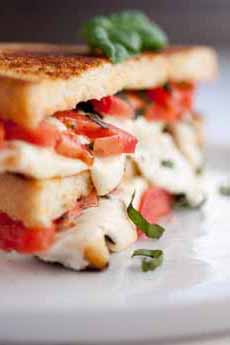
Caprese Sandwich
[1] A Caprese grilled cheese sandwich made with mozzarella, tomatoes and fresh basil. Here’s the recipe from Cooking Classy.

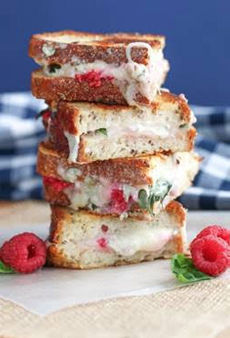
Raspberry Grilled Cheese Sandwich
[2] Dessert grilled cheese: queso blanco and fresh raspberries (photo courtesy Litehouse Foods).

  April 12th is National Grilled Cheese Day. We’re passing along these tips for a better grilled cheese sandwich from the culinary team at HelloFresh, a weekly recipe-kit delivery service..

  • Keep the heat on medium. This will allow ample time for the cheese to melt without the risk of burning the bread. Patience is a virtue for a perfectly toasty sandwich.
  • Grill both sides of the bread. Not only do you get an extra toasty buttery texture when it’s finished, but the cheese will melt faster, reducing the risk of burning.
  • Don’t be afraid to use lots of butter. Use unsalted butter at room temperature: You want it to spread evenly for a consistent result. Seasoning with salt and pepper amps up the flavor as well.
  • Use mayo instead of butter. A technique for added texture and flavor is to spread the outside of the bread with a little mayo. You should still melt butter in the pan, but the added mayo helps to get the bread nice and crispy.
  • Try mustard. Add a layer of mustard to the inside of the bread for a flavor boost.
  • Get creative with toppings. Tomato slices are a favorite, as are pickles. Thinly slice them and add them to the inside for some briny crunch. If you like things hot, use sliced or pickled jalapeños. You can add caramelized onions to any grilled cheese sandwich.
  • Add some jam or preserves Experiment with a dab of fig, peach or blackberry jam for a sweet-and-savory balance.
  • You can add fresh fruit instead of—or in addition to—jam (photo #2). Try brie, Granny Smith apple and apple butter; blue cheese and sliced figs; gruyère/emmenthaler and stone fruits (apricot, peach, pitted cherries, plum, etc.).
  • Add meat. Smoky or spicy meats, like bacon, pepperoni or other sausage, are great pairings.
  • Explore different breads. You know what a loaf of white bread can do; try something else. A rustic loaf? Challah?
  • explore different combinations.

  • Add fresh herbs. We particularly like basil, cilantro, chives, oregano, thyme and/or parsley.
  • Add more cheese! In addition to extra cheese, consider a second cheese for a combination flavor. You can also sprinkle some parmesan on top of your main cheese.
  •  
    Use your imagination, and you’ll leave that American cheese on white bread a memory!


    Comments off

    TIP OF THE DAY: Garnished Butter

    Whether you like your butter plain or compound (with added flavor ingredients), here’s a fun idea from The Peached Tortilla in Austin, Texas.

    This dish of citrus butter inspired us to create something similar, using a small, shallow dish (the bread plate that came with our fine china) and:

  • Covered half with great butter (our favorite is the cultured butter from Vermont Creamery. You can also use a straight stick or brick of butter.
  • Sprinkled with lemon zest.
  • Topped with microgreens.
  • A side of flaky (crunchy) sea salt.
  •  
    We have such a store of sea salt that we offered three:

  • Maldon sea salt.
  • Pink Himalayan sea salt.
  • Flavored salt (we used saffron-infused sea salt).
  •  
    Check out the other types of salt in our Salt Glossary.

    You can decorate your butter as you wish, tailoring the garnishes to what you’re serving. Some ideas:

      Compound Butter

    Butter topped with lemon zest and microgreens, with a side of coarse sea salt (photo courtesy The Peached Tortilla | Austin).

  • Chili flakes.
  • Fresh herbs: chives, cilantro, parsley, oregano, tarragon, thyme.
  • Greens: microgreens, fronds (dill, fennel).
  • Pepper: cracked pepper, green or pink peppercorns.
  • Seeds: aniseed, black sesame, caraway, celery seed, chia, dill seeds, fennel seeds, flax, mustard.
  • Spices: grated cinnamon or nutmeg, za’atar.
  • Others: capers, citrus zest, edible flowers, herb blossoms.
  •  
    There are many other ingredients you can use. Just be sure to use contrasting colors.

    There’s enough choice so that you need never garnish butter the same way twice.


    Comments off

    TOP PICK OF THE WEEK: Pernod Classic Liqueur

    Pernod Liqueur
    [1] Pernod created what is now called Pernod Classic in 1915, when a component its absinthe liqueur, wormwood, was declared illegal. See the history of absinthe (photo courtesy Liquor.com).

    Bouillabaise With Pernod
    [2] Pernod is a delicious addition to seafood dishes like this bouillabaisse, as well as cream sauces with seafood (photo courtesy Pernod Ricard).

    Flourless Chocolate Cake - Pernod
    [3] Use Pernod instead of Grand Marnier or rum in cakes (photo courtesy Pernod Ricard).

    Pernod Cocktail
    [4] In addition to the classic Pernod and water, make a cocktail. This “French Grasshopper” substitutes Pernod for the creme de cacao (photo courtesy Josh Pearson).

    La Fee Absinthe
    [5] Absinthe, which has a green tinge (from pale to bright, depending on the producer). You can see the “Ouzo Effect” in one of the glasses: Adding water makes the drink cloudy (photo courtesy La Fée Absinthe).

      Lovers of licorice who haven’t yet discovered Pernod are in for a treat.

    Pernod is a liqueur made in France from star anise, fennel and 14 herbs. It is one of the lighter anise- or licorice-flavored liqueurs, so it’s the right place for licorice lovers to begin. Its sister brand, Ricard Pastis (the companies merged in 1975), has a heavier licorice taste, as do Sambuca and other anise/licorice-flavored liquors.

    To check them out before you buy a bottle, invite a friend or two for an after-work drink. Order all the types of anise/licorice flavored liqueurs the bar has, and have a tasting.

    Before we get to how to use Pernod (below), here’s some background to help you understand it.
     
     
    ANISE- AND LICORICE-FLAVORED LIQUEURS & SPIRITS

    Whether made from anise, fennel, licorice and/or star anise, this group of drinks is very refreshing. That’s one reason why they’re so popular in warm Mediterranean climates.

    In addition to Pernod, Ricard Pastis and Anisette from France, similar-tasting spirits include absinthe (originating in Switzerland), Sambuca (Italy), anis (Spain), arak (the Levant), kasra (Libya), mistra and ouzo (Greece), ojen (Spain) and raki (Turkey).

    Pastis, created by Paul Ricard in 1932 and flavored with anise and licorice, is not sweetened like a liqueur. Instead, it is dry and consumed as an apéritif.

    All of the plants used to make these spirits have similar flavors, but the plants are not related: They’re in different botanical families.

  • The licorice plant is an herbaceous perennial native to southern Europe and India. It is not botanically related to anise, star anise, or fennel, which are sources of similar flavoring compounds.
  • Fennel is a flowering plant species in the carrot family. It is a bulbous vegetable with top stems that resemble celery; both are in the Apiaceae family. Some people erroneously refer to fennel as anise, because of the similarity of aroma flavor. That is incorrect.
  • Anise and star anise are not related. True anise is an herb in the parsley family; its seeds have a licorice-like flavor. Star anise, native to southern China and Indochina, is the star-shaped fruit of a tree that is a member of the magnolia family.
     
    So why do these unrelated plants have similar flavors and aromas? It’s because they contain contain the same flavor compound, a substance called anethole.
     
    What Is Anethole?

    Anethole, also called anise camphor, is the organic compound that creates the aroma and flavor of anise and fennel (both in the botanical family Apiaceae), anise myrtle (Myrtaceae family), liquorice (Fabaceae family), and star anise (Illiciaceae family), among other plants and families.

    The essential oils extracted from the roots, seeds or other parts contain the anethole. To create the liqueur, the oils are distilled with pure alcohol and sweetened with sugar.

    The liqueurs are served neat, on the rocks, with water, or served with coffee as an after-dinner drink, where they can be drunk after the coffee or mixed into it.

    When these liqueurs are mixed with water or other liquid (a traditional ratio is 1 part liqueur to 5 parts water), the anethole reacts to make the drink cloudy, a spontaneous emulsification known as the Ouzo Effect (photo #5).
     
     
    THE HISTORY OF PERNOD

    The ancestor of modern Pernod liqueur was created by a French physician, Pierre Ordinaire, in 1789. When retired in Switzerland, he created an elixir, a pain-relieving restorative. At the time, such elixirs were a common treatment for ills. (That’s how all spirits and liqueurs began. We now know that the “relief” was largely due to the euphoria-inducing properties of the alcohol.)

    Dr. Ordinaire called his elixir absinthe, after one of its key ingredients, Artemisia absinthium, grand wormwood. It also contained green anise, sweet fennel, and other medicinal and culinary herbs.
     
    Absinthe Goes Commercial

    Some 10 years later, Dr. Ordinaire sold his formula to Major Daniel-Henry Dubied, who set up the first commercial absinthe distillery with his son-in-law, Henri-Louis Pernod. In 1805 Pernod established his own distillery, Pernod Fils, in France.

    The original Pernod liqueur (absinthe) became very fashionable in the cafés of Paris. It was so popular that the evening cocktail hour was called “L’heure Verte” (The Green Hour), after absinthe’s green hue.

    Absinthe was sweetened by pouring it over a sugar cube, held in a perforated spoon (photo #5). It was popular with artists, poets, writers and other members of bohemian society.

    Some claimed it enhanced their creativity, and the drink was affectionately dubbed “The Green Fairy,” the artists’ muse. Ernest Hemingway, Pablo Picasso and Vincent Van Gogh, among many others, were fans.

    This rankled producers of other alcoholic beverages, who were losing sales. Over time, they were able to build a specious argument via advertising and newspaper articles about the [alleged] hallucinogen properties of a key ingredient, the herb wormwood (absinthium in Latin).

    Wormwood contains the chemical thujone, which was believed to cause hallucinations.

    While this theory was scientifically debunked almost a century later, it wreaked havoc. France and other countries banned the production and consumption of absinthe in 1915. (The U.S. banned it even earlier, in 1912. See the discussion in the footnote* below.)

    In response, Pernod was reformulated without the wormwood, and launched as Pernod Traditionelle (Pernod Classic in the U.S.). The reformulation also substituted star anise for the green anise that gave, to avoid a green-hued color that would be associated with absinthe.

    Pernod Traditionelle was pale yellow with a green tinge; and it was sweetened†, no sugar cube required. Following the absinthe tradition, drinkers frequently diluted it with water.

  •  
    When the absinthe ban was debunked and lifted in the early 21st century, French companies resumed producing absinthe, and it became legal to import into the U.S. in 2007. Some American producers also make absinthe.

    And absinthe even has its own food holiday, March 5th.
     
     
    WAYS TO USE PERNOD

    In Foods

    Use it as you would use Grand Marnier, brandy, rum, or other liqueur or spirit.

  • Baking: Use Pernod instead of Grand Marnier or rum in cakes (photo #3).
  • Chicken Fricassee (recipe).
  • Cream sauces, especially for seafood (recipe).
  • Ice cream: chocolate, mint, vanilla (recipe).
  • Seafood: Add a tablespoon to the broth (photo #2).
  •  
    In Cocktails

    Use Pernod instead of another liqueur in a cocktail you enjoy. In photo #4, Pernod was added to a Grasshopper (recipe‡).

    Here’s a selection of Pernod cocktails.

    Pernod can also be mixed with fruit juices.

  • Try it with grapefruit juice in the ratio of 1:5 Pernod:juice.
  • Similarly, add it to orange juice instead of vodka, for a “Pernod Screwdriver.”
  • Blackcurrant juice makes a version called Pernod and Black.
  • Add a tablespoon to iced tea, coffee or lemonade.
  • On a warm day, pour it over an ice cube and relax.
  •  
    Whatever you’re making: Think licorice!
    ________________

    *Thujone, a chemical component of wormwood, has been alleged to cause hallucinations. The truth is that, in very high doses, thujone can be toxic and also can cause convulsions. However, in wormwood and other plants, including oregano and common sage, there are only trace amounts and it cannot cause a negative effect.

    While modern science has proved that there is no evidence at all that thujone can cause hallucinations, even in high doses, the U.S. still prohibits absinthe imported into the country to contain thujone.

    †The original absinthe was distilled without added sugar, making it a spirit instead of a liqueur. To add sweetness, absinthe was traditionally poured into the glass over a sugar cube held in a perforated spoon. The reformulated Pernod was crafted with added sugar. See a photo.

    ‡ Combine in a cocktail shaker 1 ounce Pernod Classic, .5 ounce each crème de cacao blanc, crème de menthe and heavy cream. Shake and pour into a coupe glass. Garnish with shaved mint chocolate.
      

    Comments off


    © Copyright 2005-2026 Lifestyle Direct, Inc. All rights reserved. All images are copyrighted to their respective owners.