THE NIBBLE BLOG: Products, Recipes & Trends In Specialty Foods


Also visit our main website, TheNibble.com.

Uses For Extra Shallots & A Recipe For Shallot Vinaigrette

Shallot Vinaigrette Recipe
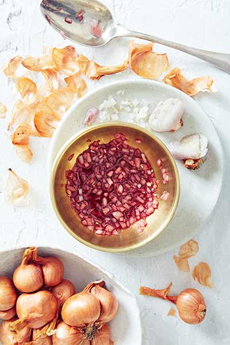
[1] Shallot vinaigrette, a French classic, shown with Dutch yellow shallots. The recipe is below (photo © Good Eggs).
Shallots
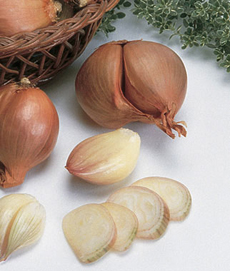
[2] Shallot bulbs have individual cloves, which are peeled and sliced like garlic bulbs (photo © Burpee).
Oysters With Mignonette Sauce
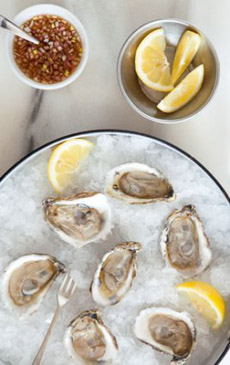
[3] Mignonette sauce for oysters is shallot vinaigrette without the oil (photo © Whole Foods Market).

A basket of red French shallots
[4] French red shallots (photo © The Fresh Direct).
A dish of crispy fried shallots
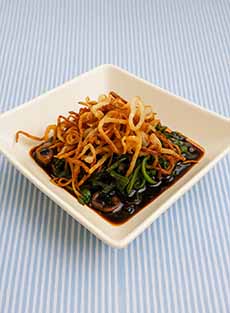
[5] A crispy fried shallot garnish tops sautéed baby greens. Here’s the recipe (photo © It’s Not Easy Eating Green).

A plate of uncooked banana shallots
[6] Banana shallots (photo © Tesselaar).
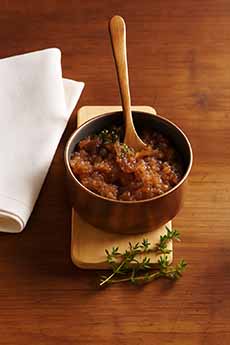
An Pot Of Shallot Confit
[7] Shallot confit. The recipe is above (photo © Eat Smarter).
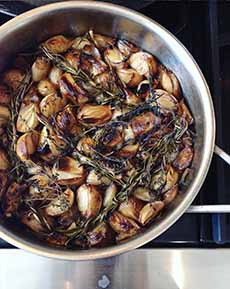
A Pot Of Sauteed Shallots
[8] Shallots sautéed with rosemary, thyme and Pedro Ximénez sherry (photo © Botanica Magazine).
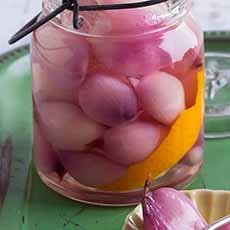
Jar Of Asian Pickled Shallots
[9] Pickled Asian shallots, small and round. Here’s the recipe (photo © Karen Solomon | Asian Pickles: China).

Shallots Growing
[10] Shallots peeping up from the earth (photo © Harley Lin | Unsplash).


While they are a staple in France, most Americans don’t keep a store of shallots in the kitchen. Shallots tend to be that specialty onion you purchase for a particular recipe.

If you buy them for a particular recipe and have a extra shallots, what should you do with them?

  • Milder than onions, they are easy to add to salads, omelets, roasted vegetables and other recipes.
  • You can caramelize them or fry them into a crispy shallot garnish.
  • Use them to top a burger, bruschetta or a pizza, raw or sautéed.
  • Two classic French recipes are shallot vinaigrette and mignonette sauce for oysters. The difference: mignonette sauce has no oil.
  •  
     
    > What exactly are shallots? See below.

    > Also below: the history shallots.

    > Mignonette sauce recipe.

    > The different types of onions: a photo glossary.

    > The history of onions.
     
     
    RECIPE #1: SHALLOT VINAIGRETTE

    Prep time is 5 minutes, active time is 20 minutes (photo #1)

    You can double or triple the recipe and keep the extra in the fridge.
     
    Ingredients

  • 2 small shallots, minced (tiny dice, 2-3 tablespoons)
  • 2-3 tablespoons red wine vinegar
  • 8 tablespoons olive oil
  • Salt and pepper
  •  
    Preparation

    A shallot is different from other onions in that the bulb is made up of individual cloves like a bulb of garlic, its close cousin.

    The technique for dicing shallots and onions is to leave the root end of the bulb or clove intact while you cut. This keeps the bulb together so you can cut pieces that are uniform in size. Here’s a video showing how to peel, slice, dice and chop shallots.

    1. COMBINE the vinegar and minced shallots in a small bowl and set aside for at least 15 minutes.

    2. ADD the olive oil and a pinch of salt, and whisk together until well-combined.

    3. TASTE and add another pinch of salt and pepper as desired.
     
     
    RECIPE #2: CRISPY FRIED SHALLOT GARNISH

    Use these (photo #5) to garnish anything savory. We add them as a garnish to plain grilled fish, meat and poultry for a bit of visual and flavor pizzazz.

    Ingredients

  • ½ pound shallots (about 6), peeled and very thinly sliced
  • 1 cup canola oil
  • 1/4 teaspoon salt
  •  
    Preparation

    1. LINE a large plate with paper towels. In a small saucepan, heat the oil over medium-high heat until it begins to shimmer and lightly smoke.

    2. ADD the shallots and cook, stirring often, until light golden brown, about 7-9 minutes. Using a slotted spoon, transfer the shallots to the paper towel-lined plate. Sprinkle lightly with salt.
     
     
    RECIPE #3: SHALLOT CONFIT

    You can make shallot confit (photo #7), by placing peeled shallots in a small dice (best for spreading, or cut into slices if you want larger pieces) in a small saucepan covered with olive oil or butter. You can add aromatics† if you like.

    Then, simply simmer gently on very low heat for 30–60 minutes, until soft and golden (not browned). When cool, store them in a jar submerged in the cooking fat.

    The confit will keep refrigerated for up to 2 weeks. Then, enjoy it:

  • Spread on toast or crostini (with optional goat cheese or ricotta).
  • Swirled into mashed potatoes or risotto.
  • Spooned over grilled steak, chicken, or fish.
  • Added to pasta, pizza, or grain bowls.
  • Added to vinaigrettes and sauces.
  • As a sandwich spread, alone or mixed with mayonnaise.
  •  
    How does shallot confit differ from caramelized onions?

    Shallot confit is a slow-poached preserve: mild, luxurious, and subtly sweet. Caramelized onions are pan-browned: bold, rich, and deeply savory-sweet.

  • Use shallot confit as noted above.
  • Use caramelized onions when you want a stronger onion flavor: as a burger and sandwich topping, mixed into French onion soup or quiche, or stirred into dips, pastas, and savory tarts.
  •  
    WHAT ARE SHALLOTS

    Shallots are an allium, a member of the same botanic species as chives, garlic, leeks, onions and scallions/green onions. Prized for their delicate, sweet, and complex flavor, shallots have long been a staple in European, Middle Eastern, and Southeast Asian cuisines.

    They are a milder type of onion, imparting a subtle flavor to recipes.

    Shallots are preferred to onions by French chefs, because their mild flavor doesn’t overpower the other delicate flavors.

    Shallots differ from other alliums in that they grow in clusters or clumps, like garlic—with individual cloves as well. Traditional varieties include:

  • French Grey Shallot (griselle): considered the finest, though difficult to find outside France.
  • French Red shallot (Jersey shallot): can be red or pink in color (photos #4 and #12).
  • Dutch Yellow Shallot: a little sharper than red shallots, sometimes found at farmers markets and from seed suppliers (photo #11).
  • Banana Shallot (echalion): larger and milder; a modern cross between shallot and onion (photo #6).
  • Asian Shallot (Thai or Filipino Shallot): small, round, reddish or purplish bulbs commonly found in Asian markets (photo #9). They are essential in Southeast Asian cooking, often fried crispy or pounded into spice pastes.
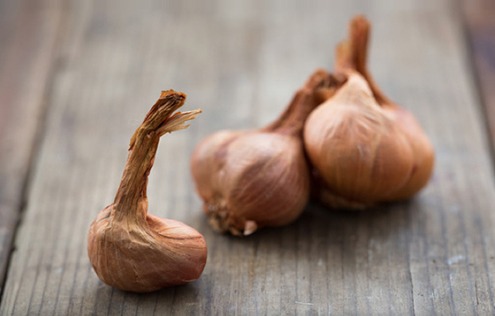
  •  
    Dutch Yellow Shallots
    [11] Dutch yellow shallots (photo © Good Eggs).
     
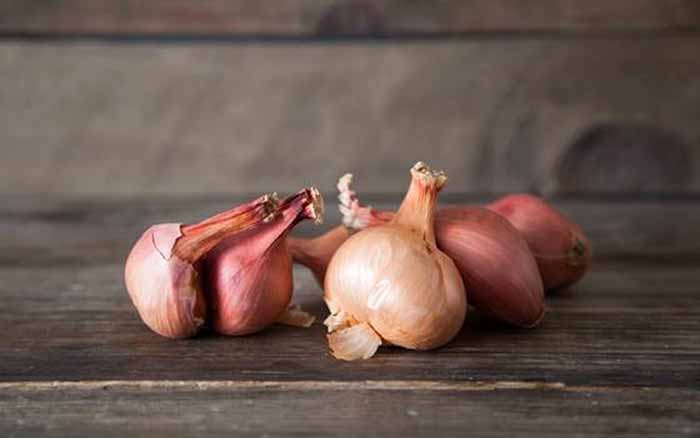
    Terminology can get confusing. In French, shallots are called échalotes. Confusingly, in British English, spring onions* were once called “shallots” in some regions, leading to terminology overlap in older recipes. Whatever you buy should look like photo #2, although the coloring may differ.
     
    Meet The Whole Genus

    The Allium genus comprises some favorite flavor ingredients:

  • Chive: Allium schoenoprasum
  • Garlic: Allium sativum
  • Green onion/scallion: Allium cepa var. cepa
  • Leek: Allium ampeloprasum
  • Onion and spring onion*: Allium cepa
  • Shallot: Allium cepa var. aggregatum
  •  
    The botanical family is Amaryllidaceae, which contains mainly perennial flowering bulbs such as amaryllis and other lillies, daffodil and tuberose.

    Allium genus members are also bulbs and also flower, but not in the same, showy way that engenders garden and home decoration.
     
     
    THE HISTORY OF SHALLOTS

    Shallots are believed to have originated in Central or Southwest Asia, possibly around present-day Iran, Turkmenistan, or Israel, all areas known for early allium diversity and cultivation.

    The name “shallot” is thought to derive from the ancient city of Ashkelon (or Ascalon), a port city in modern-day Israel.

    Greek and Roman traders called a type of onion Ascalonia caepa (“onion from Ascalon”), although it’s questioned whether this referred to shallots or a broader category of onions.

    By the Middle Ages, shallots were cultivated in Europe, particularly in France, where they became a foundational aromatic in regional cooking.

    They were also prominent in Persian and Indian cuisines, often used raw, pickled, or fried.

    In Southeast Asia, especially in Thailand, Indonesia, and the Philippines, small red shallots became a kitchen staple—used in spice pastes, stir-fries, and condiments.

    By 17th century France, shallots had gained prestige in haute cuisine due to their nuanced flavors.

    They became essential in sauces like béarnaise and pan sauces; in vinaigrettes, compound butters, and refined sautés.

    Today, more recipes around the world call for shallots instead of onions in dishes where a gentler flavor is desired.

    In the U.S., you’ll see them in recipes for salad dressings, risottos, pastas, and even burger toppings where subtlety matters.

     
    Pink Shallots
    [12] Pink shallots (photo © Good Eggs).
    _________________

    *Spring onions are immature onions, harvested early in the season.

    Aromatics for shallot confit:
    > Thyme or clove: best for steak or chops topping, mashed potatoes, crostini.
    > Rosemary or sage: best for roasts, squash dishes, charcuterie boards.
    > Balsamic vinegar or red wine (a splash): best for cheese pairings, pork, or duck.
    > Chili flakes, Aleppo pepper or coriander seeds: best for gentle heat with Asian fusion, lamb, or glazed vegetables.


    CHECK OUT WHAT’S HAPPENING ON OUR HOME PAGE, THENIBBLE.COM.


    Comments off

    ACADEMY AWARDS RECIPE: Popcorn Cupcakes

    Popcorn and a movie?

    How about popcorn cupcakes and a movie awards show?

    Jessica of PNP Flowers Inc. created these fun cupcakes with popcorn. The popcorn is both in the batter and a garnish on top of the icing.

    Why not whip up a batch for your Oscar nibbles?

    Here’s Jessica’s recipe; the original recipe is from the Food Network.

    More fun:

    Can you guess which country has the most motion picture award organizations, after the U.S.? The answer is in the footnote below.

    Here’s a list of film awards worldwide.

    For yet more fun, pull down the Holidays & Occasions menu at the right and select Academy Awards.


    popcorn-cupcake-pnpflowersincFB-230sq
    Cupcakes for the movies, with popcorn both inside and on top. Photo courtesy PNP Flowers Inc.

     
    ___________________
    *The country that bestows the second largest number of film awards is India.


    Comments off

    TIP OF THE DAY: Leftover Pasta For Breakfast

    Spaghetti

    Pasta For Breakfast

    Angel Hair With Fried Egg

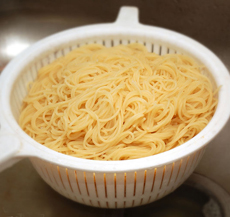
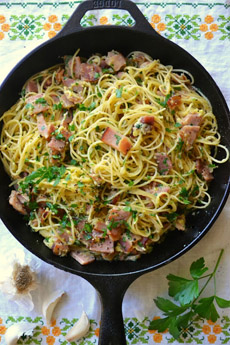
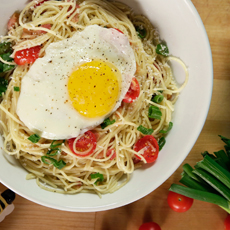
    Top: Start with unsauced pasta (photo courtesy Wikihow.com. Middle: A breakfast version of Spaghetti Carbonara from TheViewFromGreatIsland.com. Bottom: A fried egg tops pasta mixed with cherry tomatoes and chives, at Popsugar.com.


    Pasta for breakfast? Yes, although not cold or reheated with sauce.

    We’ve previously published recipes for gnocchi topped with a fried egg and breakfast pizza.

    But plain leftover pasta, unsauced, can be served up as breakfast with a fried or poached egg, plus any cooked veggies you have on hand: broccoli florets, mushrooms, peas, spinach or other leafy greens, for example. Got cherry or sundried tomatoes? Toss ‘em in.

    Our favorite leftover pasta for breakfast is angel hair pasta (capelli d’angelo) or other thin ribbon (capellini, spaghettini). If we’re cooking it for dinner, we make extra for breakfast or brunch. It will keep for a few days, if you don’t want to follow one pasta meal with another.

    You can also use standard linguine or spaghetti; and, while they don’t hold a fried egg as evenly, any cut of pasta from tubes (penne, rigatoni) to shapes: bow ties (farfalle), shells (conchiglie), wagon wheels (ruote) and so forth. (See the different types of pasta.)

    We adapted this recipe from TheViewFromGreatIsland.com, a blog by Susan Moran, who calls it “pure satisfying comfort food.” She enjoys it with her coffee.

    Don’t forget the toast!

     
    RECIPE: LEFTOVER BREAKFAST PASTA

    Ingredients For 2-4 Servings

  • 3 cups cooked pasta
  • 1 cup diced ham
  • 4 slices cooked bacon (or substitute another 1/3 cup of ham, sausage or other breakfast meat)
  • 2 cloves garlic, minced or sliced
  • Olive oil as needed
  • 1 cup grated Parmesan cheese
  • 4 eggs, beaten
  • Black pepper or red chili flakes to taste
  • 1/2 cup fresh parsley (substitute fresh basil or cilantro)
  • Salt to taste
  • Optional garnish: extra parsley and cheese
  •  
    Preparation

    1. REMOVE the pasta from the fridge and let it warm on the counter.

    2. COOK the bacon until crisp. Add the ham and garlic and sauté for 3-4 minutes, adding some olive oil if the bacon didn’t render enough fat to cook the garlic. If you’re using only ham, you’ll need about 2 tablespoons of olive oil.

    3. COMBINE the Parmesan and eggs in a small bowl, with fresh-ground black pepper to taste.

     
    4. HEAT the pasta in the microwave at 30-second intervals until hot. Add the pasta and the egg mixture to the skillet and toss, along with the parsley.

    5. COOK until the eggs and cheese become a creamy sauce. If it is too thick, you can add some milk or cream. Taste and add salt as desired (or let each individual add his/her own salt to taste).
     
     
    THE DIFFERENT TYPES OF PASTA


    Comments off

    RECIPES: It’s Cherry Time!

    Fresh cherry season begins in May; but today is George Washington’s Birthday, a traditional occasion for cherry pie and other cherry recipes.

    We started the day with a Cherry Yogurt Parfait. Chobani, Dannon and Yoplait, among others, sell cherry-flavored yogurt; but one can easily make a more festive yogurt parfait. And we did! We prefer our parfait to a cup of cherry yogurt.

    RECIPE: SUPER-EASY CHERRY YOGURT PARFAIT

    Ingredients

  • Yogurt brand of choice, in plain or vanilla; if you can find cherry yogurt, great
  • Cherries: fresh in season, frozen in the off-season
  • Optional: dried cherries (alone or in combination)
  •  
    What about canned or jarred cherries or cherry pie filling?

    You can mix cherries in water or light syrup into plain yogurt, but sweet, gloppy pie filling is over the top.
     
    Preparation

    1. COMBINE the yogurt and cherries in a mixing bowl, in your preferred proportions. Reserve a few cherries as a topping for the parfait. Stir to combine.

    2. SCOOP into a dessert dish, parfait dish, Martini glass or other festive vessel. Garnish with the reserved cherries and serve.
     
    HOW TO ENJOY YOUR CHERRY YOGURT PARFAIT

  • In the “normal” way—as a yogurt parfait.
  • Atop dry cereal (we eliminate the milk, and enjoy the cereal at its crunchy best).
  • As a topping for pancakes or waffles.
  • As a garnish for fruit salad.
  • Spooned over pound cake or angel food cake.
  • Atop frozen yogurt.
  •  
    DON’T WANT CHERRY YOGURT?

    Pick up some Welch’s Fruit & Yogurt Snacks in the new Cherry flavor.


    Cherry Yogurt Parfait

    Welch's Fruit 'n Yogurt - Cherry
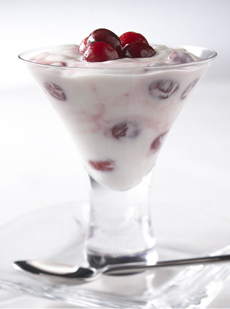
    Top: Make a Cherry Yogurt Parfait like this one from ChooseCherries.com. Bottom: Want something that’s grab-and-go? Have fun with these yogurt-covered cherry snacks from Welch’s.

     
    Small, round and chewy, they are, alas, addictive. There’s more information on the Welch’s Fruit Snacks website.
      

    Comments off

    TIP OF THE DAY: Make Compound Butter (Flavored Butter )

    Compound Butter

    /home/content/p3pnexwpnas01 data02/07/2891007/html/wp content/uploads/crayfish butter chickenfriedgourmet 230.com

    Truffle Butter

    Compound Butter

    Compound Butter

    Compound Butters

    Cookies & Compound Butter
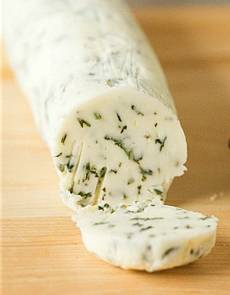
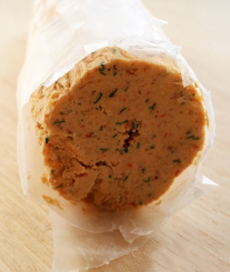
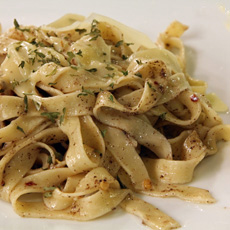
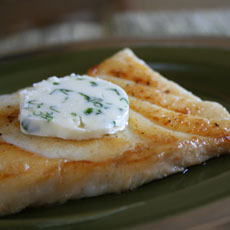
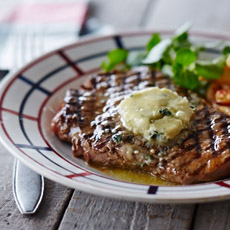
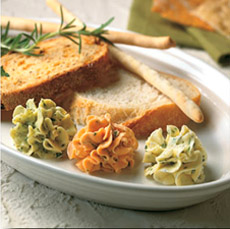
    Beurre à la maître d’hotel, lemon parsley butter; crayfish compound butter for seafood; pasta tossed with truffle butter; roasted sea bass with herb butter; herb, bourbon-pecan, and gorgonzola butters, ready to spread on bread; last but not least, sweet compound butter for dessert or pancakes. Photos: Brown-Eyed Baker, Chef Michael O’Boyle, WKNOfm.org, Land O’Lakes, Feastie.com.


    Want to become a more impressive cook instantly? Use compound butter! Also known as finishing butter or beurre composé in French, it’s unsalted butter that has been blended with seasonings.

    There are endless variations. Escoffier published 35 combinations in 1903, and cuisine has evolved in many directions since his classic renderings of anchovy butter and beurre à la maître d’hotel (lemon parsley butter, which is the sauce served with escargots).

    In Continental cuisine, compound butter is added to the pan to finish a sauce, placed directly atop meat, fish or vegetables to create a flavorful garnish, or mixed into pasta and rice. Just a dab transforms a dish: If you think butter makes everything taste better, think of what butter infused with great seasonings will do.

    Herb butter and Roquefort butter are classics atop steak, anchovy butter has long been paired with grilled seafood) are staples at fine steakhouses. On the sweet side, honey butter and strawberry butter have long been a brunch favorite.

    These are just a few of the dozens that were long a part of the standard fine-cooking repertory. The compound butter most often used in the U.S.: garlic butter.

    A melting dollop of compound butter is an attractive garnish, melting over a piece of beef or fish; or can be used in the kitchen to make a quick pan sauce, adding mouth feel add fat and flavor simultaneously. Whether at a restaurant or at home, it creates an easy upgrade to a simple dish.

    But trends in cooking, from cuisine minceur (lighter French food) and Asian-accented dishes, have pushed the one-ubiquitous compound butter to the side.

    Fear not, butter lovers: According to Flavor & The Menu, compound butter is currently trending with restaurant chefs.

    The new compound butter, however, is modernized with flavors that would not have found their way into Escoffier’s (or Julia Child’s) compound butters:

  • Hot sauce compound butter, tossed with potato tots or fried vegetables, from Chef Ray Martin of Noodle Fresh in Orange County, California.
  • Ramp butter for pasta and sea urchin butter for Lobster Bucatini, from Benjamin Lambert at 701 in D.C.
  • Ribeye with gochujang butter, at Edward Lee’s Succotash in National Harbor, Maryland.
  • Wasabi-yuzu-kosho butter, at Wolfgang Puck’s Cut in Las Vegas.
  • Pork belly-sake butter served over pork tenderloin, from Chef Deb Paquettte in Nashville.
  •  
    Compound Butter As An Appetizer!

    Chef Paquette offers a butter tasting as an appetizer—and it’s very popular. Diners get four distinct flavored butters with a French baguette. The flavors change, but recent flavors have included cashew-ginger, mushroom-taleggio-tarragon, saffron chorizo and Steak Diane, which blends the butter with a reduction of beef stock, red wine, thyme and Dijon.

    More Compound Butter Ideas From Flavor & The Menu

  • Avocado + Citrus: Season butter with smashed avocado, zesty chile-lime seasoning and chopped cilantro, shape into a log and chill. Serve over grilled skirt steak, chicken and fish, or slather on grilled Mexican street corn with cotija cheese.
  • Bacon + Blue cheese: Pair the bold, craveable flavors of crumbled blue cheese and salty-crisp bacon with unsalted butter, coarse black pepper and minced chives. Serve as a signature topper for grilled steak, shrimp, chicken, specialty burgers and roasted potatoes.
  • Creole + Roasted Garlic + Lemon: Add New Orleans attitude to your menu with a Creole butter seasoned with rich, roasted garlic and caramelized lemon, Louisiana hot sauce and Creole seasoning. This is delicious over grilled oysters, scallops or as a signature butter paired with crusty bread.
  • Lemon + Rosemary + Asiago: Combine lemon zest, fresh rosemary, sea salt and grated Asiago cheese with unsalted butter. Slice into coins and serve over grilled fish, roast chicken, haricots verts and grilled vegetables. Or spread over grilled flatbread for an appetizer.
  • Sriracha + Honey: Blend unsalted butter with golden honey and fiery Sriracha sauce for a sweet and spicy flavored butter; spread on a split hot-from-the-oven biscuit and top with a crispy chicken filet and bread-and-butter pickles for a hearty “anytime” breakfast sandwich.
  •  
    Plus:

  • Chipotle butter for corn on the cob.
  • Gochujang and honey butter on a garlicky seared chicken paillard.
  • Sriracha and toasted sesame butter on cracked pepper-seared scallops.
  • Harissa, honey and za’atar butter over cumin-spiced, char-grilled lamb chops.
  • Aleppo pepper, smoked-salt maple butter over wood-fired Brussels sprouts.
  •  
    For a topping butter, consider adding flavorful liquids like wine, reduced citrus juice, soy or mirin. Whip at high speed to marry the flavors; the butter will break, but keep whipping—it will come together again.

  • Try roasting items like mushrooms and onions, then finely chop and whip into butters for concentrated flavor.
  • Toast or lightly fry spices like curry powder, smoked paprika and chile powder before adding to flavored butters.
  •  
    On The Sweet Side

  • Tangerine + Dark Chocolate: Combine European-style unsalted butter with tangerine zest, orange marmalade and chopped pieces of best-quality dark chocolate. Spread over a warm croissant or brioche as a signature brunch option.
  • For sweet butters, use high-quality flavored syrups like blackberry and toasted hazelnut for consistency.
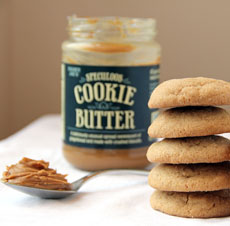
  • Cookie butters have been trending on the retail side, to spread on cookie! What else would you do with this Snickerdoodle Cookie Butter recipe?
  •  
    GET STARTED

    First, remember that any of these butters can also be used on bread, potatoes, rice, vegetables, etc.

  • Compound butter technique and recipes
  • Crayfish Butter Recipe for fish and seafood
  • Mussels With Maître d’Hotel Butter Recipe
  • Hazelnut Butter, which goes with just about everything
  • Still more compound butters from Epicurean Butter
  •  
    Once you’ve developed your favorite compound butters, you can bring them as gifts to friends who cook (or who love bread and butter).
      

    Comments off

    The Nibble Webzine Of Food Adventures


    © Copyright 2005-2026 Lifestyle Direct, Inc. All rights reserved. All images are copyrighted to their respective owners.