THE NIBBLE BLOG: Products, Recipes & Trends In Specialty Foods


Also visit our main website, TheNibble.com.

TIP OF THE DAY: Ploughman’s Lunch For St. Patrick’s Day

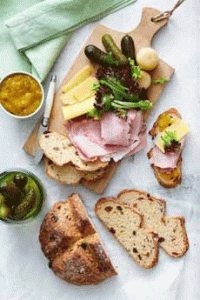
Ploughman's Lunch
[1] The Ploughman’s Lunch, a staple lunch in Britain for centuries (photo ©Taste | Australia).

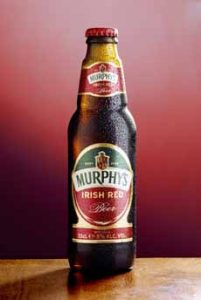
Murphy's Irish Red
[2] Have an Irish beer with your lunch (photo © Murphy’s Irish Stout).

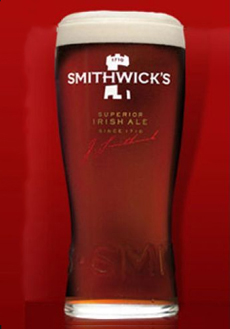
Irish Red Ale
[3] Smithwick’s Irish Ale (photo © Smithwick’s).


For St. Patrick’s Day, how about a Ploughman’s lunch? You can bring it to work or dig in at home.

Pronounced “plow man,” Ploughman’s, as it’s called for short, is a cold lunch that farmers (the plow men) and other laborers in the British Isles (including Ireland), out for the day, would take with them.

The lunch included bread and butter, cheese (cheddar, stilton or other local cheese), relish such as a Branston pickle (chutney),* piccalilli* and/or pickled onions.

  • A deluxe version might include ham, hard boiled eggs, a green salad and an apple.
  • The ploughman’s lunch entered pub menus as an inexpensive meal.
  • Today’s ploughman’s lunch at a pub or café can add a green salad, celery sticks, hard-boiled egg, beet salad, pâté, potato chips and sliced apple.
  • At home, you can add caramelized onions, tapenade and/or chutney. We also like to add a chicken-and-apple sausage.
  •  
    The history of the ploughman’s lunch is below.
     
     
    RECIPE: DIJON VINAIGRETTE

    Dress your salad with a Dijon vinaigrette.

    Ingredients

  • 1 cup extra virgin olive oil
  • 1/3 cup white wine vinegar
  • 1 teaspoon Dijon mustard
  • Salt and pepper to taste
  •  
    Whisk in a bowl or shake in a jar to combine.
     
     
    UPGRADE FOR ST. PATRICK’S DAY

    For St. Patrick’s Day, substitute Irish soda bread for everyday bread.

    Add an Irish beer.

    Beyond the well-known Guinness and Fuller’s beers, look for something new.

    There’s a lot to choose from, including:

  • Beamish Irish Stout
  • Harp Lager
  • Kilkenny Irish Cream Ale
  • Murphy’s Irish Red
  • Murphy’s Irish Stout
  • O’Hara’s Celtic Stout
  • O’Hara’s Irish Wheat
  • Porterhouse Brewing Co. Oyster Stout (oyster shells are added to the vat)
  • Smithwick’s Irish Ale
  •  

    THE HISTORY OF THE PLOUGHMAN’S LUNCH

    There’s not much mystery to it: bread and cheese were the basis of a poor person’s diet, and was what rural English labourers carried when they left the house [source].

    A reference as far back as c.1394 mentions the traditional ploughman’s meal of bread, cheese and beer.

    Meat was a luxury, so cheese provided the protein.

  • The cheese, plus butter or lard for the bread, provided fats.
  • Onions and leeks, served as a condiment, when more expensive seasonings and condiments were out of reach.
  •  
    Over the years, the romance of “the rural life” led middle-class people to embrace the Ploughman’s Lunch. See if your local Irish pub offers it.

    ________________

    *Branston pickle is a chutney typically made of carrots, cauliflower, gherkins, onions and rutabaga, pickled in a sauce of vinegar, tomato, apple and dates flavored with chutney spices such as mustard, coriander, garlic, cinnamon, pepper, cloves, nutmeg and cayenne pepper, plus sugar. British piccalilli is similar but tangier, less sweet, and colored bright yellow with turmeric.


    Comments off

    ST. PATRICK’S DAY: Irish Beef Stew With Guinness & Puff Pastry

    An everyday beef stew can be turned into a special-occasion dish, merely with the addition of some puff pastry and wine or beer.

    This recipe, Beef & Guinness with Puff Pastry, was created for his St. Patrick’s Day menu by Justin O’Connor, Executive Chef at the Guinness Storehouse in Dublin. Patrick’s Day. The recipe serves four.

    > The history of St. Patrick’s Day.

    > The history of beef.

    > The history of Guinness is below.

    > The history of beer.

    > 35 comforting stew recipes.

    > National Beef Day is April 6th.

    > National Beef Stew Day is December 13th.
     
     
    BEEF & GUINNESS WITH PUFF PASTRY RECIPE

    Ingredients For 4 Servings

  • 7 ounces of Guinness Foreign Extra Stout* (or other variety)
  • 14 ounces stewing beef, diced
  • 4 ounces pearl onions
  • 1 large carrot, diced
  • 4 ounces sliced button mushrooms
  • 2 cloves garlic crushed
  • 16 ounces thick beef stock
  • Sprigs of fresh thyme and rosemary chopped
  • Small sheet of puff pastry
  • Egg
  •  
    Preparation

    1. SLICE the vegetables as desired. In a pot, brown the diced beef all over. Add the vegetables and cooked for 5 minutes. Add the herbs and beef stock. Finally, add the Guinness.

    2. BRING the stew to a slow boil and simmer for 1 to 1¼ hours. If needed, add a bit of water towards the end.

    3. MAKE the egg wash. Beat the egg thoroughly with a fork. Add 2 tablespoons of water or milk and a pinch of salt. Stir until combined. (Milk creates a more browning on the pastry.)

    4. CUT the puff pastry into 8 even pieces. Brush each piece of pastry with a pastry brush. Make four double packets by placing one piece of pastry atop another piece. Score the top of the pastry to give it the effect of a vol au vent.

    5. BAKE at 390°F for 14 minutes. When cool, cut the top of to form a lid. Core some of the top out in the centre of each packet. Spoon the beef stew into each case and serve.
     
     
    MORE GUINNESS RECIPES

  • BBQ Sauce With Guinness
  • Chocolate Mousse With Guinness
  • Chocolate Stout Float With Guinness
  • Corned Beef & Cabbage With Guinness
  • Fish & Chips With Guinness Batter
  • Lamb Kebabs Marinated In Guinness
  • Irish Lamb Stew For St. Patrick’s Day
  • Milkshake With Guinness
  • Roasted Leg Of Lamb With Guinness
  •  
     
    GUINNESS HISTORY


    [1] Add Guinness to beef stew for a hearty St. Patrick’s Day dinner (photo courtesy Guinness).

    Guinness Foreign Extra Stout
    [2] A more-hopped, higher alcohol version of Guinness Extra Stout (photo courtesy Evensi).

    Arthur Guinness
    [3] Brewer Arthur Guinness (photo courtesy Guinness).

     
    Guinness is a brand of Irish dry stout that originated in the brewery of Arthur Guinness, at St. James’s Gate in Dublin.

    Arthur Guinness signed a 9,000 year lease (was there a clause for rent increases??) for an vacant brewery and began to brewing ale in 1759. Guinness was first a domestic product, but began export 10 years later.

    Guinness stout evolved from the porter style of beer that originated in London in the early 18th century.

    A distinctive feature of Guinness is the burnt flavor, which derives from roasted unmalted barley. It has a thick, creamy head, created by the “surging” of bubbles of nitrogen as the beer is poured.

    The brand became wildly popular, even without advertising or discounts. Guinness became a public company in 1886, with average sales of 1.2 million barrels a year.

    By 1914, Guinness was producing 2.6 barrels of beer a year—more than double that of its nearest competitor. In the 1930s, Guinness became the seventh largest company in the world.

    Guinness is brewed in approximately 50 countries and sold in more than 100. [source].

    ________________

    *Guinness Foreign Extra Stout was first brewed in 1801, designed for export; hence the name “Foreign.” It is more heavily hopped than Guinness Draught and Extra Stout, and typically has a higher alcohol content (7.5% ABV). The extra hops were used as a natural preservative for the long journeys the beer would take by ship.


    CHECK OUT WHAT’S HAPPENING ON OUR HOME PAGE, THENIBBLE.COM.


    Comments off

    ST. PATRICK’S DAY FOOD: Green Cheese

    Vermatcha Cheese
    [1] The newest green cheese: Vermatcha, colored with powdered matcha tea (photo courtesy Murray’s Cheese).

    Basiron Green Pesto Gouda
    [2] Basiron is a Dutch cheese, made in the style of Gouda in eight different flavors! The green variety is mixed with powdered basil

    Sage Derby Green Cheese
    [3] With Sage Derby, a cheddar-like cheese, the curds are pressed with powdered sage to create a lovely marbled effect (photo courtesy Ford Farm).

    Schabziger Green Cheese
    [4] Schabziger, made for some 1300 years, is colored pale green with an herb, blue fenugreek (photo courtesy Geska).


    “The moon is made of green cheese.”

    This expression began centuries ago in a fable for children. It’s in a story about a simpleton who sees a reflection of the moon in a pond, and mistakes it for a round wheel of cheese.

    The concept evolved to refer to people who are so gullible as to believe that the moon is made of cheese.

    In 1546, The Proverbs of John Heywood described convincing someone that “the moon is made of a greene cheese.”

    In those days, “green” referred to unaged cheese. An unaged cheese is soft, and hasn’t yet developed a rind.

    When we first saw the phrase, in our early childhood, it was in an illustrated book of tales that showed the moon in a shade of pale green, against a dark sky.

    We were years away from knowing that “green” also meant young or fresh; but as with other children, we delighted in the idea of a moon made of green cheese.
     
     
    THE EMERGENCE OF REAL GREEN CHEESE

    Today you can purchase cheeses that have green-colored paste (i.e., the part of the cheese that’s under the rind).

    In this century, we’ve seen—and tasted—green cheeses, made by adding basil or other herbs to the vat. One cheese little-known in the U.S. dates back 1300 years. Others are more recent. A selection:

  • Basiron Pesto: Basiron is a Dutch cheese made in the Gouda style (photo #2). It’s available in 22 different flavors including bacon, chocolate and wasabi. The green shade is achieved with basil.
  • Roquefort Societé Bee: Some roqueforts have green veins instead of blue, due to particular microbes in the cellars where they age.
  • Sage Derby: Similar to cheddar, Derby is best known in its “green” form (photo #3). Ground sage and spinach juice give this cheese its green color and soft, herbal flavor.
  • Schabziger: This pale green cheese (photo #4) was first made by Swiss monks in the 8th century. It’s sold in the U.S. under the brand Sap Sago. The color comes from an herb called blue fenugreek.
  • Tintern, an aged cheddar sporting green flecks of chive in the paste and a bright green wax exterior.
  •  
     
    VERMATCHA: JUST IN TIME FOR ST. PATRICK’S DAY

    Add another green cheese to the lineup!

    Just in time for St. Patrick’s Day, Murray’s Cheese has created Vermatcha, a colorful cheese made by mixing Champlain Valley Organic Triple Cream with matcha green tea powder (photo #1).

    The matcha is added and the cheeses are aged in Murray’s bloomy cave for approximately 10 days.

    The bloomy-rind beauty that emerges has a vibrant green paste under a thin, snowy rind, which is definitely edible and has earthy hints of mushroom.

    The paste (interior) is very creamy, with a luxurious velvet mouthfeel and a complex depth of flavor. It has a slightly herbal flavor from the matcha.

    It’s a unique and eye-catching cheese.
     
     
    GET YOURS BEFORE THE SUPPLY RUNS OUT. Buy it here.
     
     
    MORE ST. PATRICK’S DAY CHEESE IDEAS

  • Create An Irish Cheese Board
  • More Irish Cheeses
  • Have An Irish Cheese & Beer Party
  •  


    Comments off


    © Copyright 2005-2026 Lifestyle Direct, Inc. All rights reserved. All images are copyrighted to their respective owners.