A Big Change In Style
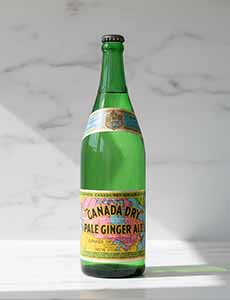
Modern-style ginger ale was born in 1907 when a Canadian, John McLaughlin, owner of a Toronto soda water since 1890, invented Pale Dry Ginger Ale (which became Canada Dry).
He eschewed the dark, sugary, ginger ales and created a light dry version the color of Champagne. As a soft drink rather than a tonic, consumers preferred it and the dry style became the current style.
It was available in two versions: dry ginger ale, the style of modern ginger ale—pale color, mellow ginger flavor—and golden ginger ale, with a much deeper ginger flavor and golden color.
A Boost During Prohibition
During Prohibition (1920 through 1933), American bartenders mixed bootleg whiskey with ginger ale to mask the burn and cover up the aftertaste of bathtub gin and other poorly distilled alcohol.
Today, the golden style—deeper color and flavor—survives as non-alcoholic ginger beer. While modern ginger beers do have a touch of alcohol from the fermentation, they are categorized as non-alcoholic drinks in the U.S. because their alcohol content is less than 0.5% (this meets FDA requirements for a non-alcoholic beverage).
Ginger ale was the most popular soft drink in the U.S. until the 1930s, when it was surpassed by Coca-Cola (first was bottled for distribution in 1899).
But it continues to be a popular cocktail mixer.
The Artisan Movement
In 1989, Chris Reed launched the artisan ginger ale movement with a ginger beer recipe that used fresh ginger root pieces instead of artificial flavoring, and reintroducing traditional, small-batch brewing methods to a market that had been (and is) dominated by mass-produced, artificially flavored sodas for decades.
Before Reed’s, the “Big Three” (Schweppes [founded 1870], Canada Dry [904], and Seagram’s [1834]) had moved almost entirely toward the “Pale Dry” styles, and used ginger extracts or artificial flavorings instead of real ginger.
In 1987, Reed began to research old Jamaican recipes that used massive amounts of fresh ginger root, honey, and fruit juices instead of high-fructose corn syrup and “natural flavors.” (His recipe uses honey and pineapple juice).
Reed’s ginger ale was a radical departure from the clear, fizzy sodas consumers were used to. He began to selling it in Los Angeles health food stores, and Americans with picky palates took notice.
Today, Reed’s is joined by Boylan’s, Bruce Cost, Bundaberg, Dry Botanical Bubbly (formerly Dry Soda), Fever-Tree, GuS, Maine Root, Q Mixers, and Virgil’s, among others.
(Among these brands, those that make both ginger ale (a clear ginger soda) and ginger beer (a spicier/brewed version) are Bundaberg, Fentiman’s, Fever-Tree, Maine Root, Reed’s, and Virgil’s.)
For the next National Ginger Ale Day, March 13th, why not host a ginger ale tasting party?
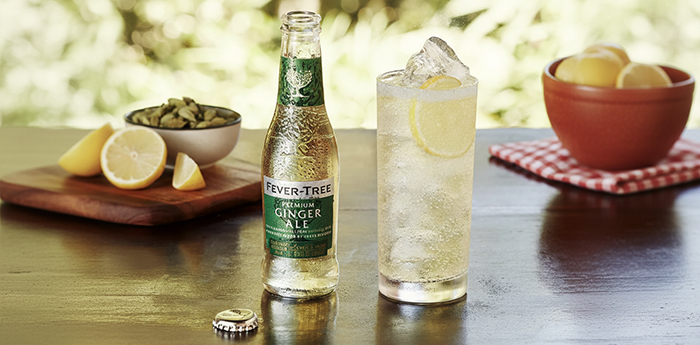
[7] Another of our favorite ginger ale brands is Fever Tree, but it’s made in smaller bottles as cocktail mixers (photo © Fever Tree).
GINGER ALE & GINGER BEER: THE DIFFERENCE
The main differences between today’s ginger ale and ginger beer are the sweetness and spiciness.
Ginger beer is less sweet than ginger ale, and has a sizzling ginger kick. The spicier ginger beer provides a bite to cocktails and food pairings (any spicy or highly-seasoned foods, as well as foods with sweet glazes and sauces like barbecue or glazed ham). The lighter ginger ale provides more sweetness and effervescence as a soft drink or cocktail mixer.
Production processes differ. Ginger beer is brewed (naturally fermented), a reason for the higher price. Ginger ale is a soft drink made from flavored carbonated water.
Historically, both were fermented. Today only ginger beer is fermented, a reason for the higher price.
The natural fermentation of ginger beer yields less carbonation.
Ginger beer can have a beer-like head when poured into a glass.
Now, the exception: Some artisan soft drink makers, including Reed’s Original Ginger Brew in the U.S. and Fentinman’s in England, ferment their soft drinks for more flavor and complexity.
Will this become a trend? Stay tuned?
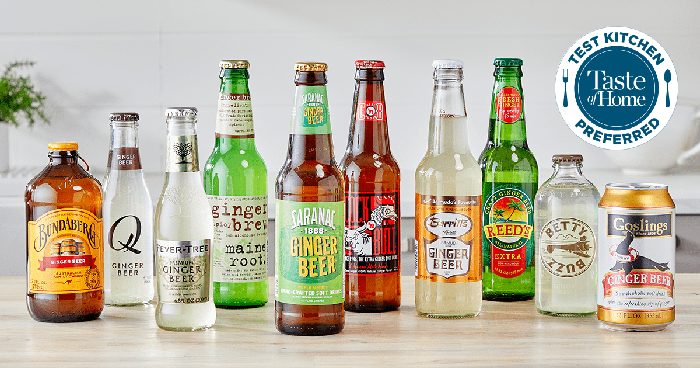
[8] The best ginger beers from a Taste Of Home tasting (photo © Taste Of Home).
CHECK OUT WHAT’S HAPPENING ON OUR HOME PAGE, THENIBBLE.COM.
|