THE NIBBLE BLOG: Products, Recipes & Trends In Specialty Foods


Also visit our main website, TheNibble.com.

RECIPE: Caprese Breakfast Sandwich For National Sandwich Month


[1] Open-face Caprese sandwich for breakfast or brunch (photos #1 and #4 © Stella Cheese).

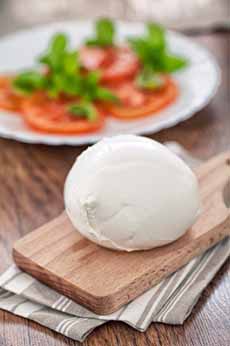
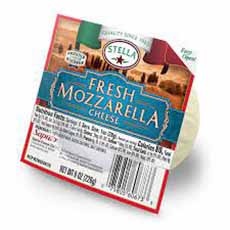
Ball Of Mozzarella
[2] Mozzarella, tomatoes and basil are the components of “everything” Caprese. Check out the recipes (photo © S Vario Photo | Panther Media).


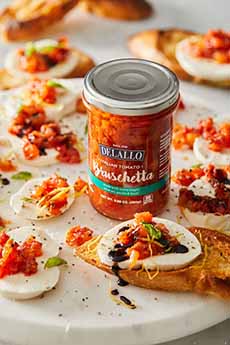
[3] The same concept turns into crostini for snacks or cocktails. Here’s the recipe (photo © DeLallo).


[4] Thanks to Stella Mozzarella for the breakfast sandwich recipe.


August is National Sandwich Month.

Usually, we head to our Sandwich Glossary and pick a different type of sandwich each time we make one.

Go beyond the everyday tuna or grilled cheese to something more celebratory, bánh mì or a Croque Monsieur?

With the beautiful summer tomatoes at hand, we’re adding them to every type of sandwich.

Here, an open-faced sandwich for breakfast or brunch—although you can have one any time.

Think of it as a variation of Eggs Benedict or a sophisticated Egg McMuffin.

If you’d rather have a more conventional sandwich, make a:

  • Classic Caprese Sandwich
  • Grilled Cheese Caprese with Balsamic Syrup Drizzle
  •  
    And check our:

  • The History Of The Sandwich
  • The History Of The Caprese Salad
  •  
     
    RECIPE: CAPRESE BREAKFAST & BRUNCH SANDWICH

    Ingredients For 4 Open-Face Sandwiches

  • 2 English muffins (makes 4 sandwiches)
  • 1 tomato
  • 1 ball fresh mozzarella
  • 4 eggs
  • 2 tablespoons white vinegar
  • Fresh basil
  • Balsamic Vinegar
  • Black pepper
  •  
    Preparation

    1. THINLY SLICE the tomatoes and mozzarella. Lightly toast the English muffins (this can be done while you continue prepping).

    2. POACH the eggs: Add a few inches of water to a cooking pot and bring to a light simmer. Add the white vinegar and swirl lightly.

    3. CRACK the eggs and slowly guide them into the swirling water. Allow them to cook for 2-3 minutes (the whites should be firm but flexible when removed).

    4. REMOVE the eggs from the pot with a slotted spoon and carefully air-dry them on paper towels.

    5. TOP one side of the toasted English muffins with a slice of mozzarella, tomato and poached egg. Add the basil, and lightly drizzle with balsamic. Garnish with a grind of black pepper.
     

    MORE CAPRESE RECIPES

    It’s more than salad. How about Caprese sandwiches and pasta?

  • Artistic Caprese Salads
  • Caprese Pasta Salad
  • Caprese Sandwich
  • Deconstructed Caprese Salad
  • Goat Cheese Caprese Salad
  • Grilled Cheese Caprese with Balsamic Syrup Drizzle
  • Mango Caprese Salad
  • “Martini” Caprese Salad
  • Mixed Heirloom Caprese Salad
  • Plum Caprese Salad
  • Summer Caprese Salad With Flowers
  • Tofu Caprese Salad
  • Tuna Salad Caprese Sandwich
  • Watermelon Caprese Salad
  •  


    Comments off

    TIP OF THE DAY: Easy Homemade Strawberry Jam & Blueberry Preserves

    For those who like the idea of homemade jam but have never wanted to undertake the labor to make it:

    This tip’s for you!

    These fresh quick jam recipes—Strawberry Jam and Blueberry Preserves—came to us from Anson Mills, purveyor of organic heirloom grains: the finest grains, flours, grits, rices beans and peas we’ve ever had (check them out).

    They recipes below make “fresh” jam because they have no pectin or other gelling agent, and aren’t sterilized in jars to preserve them.

    They’re “quick” because they take just 45 minutes to make.

    “They’re is so much tastier than a jar of [conventional homemade] jam,” says Anson Mills.

    “We wonder why anyone goes through the labored orchestration of traditional jam.

    “Fantastically perfumed, lightly jelled, perfectly balanced with bright berry acid and sweetness, this jam is great on ice cream, yogurt, in hand pies, or on toast.”

    All you need are:

  • A digital kitchen scale
  • A 4.5-quart Dutch oven
  • A digital instant-read thermometer
  • A glass container or jar with lid for storing the jam
  • Strawberries or blueberries, lemon juice and sugar
  •  
     
    > Jam, Jelly, Marmalade, Preserves & Other Spreads: The Difference
     
     
    RECIPE #1: FRESH STRAWBERRY JAM

    Ingredients

  • 1½ pounds slightly underripe or just ripe strawberries, rinsed, dried, and hulled, large berries halved
  • Juice of 1 large, juicy lemon*
  • 8 ounces sugar
  •  
    Preparation

    1. COMBINE the strawberries and lemon juice in a 4.5-quart Dutch oven. Cover and bring to a very gentle simmer over medium-low heat, occasionally swirling the pot. Cook until the berries begin go limp and are swimming in juice, about 10 minutes.

    2. ADD the sugar and stir until completely dissolved. Return the mixture to a gentle simmer and continue to cook, uncovered and stirring infrequently—just to check for sticking—until the jam registers 221° to 222°F on a digital instant-read thermometer, 35 to 45 minutes.

    NOTE from Anson Mills: Berry jams are typically cooked to 221°F. While temperature is an excellent guideline, pouring the hot jam into a bowl set on a scale to weigh it provides a more reliable indicator for us. Some jam-makers swear by a wrinkle-test whereby a spoonful of cooked jam is dropped from a spoon onto a frozen plate. If the jam wrinkles as a finger pushes through it on the plate, the jam is done. We tried that, too. It works!

    3. TRANSFER the jam to a glass container or jar with a lid and let cool to room temperature (lid off). Cover and refrigerate for up to 5 days or freeze indefinitely.
     
     
    RECIPE #2: FRESH BLUEBERRY PRESERVES

    The recipe stir 6 ounces of the cooked, strained berries back into the jelly. If all the cooked berries were added back in, the preserves would be too loose. Use the remaining cooked berries in another way; e.g., mix into yogurt, smoothie or shake; serve as a dessert sauce.

    We made blueberry soda by mixing the preserves with club soda.

    Ingredients

  • 1½ pounds blueberries, rinsed, drained, and picked through
  • Juice of 1 large, juicy lemon
  • 5 ounces sugar
  •  
    Preparation

    1. POSITION a fine-mesh strainer over a heavy-bottomed medium saucepan and set aside.

    2. COMBINE the blueberries and lemon juice in a 4.5-quart Dutch oven. Cover, bring to a simmer over medium-low heat, and cook until the berries go limp and are swimming in juice, about 5 minutes, stirring once or twice. Pour the berries into the strainer and let the juices drip into the saucepan for 15 minutes without pushing on the fruit.

    3. MOVE the strainer with the berries to rest atop a medium bowl to collect additional drips. Bring the juices in the saucepan to a simmer over medium-high heat, add the sugar, and stir until completely dissolved. Cook uncovered, stirring occasionally to check for sticking and adding newly collected juice from the berries to the pot, until the jelly registers 221°F on an instant-read digital thermometer and weighs 9 to 10 ounces when poured into a bowl on a digital scale, about 10 minutes.

    4. STIR 6 ounces of the strained blueberries into the jelly. Transfer to glass container or jar with a lid. Let cool completely, cover; refrigerate for up to 5 days, or freeze indefinitely.
     
     
    © Copyright Anson Mills 2020. All Rights Reserved.


    [1] Homemade jam in 45 minutes (photos #1, #2, #3, #4 © Anson Mills)!


    [2] Beyond toast: Spoon it on oatmeal, pancakes,ice cream and other desserts.

    Fresh Strawberries
    [3] Look for firm, just-right strawberries. This isn’t a recipe to use up overripe fruit.


    [4] Who needs the toast? You’ll want to eat it from the jar.

    Carton Of Blueberries
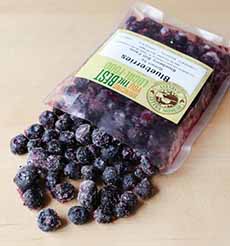
    [5] Use fresh, not frozen, berries.


    [6] Top ice cream or sorbet (photo © MS Photographic | iStock Photo

     
    ________________

    *Get more juice from a lemon by heating it whole in the microwave for 10 to 20 seconds. No microwave? Roll it on the counter under heavy pressure from your palm. In either case, a room temperature lemon is best.


    Comments off

    TIP OF THE DAY: Serve Multiple Sauces With Filet Mignon (Or Other Steak Cut)

    August 13th is National Filet Mignon Day.

    The simplest way to garnish a steak is with a pat of butter, or a compound butter like blue cheese butter, garlic herb butter or truffle butter (photo #2).

    While we’re fine with steak sauce with a sirloin steak, a tender, subtle cut like filet mignon benefits from a more complicated preparation like mustard sauce, red wine sauce (photo #3) or mushroom sauce (photo #4)?

    Add Dijon mustard to taste for a Dijon sauce, add a bit of cream for a cream sauce.

    We’ve even tried it with creamy parmesan sauce (our suggestion is to save this preparation for a less expensive cut, like sirloin).

    But we actually like the “more is better” approach, and serve grilled filet mignon and other cuts of steak with three or four sauces (photo #5).

    Different bites, different experiences.

    Don’t want a sauce, per se? Use a topping:

  • Really plain: minced chives or parsley, cracked black pepper on the side
  • Caramelized onions
  • Fresh baby arugula or watercress
  •  
     
    WHAT IS FILET MIGNON?

    The most tender cut of beef comes from the small end of the tenderloin, inside the rib cage of the steer. It accounts for less than 1% of the entire carcass (see the small red triangle on image #6).

    That’s why it’s so expensive.

    The tenderloin runs across the back of the steer. Because this area of the animal is not weight-bearing, the connective tissue is not toughened by exercise. This results in extremely tender meat.

    Filet mignon is lightly marbled and mild flavored compared to other cuts, and is best served rare to medium rare.

    Boneless, it is ideally 2-1/2 inches thick (although it is sliced thinner) and 1-1/2 to 3 inches in diameter.

    The term “filet mignon” is a French term. The literal meaning is small, cute or dainty (mignon) boneless slice (filet).

    Chateaubriand is the center, thickest cut from the tenderloin, and a specific preparation.

    Filet mignon can also be served raw, as carpaccio.

    On restaurant menus it is called filet mignon, tournedos, medallions, filet de boeuf and tenderloin steak.

    But the term filet mignon is not used in France!

    It was invented in 1906 by O. Henry (William Sydney Porter) in his book, The Four Million.

    Some Other Names For Filet Mignon

  • Argentina: bife de lomo
  • Australia, New Zealand: eye fillet
  • Brazil: filé mignon
  • Dutch: haasbiefstu, ossenhaas
  • English (U.S.): medallions, tenderloin steak
  • English (UK, Ireland): fillet steak
  • English (Australia, New Zealand): eye fillet
  • French: filet de boeuf, tournedos (the entire center-cut tenderloin is the dish known as Chateaubriand)
  • French (Québec): filet mignon
  • Ireland, South Africa: fillet steak
  • Italian: filetto
  • Norwegian: indrefilet
  • Portuguese: filé or filé mignon
  • Puerto Rico: filete miñón
  • Spanish: filete miñón or filet mignon
  • Swedish: oxfilé
  •  
     
    > Check Out The Different Cuts Of Beef In Our Beef Glossary


    [1] Filet mignon naked, waiting of a sauce or garnish (photo © Chianina Steakhouse | Long Beach).


    [2] Filet mignon with truffle butter (photo © Eddie Merlot’s).


    [3] Filet mignon in red wine sauce (photo © Palm Restaurant | New York City).


    [4] Make a mushroom sauce, or add mushrooms to the red wine sauce. Mushrooms and filet mignon are a perfect pairing (photo © Bagatelle Restaurant | New York City).


    [5] Fun food: a choice of sauces for dipping (photo © Fleming’s Steakhouse).


    [6] See the little red triangle? That’s the filet mignon (image © Joe Smack | Wikipedia).
      

    Comments off


    © Copyright 2005-2026 Lifestyle Direct, Inc. All rights reserved. All images are copyrighted to their respective owners.