THE NIBBLE BLOG: Products, Recipes & Trends In Specialty Foods


Also visit our main website, TheNibble.com.

PRODUCT: Cassoulet Beans For A Summer Cassoulet


[1] A summer cassoulet made with corn and summer squash. The recipe is below (both photos © Rancho Gordo).


[2] Tarbais beans are perfect for cassoulets—so much so that Rancho Gordo calls them “cassoulet beans.” Get them at RanchoGordo.com.


[3] In attractive packages, Rancho Gordo beans are welcome gifts for your favorite cooks.

Summer Squash & Zucchini
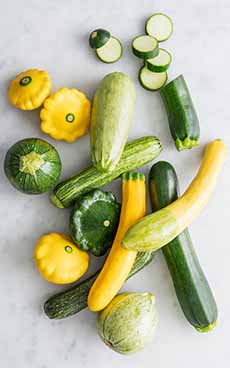
[4] Use zucchini, yellow squash, or a combination (photo © Good Eggs).

Removing Corn Kernels From The Cob
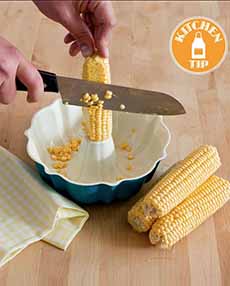
[5] The easiest way to remove kernels from the cob is to place the cob in an Bundt pan (photo © Hidden Valley).

Cassoulet With Chicken, Sausage, & Bacon
[6] A classic winter cassoulet with chicken, sausage and bacon, at Church & State in Los Angeles (photo © Church & State).


[7] A deconstructed gourmet cassoulet, here with a duck breast and duck sausage. Instead of everything served from a cassoulet dish, the components are cooked separately (at Rebelle restaurant in New York City, photo © Rebelle).


Most of us think of cassoulet as a winter dish, chock full of hearty meats like duck, pork, sausage and beans (photo #6).

The most famous bean for a traditional cassoulet but versatile enough to become an everyday favorite.

The recipe below (photo #1) is a summer version that uses a different bean. Here’s the story, from Steve Sando, America’s rare bean guru and proprietor of Rancho Gordo beans.

“I first enjoyed French Tarbais beans [from Tarbes, France] made by the great Paula Wolfert.

“I had been recommending flageolet, another great French legume, for the dish, cassoulet.

“It turned out that Tarbais and Flageolet are very different. You can make a cassoulet with the Flageolet but the Tarbais has thinner skin and all the ingredients involved with this slow-cooked masterpiece seem to get along better with the Tarbais.”

It was a revelation. Sando acquired seeds from Tarbes to grow in California (photo #2).
 
 
THE CASSOULET BEAN

Out of respect for the terroir* and the French farmers, he re-christened them as Cassoulet beans.

“They are delicious on their own and it would be a shame to save them only for cassoulet,” says Sando. “My favorite Bean Buddy (and co-author of The Rancho Gordo Vegetarian Kitchen), Julia Newberry, came up with the following dish, perfect for your Cassoulet beans and your finest summer crops.

In addition to casseroles, Tarbais beans are also excellent for baked beans and pot beans; and in dips, fagioli, salads and soups.

In fact, every bean sourced by Rancho Gordo delivers a superior flavor and performance.

We give bags (photo #3) as gifts. But note: When a particular bean sells out, it won’t be available until the next harvest.
 
 
RECIPE: BAKED CASSOULET BEANS
WITH SUMMER SQUASH & CORN

This recipe from Julia Newberry uses some optional pancetta or bacon for a smoky flavor. It is easy to adapt to a vegetarian or vegan dish.

After you cook the beans, which you can do the day before, the dish comes together in under an hour.

Here’s how Rancho Gordo recommends that you cook the beans.
 
Ingredients

  • 2 tablespoons butter or olive oil, plus more for topping
  • 1 cup fresh breadcrumbs (crusty bread torn into small chunks or cut into cubes)
  • 1 large tomato, sliced, plus 1 cup cherry tomatoes
  • 1/2 pound summer squash, very thinly sliced
  • 2 cloves garlic, minced
  • 1 teaspoon lemon zest, plus more for finishing
  • Salt and freshly ground pepper
  • 2 ears of corn, kernels removed
  • 3 to 4 cups cooked Rancho Gordo Cassoulet [Tarbais] beans, drained, some cooking liquid reserved
  • Optional: 4 ounces pancetta or bacon, chopped
  • Grated pecorino or parmesan cheese
  • Minced fresh mint or basil
  •  
    Preparation

    1. PREHEAT the oven to 350°F. Lightly grease an ovenproof gratin dish.

    2. MELT the butter in a small skillet over medium-high heat. Add the breadcrumbs and stir, frying until light golden. Set aside.

    3. ARRANGE the tomato slices so they cover the bottom of the dish. Add a layer of squash slices, then top with corn kernels and cherry tomatoes. Save about one-fourth of the squash, corn and cherry tomatoes for the top layer.

    4. SPRINKLE the first squash layer with the minced garlic, lemon zest, and salt and pepper to taste. Add a layer of beans on top of the vegetables. Pour about 1/4 cup of bean broth over the beans (just enough to wet them).

    5. ADD another layer of squash, corn and cherry tomatoes. Top with the breadcrumbs and pancetta. Drizzle with olive oil or, if you prefer, dot with butter.

    5. BAKE for about 30 minutes, until the breadcrumbs are golden and the squash is tender. Before serving, drizzle with a bit more olive oil (or a few more dots of butter) and dust with a generous amount of cheese, fresh herbs and more lemon zest.

    NOTE for pressure cooker users: Cook the unsoaked beans in an Instant Pot for 40 minutes, with natural pressure release (NPR).
     
     
    MORE CASSOULET RECIPES

  • Cassoulet Au Canard (Duck Cassoulet)
  • Chicken & Sausage Cassoulet
  • Pork Cassoulet
  • Toulouse-Style Cassoulet
  •  
     
    > The History Of Cassoulet
     

    THE HISTORY OF BEANS

    Beans are a genus in the Fabaceae family, which is commonly known as the legume, pea, or bean family.

    In addition to beans, chickpeas, peas and soybeans, the family includes other foods such as alfalfa sprouts, carob, licorice and peanuts (plus, numerous non-foods).

    Beans are one of the earliest-cultivated plants and have been a staple food and an important source of protein from pre-history onward.

    They can be dried and stored for years, maintaining their nutrition and ensuring there would be food during lean times.

    Nutritious, beans are rich in complex carbohydrates, fiber, folate, and iron and protein.

    While beans no doubt grew wild for many millennia, the earliest archaeological evidence to date, from Thailand, shows that beans were cultivated almost 12,000 years ago(carbon dated to 9750 B.C.E.).

    Evidence also suggests that the native people of Mexico and Peru were cultivating bean crops as far back as 7000 B.C.E.

    But before cultivation in the West, around 7000 B.C.E., wild broad beans (fava beans), were gathered in Afghanistan and the Himalayan foothills—the size of a small fingernail.

    These Old World beans were not cultivated until the second millennium B.C.E. At that time, large-seeded broad beans appear in the Aegean, Iberia and transalpine Europe.

    About the same time, beans found at an archaeological site in Peru showed that beans appeared everywhere from Asia to Europe and the Americas. everywhere and where one of the staple foods of the early peoples [source].

    The early farmers who grew beans also grew grains (barley, corn, millet, rice or wheat).

     
    Beans and grains have a symbiotic nutritional relationship, in which the amino acids of each complement the other so as to form a complete protein.

    This is why, even in the absence of animal proteins in the diet, the combination provides the foundation for human growth and development.

    In addition to everyday folk, beans were enjoyed by the elite: They were buried with the kings of ancient Egypt.

    In 17th-century America, When the first colonists arrived, Native Americans taught them to grow beans together with corn so the bean plants could climb the corn stalks.
     
     
    TYPES OF BEANS

    There are many different types of beans grown worldwide—from soybeans initially from Asia to ceci beans (chickpeas) from the middle east to Phaseolus vulgaris, also known as the common bean and French bean, which is native to Mesoamerica†.

    Beans are now grown on every continent, except Antarctica.

    New World varieties include black beans, cranberry beans, kidney beans, lima beans, navy beans, pinto beans and many others.

    > Check out our Bean Glossary

    ________________

    *Terroir, pronounced tur-WAH, is the French word for soil, land or terrain. It can be loosely translated as “a sense of place,”the sum of the effects that the environment has on the creation of what is grown there. It has long been used in wine and coffee analysis to denote the special characteristics of soil, climate, weather, geology, aspect (how many hours it gets direct sunlight, e.g.) and altitude that give the grape or bean its individuality. The term is now being used, appropriately, to describe other agricultural products.

    The original Tarbais bean is a New World bean and most likely originated in Mexico. The Tarbais beans were developed by generations of farmers in Tarbes, France. Once it was cultivated there, it expressed the characteristics of its particular terroir (soil, climate, etc.). Given that Rancho Gordo’s beans are grown in a California terroir, they decided to call it the Cassoulet Bean to avoid confusion (and price—imported Tarbais beans are much more expensive).

    †Three native Mesoamerican crops, beans, corn (maize) and squash, constitute the “Three Sisters” crops that were central to indigenous North American agriculture.

    ‡In Roman antiquity, this was Gallia Transalpina, the land bounded by the Alps, the Mediterranean, the Pyrenees, the Atlantic, and the Rhine. It included what is now France and Belgium, along with parts of Germany, the Netherlands and Switzerland.


    Comments off

    TOP PICK OF THE WEEK: Mionetto Prosecco

    While the third week in July is National Prosecco Week, August 13th is National Prosecco Day.

    Prosecco, a sparkling wine, is our favorite summer wine—and a good year-round sparkler, taking its place among the world’s noteworthy sparkling wines.

    Light, fizzy, balanced with a layers of sweet fruit, it’s a good white wine to serve as an apéritif or throughout the meal. Drink it chilled but not ice-cold.

    Prosecco is the original base for sparkling cocktails like the popular Aperol Spritz and Bellini.

    We think it’s a better base for a Mimosa than the original champagne‡.

    Our go-to prosecco is Mionetto, a brand with a delicious and affordable basic wine and varieties from organic to rose to tête de cuvée (a French word meaning “top blend,” the winery’s best [and costliest]).
     
     
    ABOUT MIONETTO PROSECCO

    Mionetto was founded in 1887 by winemaker Francesco Mionetto in Valdobbiadene in the Prosecco region of the Veneto.

    Veneto is region in northeastern Italy that stretches from the Dolomite Mountains to the Adriatic Sea. The regional capital is Venice.

    Mionetto is one of the areaʼs oldest wine producers. But more noteworthy, itʼs the only Prosecco producer to bottle its wines on demand, only when orders come in.

    For a wine variety that shows best when its flavors and aromas are freshest, this is a boon. (NOTE: Don’t age Prosecco—it’s ready to drink when you buy it.)

    Another first: Mionetto Organic was the first Prosecco made from organically-grown grapes.

    The winery makes four different collections. The Prestige Collection, the classic line, includes:

  • Prosecco DOC* Treviso Brut, the classic line in a black bottle with an orange label ($13.99)
  • Prosecco DOC* Organic Extra Dry ($15.99)
  • Prestige Rosé Extra-Dry ($15.99)
  • Prestige Moscato Dolce, a dessert wine ($12.99)
  •  
    The largest bottling is DOC Treviso Brut (photo #5), made from 100% glera grapes (glera is the main grape of Prosecco).

    This wine delivers aromas of golden apples, honey and white peaches, with well-balanced acidity and a clean, dry finish.
     
    There is a Luxury Collection of Valdobbiadene Prosecco Superiore DOCG Extra Dry and Cartizze† DOC Dry, priced at $20.99 and $34.99.

    Here are all the bottlings available in the U.S.
     
     
    PROSECCO FOOD PAIRINGS

    Because of the bright acidity and the abundance of bubbles, Mionetto sparkling wines cut right through rich, salty foods making them a perfect partner for:

  • Light bites like cheese and charcuterie boards, olives, almonds (stuffed mushrooms are great here)
  • Pizza and flatbreads
  • Pasta or anything with salty cheeses like parmesan
  •  
    Prosecco’s delicate flavors enable it to pair well with lighter fare, including fish and shellfish:

  • Oysters on the half shell, seafood platters and dishes
  • Sushi, sashimi and crudo
  • Caviar
  •  
    It is also a wine that pairs well with spicy foods, including Chinese, Indian, Thai and other Asian cuisines.

    And because of its lightness and high acidity, it can easily be drunk with a vinaigrette-dressed salad.
     
     
    PARTY TIME!

    Taste The Line

    For a simple tasting, gather as many expressions (different types) of Mionetto prosecco and compare them. Serve them with cheeses, charcuterie and olives.

    We especially like tasting the different styles during brunch. They pair well with eggs, frittatas, quiche, even dim sum, bagels and cream cheese.

    Cocktail Party

    Set up a DIY tasting bar. Guests can taste the Prosecco plain, then turn it into a cocktail with:

  • Spirits: gin, tequila, vodka
  • Liqueurs: Chambord, creme de cassis, Grand Marnier, Limoncello or other fruit liqueur
  • Juices: grapefruit, orange, pomegranate
  • Garnishes: apple or peach slices, berries, orange peel, pomegranate arils, rosemary or thyme sprigs, etc.
  •  
     
    PROSECCO TRIVIA

  • There are 49 billion bubbles in a bottle of Mionetto.
  • The cork pops at a speed of 25MPH.
  • Prosecco has fewer calories than most other wine—especially Mionetto, since itʼs one of the driest Proseccos.
  • Prosecco is not always bubbly. It can be made in sparkling, semi-sparkling, or still, but all Mionetto Proseccos are sparkling or semi-sparkling.
  •  


    [1] Serve prosecco with hors d’oeuvre, appetizers, or anywhere a white wine is called for (all photos © Mionetto).


    [2] Add sliced apples to a green salad and serve with Prosecco.


    [3] Prosecco loves pasta dishes, especially those with seafood or vegetables. Here, it’s paired with Linguine With Clam Sauce.


    [4] Prosecco is very friendly to spicy foods—Chinese, Indian and Thai, for example).


    [5] Snack on apples, peaches and other fruits with a glass of Mionetto. Here, a perfect pairing, since apples and peaches are flavors that naturally occur in prosecco.


    [6] Similarly, you can serve it with a simple fruit dessert. Prosecco’s Moscato Dolce is also terrific with dessert.


    ________________

    *Under Italian wine law, DOCG (Denominazione di Origine Controllata e Garantita, or Denomination of Controlled and Guaranteed Origin) is the highest designation of quality. The second-highest is DOC (Denominazione di Origine Controllata, or Denomination of Controlled Origin). They also specify the region where the wine must be made, and the grapes they can be made with. This does not mean that wines without a DOC label are not excellent, such as Mionetto’s rosé and moscato. Rather, it means that the historic laws governing the region do not cover wines made in those styles. (However, producers are lobbying to enable rosé prosecco to be considered for DOC labeling).

    †Cartizze, made by several producers, is vinified from the grapes of the top terroir in Prosecco: a perfect combination between terroir, micro-climate, viticulture and winemaker’s craft.

    ‡The orange juice covers up the toasty qualities that make champagne a premium-priced wine.


    Comments off

    TIP OF THE DAY: Try A Different Variety Of Apple For National Apple Week

    Updated August 2026

    Apples’ durability is a marvel of nature. Harvested in from July through October, most apples are then put into a controlled climate, awaiting release through the year.

    That’s why you can purchase numerous types of apples year-round. During the off seasons, you’re actually buying apples that are up to a year old, and you barely notice (and that’s why in the spring and early summer, they may taste a bit less than prime [source]).

    That’s why you can purchase numerous types of apples year-round. During the off seasons, you’re actually buying apples that are up to a year old, and you barely notice (and that’s why in the spring and early summer, they may taste a bit less than prime [source]).

    National Apple Week begins the second Sunday of the first full week in August*.

    Our tip: Try a different type of apple than your regular two or three favorites.

    You might have to look beyond your supermarket to farmers markets, but it’s well worth your time.

    Below:

    > The year’s apple holidays.

    > New apple varieties.

    > A brief history of apples.

    > Apple recipes “beyond the pie.”

    > Apple trivia.

    Elsewhere on The Nibble:

    > The top 10 apple varieties.

    > The history of apples.
     
     
    THE YEAR’S APPLE HOLIDAYS

    > National Johnny Appleseed Day is March 11th and also September 26th.

    > National Apple Pie Day is May 13th.

    > National Sugarbee Apple Day is May 20th.

    > National Applesauce Day is June 6th.

    > National Apples Strudel Day is June 17th.

    > National Apple Turnover Day is July 5th.

    > National Apple Week: Second Sunday in August.*

    > National Apple Dumpling Day is September 17th.

    > National Eat An Apple Day is the third Saturday in September.

    > National Apple Month is October.

    > National Applejack Month is October.

    > National Apple Betty Day is October 5th.

    > National Apple Day is October 21st.

    > National Caramel Apple Day is October 31st.

    > National Eat A Red Apple Day is December 1st.
     
     
    NEW APPLE VARIETIES

    Breeders are always seeking the next great thing: an apple that will capture the hearts and palates of consumers.

    New apples arrive are created regularly, but only a small number become widely available, recognizable supermarket varieties. A major, nationally marketed variety tends to emerge every few years.

    “Club apples”, the name for cultivars grown and sold under controlled licenses and branding—have accelerated the number of new apples consumers see, though many remain regional and/or seasonal.
     
     
    It Takes A Long Time To Develop A New Apple

    Developing a new apple is a slow process: A breeder makes a cross, evaluates seedlings, tests the most promising selections in orchards and different climates, then growers plant enough trees for commercial volume.

    That commonly takes 15–25 years, sometimes longer, between when a new cultivar is bred and when it is released to consumers. For example, Cosmic Crisp was first cultivated by Washington State University in 1997 but didn’t appear in the national marketplace until the end of 2019. Honeycrisp, a parent of Cosmic Crisp, was created in 1960 at the University of Minnesota but not released until 1991.


    [1] Cosmic Crisp is our new favorite apple. Its name comes from the yellow dots (lenticels) on the skin, which hint at stars in the night sky (photo © Proprietary Variety Management).

    A Bowl Of Opal Apples, A Yellow Variety
    [2] Opal apples, a cross between Golden Delicious and Topaz, were bred in the Czech Republic (photo © Golden Sun Marketing).


    [3] RubyFrost: sweet and tart, crisp and crunchy. Eat it or bake it (photo © Crunch Time Apple Growers | Matt Wittmeyer).


    [4] America’s top-selling apples (chart © U.S. Apple).

     
    Why does apple breeding take so long? It’s a lot of trial and error: planting trees, waiting for fruit to grow, and repeating until the ideal result is achieved.

    New apples arrive every year, but only a small number become widely available, recognizable supermarket varieties. A major, nationally marketed variety tends to emerge every few years.

    Beyond the familiar Delicious, Gala, Granny Smith, and Honeycrisp of our youth, recent years have introduced newer varieties of America’s favorite fruit.

    These branded and trademarked varieties were bred to be eating apples, also known as dessert apples and table apples. Growers pay to license the seeds each year.

    “Club apples” is the industry name for cultivars grown and sold under controlled licenses and branding.

  • Jazz, a New Zealand-bred cultivar named Scifresh, a cross of Braeburn × Royal Gala, sold under the Jazz brand. On the market since the mid-2000s, it’s now an established international “club apple.” It was bred for a dense, very crisp texture and a lively sweet-tart, rather than merely sweet, flavor—a firm, crisp apple intended for snacking.
  • Juici is a Honeycrisp × Braeburn cross, developed in Washington State. It combines Honeycrisp’s juicy crunch with Braeburn’s firmer, more balanced sweet-tart character. Its flavor is more complex than Honeycrisp, with great crunch. It can also be baked.
  • Opal, a yellow apple developed in the Czech Republic, is a cross between Golden Delicious and Topaz. More flavorful than the Golden Delicious, is also naturally slow to brown.
  • Piñata is the North American brand name for the German-bred cultivar Pinova, a cross between Cox’s Orange Pippin, Duchess of Oldenburg and Golden Delicious. It’s targeted to people who like Fuji and Gala varieties: a firm, juicy, tangy apple with an unusually fruity, sometimes pineapple-like finish. A sweet-tart profile with tropical notes it’s a late-season apple. For a bit of consumer confusion, it’s also marketed as Corail, Pinova, and Sonata. Excellent for pies, crisps, cakes, and tarts, it has firm flesh and enough tartness to retain its character under heat. It is one of the strongest all-purpose baking choices among the newer apples.
  • RubyFrost is newer than Jazz and Piñata, but it has been established for more than a decade. It was developed by Cornell University and is a Braeburn × Autumn Crisp cross. A late-season/winter apple commonly available from roughly January into spring, its principal market is New York and the Northeast.
  • Cosmic Crisp is the most recent to achieve large-scale success. It was bred at Washington State University, a Honeycrisp × Enterprise cross. An easier-to-grow alternative to Honeycrisp, it’s a cross between Honeycrisp and Enterprise apples. It’s super crunchy, sweet-tart in flavor, and—a big “plus”—it’s slow to brown. It entered commercial sales in 2019 and expanded extremely quickly to an established, broadly distributed variety.
  •  
    Other New Varieties To Look For

    Availability varies enormously by region and food chain, but these are among the more distributed modern varieties:

  • EverCrisp, a Honeycrisp × Fuji cross; very crisp, sweet, and juicy, with a longer season than Honeycrisp in many markets.
  • Kissabel, a family of red- or pink-fleshed apples that is still an emerging category entering broader commercial distribution.
  • Koru, a New Zealand-bred apple, typically sweet, crunchy, and low in acidity.
  • Lucy Glo and Lucy Rose are modern red-fleshed apples, respectively tart-bright and sweeter, developed partly for their beguiling pink-to-red interior color as well as eating quality.
  • SnapDragon, a Cornell-developed New York apple, notable for its crisp texture and sweet, spicy flavor..
  • SugarBee is a branded variety with a very sweet, honeyed profile and firm crunch. It was a chance mutation discovered in a Minnesota orchard as a chance seedling in the 1990s, with the distinctive, grown tree noticed later in the orchard. One parent is the Honeycrisp, the other variety, whose pollen was carried by a honeybee, remains unknown.
  • SweeTango is a Honeycrisp × Zestar! cross bred in Minnesota, known for a very crisp bite and bright sweet-tart flavor. Yes, the exclamation point is part of its trademark! Its marketing season is often relatively short.
  •  
     
    APPLE HISTORY

    Apples, seemingly the all-American fruit, actually originated in Central Asia: in southern Kazakhstan, Kyrgyzstan, Tajikistan and Xinjiang, in northwest China.

    Apples were introduced to North America by colonists in the 17th century. The first apple orchard on the continent was planted in Boston in 1625, by Reverend William Blaxton.

    > Here’s more comprehensive history of apples.
     
     
    APPLE RECIPES “BEYOND THE PIE”

    Apples require no cooking to be enjoyed as hand fruit, with cheese, sliced into green salads and fruit salads, diced into a yogurt parfait, apple slaw, apple salsa, and yesterday’s pickled apples recipe.

    But when you’re ready to head to the stove or oven, check out:

  • Apple Balsamic Salmon
  • Apple Dumplings
  • Apple Ginger Cole Slaw
  • Apple Pie Oatmeal
  • Apple Sangria
  • Applesauce Cake
  • Apple Streusel Bundt Cake
  • Apple Turnovers
  • Apple Walnut Chutney
  • Caramelized Onion & Apple Galette
  • Classic Apple Crisp
  • Homemade Applesauce
  • Pork Fajitas With Apple Cilantro Salsa
  • Roasted Beet, Avocado and Granny Smith Apple Towers
  • Salted Apple Caramel Cheesecake
  • Sour Cream Walnut Apple Pie
  • Sweet & Spicy Pickled Apples
  • Turkey Salad With Celery Root & Apples
  •  
     
    APPLE TRIVIA

  • Apples are a member of the rose family, Rosaceae, which, in addition to flowering plants, also includes almonds, apricots, cherries, loquats, peaches, pears, plums, quinces, raspberries, and strawberries.
  • More than 2,500 varieties of apples are grown in the United States, 200 commercially (see photo #4 for the Top 10 apples). Only the crabapple is native to North America. Some 7,000 varieties exist worldwide.
  • The top apple producers around the world are China, the United States, Turkey, Poland, and Italy.
  • Apples account for 50% of international deciduous fruit tree production.
  • Seventy percent of American apples are grown in Washington State.
  •  
    ________________

    *According to A Healthier Michigan, the first full week in August is National Apple Week. We can’t find other references for this holiday; it may be a Michigan “thing.” Nevertheless, we’re more than happy to celebrate National Apple Week now. National Apple Month is October and National Apple Day is October 21st.

    †Some popular varieties that do not store well are imported from the Southern Hemisphere, where the seasons are reversed.


    CHECK OUT WHAT’S HAPPENING ON OUR HOME PAGE, THENIBBLE.COM.


    Comments off


    © Copyright 2005-2026 Lifestyle Direct, Inc. All rights reserved. All images are copyrighted to their respective owners.