THE NIBBLE BLOG: Products, Recipes & Trends In Specialty Foods


Also visit our main website, TheNibble.com.

A Blueberry Slab Pie Recipe For National Blueberry Pie Day

For National Blueberry Pie Day, April 28th, how about a slab pie (photo #1)?

A slab pie is a pie that has been sized to fit a rectangular baking pan instead of a round pie pan (it’s been called the pie version of a sheet cake).

Cut into squares or rectangles instead of triangular slices, a slab pie creates more pieces than a standard round pie. It can typically serve twice as many people.

You follow all the same steps as with a regular pie; you just need more crust.

> The history of blueberries.

> The history of pie.

> The history of pie à la mode.

> The different types of pie: a photo glossary.

> How to fix runny fruit pies.

> The year’s 11 blueberry holidays.

> The year’s 31 pie holidays.

> The year’s 35+ berry holidays are below.
 
 
RECIPE: BLUEBERRY SLAB PIE

If you can’t get fresh berries (or they’re too pricey, substitute 2 packages (12 ounces each) frozen blueberries, thawed and drained (about 5 cups).

You can of course make your own crust instead of using store-bought.
 
Ingredients

  • 2 boxes (14.1 ounces) refrigerated Pillsbury™ Pie Crusts (2-count), softened as directed on box
  • 4 cups fresh blueberries (2 pounds)
  • 1/4 cup* plus 2 teaspoons sugar†
  • 3 tablespoons cornstarch
  • 1 teaspoon ground cinnamon
  • 1 teaspoon grated lemon peel**
  • 1 egg, beaten
  • Optional for serving: vanilla ice cream
  •  
    Preparation

    1. PREHEAT the oven to 400°F. Remove 2 of the pie crusts from the pouches, unroll, and stack on lightly floured surface. Roll to a 17×12-inch rectangle.

    2. FIT the crust into an ungreased 15″x10″x1″ pan, pressing it into the corners. Do not trim pie crust edges. (If your baking pan is larger, add more fresh berries to the filling.)

    3. MIX the blueberries, sugar, cornstarch, cinnamon, and lemon peel in large bowl, until well combined. Spoon into the crust-lined pan.

    4. UNROLL and stack the remaining 2 pie crusts on the lightly floured surface. Roll to a 17″x12″ rectangle.

    5. MAKE the lattice top: Cut 1/2″-wide strips with a pastry cutter or knife. Place half of the strips across the pan diagonally. Weave the remaining strips with the first strips to form a lattice. Trim the edges of the strips to be even with edge of bottom crust.

    6. PINCH the edges of crust together to seal, tucking under pastry crust, if necessary. Flute or crimp the edges. Brush with the beaten egg and sprinkle with remaining 2 teaspoons sugar.

    7. BAKE for 35 to 40 minutes or until the crust is a deep golden brown and filling is bubbly. Cool completely, about 1 hour.


    THE YEAR’S 35+ BERRY HOLIDAYS‡

    January

  • January 15: National Strawberry Ice Cream Day
  • January 28: National Blueberry Pancake Day
  •  
    February

  • February: Berry Fresh Month
  • February: Fabulous Florida Strawberry Month
  • February 27: National Strawberry Day
  •  
    March

  • March 10: National Blueberry Popover Day
  • March 21: National California Strawberry Day
  •  
    April

  • April 28: National Blueberry Pie Day
  •  
    May

  • May: National Strawberry Month
  • May 3: National Raspberry Popover Day
  • May 20: National Pick Strawberries Day
  • May 21: National Strawberries and Cream Day
  • May 26: National Blueberry Cheesecake Day
  •  
    June

  • June: Georgia Blueberry Month
  • June 8: National Raspberry Day
  • June 9: National Strawberry Rhubarb Pie Day
  • June 14: National Strawberry Shortcake Day
  • June 25: National Strawberry Parfait Day
  •  
    July

  • July: National Blueberry Month
  • July 7: National Strawberry Sundae Day
  • July 8: National Blueberry Day
  • July 8: National Raspberry Day
  • July 10: Pick Blueberries Day
  • July 11: National Blueberry Muffin Day
  • July, 3rd Saturday: National Strawberry Rhubarb Wine Day
  • July 31: National Raspberry Cake Day
  • July, last Weekend or August, 1st Weekend: Bilberry Sunday (Ireland)
  • August 1: National Raspberry Cream Pie Day
  •  
    August

  • August 7: National Raspberries N’ Cream Day
  • August 10: National Raspberry Bombe Day
  • August 11: National Raspberry Tart Day
  •  
    September

  • September 2: National Blueberry Popsicle Day
  • September 12: National Blackberry Day (U.K.)
  • September 28: National Strawberry Cream Pie Day
  •  
    October

  • Massachusetts Cranberry Month
  •  
    November

  • November 21: National Cranberry Day
  • November 22: National Cranberry Relish Day
  • November 23: National Eat A Cranberry Day
  •  
    December

  • Nothing yet!
  •  
     
    Plus

  • August 14: Halle Berry’s Birthday
  • October 18: Chuck Berry’s Birthday
  •  
     
    ________________
     
    *The original recipe calls for a 1/2 cup of sugar but unless you like things quite sweet, you can cut back to 1/4 or 1/3 unless the berries are tart.

    **You can use orange or mandarin zest if you prefer, and regardless of the citrus, add a drop of lemon or orange extract. We also added 1/4 teaspon vanilla extract.

    †Substitute: You can use 2 tablespoons of sanding sugar instead of the granulated sugar for a more aesthetic effect and crunch. Check out the different types of sugar in our Sugar Glossary.

    ‡Please note that because so many different foods contain berries (breakfast recipes, beverages, desserts, etc.), this list limits itself to occasions with “berry” in the name.

    ‡‡Bilberry Sunday is the Sunday closest to the Gaelic Harvest Festival, Lughnasadh, which is the last weekend last weekend of July or the first weekend of August), people across Gaelic communities would celebrate Bilberry Sunday. Here’s more about it.

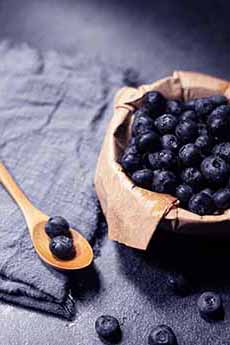
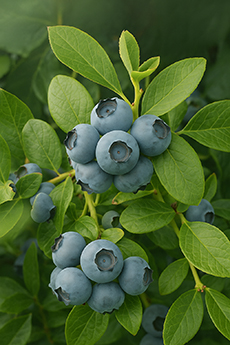
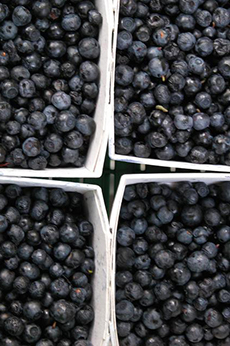
    Bilberries and blueberries are members of the same genus, Vaccinium. Blueberries (photo #4) are native to North America, in several species including Vaccinium myrtilloides, V. angustifolium, and V. corymbosum. Bilberries (photos #5 and #6, Vaccinium myrtillus) are also native to the northern U.S. and Canada, as well as to northern parts of Europe and Asia. Up to a fifth of Sweden’s total land area is carpeted by bilberry bushes! Bilberries are smaller and have a richer flavor than blueberries.


    Blueberry Slab Pie
    [1] Once you bake a slab pie, you may never go back to round pies. Slabs are easier to slice and provide twice the servings for the same amount of effort (photo and recipe © Pillsbury).

    Blueberry Pie
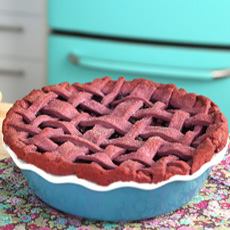
    [2] How about a purple crust to match the blueberries? Here’s the recipe (photo © Raiza Costa Dulcr Delight).

    Deconstructed Blueberry Pie
    [3] A deconstructed blueberry pie: food fun with all the flavor. Here’s the recipe (photo © Linda Anctil).

    Bowl Of Blueberrries
    [4] A bowl of blueberries, which are indigenous to North America (photo © Vino Li | Unsplash).

    Bilberries On Their Bush
    [5] Bilberries look like blueberries, but are smaller (photo © Plantex) | ChatGPT 2025-04-28).

    Boxes Of Bilberries
    [6] Bilberries at a farmstand (photo © Clarita | Morguefile).

    Blueberry Ice Cream With Fresh Blueberries
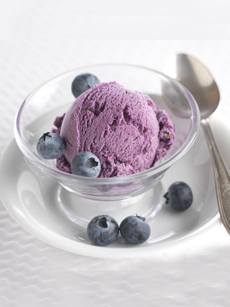
    [7] Some blueberry ice cream to go with your pie. Here’s the recipe (photo © Driscoll’s).

    Blueberry Mimosa
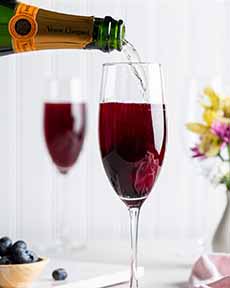
    [8] How about a Blueberry Mimosa with your pie? Here’s the recipe (photo © Gelson’s Market).

    Box Of Pillsbury Pie Crusts
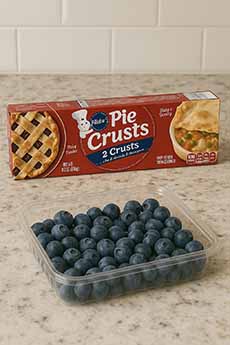
    [9] Ready to bake? (photo ChatGPT 2025-04-28).


    CHECK OUT WHAT’S HAPPENING ON OUR HOME PAGE, THENIBBLE.COM.


    Comments off

    National Prime Rib Day Is Only One Of Some 75 Meat Holidays!

    Prime Rib On A Plate With Green Beans
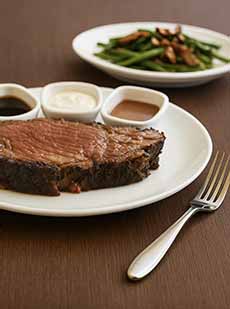
    [1] National Prime Rib Day is April 27th (photo © Fleming’s Prime Steakhouse and Wine Bar).

    Crown Roast Of Pork Recipe
    [2] National Crown Roast Of Pork Day is March 7th (photo © Harry & David).

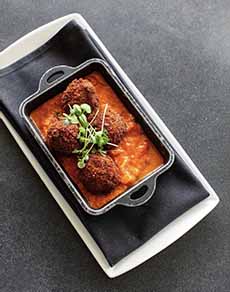
    Meatballs In Tomato Sauce
    [3] Want something simpler? National Meatball Day is March 9th (photo © Il Ritorno | St. Petersburg).

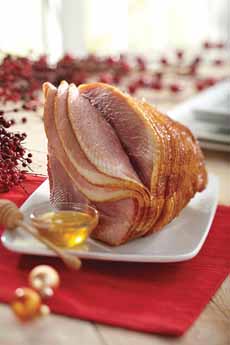
    Smithfield Honey Cured Spiral Ham
    [4] After you’ve paid your taxes, you may have enough left to celebrate National Spiral Ham Day, April 15th (photo © Smithfield Foods).

    Cassoulet topped with duck confit
    [5] National Duckling Month, May, was created to celebrate all the delicious duckling dishes. In the photo is cassoulet, a classic French confit of duck with beans (photo © Bar Boulud | NYC).

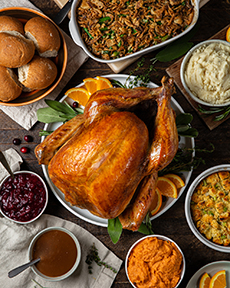
    Turkey Dinner
    [6] Hoping to drum up turkey business after the holidays, June is Turkey Lovers’ Month and the third Sunday is national Turkey Lovers’ Day (photo © Gelson’s Market).

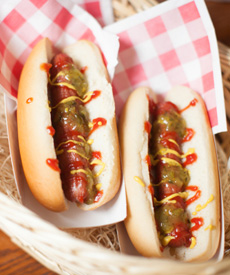
    Hot Dogs With Ketchup
    [7] July is National Hot Dog Month, and the 3rd Wednesday is National Hot Dog Day. The all-American hot dog was inspired by a German sausage (photo © Applegate Farms).

    A Plate Of Filet Mignon With Red Wine
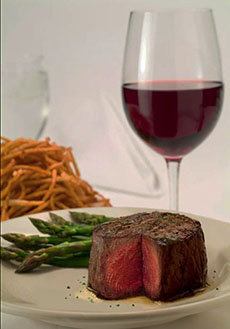
    [8] National Filet Mignon Day is August 13, celebrating the most tender cut of beef (photo © Ruth’s Chris Steak House).

    Red Wine With A Roast Chicken
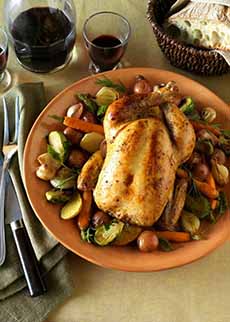
    [9] September is National Chicken Month (photo © Corto Olive | Facebook).

    Mincemeat Pie
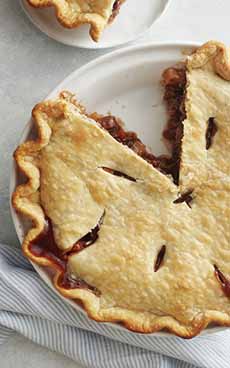
    [10] A mincemeat pie (a.k.a. mince pie) is filled with spiced minced meat and other ingredients. National Mincemeat Day is October 26th; the pie is especially popular for Thanksgiving and Christmas (photo © Pillsbury).


    April 27th is National Prime Rib Day, which got us to thinking about meat, the American diet, and our ancestors—not Great Grandma and Great Grandpa, but way, way back to the primates from whom we descend.

    > You can skip to the meat holidays, below.

    Why, we asked, are some primates herbivores while others—like us—are omnivores (eating both plant and animal foods)?

    So we did what anybody sitting at a computer would do: We looked it up. Specifically, we asked our great editorial assistant, Claude.ai.

    The insights follow, but first, elsewhere on The Nibble, explore your favorite meats in our photo glossaries:

    > The different types of bacon.

    > The different cuts of beef.

    > The different cuts of chicken.

    > The different types of duck.

    > The different types of ham.

    > The different cuts of lamb.

    > The different cuts of pork.

    > The different types of ribs.

    > The different breeds of turkey.
     
     
    WHY HUMANS ARE CARNIVORES

    Claude reminded us that Homo sapiens (modern humans‡) are the most common and widespread species of primate—and the last surviving species of the genus Homo.

  • We are great apes characterized by our lack of fur, bipedalism, and high intelligence.
  • We have large brains, enabling more advanced cognitive skills that facilitate successful adaptation to varied environments, development of sophisticated tools, and formation of complex social structures and civilizations.
  •  
    And that’s why we eat meat.

  • Our closest relatives, chimpanzees and bonobos, regularly hunt and eat meat, as do baboons and some macaques, though it makes up a smaller portion of their diet than man’s diet does.
  • While humans can thrive on various diets, including plant-based ones (with proper supplementation in modern times), our biology shows adaptations for an omnivorous diet, including our teeth structure, digestive system, and nutritional needs.
  •  
    Human meat-eating likely evolved for several reasons:

  • Nutritional benefits: Meat is calorie-dense and rich in protein, fat, and certain micronutrients like B12 and iron that are harder to obtain from plants alone.
  • Brain development: The energy-rich diet that included meat may have supported our brain’s evolution, as brains require substantial energy.
  • Environmental adaptation: As early humans moved into diverse environments, including grasslands with fewer fruit trees, meat provided a valuable food source.
  • Tool use: The development of tools allowed early humans to hunt and process meat more efficiently than other primates.
  •  
    With the growing emphasis on the longevity benefits of vegetarianism, animal rights, and the impact of raising food animals on the environment, we personally try to eat like a chimp: more plant foods and less animal-based foods.

    But our world is an omnivore world, and here are all the meat holidays to prove it:
     

    THE YEAR’S 75+ MEAT HOLIDAYS
    January
  • January: National Meat Month
  • January 25: National Haggis Day
  • January, last Sunday: National Meat Week Begins
  •  
    February

  • February, 2nd Full Week: National Kraut and Frankfurter Week Begins
  • February, 3rd Sunday: Orthodox Meatfare Sunday*
  •  
    March

  • March: National Deli Meat Month
  • March 3: National Cold Cuts Day
  • March, 1st Monday: National Butchers Week Begins
  • March 7: National Crown Roast of Pork Day
  • March 9: National Meatball Day
  • March 15: International Eat an Animal for PETA Day (or EATAPETA)†
  • March 17: National Corned Beef and Cabbage Day
  •  
    April

  • April 4: National Chicken Cordon Bleu Day
  • April 10: National Farm Animals Day††
  • April 15: National Glazed Spiral Ham Day
  • April 27: National Prime Rib Day
  •  
    May

  • May: National Duckling Month
  • May: National Hamburger Month
  • May 7: National Roast Leg of Lamb Day
  • May 16: National Barbecue Day
  • May 28: National Brisket Day
  •  
    June

  • June: Turkey Lovers Month
  • June 5: Sausage Roll Day
  • June 12: National Jerky Day
  • June, 3rd Sunday: National Turkey Lovers’ Day
  • June 21: National Wagyu Day
  •  
    July

  • July: National Hot Dog Month
  • July, 1st Full Week: National Luncheon Meat Week
  • July 4: National Barbecued Spare Ribs Day
  • July, 2nd Friday: World Kebab Day
  • July 3rd Wednesday: National Hot Dog Day
  •  
    August

  • August, 1st Saturday: National Jamaican Patty Day
  • August 13: National Filet Mignon Day
  • August 29: National Chop Suey Day
  • August/September, Saturday Before Labor Day: International Bacon Day
  • September

  • September: National Chicken Month
  • September, 1st Saturday: International Bacon Day
  • September 7: National Salami Day
  • September 14: National Eat A Hoagie Day
  • September 27: National Corned Beef Hash Day
  • September 29: National Goose Day
  •  
    October

  • October: National Sausage Month
  • October, 1st Week: National Chili Week
  • October 2: World Farm Animals Day
  • October 4: National Taco Day
  • October 12: National Gumbo Day
  • October 15: National Roast Pheasant Day
  • October 15: National Shawarma Day
  • October 24: National Bologna Day
  • October 24: World Tripe Day
  • October 26: National Mincemeat Day**
  •  
    November

  • November: National Roasting Month
  • November, 1st Saturday: National Bison Day
  • November 1: National Pâté Day
  • November 7: National Bison Day
  • November 12: National French Dip Day
  • November 4th Thursday: Turkey-Free Thanksgiving
  • November 27: National Craft Jerky Day
  •  
    December

  • December 18: National Roast Suckling Pig Day
  •  
     
    PRO VEGETARIAN HOLIDAYS

  • March 20: The Great American Meatout Day (1st day of SPRING?)
  • May, 2nd Sunday: National Veal Ban Action Day
  • June 9: Eat Flexitarian Day†††
  • July 4: Independence From Meat Day
  • September, 4th Friday: Hug a Vegetarian Day
  •  
     
    FUN

  • September 27: Meat Loaf Birthday
  •  
     
    PLUS

  • All The Bacon Holidays
  • All The Ham Holidays
  • All The Poultry Holidays
  •  
    ________________

    *Orthodox Meatfare Sunday is the last day Orthodox Christians can eat meat until ‘Pascha’ or Easter.

    **What is Mincemeat? It’s a spiced meat primarily used in pies but also in other preparations, such as cakes, muffins, tarts, and even as a topping for ice cream and porridge. It arose in the 15th century, when meat was preserved with fruits and spices—particularly cinnamon, cloves, and mace—wine and vinegar (later, brandy and other distilled spirits). Chopped nuts were also added to the minced meat. In England, mince pie became a traditional Yuletide treat.

    By the 19th century, raisins, apples, and candied lemon peel were added to the recipe. In the 20th century, any similar recipe, including vegetarian versions, came to be referred to as mincemeat. During the 20th century, mincemeat pie (mince pie) was added to the Thanksgiving table, where can be served with cheese (like apple pie). If the combination sounds strange to you (i.e., mince pie filling or mince pie with cheese), try it: It’s quite tasty!

    †Isn’t “Eat an Animal for PETA” an oxymoron? Yes, on purpose: The holiday was established by people who disdained the organization People for the Ethical Treatment of Animals (PETA). They found harm in their aggressive ad campaigns (one likened killing animals to the Holocaust). Hypocritical in their operations, PETA animal shelters have a very high rate of euthanizing the animals in care care. So on this day, participants are encouraged to eat eating animal products for breakfast, lunch, and dinner.

     
    ††World Farm Animals Day supports quality treatment of animals so that our meat supply and related products can be obtained from healthy and well-treated animals.

    †††Eat Flexitarian Day encourages the incorporation of more plant-based protein into one’s diets without eliminating the option to eat meat. The difference between vegan, vegetarian, pescatarian, and other food practices.

    ‡Our first ancestor to walk upright, Homo erectus, appeared about 1.9-1.8 million years, with advanced toolmaking and controlled use of fire. The older, first member of the Homo genus is Homo habilis, emerging around 2.4-1.5 million years ago. They were among the first known makers of simple stone tools. Homo erectus appeared about 2 million years ago and spread throughout Africa. Homo sapiens, anatomically modern humans, emerged 300,000 to 200,000 years ago in Africa. Homo neanderthalensis, Neanderthals, emerged around the same time in Europe and Western Asia. To go way back, our chimp and bonobo ancestors diverged around 5.7–11 million years from the hominin lineage (all species that existed prior to this split are extinct). Here’s more about our predecessors, who are known as archaic humans.
     

    CHECK OUT WHAT’S HAPPENING ON OUR HOME PAGE, THENIBBLE.COM.


    Comments off

    Michelle’s Maccs: Gourmet Coconut Macaroons In 17 Flavors!

    If you’re looking for an especially tasty gift for someone who loves coconut, you can’t do better than Michelle’s Maccs.

    They handmade, gourmet treats are gluten-free, egg-free and nut-free (except for Hazelnut and Peanut Butter, which are baked in dedicated pans).

    All-natural and enrobed in one of the world’s finest couverture chocolate, Belgium’s Callebaut, they’re baked to order.

    We are in heaven with each bite.
     
     
    EXCEPTIONAL FLAVORS
     
    There are the basics with plain coconut (photo #5):

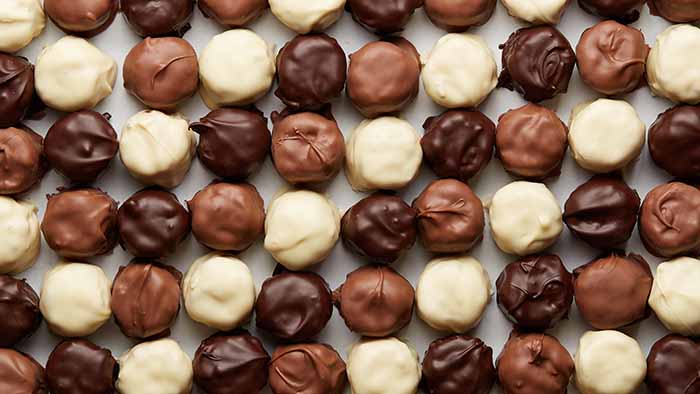
  • Simple Dark Maccs
  • Simple Milk Maccs
  • Simple White Maccs
  •  
    And these may be the best “classics” you’ll ever taste.

    Yet Michelle is a master at flavoring macaroons, which leads to the challenge:

    How can one select from all these great flavors? Two solutions:

  • You can build your own dozen.
  • Select a variety pack with the 12 original flavors.
  • Four-packs of different flavors.
  • A subscription!
  •  
    Even so, if you’re a connoisseur of everything delicious—but not wealthy enough to buy everything at once—you’ve got to prioritize. In alphabetical order, take your pick:

  • Amarena Cherry Maccs
  • Chocolate Chocolate Maccs
  • Espresso Maccs (photo #3)
  • Hazelnut Maccs
  • Key Lime Maccs
  • Macadamia Maccs
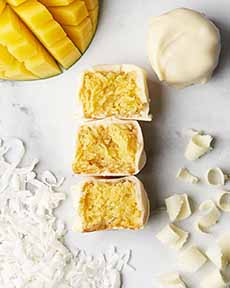
  • Mango Maccs (photo #2)
  • Orange Zest Maccs
  • Peanut Butter Maccs
  • Piña Colada Maccs
  • Pumpkin Pie Maccs
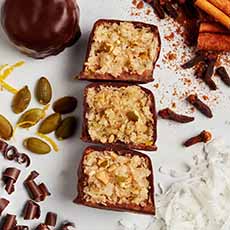
  • Pumpkin Spice Maccs (photo #4)
  • Raspberry Blackout Maccs (photo #5)
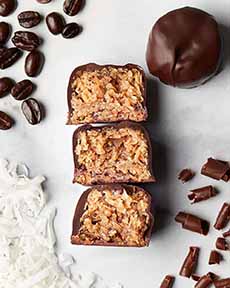
  • Salted Caramel Maccs (photo #1)
  •  
    PARTY IDEA: For Mother’s Day, Father’s Day, or any party time: How To Pair Macaroon Flavors & Beer.
     
    GET YOUR MICHELLE’S MACCS!

    They’re sold in packs of 4 or 12.

    And they can be customized for parties and special events.

    Use code GIFT4MOM at checkout for complimentary gift packaging (choose the gift option and then apply the code).

    The line is certified kosher by United Kosher Supervision (UKS).

    > Head to MichellesMaccs.com.

    Note: Michelle advises that the macaroons should be eaten within a week. Otherwise refrigerate them.

    They can also be frozen, if you’re a one-piece-a-day enthusiast, as we are.

    From our experience, you can keep them for longer than a week in the fridge, without freezing. The coconut becomes less moist, but they’re still delicious.
     
     
    > The history of macaroons and macarons, and how they differ.

    > The history of cookies.

    > The 11 basic cookie styles.

    > The different types of cookies: a photo glossary.

    > The year’s 44 cookie holidays (National Macaroon Day is May 31st).

    > How to keep cookies fresher for longer.


    Salted Caramel Macaroons
    [1] Salted caramel macaroons (all photos © Michelle’s Maccs).

    Mango Macaroons
    [2] Mango Maccs are a tropical flavor duo.

    Espresso Macaroons
    [3] Espresso Maccs.

    Pumpkin Spice Macaroons
    [4] Pumpkin Spice Macaroons.

    Raspberry Chocolate Macaroons
    [5] Raspberry Blackout Macaroons.

     
    Chocolate-Enrobed Macaroons
    [6] “Simple” Maccs mean that the coconut is sweetened but not flavored.


    CHECK OUT WHAT’S HAPPENING ON OUR HOME PAGE, THENIBBLE.COM.


    Comments off


    © Copyright 2005-2026 Lifestyle Direct, Inc. All rights reserved. All images are copyrighted to their respective owners.