THE NIBBLE BLOG: Products, Recipes & Trends In Specialty Foods


Also visit our main website, TheNibble.com.

RECIPE: Super Easy Apple Chips


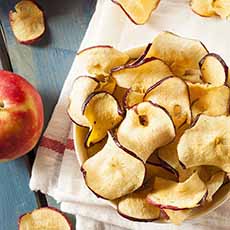
[1] Super-easy apple chips are low in calories (photo © Melissa’s Produce).

Fuji Apples
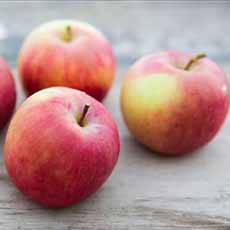
[2] Fuji apples (photos #2, #3, #4 and #5 © Good Eggs).


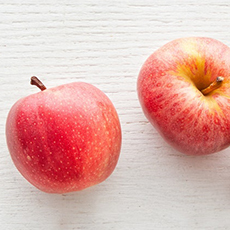
[3] Gala apples.


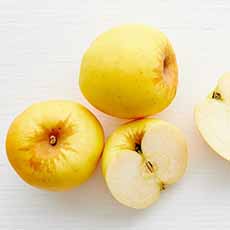
[4] Golden Delicious apples.


[5] Pink Lady apples.


Crunchy, homemade apple chips are wonderful homemade snack.

And it couldn’t be easier.

No dehydrator is needed to make these delicious apple chips; just your oven and a couple of kitchen staples.

Just as apples are a healthful snack, so are apple chips.

We like them “out of the bag,” as it were, as well as:

  • With yogurt or cottage cheese.
  • With a sweet yogurt dip*.
  • As a dessert garnish.
  • As a garnish with grilled or roasted chicken, lamb or pork.
  • With a cup of chai or other black tea.
  •  
     
    WHICH TYPE OF APPLE SHOULD YOU USE?

    Says apple grower Stemilt of Wenatchee, Washington:

    “For these tasty snacks you’ll want an apple that holds up well in the oven or dehydrator:

  • Fuji Apples
  • Gala Apples
  • Golden Delicious Apples
  • Pink Lady Apples
  •  
    Making chips is simply drying the fruit.

    “Drying fruit is basically just removing the natural moisture so only two things need to be right: the time and the temperature,” continues Stemilt.

    “Once you’ve got those nailed down, voilà!”
     
     
    RECIPE: APPLE CHIPS

    If the apples are sweet, or if you don’t want sugar, simply omit it.

    Or, you can use a noncaloric sweetener that’s oven-stable (Pureane, Splenda, Stevia, or ZSweet, e.g.).

    Ingredients

  • Apples of choice
  • Sugar
  • Cinnamon
  •  
    Preparation

    1. PREHEAT the oven to 225°F.

    2. SLICE the apples thinly. Use a mandoline if you have one (they were invented to slice fruits and vegetables very thinly).

    3. SPRINKLE the sugar and cinnamon on top and bake for an hour.
     
    Variations

    With your next batch of apple chips, consider layering on the pumpkin pie spices: cloves and nutmeg.

    Or, go for sweet and spicy, with some ancho chile powder and/or cayenne.
     
     
    > The History Of Apples

    ________________

    *You can simply use fruit or vanilla yogurt; or sweeten plain yogurt with a noncaloric sweetener.


    Comments off

    TIP OF THE DAY: A New Look At Sardines For National Seafood Month

    First, don’t turn away. You’ll find out why you should take a new look at sardines: very nutritious, very inexpensive, and in the right hands, very delicious!

    We all know that seafood is part of a healthy diet. For National Seafood Month, October, think of how you can add more seafood to your diet.

    If you don’t already eat seafood at least one day a week, pick a day for “seafood lunch” and “seafood dinner.” Remember that:

  • “Seafood” comprises both fish and shellfish.
  • Eating canned seafood counts.
  • Prepare it any way you like—even raw (crudo, sashimi, sushi). See our 15 serving suggestions below
    .
  •  
    On average, Americans consumed 16.1 pounds of seafood in 2018, the last year for which numbers are available. That may sound a lot, but it isn’t great.

    You’ve heard that switching out animal protein for seafood protein is a much healthier way to eat.

    In the western world, Portugal serves up 177 pounds per capita [source]. (It’s true that the coastal country has lots of fish at its disposal.)

    U.S. consumers had a wee uptick (.1 pound) in consumption of fresh and frozen seafood in 2018, per the NOAA (
    National Oceanic and Atmospheric Administration).

    A point one pound increase? Come on, folks!
     
     
    THE TOP 10 MOST POPULAR SEAFOOD IN THE U.S.

    Thanks to the World Atlas for this data on U.S. seafood consumption.

    1. Shrimp: 4.0 Pounds Per Capita. Shrimp are high in calcium, protein, omega-3s, and iodine.

    2 & 3. Salmon & Tuna: 2.30 Pounds Per Capita. Salmon and tuna are tied as the second most popular seafood. Both contain high levels of healthy omega-3 fatty acids. Salmon is fattier and has higher levels, while tuna contains more protein.

    4. Tilapia: 1.4 Pounds Per Capita.

    5. Alaska Pollock: 0.98 Pounds Per Capita

    6. Pangasius* (Basa or Swai): 0.69 Pounds Per Capita

    7. Cod: 0.65 Pounds Per Capita

    8. Catfish: 0.52 Pounds Per Capita

    9. Crab: 0.51 Pounds Per Capita

    10. Clams: 0.34 Pounds Per Capita

    Epicurious Magazine recommends these fresh fish as affordable alternatives to the pricey salmon and tuna: catfish, dorade, porgy, mackerel, red mullet, sardines and skate wing.
     

    HOW TO SERVE SARDINES

    If you’re on a budget—and even if you’re not—point your palate in the direction of sardines.

    Don’t turn your nose up if you’ve had a prior disappointing experience with sardines. Give them another chance.

    Sardines are a superfoods with lots of nutritional bang for the buck: packed with flavor, protein and omega-3 fatty acids, and a great source of vitamin D.

    (FOOD TRIVIA: Sardines are named after the island of Sardinia. The small, oily fish were once in abundance in the seas around the island.)
     
    Fresh Vs. Canned Sardines

    Since fresh sardines are truly delectable. Even people who don’t like the canned variety can embrace them.

    Alas, they are highly perishable, so are mostly found canned (but keep an eye out for fresh sardines during sardine season, May through October).

    Different canned sardines are of different quality. You can find wonderful brands that are not “fishy.”

    We are huge fans of the Bela brand, and their mackerel, too.

    15 Easy Ways To Serve Sardines

    If the flavor is too strong for you, add counterpoints such as a squeeze of fresh lemon, capers, a Dijon vinaigrette, fresh herbs, olives, pesto, pickled onions or other pickled vegetables, boiled or baked potatoes (see the last bullet below).

  • Grill or fry them.
  • Make a composed salad (salade composée with a Dijon vinaigrette, or garnish a green salad.
  • Put them on a pizza.
  • Toss them in pasta.
  • Make a sandwich, either chopped like a tuna sandwich, or whole with lettuce, tomatoes and red onion (quick-pickled red onion is the bomb)—plus lemon mayonnaise†,
  • Add them to red pasta sauce or other tomato sauce.
  • Make fish tacos.
  • Substitute for salmon in croquettes and fish cakes.
  • Add to a cheese tart/quiche.
  • Serve with avocado: garnish avocado toast, or plate them with avocado slices and a mesclun salad.
  • Add to a potato casserole or sliced boiled potatoes tossed with butter and parsley.
  • Top rice and other plain grains.
  • Puree and serve as a spread on crackers or sliced baguette, like tapenade. Great with beer, wine, a Bloody Mary or Martini.
  • Flake and add to a braise of greens (broccoli rabe, cabbage, chard, collards, kale, spinach) with garlic and olive oil.
  • Make chirashi or nigiri sushi (photo #3).
  • Add to skewers with vegetables, including baby potatoes.
  • Garnish a baked potato with chopped sardines and scallions and sour cream.
  •  
    Most important, try them!
     
    ________________

    *Other names for swai and similar species are panga, pangasius, sutchi, cream dory, striped catfish, Vietnamese catfish, tra, basa and — though it’s not a shark — iridescent shark and Siamese shark. It is typically farmed in, and imported from, Vietnam. Here’s more about it.

    †Blend some fresh lemon juice and zest into regular mayonnaise.


    Sardines Presented In Can
    [1] This is food fun: a can of sardines on a fancy plate with crostini and pickled onions. CAn idea we love from Trattoria Italienne in New York City (photo © trattoria Italienne).

    Spaghetti & Sardines
    [2] Pasta con sarde, pasta with sardines, is considered by some to be the national dish of Italy. Here’s the recipe (photo © Taste | Australia).

    Sardine Chirashi
    [3] Sardines, chirashi-style, atop rice with a fried egg. Sprinkle with sesame seeds or shichimi togarashi, a.k.a. Japanese 7-spice blend. You can also make sardine sushi nigiri-style, atop pads of sushi rice Here’s the recipe from Kitchen Gidget (photo © Kitchen Gidget).

    Sardines On Wilted Greens
    [4] Salad on wilted greens with a squeeze of lemon. A light lunch or first course (photo © The Nibble).


    [5] Sardines with ramps, at Abboccato Restaurant in New York City (photo © Abboccato [alas, now closed).

    Bela Olhao Sardines
    [6] Bela sardines, a great brand from Portugal. Here’s our review (photo © The Nibble).


    [8] One school a-swimming (photo of sardines © Matthew T, Rader | Unsplash).


    Comments off

    RECIPE: Vegetarian Kung Pao ‘Chicken’ For World Vegetarian Day


    [1] Kung Pao goes vegetarian/vegan (photos #1, #2 and #4 © Melissa’s).


    [2] The ingredients for Kung Pao Vegetables. Don’t be deterred by the number.


    [3] Chinese eggplant is not bitter like Italian eggplant, and tends to have a mild, sweet flavor (photo © Good Eggs).


    [4] Chinese long beans. You can substitute regular green beans (photo © Burpee).


    [5] Hawaiian Style Tofu Squares, tofu that is pre-fried to use right out of the package.


    [5] Spaghettini is thinner than spaghetti but thicker than angel hair (photo © CC Produce).

    A Plate Of Kung Pao Chicken
    [6] Actual Kung Pao Chicken (photo © B. Hhofack | Panther Media).

    General Tso's Chicken
    [7] General Tso’s Chicken, another Westernized Chinese favorite. Here’s the recipe from Spicy Southern Kitchen (photo © Spicy Southern Kitchen).


    For World Vegetarian Day, October 1st, it’s easy to convert some of some favorite dishes from meat to meatless.

    Melissa’s Produce took on a Chinese-American favorite, Kung Pao Chicken (photo #6).

    Goodbye chicken, hello veggies:

    Using spaghettini (thin spaghetti) as a base, with a colorful Chinese vegetables and Kung Pao spices, they created Kung Pao Vegetables (photo #1).

    The recipe contains Chinese eggplant, green long beans and baby bok choy, with cubed tofu replacing the chicken.

    There are roasted peanuts for crunch and extra protein and flavor.

    A word about the tofu: In this recipe, Melissa’s used its Hawaiian Style Tofu Squares, tofu that is pre-fried to use right out of the package.

    It’s great stuff, but you will want to pan-fry your tofu in advance. Or, you may prefer to stir in regular tofu, as is.

    Thanks to Melissa’s for this delicious recipe. It’s actually vegan (here’s the difference between vegan and vegetarian).

    > Below: the history of Kung Pao Chicken and General Tso’s Chicken.

    > The year’s 15 Chinese food holidays.
     
     
    RECIPE: KUNG PAO VEGETABLES

    Because there are no noodles in this dish, no side dish of rice is specified.

    Ingredients For 4 Servings

    For The Sauce

  • 3/4 cups vegetable broth
  • 2 teaspoons soy or tamari sauce
  • 2 teaspoons rice vinegar
  • 1-1/2 tablespoons maple syrup or honey
  • 1 teaspoon sriracha† sauce
  • 1-1/2 tablespoons cornstarch
  •  
    For the Main Dish

  • 3 cups chinese eggplant, 1/2″ cubes (photo #3)
  • 3 cups chinese long beans, 1″ pieces
  • 2 tablespoons vegetable oil
  • 1 tablespoons sesame oil
  • 2 dried red chiles
  • 2 tablespoons ginger minced
  • 1/2 cup green onions, white part only, diced
  • 1/2 cup green onions, green part only, diced
  • 1-1/2 cups rainbow carrots, 1/2″ pieces
  • 1-1/2 cups red bell pepper, 1/2″ pieces
  • 2 tablespoons minced garlic
  • 3 cups baby bok choy, 1″ cubes
  • 1 package Hawaiian style tofu (or substitute), 1/2″ cubes (photo #5)
  • 1-1/2 cups dry roasted peanuts
  • 1 package spaghettini (photo #6—substitute spaghetti or angel hair)
  • Salt and pepper to taste
  •  
    Preparation

    1. MAKE the sauce. Combine the sauce ingredients, whisk together and set aside

    2. HEAT the eggplant and long beans in a steamer about 5 minutes until tender. Remove and set aside.

    3. COOK the spaghettini according to package instructions. While the spaghetti is cooking, prepare the vegetables as follows:

    4. HEAT the oil in a wok or large sauté pan on medium heat. When the oil sizzles, add the dried red chiles and white part of the green onions. Stir-fry for 2 minutes.

    5. ADD the ginger, red bell pepper and carrots and sauté 2-3 minutes.

    6. ADD the garlic and bok choy and sauté 2 minutes.

    7. ADD the steamed eggplant and long beans, along with the tofu and sauté 1-2 minutes.

    8. ADD in the sauce mixture and stir to combine. Continue cooking until sauce thickens.

    9. ADD in the peanuts and green onions and cook another minute. Taste and add salt and pepper as desired.

    10. DRAIN the spaghettini and then transfer to a large serving bowl. Pour the vegetables and sauce over the spaghettini. Toss to combine, and serve.
     
     
    THE HISTORY OF KUNG PAO CHICKEN & GENERAL TSO’S CHICKEN

    The legend is that that Kung Pao chicken (photo #7) was created by Ding Baozhen (1820–1886), a governor of the Sichuan province of southwestern China, during the Qing Dynasty (1644-1912).

    He was very interested in cooking, and chicken, peanuts and spicy flavors.

    He combined diced chicken, red chiles and peanuts into a popular family recipe.

    Another version of the story is that he first had the dish at someone else’s home, and liked it so much that he asked for the recipe (which had spicy Sichuan peppercorns instead of chiles). He began serving it to his own family and guests.
     
    Others must have asked for the recipe*, too, because as time passed, it transcended the Ding family dining room an reached an enthusiastic regional (Sichuan), the national, and then world—audience.

    While it traveled around the other provinces of China, each with their own regional spin.

    Kung Pao chicken became a staple of Westernized Chinese cuisine.

    Thille here is an authentic Sichuan version of the recipe.

    As for the name, Kung Pao is actually the honorable official title. Ding was a good governor, so the Qing government bestowed upon him the title “Kung Pao,” which translates to “an officer who tutors the crown prince” [source].
     
     
    Did Ding Baozhen (1820–1886) know Zuo Zongtang, General Tso (1812-1885)?

    It’s a fanciful “who knows?” They both lived at the same time during the Qing Dynasty.

    But General Tso did not create the dish named after him.

    A chef named Peng Chang-kuei created General Tso’s Chicken (photo #8), in the 1950s.

    Peng was a banquet chef for Chinese Nationalists. He fled to Taiwan with them after their 1949 defeat by Mao Zedong’s Communists.

    It was there that he came up with the idea for General Tso’s Chicken, and when he immigrated to New York in 1973 he brought the dish with him.

    It’s a pretty simple dish: boneless pieces of chicken, breaded and deep-fried, with a sweet-and-hot sauce.

    The sauce is made from soy sauce, rice wine, rice-wine vinegar, sugar, cornstarch, whole dried red chili peppers and garlic.

    It is often served with broccoli florets.

    Why is the dish named for General Zongtang?

    Chef Peng came from the same town as Zuo Zongtang, and named the dish after the hometown hero.

    We actually had the dish, made by Peng’s own hand‡, in his New York City restaurant, Uncle Peng’s Hunan Yuan. It introduced New York, to Hunanese food.

    Peng died in 2016, leaving a culinary legacy.
     
     
    ________________

    *Truth to tell, it’s an easy enough recipe to figure out.

    A substitute for sriracha is sambal oelek, an an Indonesian chile sauce or paste (sriracha is from Thailand); or another hot chile paste.

    Crushed red chile flakes or even cayenne pepper can be used in a pinch, although they are not as hot; and dried spices do they have the same thick consistency as sriracha.

    > Here’s more about sambal olek.

    More accurately, General Tso’s chicken was cooked by whomever was at the wok at Uncle Peng’s Hunan Yuan that night.


    CHECK OUT WHAT’S HAPPENING ON OUR HOME PAGE, THENIBBLE.COM.


    Comments off


    © Copyright 2005-2026 Lifestyle Direct, Inc. All rights reserved. All images are copyrighted to their respective owners.