THE NIBBLE BLOG: Products, Recipes & Trends In Specialty Foods


Also visit our main website, TheNibble.com.

Easy Gazpacho Recipes For National Gazpacho Aficionado Month

National Gazpacho Aficionado Month comes at just the right time: May, when warmer weather makes chilled soup a treat.

(Why National Gazpacho Day is on December 6th is beyond us.)

Gazpacho is easy to make, and requires no stove. So it’s also a go-to dish for a hot summer day (and a hot kitchen).

Check out our selection of vegetable- and fruit-based gazpacho recipes.
 
 
> THE HISTORY OF GAZPACHO
 
 
MORE GAZPACHO RECIPES

  • Avocado Gazpacho
  • Blender Gazpacho
  • BLT Gazpacho
  • Gazpacho Shooters
  • Gazpacho Verde
  • Honeydew & Green Chile Gazpacho
  • Melon Gazpacho
  • Salsa Gazpacho
  • Salsa Gazpacho With Beer
  • Savory Chocolate Gazpacho
  • Savory Mango Gazpacho With Fromage Blanc Sorbet
  • Savory Pineapple Gazpacho
  • Savory Strawberry Gazpacho
  • Tri-Color Layered Gazpacho
  • White Gazpacho With Almonds, Grapes & Leeks
  • Yellow Bell Pepper Gazpacho
  •  
    Plus

  • Gazpacho Sandwich
  • Gazpacho Garnishes
  •  


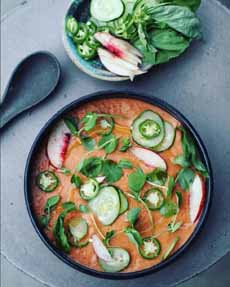
    [1] Gazpacho can be a canvas for a beautiful garnish of fruits, herbs and vegetables (photo © Botanica | Los Angeles).

    Yellow Gazpacho
    [2] Gazpacho isn’t just red. Different vegetables create yellow and green gazpacho, and there’s white gazpacho from almonds (photo © Chicken Fried Gourmet Blog [now closed]).


    Comments off

    Sylvaner Or Silvaner Wine & Food Pairings


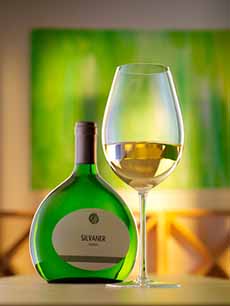
    [1] One of the best Silvaner wines from Germany (photo © Shop Banquet).

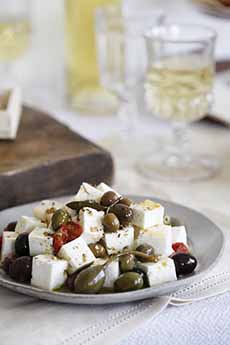
    Feta & Olives Antipasto
    [2] Sylvaner is delicious with antipasto, cheese and olives, among many other foods noted below (photo © Vermont Creamery).


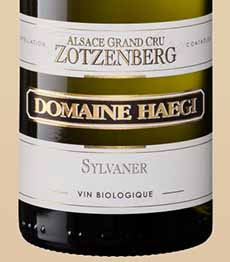
    [3] The best Sylvaner from Alsace—the region spells the wine with a “y” instead of the “i” used in Germany (photo © Domaine Haegi).

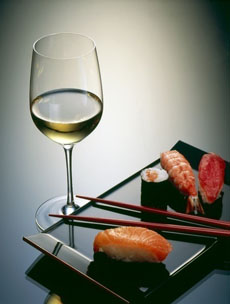
    Wine & Sushi
    [4] Pair Sylvaner with raw seafood like sushi and oysters, as well as grilled fish and shellfish (photo © Lognetic | Dreamstime).


    [5] The bocksbeutel bottle, a flask shape, is used for Silvaners from the Franconia region of Germany (photo © Bottle Stops).


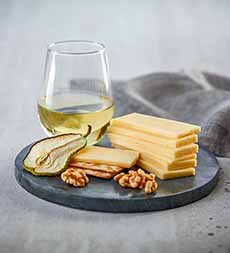
    [6] Serve Sylvaner with a cheese plate (photo © Wisconsin Cheese).


    For National Wine Day, May 25th, how about trying a new grape varietal? Our recommendation is Sylvaner, a white wine grape grown primarily in Alsace and Germany. It’s spelled Silvaner in Germany, and as appropriate, we’ll alternate the spellings in this article.

    These refreshing wines are ready to fill your glass as an alternative to Pinot Grigio and rosé, America’s unofficial wines of summer.

    Many American wine drinkers haven’t even had better-known German and Alsatian wines such as Gewürtztraminer, Pinot Blanc and Riesling. We highly recommend them as well, but today our focus is on Sylvaner.
     
     
    THE HISTORY OF SILVANER WINE

    Silvaner is an ancient grape varietal that has long been grown in Central Europe. It is believed to have originated in Transylvania, in the Austrian Empire*.

    Widely cultivated in the Middle Ages, Silvaner was brought from the Austrian Empire to Germany, where it was embraced. From there, the grape was brought to the Alsace region of France, where it took well to the terroir†.

    After World War II, so much Silvaner was planted in Germany and Alsace that overproduction resulted in lower-quality wines and ruined its reputation. In Germany, it was often used as a blending grape in wines like Liebraumilch—not exactly prestige wine.

    Changing tastes in the Franconia region of Germany even resulted in the Silvaner vines being pulled up in favor of dry white wines.

    Like the phoenix, Silvaner has risen from the ashes. Today’s wine makers in both Germany and Alsace are vinifying Sylvaner into delightful wines that are very affordable and vinified in dry, semi-sweet and sweet styles.

    Some exceptional wines are now produced on good vineyard sites with low yields. In 2006; Zotzenburg Sylvaner became the first to be designated an Alsace Grand Cru. Grown on a soil of marl-limestone, the wines have great finesse and body, and age wonderfully. All for around $20 a bottle!

    Today, this white wine grape has been called a “blank canvas for the expression of terroir†” [source]. It can produce elegant wines with high acidity, and pairs very well with a wide variety of foods (see below).
     
     
    SILVANER / SYLVANER WINES TO SEEK OUT

    German Silvaner

    The Rheinhessen region, which lies to the west of Frankfurt, is the largest of Germany’s 13 wine appellations. It has the largest Silvaner acreage.

    Two of the region’s top producers are Wittmann (photo #1) and Schätzel: wines with brisk, fresh leafiness in the manner of Sauvignon Blanc.

    Also check the Baden appellation in southwestern Germany, where the Kaiserstuhl viticultural district produces wines with delightful green notes.

    In the state of Bavaria, in the district of Franken (Franconia), Silvaner is a specialty of the region. The wines are dry and full-bodied with a mineral undercurrent.

    Bavarian Silvaners have an unusual bottle shape, called a bocksbeutel (photo #5). It’s flat, squat and wide, like a flask (similar to the classic Mateus rosé bottle).

    Look for Sylvaner from Bürgerspital, Julius Spital, Weingut Bickel-Stumpf, Weingut Hans Wirsching, Weingut Rudolf May, Weingut Sauer and Zehnthof Luckert.
     
     
    Alsatian Sylvaner

    In Alsace, Sylvaner takes on a different character: They’re richer than their German counterparts, with honey and melon notes.

    Look for wines from the Zotzenberg Grand Cru (photo #3), where there are several fine producers. But also sample other Silvaners from Hugel and Trimbach.
     
     
    SYLVANER FOOD PAIRINGS

    Sylvaner is a great pairing wine, not just for the foods below, but with picnic fare. Also serve it with:

  • Antipasto
  • Asian cuisine
  • Asparagus
  • Artichokes
  • Cheese
  • Cream sauces, mayonnaise
  • Crudités
  • Desserts (sweet or semi-sweet bottlings)
  • Deviled eggs
  • Foie gras
  • Fried food
  • Fondue
  • Gnocchi
  • Grilled fish, smoked fish
  • Hot dogs and sauerkraut
  • Mushroom omelets, onion tarts, quiche
  • Onion soup
  • Pasta with pesto or cream sauce
  • Roast chicken, pork, turkey
  • Shellfish (lobster, oysters, shrimp, etc.)
  • Salads
  • Sausages
  • Sashimi and sushi
  • Sautéed veal, veal chops
  • Tapas
  •  
    Find more matches here.

    And if you have any “leftover” wine, use it for deglazing the pan for sauce, or other cooking applications.

     
    ________________

    *After the Austro-Hungarian Compromise of 1867, Transylvania was incorporated into the Kingdom of Hungary, as part of the Austrian-Hungarian Empire. After World War I, Transylvania became part of Romania.

    †Terroir, pronounced tur-WAH, is a French agricultural term referring to the unique set of environmental factors in a specific habitat that affect a crop’s qualities. It includes climate, elevation, proximity to a body of water, slant of the land, soil type and amount of sun. These environmental characteristics give a fruit, vegetable, cheese, olive oil, etc. its unique character.


    Comments off

    Grow Exotic Mushrooms At Home: It’s Easy

    If you like to cook with fresh mushrooms, grow some at home. It’s easy, fun, and, as you can see from the photos, have grat eye appeal.

    North Spore offers mushroom kits of exotic mushrooms. These are beauties, not [with no disrespect] plain white button mushrooms or brown creminis.

    The varieties are gourmet mushrooms, highly esteemed by chefs worldwide.

    Watching your mushrooms grow is a fascinating experience for adults and kids alike, and the crop will be ready in two weeks.

    The simple “Spray and Grow” Kits from North Spore are rectangular boxes of light cardboard containing a block of substrate (compacted sawdust) colonized with mushroom mycelium*.

    You spray the substrate twice daily (sprayer included) and wait for the magic to happen.

    The mushrooms are eye-catching (or in modern terms, Instagrammable).

    The mushrooms can be used in conventional preparations—omelets, sauces, sides, tarts, quiches, etc. But they have specialty uses, too.
     
     
    PICK YOUR MUSHROOMS

    Choose from:

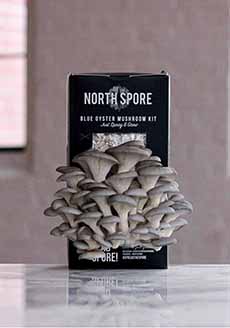
  • Blue Oyster Mushrooms (photo #3). Great for sautés with butter, garlic and fresh herbs (rosemary, thyme or whatever you have on hand). Turn them into a sauce when you deglaze a pan. Show them off in a salad.
  • Golden Oyster Mushrooms (photo #2). Use them like blue oyster mushrooms. They’re beautiful raw† in salads, marinated raw as a plate accent, and on vegetable skewers.
  • Pink Oyster Mushrooms (photo #1). Pink oyster mushrooms are so glamorous. They pair well with many cuisines and flavors; but more important, we think, is their wow factor when served whole. We marinate them whole and served them as a plate accent. You can crisp them in a pan with butter or olive oil. Make a stunning spinach or arugula salad with whole marinated mushrooms.
  • Lion’s Mane Mushrooms (photo #4). With a unique consistency and flavor, Lion’s Mane can be used as a vegan seafood substitute. You can slice them into rounds and pan-fry them in olive oil or butter. Or, shred them into a crab meat consistency and make crab cakes.
  •  
     
    HOW THE MUSHROOMS GROW

    Open the box, cut open the perforated window, and spray the substrate, per the directions. Place the box in a more humid place—as opposed to a dry spot of direct sunlight.

    In two weeks you’ll have full-grown mushrooms. And that’s not all.

  • After the first flush‡ (fruiting), you may get a second and even a third flush, especially if you can keep the box in a humid location. If your home is dry, it’s easy to make a humidity tent. (Also check out how to add good humidity to your home.)
  • When your kit has produced two or more flushes indoors, you may be able to get another flush by putting the substrate outside, where rain and humidity can encourage more growth.
  •  
    Questions? Check out the FAQ.
     
     
    GET YOUR MUSHROOM KITS

    Get them for yourself.

    Get them for your friends who love to cook.

    Get them for kids, to inspire them.

    It’s a gift that no one is likely to have received before, or likely to forget!

    Head to Northspore.com.
     
     
    > THE DIFFERENT TYPES OF MUSHROOMS
     
     
    > THE HISTORY OF MUSHROOMS


    [1] Pink oyster mushrooms, growing from a medium inside a box (all photos © North Spore).


    [2] Golden oyster mushrooms.


    [3] Blue oyster mushrooms.


    [4] Lion’s mane mushrooms.


    ________________

    *The mycelium is the vegetative part of a fungus, consisting of a network of fine white filaments (hyphae). Here’s more about it.

    †If you are concerned about eating raw mushrooms, speak with your healthcare provider.

    ‡A flush is the growth for harvesting during the same season. After you harvest the first growth (flush) a second growth may occur, and even successive flushes after that. The more humid the mushrooms’ environment, the likely you’ll get additional flushes. Fruiting means the same thing as flush.


    Comments off


    © Copyright 2005-2026 Lifestyle Direct, Inc. All rights reserved. All images are copyrighted to their respective owners.