THE NIBBLE BLOG: Products, Recipes & Trends In Specialty Foods


Also visit our main website, TheNibble.com.

TIP OF THE DAY: Filet Mignon Eggs Benedict

If you’re near a Fleming’s Steakhouse (there are locations nationwide), you can celebrate Father’s Day with Filet Mignon Eggs Benedict (photo #1).

It’s a meat-lovers riff on the classic Eggs Benedict, which is Canadian bacon, a poached egg and hollandaise sauce on an English muffin (photo #2).

  • Fleming’s Eggs Benedict has filet mignon, sautéed spinach and hollandaise on a round of baked brioche French toast.
  • You can go surf-and-turf with this recipe: Filet Mignon & Crab Eggs Benedict.
  • Or, turn America’s favorite food into Burger Eggs Benedict.
  •  
    The original recipe from the 1860s is toasted English muffins topped with a round of cooked ham “an eighth of an inch thick and of the same diameter as the muffins one each half.” A poached egg is placed atop each muffin half, and the whole is covered with hollandaise sauce.

    Here’s the history of Eggs Benedict.

    Over the years, the ham was replaced with the newly-popular Canadian bacon; and since then, there has been an explosion of variations.

    Just take a look at these and plan your own Signature Eggs Benedict.
     
     
    VARIATIONS: MORE EGGS BENEDICT RECIPES

    Here are updated versions of the Eggs Benedict recipe; but don’t forget Classic Eggs Benedict.

  • American Casual: Burger Eggs Benedict.
  • Comfort food: Grilled Cheese Eggs Benedict.
  • Custom Eggs Benedict: Mix & Match Your Favorite Ingredients.
  • Down-Home: Corned Beef Hash Eggs Benedict.
  • Down Home 2: Corned Beef Hash Patties.
  • Format: Eggs Benedict Casserole.
  • From A Sandwich Favorite: BLT & BLAT Eggs Benedict.
  • Fusion Food: Grilled Cheese Eggs Benedict.
  • Luxury: Surf & Turf Eggs Benedict (lobster and filet mignon).
  • No Carbs: Portabella Eggs Benedict.
  • Reinvented Eggs Benedict: Reinvented Eggs Benedict.
  • Scandinavian: Icelandic Eggs Benedict, with smoked salmon and skyr.
  • Steak Lovers: Filet Mignon Eggs Benedict.
  •  
    Plus A Related Recipe:

  • Potato & Crab Hash With Poached Eggs.
  •  

    Filet Mignon Eggs Benedict
    [1] Filet mignon eggs benedict, with filet mignon instead of ham/Canadian bacon and an added touch of sautéed spinach (photo courtesy Fleming’s Steakhouse).

    Eggs Benedict
    [2] Classic Eggs Benedict: ham, poached egg and hollandaise sauce on an English Muffin, garnished with chives and paprika (photo courtesy The Incredible Egg).

     
    But tip your hat in homage to the original. Where would brunch be without it?

    National Eggs Benedict Day is April 16th.
     
    Find more egg recipes on the pull-down menu at the upper right.


    CHECK OUT WHAT’S HAPPENING ON OUR HOME PAGE, THENIBBLE.COM.


    Comments off

    FATHER’S DAY GIFTS: Hendrick’s Midsummer Solstice Gin & Jumbo Ice Cubes

    Hendrick's Midsummer Solstice Gin
    [1] Don’t let the summery flowers and lavender label give the wrong impression: This floral gin is a delight for anyone who loves gin botanicals (photo courtesy Hendrick’s Gin).

    Epare Jumbo Ice Cube Trays
    [2] These ice cube trays make jumbo ice cubes, twice the size of standard cubes (photo courtesy Eparé).


    Two Father’s Day gifts we’re giving this year: Hendricks Midsummer Solstice limited release gin, and Eparé jumbo ice cube trays, for the ultimate on-the-rocks experience.
     
     
    HENDRICK’S MIDSUMMER SOLSTICE LIMITED EDITION GIN

    The latest expression from Hendrick’s Gin, created at the newly-opened Hendrick’s Gin Palace in Girvan, Scotland.

    The new expression captures “nature’s flavors and aromas at the peak of summer,” per Master Distiller Lesley Gracie, who also created the original Hendrick’s Gin. “…For this new expression I’ve hand-selected each floral essence to capture this intensity,” she notes.

    The packaging (photo #1) features a deep purple bottle with lavender labels. The gin is clear, as always.

    But don’t think that summer flowers and lavender labels mean “feminine.”

    This is a full-on gin that’s perfect for sippers who enjoy the botanicals in a glass of gin, straight-up or on-the-rocks.

    While Hendrick’s has created special cocktails to show off the new gin, we think that the best way to enjoy the uniqueness of any particular expression of spirits is to drink it “as is,” without the layering of other flavors or aromas.

    But there are plenty of recipes online, starting with this Midsummer Spritz.

    Once the small batch of bottles is gone, it’s gone forever. So in addition to Father’s Day gifts, we picked up an extra couple of bottles; maybe for gifting later on, maybe to remain in our personal stock.

    For more information, visit HendricksGin.com.
     
     
    EPARÉ JUMBO ICE CUBES

    Eparé’s Clear Ice System has created trays for jumbo ice cubes: They’re two inches square!

    They’re not just eye-catching: The larger the cube, the slower it melts.

    Each ice cube tray makes six cubes (as compared to the traditional dozen regular cubes), $15.99 for a set of two trays.

    The ice cube trays have lids, to protect the cubes from migrating aromas and freezer detritus.

    Get yours at Empare.com, or at Overstock, Target, Wayfair and other retailers.

     
    TIP: For flawless, clear ice cubes every time, use distilled water; or boil tap water twice, and let cool.

    You can also use the trays to make:

  • Ice cream squares.
  • Ice cubes decorated with fruits or flowers (here’s how).
  •  
    Here are more uses for ice cube trays.


    Comments off

    FOOD FUN: Rainbow Sangria With Colored Ice Cubes

    What’s new in sangria?

    This clever idea from I|O Godfrey, a rooftop lounge at The Godfrey Hotel in Chicago. (In fact, it’s Chicago’s largest indoor/outdoor rooftop.)

    An array of colored ice cubes is made from fresh fruit juices.

    After they’re piled high in a tall glass, a blend of Moscato and vodka is poured from a pitcher at the table. The result: food art.

    If you’d like to serve it at home, here’s a guide:
     
     
    COLORED ICE CUBES

  • Green: honeydew (juiced), lime Juice
  • Orange: cantaloupe (juiced), orange juice
  • Pink: red/pink grapefruit juice, watermelon juice
  • Purple: blueberry juice, grape juice
  • Red: cranberry juice, pomegranate juice
  • Yellow: lemonade, pineapple juice
  •  
    What about blue?

    For the blue ice cubes, you can use:

  • Blue curaçao diluted in water (so it will freeze)
  • Blue Hawaiian Punch
  • Blue food color (which won’t have flavor)
  • Homemade blue juice*
  •  
    How fun is this sangria?

    Just try it!
     
     
    MORE SANGRIA RECIPES

  • Apple Sangria
  • Cranberry Sangria
  • Halloween Sangria
  • Jubilee Sangria
  • Peach Sangria #1
  • Peach Sangria #2
  • Pomegranate Sangria
  • Red, White & Blue Sangria
  • Rosé Sangria
  • Saké Sangria
  • Stone Fruit Sangria
  • Summer Sangria
  • Winter Sangria
  •  
     
    THE HISTORY OF SANGRIA
     
     
    ________________

    *This is actually blue simple syrup. Make it and pour it into an ice cube tray.


    Rainbow Sangria
    [1] A rainbow of fruit-flavored ice cubes contribute the fruit juice to this innovative sangria from I|O Godfrey in Chicago (photo © Godfrey Hotel).

    Cranberry Sangria
    [2] A conventional sangria adds fresh fruit to the wine mixture (photo © McCormick).

    White Sangria
    [3] Many people think of sangria as a red-wine drink, but it is made with white wine and rosé, too (photo © Dante Restaurant | New York City).


    CHECK OUT WHAT’S HAPPENING ON OUR HOME PAGE, THENIBBLE.COM.


    Comments off

    RECIPE: Mediterranean Chicken With Olives

    Chicken With Olives
    [1] Yum, yum: Mediterranean chicken with kalamata olives (both photos courtesy DeLallo).

    Kalamata Olives Jar
    [2] A more conventional spelling is kalamata (transliterated from the Greek alphabet). Regardless of the spelling, these extra-large, pitted kalamata/calamata olives from DeLallo are great.


    June 1st was National Olive Day. This year, it fell on the weekend, when we often don’t publish.

    But you won’t mind getting this delicious, easy recipe a couple of days late.

    The bright and briny flavor of the Greek kalamata olive stars in this easy-to-prepare chicken entrée.

    Accented with slices of tangy lemon and fragrant herbs, this dish gives that classic weeknight chicken dinner a marvelous Mediterranean twist.

    Thanks to DeLallo for this recipe.
     
     
    RECIPE: MEDITERRANEAN CHICKEN WITH OLIVES

    Ingredients

  • 1/4 cup lemon juice
  • 2 tablespoons extra virgin olive oil, plus more for greasing pan
  • 4 cloves garlic, minced
  • 4 boneless skinless chicken breasts
  • 1 red onion, sliced
  • 4 ounces (about 12) kalamata olives, preferably pitted (photo #2)
  • 1/2 teaspoon chopped fresh rosemary
  • 1/2 teaspoon chopped fresh oregano
  • 1 lemon, thinly sliced
  • Pinch of ground black pepper
  • Cooking spray
  •  
    Preparation

    1. PREHEAT the oven to 400˚F. Combine the lemon juice, olive oil and garlic in a small mixing bowl.

    2. MARINATE the chicken breasts in a resealable plastic bag or a deep dish, for 20 minutes. Be sure thee chicken is completely coated. Meanwhile…

    3. PREPARE a deep baking dish with a thin layer of olive oil. Arrange the marinated chicken and marinade in the pan with the onion and olives. Sprinkle with fresh herbs and top with lemon slices (photo #1).

    4. BAKE for 20-25 minutes until chicken is cooked through.


    OLIVE HISTORY

    Olives are one of the oldest cultivated foods (here are the oldest cultivated foods).

    Although its savory flavor makes many people think of it as a vegetable, it’s actually a fruit—the fruit of the olive tree.

    The olive tree is native to the Mediterranean basin. Wild olives were collected by Neolithic peoples as early as the 8th millennium B.C.E.

    The wild trees are believed to have originated in Greece, and were first domesticated in one of three places: Asia Minor, the Levant*, or in Mesopotamia (source).

    Olive tree cultivation reached Iberia (Spain) and Etruscan Etruria (western Italy) well before the 8th century B.C.E. It spread to southern Gaul (France) in the 7th century B.C.E. Olives were pressed into olive oil by 6000 B.C.E.

    The olive tree may be the oldest known cultivated tree in the world. It was cultivated before written language was invented. It was grown in Crete by 3000 B.C.E. and may have been the source of the wealth of the Minoan kingdom.

    The Phoenicians spread the olive to the Mediterranean shores of Africa and Southern Europe. Olives have been found in Egyptian tombs from 2000 B.C.E.

    The olive arrived in Greece, and then to Rome, where it was carried by Romans to other lands they conquered.

    Olives came to the New World with Franciscan missionaries, in late-18th-century California. More recently, it has become a successful commercial crop in the subtropical climates of Australia and New Zealand.

    ________________

    *The Levant was a large area in southwest Asia: south of the Taurus Mountains, with the Mediterranean Sea as the western boundary, and the north Arabian Desert and Mesopotamia in the east. “Levant” is an English term that first appeared in 1497. It originally referred to the “Mediterranean lands east of Italy.” The historical area comprises modern-day Iraq, Israel, Jordan, Lebanon, Palestine and Syria. Among other popular foods, Levantine cuisine gave birth to baklava, balafel, kebabs, mezze (including tabbouleh, hummus and baba ghanoush), pita and za’atar, among other dishes that are enjoyed in the U.S. and around the world.


    Comments off

    PRODUCT: Rum’s The Word At Appleton Estates

    How about a great bottle of rum for Father’s Day? Take a look at Appleton Estate rums, a line so fine that the brand doesn’t even make an unaged white/silver rum*.

    Most Americans have only known about rum since Prohibition, but in the Caribbean it’s been around since the 17th century.

    It’s light and cheerful, a cool refresher, and a great mixer. It’s also a smooth seducer, but can stoke you with a bit of fire too.

    Rum is a liquor of multiple personalities, as it should be: It’s a child of thousands of years of history, and quite a bit of world travel as well.
     
     
    THE HISTORY OF RUM

    Original wild sugar cane, native to Asia, made the rounds of New Guinea and Polynesia thousands of years ago, stopped off in ancient Persia where Alexander the Great picked it up for western Europe, and made a few stops around the Mediterranean, with the Crusades bringing it to Italy and Spain.

    Christopher Columbus laded his ship with the sweet stalks on his second voyage to the New World, dropping them off in the Dominican Republic. Since then, nearly every Caribbean island has cultivated sugar cane and the byproduct of its processed essence, molasses, from which rum is made.

    And who better to discover such a happy accident? The slaves brought from Africa to grow and harvest the sugar crops.

    Here’s more rum history.
     
     
    TYPES OF RUM

    While every Caribbean country manufactures its own kind of rum, the end result can be quite distinct, with each region and each country having its own style of blending and aging.

    There are numerous styles of rum as well. Here are eight different rum styles.

    As with fine wines, sugar cane relies on terroir, weather variables, variety, and water purity. Because Jamaica’s terroir is rich in limestone, the water quality is particularly fine, as limestone is a natural purifier.

    During a March visit to Appleton Estate, the oldest and one of the largest producers of rum, we learned that Appleton alone grows some 14 varieties of sugarcane.

    Located near Kingston, the heart of Jamaica, conditions are perfect for growing, cooking, fermenting, and aging of what ends up as rum.

    Appleton Estate makes 5 expressions of rum, in increasing levels of age, complexity and smoothness (and price, ranging from about $25 to thousands of dollars for the 50-year):

  • Appleton Estate Signature Blend, 15 select rums, aged for an average of 4 years.
  • Appleton Estate Reserve Blend, 20 select rums, aged for an average of 6 years.
  • Appleton Estate Rare Blend 12 Year Old, select aged rums, all matured for at least 12 years.
  • Appleton Estate 21 Year Old, select aged rums, all matured for at least 21 years.
  • Appleton Estate 50 Year Old, select aged rums, all matured for at least 50 years.
  •  
    A 30-year limited release can still be found in the $500 range. The 50-year Appleton Estate rum, which is an extremely rare release, is about $6,000.

    Here’s more about the different types of rum.
     
     
    RUM BASICS

    There is rum, and then there is rum.
     
    White Rum

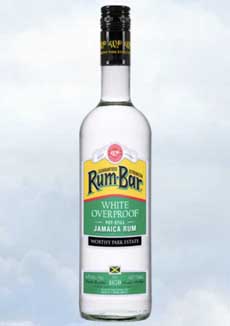
    White rum*, the clear version most of us are familiar with, is the punch-packer. It is labeled “Overproof” because it is 151% proof. If you don’t watch yourself, it’s easy to never know what hit you.

    White rum is, however, a terrific mixer in light, lively combinations of fruit juices and nectars, sodas, and lots of ice.

    A favorite Jamaican refresher is simply your preferred dose of white rum shaken up with Ting—a slightly not-too-sweet grapefruit soda—and lots of ice (you can buy it on Amazon). It’s cool company on a hot Jamaican evening.

    You would be hard put to find a Jamaican home that doesn’t have a bottle of white rum on hand—the country has some savvy uses for it† besides drinking.

  • Sinus headache? Mix it with a little alcohol and rub it on your temples.
  • Coughing? Mix in a little lime juice and rub it on your chest.
  • Achy joints? Massage it in.
  •  
    And whatever you do, never open a new bottle of rum without sprinkling some across the threshold: That’s the devil’s portion. It will keep evil spirits from intruding.
     
    Red Rum

    At the end of the spectrum are red rums (not in any way related to “The Shining”) that are aging now for Jamaica’s 100th Anniversary of Independence some 50 years from now.

    Aging takes place in previously used bourbon barrels that lend color, complexity, depth of flavor, and fire to what starts out as molasses. It is up to a Master Blender (at Appleton, she is the very brilliant Joy Spence, a chemist and designated Master Blender, appointed in 1997).

    All rums begin as sugar cane. It’s harvested by machete and stripped of its tough outer layer to reveal a semi-firm, highly sweet pulp.

    It’s great for chewing on its own when you need a hit of something sweet—just be sure to discard the pulp. (Cut into batons, the pulp also makes a sweet skewer for “Sugar Cane Shrimp,” made on the grill; or as a stirring stick for a rum cocktail.)

    Two pressings extract all of the liquid in each cane. This liquid is distilled with water and fermented but not aged, thus retaining a high alcohol content.

    The more complex aspects of rum that you taste in “red rum” come from boiling down the extracted liquid until crystals are formed and the liquid becomes molasses.

    The syrupy, rich reduction is then placed in a centrifuge where the sugar crystals separated from the molasses.

    The real magic of a delicious rum, though, happens through chemistry when it is distilled.

  • First, the molasses is allowed to ferment for several days, after which it is placed in either a “pot” still or a “column” still, each of which acts in different ways to achieve the desired mix of aromas and flavor profiles.
  • There is a vast range of esters and other chemical compounds that emerge from distillation that create aromas and flavors that can range among vanilla and caramel flavors, fruitiness, flowery notes, spiciness, and even maltiness or smokiness.
  •  
    It is now the moment for the Master Blender to go to work, creating the combinations of these essences which, when mixed with filtered water, are ready for the aging process.


    Appleton Rum
    [1] Sip rum elegantly from a stemmed glass (all photos courtesy Appleton Estate).

    Sugar Cane Cut
    [2] Cut sugar cane and a Piña Colada made with Appleton Signature rum.

    Appleton Estates Signature Blend
    [3] Appleton Estate Signature Blend, aged four years.

    Appleton Estates Reserve Blend
    [4] Appleton Estate Reserve Blend, aged six years.

    Appleton Estates 12 Year Old
    [5] The beginning of seriously aged rum: Appleton’s 12-years-old.

    Appleton Estates 21 Year Old
    [6] Appleton Estate 21 Year Old.

    Apple Estate 50 Years
    [7] If you’re in the chips, go for the king of the crop: Appleton Estate rum aged for 50 years, about $6,000.

     
    At Appleton, red rums are aged for up to 21 years. The longer rum is aged, its color becomes progressively darker and the texture smoother, while the longer aging contributes a bit of fire (50 years is the limit in terms of barrel aging). Drinking a fine aged rum is similar to sipping a well-aged bourbon or whiskey.
     
     
    COOKING WITH RUM

    At Jamaica’s first-ever Rum Festival last March, which showcased commercial and independent rum makers and their products, we were lucky to meet Jamaica’s ebullient chef, event producer, and caterer, Jacqui Tyson.

    We asked her how she likes to use rum in cooking, and she regaled us with some intriguing suggestions for using white rum at home. She is never without rum in her kitchen—she will use it in jerk dishes, or to make curried goat—and calls it the “glue” that brings flavors together.

  • Fish Soup: Roast crab, shrimp, and fish; sprinkle with rum, and flambe (the alcohol will burn off, leaving the caramelized sugar flavor), then add fish broth or stock.
  • Sauce: Use rum butter to finesse a sauce (combine softened butter with rum to taste).
  • Grill: Sprinkle rum over foods as they cook on the grill (we loved it on grilled lobster) and let it flame.
  • Pan Sauce: Deglaze a pan with rum instead of wine.
  • Desserts: Flambé berries with rum for dessert crêpes, brush onto cake layers and let soak before frosting. A personal favorite: Mix rum with caramelized brown sugar, add raisins, and spoon it over ice cream.
  •  
    Plan ahead: Friday, August 16th is National Rum Day.
     
     
    —Rowann Gilman
    ________________

    *They do produce a line of white rums under the name of Wray & Newphew.

    †Consider these uses to be folk medicine.


    Comments off

    The Nibble Webzine Of Food Adventures
    RSS
    Follow by Email


    © Copyright 2005-2025 Lifestyle Direct, Inc. All rights reserved. All images are copyrighted to their respective owners.