THE NIBBLE BLOG: Products, Recipes & Trends In Specialty Foods


Also visit our main website, TheNibble.com.

Butternut Squash Soup Recipe With A Latin Twist For National Acorn Squash Day

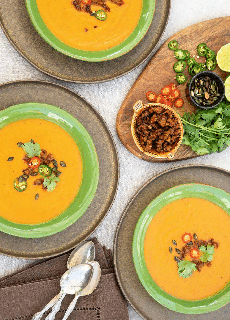
Butternut Squash Soup With Latin Accents Recipe
[1] Butternut squash soup with spicy Latin garnishes (photos #1, #2, #4, and #5 ©‎ Pointed Leaf Press).

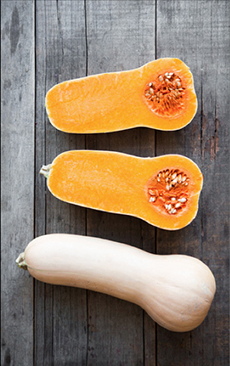
Butternut Squash Whole & Halved
[2] The star vegetable: butternut squash. Here’s the difference between butternut and acorn squash (photo © Good Eggs).

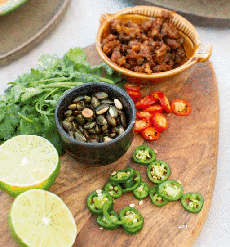
Soup Ingredients
[3] Soup garnishes: chiles, chorizo, cilantro, lime, pepitas.

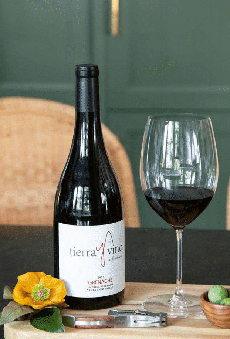
Glass Of Grenache Wine
[4] The author enjoys this soup with a glass of her Terra y Vino Grenache. “The berry notes and medium tannins found in Grenache,” she says, “balance the spice in the chorizo and bring out the richness of the butternut squash.”


September 7th is National Acorn Squash Day. We have a collection of delicious acorn squash recipes, including this Acorn Squash Soup With Gnocchi.

But today we’re horning in on acorn squash’s celebration to present a butternut squash soup recipe (there is no Butternut Squash Day and no inclusive National Squash Day, either).

Butternut and acorn squash are similar in flavor and texture. Here are the differences between them. You can substitute one for the other.

In fact, you can use any winter squash—acorn, buttercup, butternut, carnival, delicata, dumpling, hubbard, kabocha, sugar pumpkin, etc.—interchangeably in recipes.

Editors’s note: The plural of squash is either squash or squashes. “Squashes” is not commonly used in the U.S., but it is correct.

The recipe is from the new book, Caren Rideau: Kitchen Designer, Vintner, Entertaining at Home.

Caren Rideau is a kitchen and interior designer, entertaining enthusiast, vintner, and owner of wine label Tierra Y Vino. The book highlights her colorful lifestyle, beautiful kitchen designs, inspirational entertaining spreads, delicious recipes, and wine pairings, with plenty of gorgeous photography.

Inspired by her upbringing, Rideau’s work brings together the vibrant hues and styles of her native Southwest with a love for celebration fostered by her Mexican and Louisiana Creole roots.

You’ll find a lot of that in this recipe!

> The history of squash.

> The history of soup.
 
 
RECIPE: BUTTERNUT SQUASH SOUP WITH A LATIN TWIST

 
Ingredients

  • 1 butternut squash, peeled, seeded, and cut into 1-inch chunks
  • 1 yellow onion, roughly chopped
  • 2 garlic cloves, roughly chopped
  • 1 red bell pepper, roughly chopped
  • Olive oil for cooking
  • 2½ cups chicken stock
  • 3-4 sprigs fresh thyme
  •  
    For The Garnishes

  • 6 ounces Mexican chorizo, casings removed
  • 1 fresno chile, sliced thin
  • 1 serrano chile, sliced thin
  • roasted pepitas (pumpkin seeds)
  • Lime wedges
  •  
    Optional For Serving/font>

  • Crusty country bread (or substitute)
  • Olive oil or softened butter or olive oil
  •  
    Preparation

    1. PREHEAT the oven to 400ºF.

    2. PLACE the butternut squash, onion, garlic cloves, and red bell pepper on a flat baking sheet in one layer. Moderately drizzle olive oil over the vegetables and toss in the thyme sprigs. Season with salt and pepper.

    3. BAKE for 25-30 minutes or until the butternut squash is tender. Toss halfway through. While vegetables are roasting…

    4. COOK the chorizo in a skillet over medium-high heat until brown and crispy (about 8-10 minutes). Remove from the skillet, drain off any excess oil, and place into a bowl.

    5. REMOVE the butternut squash mixture from the oven and place it into a Vitamix or blender with the chicken stock. Blend until smooth. Add more chicken stock if necessary to get a medium purée or your desired consistency.

    6. POUR the soup from the blender into a stock pot to warm thoroughly for about 20 minutes. Adjust the salt and pepper.

    7. SERVE in individual bowls and garnish with the cooked chorizo, chilis, and pepitas. Serve the lime wedges on the side for those who enjoy a fresh squeeze.

    We like to serve the soup with crusty country bread. While we like butter, the bread is perfect for dipping into olive oil.


    CHECK OUT WHAT’S HAPPENING ON OUR HOME PAGE, THENIBBLE.COM.


    Comments off

    Moroccan Chicken Recipe For National Chicken Month

    September is National Chicken Month. Here’s a tasty chicken recipe that’s off the beaten track—inspired by Morocco, to be precise.

    The recipe is courtesy of the National Chicken Council, which features recipes for lunch and dinner on their consumer website, ChickenRoost.com.

    We have to take exception with the given name of the recipe, which is Moroccan Chicken with Eggplant-Zucchini Ragout. That’s not accurate.

    Ragout (rah-GOO) is not a dice of vegetables; it is a stew. Like stews, ragouts can be made from different meats, seafood, and vegetables, with different seasonings. They can be vegetables-only.

    The key difference between a ragout and a stew:

  • The meat and vegetables in a ragout are cut into smaller pieces than in a typical stew.
  • Neither a stew nor a ragout would refer to a bed or a serving of diced vegetables.
  •  
    The lesson here is one you’ve heard before: Just because you read it in print doesn’t make it true.
     
     
    THE WORD “RAGOUT”

    The word “ragout” is the American spelling of the French ragoût. The English spelling drops the circumflex over the “u.”

    Ragoût, in turn, derives from the verb ragoûter, meaning “to revive the taste.”

    A similarly-sounding word in Italian is ragù, but it refers to a sauce, typically used to dress pasta.
     
     
    WHAT SHOULD THIS RECIPE BE CALLED?

    This is a chicken dish with diced vegetables (photo #1). In French cooking, there are four sizes of dice:

  • Large dice, 3/4″ square (carré in French—cah-RAY).
  • Medium dice, 1/2″ square (parmentier—par-men-TYAY).
  • Small dice, 1/4″ square (macédoine—MAH-suh-dwon) dice.
  • Very small dice, 1/8″ (brunoise—broon-WOZ), and there’s even extra-extra small, fine brunoise, 1/16″.
  •  
    See the chart showing the different sizes, below.

    This recipe calls for a 1/2 dice of the vegetables, or parmentier in the language of French-trained chefs. But doesn’t Moroccan Chicken With Parmentier Of Eggplant & Zucchini” sound more tempting than Moroccon Chicken With Diced Eggplant & Zucchini?

    If you agree, you have our permission to call the recipe as we have renamed it.

    > The history of chicken.

    > The different cuts of chicken.
     
     
    RECIPE: MOROCCAN CHICKEN WITH PARMENTIER OF EGGPLANT & ZUCCHINI

    The principal Moroccan seasoning, ras el hanout*, is a blend of ground spices: allspice, cinnamon, cloves, coriander, cumin, ginger, paprika, and turmeric.

    However, since most American kitchens don’t have ras el hanout, the recipe was developed with other flavors of Morocco that most of us keep in the pantry.
     
    Ingredients

  • 1 ½ – 2 pounds chicken leg quarters
  • 3 tablespoons olive oil, divided
  • 1 teaspoon salt, divided
  • 1 teaspoon freshly ground black pepper, divided
  • 1 small eggplant, cut into ½-inch dice
  • 1 medium zucchini, cut into ½-inch dice
  • 1 small onion, diced
  • 2 cloves garlic, minced
  • ¼ cup white wine or water
  • 1 (14.5 ounce) can diced tomatoes with juices
  • ¼ cup pimento-stuffed green olives, roughly chopped
  • 2 tablespoons capers, rinsed
  • 2 tablespoons red wine vinegar
  • 1 teaspoon sugar
  • 2 tablespoons fresh parsley, minced
  •  
    Preparation

    1. WARM 2 tablespoons of olive oil in a large skillet over medium-high heat. Season the leg quarters with ½ teaspoon salt and ½ teaspoon black pepper. Add the leg quarters to the pan, skin-side down. Brown the chicken, turning once, 8 to 10 minutes per side. Remove the chicken to a plate and drain off all but 2 tablespoons of oil.

    2. ADD the eggplant to the hot pan and cook, stirring for 5 minutes. Add the remaining tablespoon of olive oil, along with the zucchini, onion, and garlic. Cook for 5 minutes, stirring occasionally.

    3. RAISE the heat to high and add the white wine to the pan, stirring to scrape up any browned bits (the fond). Add all of the remaining ingredients, except the parsley, and place the chicken legs back in the pan.

    4. BRING to a boil, reduce the heat to medium-low, cover and simmer for 35 to 40 minutes or until the chicken is cooked through (an instant-read thermometer should read 170ºF).

    7. TO SERVE: Place some of the eggplant-zucchini mixture onto plates, top with a leg quarter, and sprinkle with parsley.


    Moroccan Chicken Recipe With Eggplant & Zucchini
    [1] Moroccan-style chicken with eggplant, zucchini, olives and capers (photo © Chicken Roost).

    Pimento Stuffed Green Olives
    [2] Chopped pimento-stuffed olives go into the eggplant-zucchini mix (photo © Recipeland).

    Capers On A Marble Surface
    [3] So do briny capers (photo © iGourmet).

    Can Of Diced San Marzano Tomatoes
    [4] Diced tomatoes contribute to the sauce. Our favorite brand: San Marzano (photo © DeLaurenti).

    Purple Eggplant
    [5] You need only one eggplant (photo © IT Delice).

    Zucchini
    [6] And one zucchini. The singular form in Italian is zucchini. In the U.S., the same word is used for the singular and plural forms (photo © Good Eggs).


    The Different Sizes Of Diced Vegetables
    [7] Head to YouTube to see how to make each of these cuts (photo © ).
     
     
    ________________

    *In Arabic, ra’s al-ḥānūt means “top of the shop,” referring to the highest quality spices sold in a shop.


    CHECK OUT WHAT’S HAPPENING ON OUR HOME PAGE, THENIBBLE.COM.


    Comments off

    Meatless Beef Samosas Recipe For World Samosa Day

    Samosas Recipe
    [1] Classic samosas are triangular in shape (photo© Satyam Verma | Pexels).


    [2] The most popular filling combines potatoes, onions, and green peas with a variety of spices, including black mustard seeds, coriander, cumin, curry powder, garlic, ginger, and jalapeño. Here’s the recipe (photo © Oona Settembre | David & Busters | Dallas | Idaho Potato Commission).

    Half-Moon Samosas Recipe
    [3] Notice the half-moon shape on these cauliflower and cabbage samosas. Here’s the recipe (photo © Rich Vellante | Legal Seafoods | Idaho Potato Commission).

    Triangular Samosas Recipe
    [4] Here’s the recipe at right for Meatless Beef Samosas. You can serve a couple of samosas with a small salad as a snack or first course (photos #4, #5, and #6 © Hannah Kaminsky | Bittersweet Blog).

    Samosa Recipe Ingredients
    [5] Prepping for the Meatless Beef Samosas.

    Samosa Filling Recipe
    [6] The delicious Meatless Beef filling.

    Samosas With Mint Chutney
    [7] Baked samosas with mint chutney (photo © Good Eggs).

    Samosas With Hot Sauce
    [8] A fusion approach: Samosas with hot sauce instead of chutney—although some chutneys are pretty hot (photo © Shreyak Singh | Unsplash).(

    Samosa Filling In An Egg Roll Wrapper
    [9] Samosa filling in an egg roll wrapper (photo © Allen Brothers).

    Samosas
    [10] Sweet potato samosas with raisin chutney (photo © The Fry Family Food Co. | Unsplash).


    Ah, crispy samosas! September 5th is World Samosa Day. Is there a food holiday for everything? Sadly, some of our favorite foods have been overlooked in the holiday department. We have a running list that’s nearing 100, from A (arugula) to Y (yogurt—there’s no Z). Overlooked are everything from the basics (Greek salad, potato salad, sorbet) to the specialty (Dirty Martini, rugelach, steak tartare).

    Thankfully our colleague Hannah Kaminsky, a wonderful vegan recipe developer, provided us with this delicious way to celebrate samosas.

    Her recipe is meatless, but you can substitute meat. Although if you’ve never tried meatless alternatives, you’re missing out. And…no one will realize this hearty recipe is completely meatless!

    For fried food fans, samosas are a welcome snack, appetizer, or entrée. They’re great with a beer or a glass of wine. Or that overlooked Dirty Martini.

    If you don’t want fried food, there are instructions for air-frying and oven-baking.

    If you’d like to create a well-rounded plated meal with samosa as the centerpiece, just add one or more sides:

  • Basmati rice
  • Chopped cucumbers and tomatoes
  • Leafy green salad
  • Lentil dal
  • Rasam (spicy tomato soup)
  •  
    Samosas are meant for dipping. Popular choices:

  • Coconut chutney
  • Mint chutney (photo #7)
  • Raita (yogurt-cucumber dip, recipe)
  • Tamarind chutney
  •  
    You can make these or purchase them. Greek tzatziki is an excellent substitute for raita.

    The recipe follows.

    Below:

    > The history of samosas.

    > The year’s 5 Indian food holidays in the U.S.
     
     
    RECIPE: MEATLESS BEEF SAMOSAS (VEGAN)

    Hannah calls this recipe “Love Triangles” (photo #4). Prep time is 45 minutes, and cook time is 15 minutes. You’ll need an additional 30 minutes of waiting time for the dough to rise.

    Although samosas are traditionally deep-fried, you can pan-fry or shallow-fry them. Instructions for air-frying and baking are below.

    Extra filling (photo #6) can be turned into a chip dip (you can mix it with yogurt), hamburger bun samosa, pizza topping, or vegan Bolognese sauce.
     
    Ingredients For The Pastry Dough

  • 2 cups all-purpose flour
  • 1/2 teaspoon baking powder
  • 1/2 teaspoon salt
  • 1/4 teaspoon ground turmeric
  • 1/4 teaspoon ground black pepper
  • 1/4 cup coconut oil, melted
  • 1/2 cup warm water
  •  
    Ingredients For The Meatless Filling

  • 3 tablespoons coconut oil
  • 2 carrots, peeled and finely diced
  • 1/2 large red onion, diced
  • 1-2 Jalapeño or serrano chile peppers, seeded and minced
  • 3 cloves garlic, minced
  • 1/2 teaspoon whole cumin Seeds
  • 1/2 teaspoon ground ginger
  • 1/2 teaspoon Kashmiri chili powder or paprika
  • 1/2 teaspoon ground turmeric
  • 1/2 teaspoon salt
  • 1 (8-Ounce) package tempeh, crumbled
  • 1 cup soaked shiitake mushroom stems and/or caps, minced
  • 2 tablespoons soy sauce
  • 1 tablespoon lemon juice
  • 1 tablespoon garam masala
  • 1/4 teaspoon ground cinnamon
  • 1/2 cup frozen green peas
  • 1/4 cup fresh mint, minced
  • For frying: neutral vegetable oil
  •  
    Preparation

    1. MAKE the pastry dough. Combine the flour, baking powder, salt, turmeric, and pepper in a large bowl. Slowly pour in the oil and water while mixing with a sturdy wooden spoon. Once it becomes too stiff to stir easily, knead by hand until the dough is smooth. If the air is very dry, you may need to add another splash of water. Cover with a clean kitchen towel and let rest at room temperature for 30 minutes. Meanwhile…

    If you don’t want to make pastry dough, there are quick-fix solutions you can purchase for the outer wrapping such as burrito-sized flour tortillas, phyllo dough, pie dough, puff pastry, and spring roll or egg roll wrappers (photo #9).

    2. PREPARE the filling by placing the coconut oil in a medium saucepan over medium heat. Once melted, add the carrots, onion, peppers, and garlic, sautéing them into a softened aromatic, for 5-8 minutes. Add the cumin seeds, ginger, chili powder, turmeric, and salt, and cook for another minute.

    3. TURN DOWN the heat and add the tempeh, using a spatula to break up any remaining large pieces. Incorporate the minced shiitakes, soy sauce, and lemon juice, stirring well. Sauté for another 10 minutes, until lightly browned around the edges.

    4. ADD the garam masala and cinnamon, mixing well, then immediately remove from the heat. Stir in the peas, allowing them to thaw from the residual heat, followed by the mint. Transfer the filling to a separate bowl and let it cool to room temperature. When you’re ready to assemble the samosas…

    5. LIGHTLY DUST a clean surface with flour. Take the rested dough and cut it into 6 equal pieces. Working with one piece at a time, roll it into a ball and then use a rolling pin to flatten it into an even circle, about 7-8 inches in diameter. Use a sharp knife to cut it into half; you now have two half moons.

    6. TAKE one half and roll it into a cone, lightly moistening the edge with water and pressing the edges to seal. Stuff with 3-4 tablespoons of the filling, pressing down gently. Moisten the bottom edges and fold them over, pressing them together to create a neat little pyramid. Repeat with the remaining dough and filling. Cover the finished samosas with a clean kitchen towel to prevent them from drying out.

    7. COOK. Heat at least 1 inch of oil to shallow fry, or 2-3 inches of oil to deep fry, using a heavy, high-sided pan set over medium heat. Add 2-3 samosas at a time, being careful not to crowd the pan. Fry for 3-5 minutes on each side, flipping as needed, until golden brown all over. Remove with a slotted spoon and drain on paper towels.

    To air-fry: Lightly spray the samosas with a thin coating of oil and air fry at 370°F for 15 minutes, flipping after 10 minutes, until crispy and browned on both sides.

    To bake: Preheat a conventional oven to 400°F. Bake for 20-30 minutes, flipping halfway through, until golden brown.

    Serve hot!
     
     
    THE HISTORY OF SAMOSAS

    Samosas, the quintessential street food of India, did not originate there but thousands of miles away on the Iranian plateau*. The origins of its name are Persian: sanbosag.

    We don’t know when the first cooks shaped pastry into triangles, filled them with meats and vegetables, and fried them. We do know that The first known mention of the sanbosag is by the Persian historian Abul-Fazl Beyhaqi, writing in the 11th century (although typically, dishes have been in existence known much longer than their first-known notation).

    Beyhaqi describes a fine pastry, a dainty delicacy served as a snack in the great courts of the Ghaznavid dynasty which ruled large parts of Persia, Khorasan, much of Transoxiana† and the northwest Indian subcontinent from 977 to 1186.

    There, the triangular pastry was filled with minced meats, nuts, and dried fruits and then fried until crisp.
     
     
    The Sambosag Migrates East

    The dainty sambosag was transformed into the robust samosa by waves of migration from the Middle East to India. Traders and other travelers brought the recipe through Central Asia, and then over the mountains in what is now Afghanistan. Some descended down the mountains onto the plains of India (more about that in a minute).

    By the time the recipe reached what is now Tajikistan and Uzbekistan it was no longer a fine pastry, but a crude peasant dish—much larger and heartier, the type of food a shepherd would take out into the pastures for his midday meal.

    The samosa retained its triangular shape and was still fried, but the nuts and fruits were gone, replaced with the simple fillings available: coarsely chopped goat or lamb with chopped onions and some salt.
     
     
    The Samosa Arrives In India

    Over the following centuries, the samosa made its way over the icy passes of the Hindu Kush mountain range and into the Indian subcontinent.

    Once in India, the samosa was tailored to local tastes, incorporating Indian spices: caraway seeds, coriander, ginger, pepper, and numerous others.

    The filling changed, too, with vegetables often replacing meat.

    Even the shapes evolved beyond the triangle. There are now cone and half-moon-shaped samosas (photo #3), depending on the region. We’ve even seen egg roll-shaped samosas (photo #9).

    These days most samosas are filled with ingredients that came all the way from the New World: chiles, peas, and potatoes, for example. New World ingredients came to India by way of Portuguese traders in the 16th century.

    Onions, another key ingredient, are believed to have originated more than 5,000 years ago in Central Asia. They’re one of the most ancient of cultivated food sources.

     
    The Recipes Proliferate

    Not surprisingly, each region and town put its own favorite ingredients in its samosas.

    Today, as then, samosas can even vary from shop to shop as samosa-makers compete for customers.

    Samosas are now a worldwide treat. The British carried the recipe across their vast empire. The Indian diaspora—Indians who are living abroad and those who can trace their ancestry to India—did the same.

    Thus, the fried tidbit of ancient Persian rulers is now enjoyed in virtually every country on Earth [source].

  • They can be jumbo-sized to serve as an entire meal, or bite-sized for cocktail canapés.
  • In Punjab samosas include paneer, the fresh Indian cheese, among their ingredients. Cheese is not used elsewhere.
  • Most samosas are still fried, but baked samosas have appeared for the calorie-conscious.
  • There even are dessert samosas, filled with chocolate, cheesecake, fruits, and Nutella.
  •  
    A mixture of potatoes, onions, peas or lentils, and spices remain the most popular filling. It is typically served with different varieties of chutney.

    You can check out the different types of samosas—from the Middle East, the Indian subcontinant, and Africa—here.
     
     
    THE YEAR’S 5 INDIAN FOOD HOLIDAYS IN THE U.S.

  • January 12: National Curried Chicken Day
  • January 14: National Undhiyu Day
  • September 5: World Samosa Day
  • September 21: National Chai Day
  • October, 1st Full Week: National Curry Week
  • Plus:

  • January 16: International Hot & Spicy Food Day
  •  
    > The Numerous Food Focused Holidays In India
     
    ________________

    *The Iranian Plateau extends from East Azerbaijan Province in the northwest of Iran (ancient Persia) all the way to Afghanistan and Pakistan west of the Indus River. It also includes smaller parts of the Republic of Azerbaijan, Iraqi Kurdistan, and Turkmenistan.

    Transoxiana or Transoxania (“Land beyond the Oxus”) is the Latin name for a region and civilization located in lower Central Asia. It roughly corresponds to modern-day eastern Uzbekistan, western Tajikistan, parts of southern Kazakhstan, parts of Turkmenistan, and southern Kyrgyzstan. Geographically, it is the region between the Amu Darya River to its south and the Syr Darya River to its north. Here’s more about it.

    National Undhiyu Day, held every January 14th, celebrates the a mixed vegetable curry that’s a regional specialty of the Gujarati people of India. Here’s a recipe.


    CHECK OUT WHAT’S HAPPENING ON OUR HOME PAGE, THENIBBLE.COM.


    Comments off


    © Copyright 2005-2026 Lifestyle Direct, Inc. All rights reserved. All images are copyrighted to their respective owners.