THE NIBBLE BLOG: Products, Recipes & Trends In Specialty Foods


Also visit our main website, TheNibble.com.

FOOD FUN: Sashimi Tacos Recipe & The History Of Sashimi


[1] Sashimi tacos at Haru restaurant in New York City (photo © Haru/RA Sushi).

Spicy Tuna For Sushi
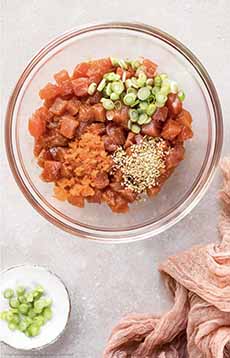
[2] Fill your taco shells with spicy tuna and/or spicy salmon. Here’s the recipe (photo © No Spoon Necessary).

Fancy Sushi Hand Rolls - Temaki
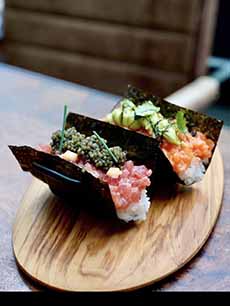
[3] Here, crisp sheets of nori are used instead of taco shells. Are they “open hand rolls,” “sashimi tacos,” or both (photo © LT Bar & Grill | Hackensack, New Jersey).

Deluxe sashimi on a bed of ice.
[4] A bit of “fusion” on this plate of sashimi: The soy sauce is given some heat with Mexican jalapeño instead of Japanese wasabi (photo © The Fulton | NYC).

Salmon and avocado sushi burrito.
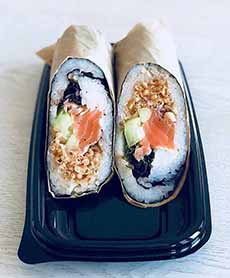
[5] More fusion: a sushi burrito, with salmon and avocado (photo © Genji Sushi | Facebook).

Sushi  burger with raw tuna.
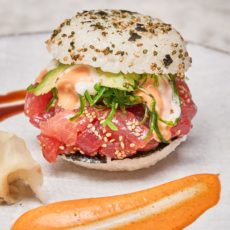
[6] Yes, there’s even a sushi burger (photo © Redeye Grill | NYC).

  Given our love of fusion food, we were delighted to discover these sashimi tacos at Haru restaurant in New York City.

You can make them full size or in miniature for appetizers and hors d’oeuvre. At Haru, the sashimi tacos are available in:

  • Salmon and/or Spicy Salmon
  • Tuna and/or Spicy Tuna
  • Yellowtail
  •  
    Of course, you can make “California roll” tacos with avocado, cucumber, and crab stick or your other favorite sashimi.

    We made delicious tacos with bay scallops and seaweed salad. With a standard taco size, some “salad” helps to fill out the base.

    If you can’t find seaweed salad, a mix of shredded daikon and carrot is equally delicious; and shredded lettuce always works!

    > The history of tacos.

    > The history of sushi. The history of sashimi is below.
     
     
    HOW TO MAKE SASHIMI TACOS

    Ingredients

  • Fish or seafood of choice
  • Sesame oil
  • Rice vinegar
  • Wasabi powder
  • Soy sauce
  • Optional filling: shredded carrots and/or daikon, seaweed salad
  • Taco shells or wonton wrappers
  • Garnish: snipped chives, thin-sliced green onion (scallion), lemon or lime zest, lemon or lime zest and grated ginger mix, toasted sesame seeds, tobiko (flying fish roe) or salmon caviar
  • Lime wedges
  •  
    Preparation

    1. BUY sushi-quality fish and dice it into 1/4″ to 1/2″ cubes.

    2. MOISTEN/TOSS with sesame oil, rice vinegar, and a bit of wasabi powder. Taste and add soy sauce if the mixture needs a hit of salt. You can also use the spicy tuna recipe in photo #2.

    3. PREPARE and fill taco shells. Here’s how Guy Fieri makes shells from wonton wrappers for his tuna taco recipe.

    4. GARNISH as desired.
     
     
    DO YOU KNOW YOUR SASHIMI?

    Check out the different types of sashimi in our Sushi & Sashimi Glossary.
     
     
    THE HISTORY OF SASHIMI

    Sashimi is a dish consisting of fresh raw fish or meat (especially beef) sliced into thin pieces and often eaten with soy sauce, wasabi, and gari or shoga (both are pickled ginger—pink-hued shoga is pickled in red plum vinegar and gari, beige in color, is pickled in sweet vinegar).

    The word “sashimi” means “pierced body” (sashi = pierced or stuck, mi = body or meat). It dates from the Muromachi period in Japan (1336-1573) and there are different origin stories.

    The most colorful one concerns the practice of sticking the fish’s tail and fin to the slices for the purpose of identifying the fish being served.

    Sashimi is often the first course in a formal Japanese meal, but it can also be the main course, served with rice and miso soup.

    In a multicourse meal, it should be eaten first so that its delicate flavors can be savored before stronger-flavored food affects the palate [source].

    Sashimi is sliced thicker than the fish used for sushi, since the latter has more substance served atop or rolled with vinegared rice.

    The typical garnish for sashimi is the Asian white radish, daikon, which is shredded into long thin strands, or individual leaves of the herb shiso, a.k.a. perilla (plastic leaves are substituted in lesser establishments).

    (If you usually leave the daikon on the plate, you’re missing out on great fiber. You can dip it in soy sauce if you want more flavor. As for shiso leaf: It’s a delicacy that’s also often left behind. A member of the mint family, it tastes a bit like basil. We wrap the leaf around a slice of fish.)
     
    How Old Is Sashimi?

    While we know the origin of sashimi, the origin of sashimi is less certain.

    In the days before refrigeration, raw fish (for both sashimi and sushi) many fish varieties could only be enjoyed raw along the coastals of Japan. But since Japan consists of hundreds of islands, fresh seafood was available in many locations.

    Inhabitants of the interior of the country could have enjoyed lake or river fish.

    One origin theory suggests that modern sashimi descends from a dish of thinly sliced raw fish marinated in seasoned rice vinegar called namasu, which was a favorite in Japan during the Heian period (794-1185). The dish is still served today.*

    Scholars agree that sashimi became popular in Japan during the Edo period (1600-1867). Nigiri sushi, slices of fish set atop patties of vinegared rice, appeared before the start of the 19th century [source].

    In 1965, the landmark Immigration and Nationality Act enabled more Asians to emigrate to the U.S. They brought with them the Asian cuisines we enjoy today. The first sushi restaurant in the U.S. opened in Little Tokyo in Los Angeles in the 1960s.

    As sushi has grown in popularity, its preparation has evolved from the traditional to the modern.

    From the use of ingredients not native to Japan (avocado for California rolls, cream cheese and smoked salmon for Philadelphia rolls, mango for numerous rolls) to new formats (sushi burritos—photo #5, sushi burgers—photo #6), Japanese sushi has become treasured American fare.
     
    ________________

    *Namasu is made from raw, thinly sliced vegetables and seafood, marinated in rice vinegar for several hours, which pickles them slightly. Namasu was brought to Japan from China during the Nara period (710-784). Sunomono and other vinegared salads are related to namasu [source].


    CHECK OUT WHAT’S HAPPENING ON OUR HOME PAGE, THENIBBLE.COM.


    Comments off

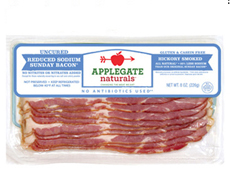
    PRODUCT: Applegate Naturals Reduced Sodium Bacon

    If you haven’t yet had Applegate organic and natural meats, you’re in for a treat. The quality is superb, and Applegate franks are our app-solute favorites.

    Another product on our “special indulgences” list is Applegate’s Natural Sunday Bacon: packed with old fashioned country bacon flavor but without added nitrites or chemical preservatives.

    Made from select cuts of antibiotic-free pork and seasoned with natural ingredients like sea salt, Applegate bacon is smoked for hours over hardwood.

    And now, there’s an even healthier version of Applegate’s Natural Sunday Bacon: Reduced Sunday Bacon, which delivers the same great taste with 25% less sodium.


    New, delicious and 25% lower in sodium. Photo courtesy Applegate.com.

    Learn more about Applegate products at Applegate.com.

    Then, whip up some BLTs or make this tasty salad:

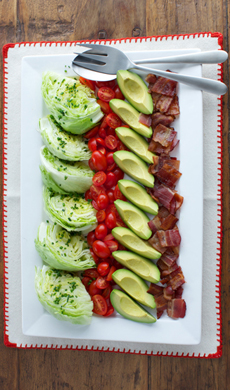
    RECIPE: BLT SALAD WITH AVOCADO & BUTTERMILK DRESSING

    This pretty composed salad is like an avocado BLT without the toast. Homemade buttermilk dressing is a creamy treat.

    The recipe serves 4 to 6.


    An avocado “BLT” salad. Photo courtesy
    Applegate.com.


    Ingredients

    Dressing Ingredients

  • 2/3 cup well-shaken buttermilk
  • 1/3 cup extra-virgin olive oil
  • 2 tablespoons chopped chives
  • 1 tablespoon apple cider vinegar
  • 2 teaspoons Dijon mustard
  • Salt and pepper
  •  
    Salad Ingredients

  • 1 package (8 ounces) Applegate Sunday Bacon
  • 1 head iceberg lettuce, cored and cut into 6 wedges
  • 3 avocados, pitted, peeled, and cut into thick wedges
  • 1 cup cherry or grape tomatoes, halved
  • 2 tablespoons chopped chives
  •  
    Preparation

    1. COOK the bacon until crisp, according to package instructions. Remove from heat, drain briefly on paper towels, then chop into 1- to 2-inch pieces.

    2. PREPARE dressing. Place the buttermilk, olive oil, chives, vinegar and mustard in a large jar; seal tightly and shake well to combine. Season to taste with salt and pepper and shake again to combine.

    3. ASSEMBLE salad: Arrange the lettuce, avocado, tomatoes and bacon on a large serving platter or individual plates. Shake the dressing well and spoon some over the salad, saving some for people to add more if they like. Garnish the salad with the remaining chopped chives.
    Find more recipes at Applegate.com.


    Comments off

    TIP OF THE DAY: Ways To Season Chicken

    You don’t want a bland chicken, so dig out
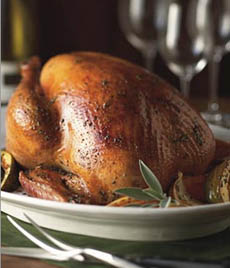
    the spices and season away! Photo courtesy Butterball.

      Barbecue sauce is the number one food that THE NIBBLE receives over the transom (and old publishing expression that means unsolicited). Barbecue sauce is expensive and totally unnecessary. Our mother rotisseried a wonderfully delicious, plump bird several times a week, using only garlic salt, onion salt and pepper. No bottle of barbecue sauce ever crossed her threshold.

    Of course, there are many options between those two extremes: numerous different ways to season a chicken, drawing from just about every cultural influence. It can be as simple as trussing the bird, then sprinkling or basting with your favorite flavors. Or, you can be as imaginative as you like. Here are some suggestions that leave out the sugar, so you can enjoy a broiled, grilled or roasted chicken as the lower-calorie protein it is.

    Here are tips from Chef Johnny Gnall, starting with a…


  • Basic Roast Chicken. If you prefer a simple bird, just sprinkle salt and pepper over it. But not your mother’s S&P: Use sea salt and freshly ground black pepper, with one of these varietal peppercorns. Basting the chicken with melted butter during roasting will also add a lot of flavor; and drizzle some fresh lemon juice on the cooked bird to add a bit of freshness and lightness (and counterbalance the rich butter. For added flavor, stuffing the cavity with half a peeled onion and a lemon that has been cut in half. (You can use this trick for any roast chicken recipe.)
  • Asian Seasoning. Stuff the inside cavity of the bird with a half a head of peeled garlic and a 1-inch knob of ginger. Baste the skin with your favorite Asian marinade or dressing (we like the Palcha line of Thai-fusion dressings), or make your own with this easy recipe.
  •  

  • Southwestern Seasoning. Take 4 tablespoons of your favorite barbecue rub (here are 10 barbecue rub recipes) and mix in 1 to 2 tablespoons of ground coffee. The ground coffee flavor will not be prominent; in fact, few people will know it’s there. Yet, it will enhance the other flavors while adding a delightful earthiness, as it does in a good chili recipe.
  • Spicy Seasoning. If you enjoy your foods heavily spiced, simply add some dried herbs along with your favorite spice combinations. For example, mix equal parts (or your preferred proportions) of chili powder, cumin, dried oregano, dried thyme and paprika. If you’re feeling more adventurous, you can blend in a stick of melted butter or oil to create a wet rub and basting paste.
  •  
    MAKE YOUR OWN SPICE RUB

    If you want to use a spice rub but don’t have one on hand, it’s easy—and far more economical—to create your own out of the spices you have in your pantry. You can use a simple ratio of two parts salt to one part each of any other spice(s). Johnny’s favorite is two parts salt to one part each of chipotle chili powder, coriander, cumin and light brown sugar.

     
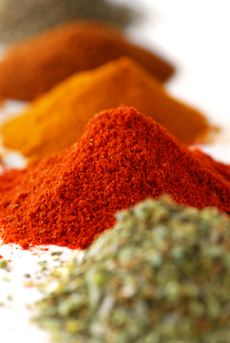
    There’s need to buy spice rub: It’s a combination of the spices you probably have in the cabinet. Photo by Elena Elisseeva | IST.
     

    WE’RE NOT ANTI BARBECUE SAUCE, by the way. Find our favorite barbecue sauces and rubs in our Rubs, Marinades, Sauces & Glazes Section.
     

    HOW MANY PARTS OF THE CHICKEN CAN YOU NAME?

    Check out our Chicken Glossary, which covers the different parts of chicken, the history of chicken and much more.


    Comments off


    © Copyright 2005-2026 Lifestyle Direct, Inc. All rights reserved. All images are copyrighted to their respective owners.