|

[1] Cold soba noodles typically are served on a flat plate like pasta; but here, they’re swirled into a stylish dome (photo © Lulu Durand | iStock Photo).
[2] Hot soba ingredients with fried tofu cubes and edamame are American-inspired (photo © Sun Basket).
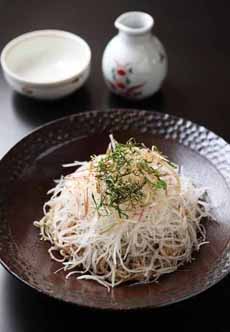
[3] A classic preparation: cold soba noodles topped with shredded daikon (suzushiro) (photo © Soba Yamagata).
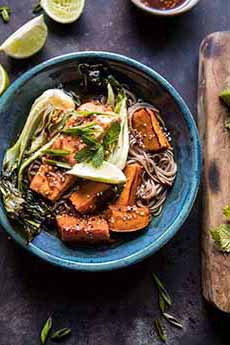
[4] Hot soba noodles topped with salmon, sweet potatoes, baby bok choy, scallions, black and white sesame seeds (photo © Vital Choice | Facebook).
[5] Serve soba noodles as a side, instead of rice or pasta. Here, it’s served with slices of panko-coated fried chicken roll, stuffed with asparagus and carrots (photo © Between The Bread).
Uncooked soba (buckwheat) noodles (photo © Maria Lapsha | Fotolia).
|
|
Unless you live in an area with good Japanese restaurants, it may be difficult to find a dish of soba noodles. But if you check in a natural foods market or online, you should be able to pick some up and cook your own. Soba noodles can be enjoyed so many ways, hot or cold. You can even set them out as a buffet, with pick-your-own toppings (see hiyashi soba, below.)
Soba dishes are appealing party fare, from bowls of noodle soup meant to be slurped with gusto, to a mix-your-own cold soba noodle salad with four, six or more optional ingredients with which to customize one’s dish.
Soba is the Japanese word for buckwheat; the thin noodles are made from buckwheat flour. As with all pasta, soba noodles can be served warm or chilled (think cold sesame noodles and pasta salad). Here are some popular recipes ideas
> A full recipe for soba noodle salad with tofu is below.
> Also below is the history of soba noodles.
HOT SOBA NOODLE DISHES
Soup: A bowl of dashi broth, filled with soba, is typically topped with sliced green onion and a tempura shrimp; add a fried egg, sunnyside up, and you’ve got tsukimi tororo. You can customize the dish with mushrooms, nori strips (seaweed) and/or western ingredients such as kale or spinach.
Stir fry: Topped with a stir fry of baby bok choy, bell peppers, green onions, snow peas and a protein (chicken, fish/seafood, tofu).
Fish dishes: Seared ahi tuna with a sesame crust (recipe) or miso-poached cod are wonderful on a bed of soba. Asparagus or snow peas add complementary color and flavor.
Vegetarian: Kake soba is the simplest hot soba, noodles topped with thinly sliced scallion (sometimes a slice of kamaboko, fish cake). Kitsune soba is topped with aburaage (deep-fried tofu). Nameko soba is topped with nameko mushrooms. Sansai soba (“mountain vegetables soba”) is topped with sansai, or wild vegetables, such as warabi, zenmai, and takenoko. Tanuki soba substitutes tenkasu, crunchy bits of leftover fried tempura batter. Tororo soba is topped with purée of yamaimo (Japanese yam). Vegetable tempura is a popular topping. Wakame soba is topped with wakame seaweed.
Poultry: Kamo nanban opped with duck meat and negi. Tsukimi soba is topped with a raw egg, which poaches in the hot soup.
Pork: Karē nanban is hot soba (or udon) noodles in curry flavored broth topped with chicken/pork and thinly sliced scallion.
Seafood: Shrimp tempura soba is a favorite. A cheaper version is kakiage soba, fried shrimp bits. Nishin soba is topped with cooked migaki nishin (dried herring).
COLD SOBA NOODLE DISHES
Hadaka soba (naked soba): a dish of plain cold soba.
Hiyashi soba: One of our favorite ways to enjoy soba is this “mix your own” concept served with dishes of optional ingredients. These mix-ins or toppings can include fresh cilantro, green onion slices (scallions), natto (fermented soybeans), nori strips, okra slices, oroshi (grated daikon radish), tororo (purée of yamaimo—Japanese yam), nattō (sticky fermented soybeans), okura (fresh sliced okra), and of course, a pitcher of dashi. You can add some optional heat, such as minced bird’s eye chile. Add a fried egg, sunnyside up, and you’ve got yakisoba. Add slices of chicken or pork, and you can set the ingredients out for a buffet lunch or brunch.
Mori* soba: Plain chilled soba noodles served on a flat basket or a plate.
Seiro* soba: Soba served on a square or rectanagular bamboo mat (seiro) instead of the round zaru basket.
Soba maki: Maki sushi made of cold soba wrapped in nori dried seaweed.
Soba salad: Cold soba noodlesand vegetables with sesame dressing. This is a modern, fusion salad and mostly found outside Japan.
Soba salad, cold soba mixed with vegetables and sesame oil-soy sauce dressing is a contemporary fusion concept served outside Japan. House Foods, makers of premium tofu and organic tofu, has provided the recipe below, which uses traditional Japanese ingredients.
Zaru* soba: Mori soba topped with shredded nori seaweed, served on a zaru basket.
You can create fusion food with western ingredients: hard-cooked egg, julienned ham, and cheese, strips of roast pork or poultry, leeks or red onions instead of scallions, sliced red radishes…anything goes.
In fact, one conceit for a soba noodles party is to have each guest bring a creative ingredient to mix in.
________________
*Mori soba, seiro soba, and zaru soba are similar but for the serving plate or basket.
________________
RECIPE: SOBA NOODLE SALAD WITH TOFU
Add optional asparagus and/or snow peas, diagonally cut, for another dimension of flavor. Adjust the ingredients to suit your taste. For example, we prefer more red bell pepper and green onions on the salad, and less sugar in the dressing.
Ingredients For 6 Servings
1 block extra firm tofu (14 ounces), drained, patted dry and cut into ½ inch strips
8 ounces soba noodles, uncooked
1 medium cucumber, cut into 1/8-inch-thick julienne strips
1 medium red bell pepper, julienned
For The Dressing
1/3 cup rice vinegar
¼ cup lime juice
2½ tablespoons sesame oil
2 tablespoons soy sauce
3 teaspoons sugar
2 tablespoons ginger, minced
2 tablespoons green onions (scallions), minced
2 tablespoons toasted sesame seeds (method below)
Preparation
1. TOAST sesame seeds: Heat a small skillet over medium heat. Add sesame seeds; cook and stir for 2 minutes or until golden brown and fragrant. Immediately remove seeds from hot pan to avoid over-toasting.
2. COOK noodles in a large pot, following package directions. Drain and rinse well under cold water. Set aside and refrigerate.
3. SPRAY oil on a nonstick pan and grill tofu. Set aside and refrigerate.
4. WHISK together the dressing ingredients.
5. TOSS together noodles, cucumber, red bell pepper, and optional asparagus and/or snow peas.
6. Add tofu strips and mix well.
|
SOBA NOODLES HISTORY
The tradition of eating soba originates from the Tokugawa Period of Japan, also called the Edo Period, from 1603 to 1868 C.E. Every neighborhood had one or two soba establishments, many also serving saké, where locals would stop for a casual meal.
At that time, the well-to-do population of Edo (ancient Tokyo) was more susceptible to beriberi than the rural poor, due to their high consumption of white rice, from which the nutrients are removed with the bran. Low thiamine (vitamin B) consumption leads to beriberi, and it was discovered that the disease could be prevented by regularly eating thiamine-rich buckwheat [source].
Previously, people ate buckwheat in the form of dumplings or mixed with glutinous rice to make rice cakes.
Innovations made it easier to eat soba transformed into long, thin soba noodles. Using a blend of 80% buckwheat with a filler of 20% wheat made the noodles resilient and easy to slurp down. This became Edo’s famous 2:8 soba.
Soba restaurants proliferated, and the noodles became so popular that merchants and samurai families would pay to have soba restaurants delivered to their homes.
Soba noodles became a daily part of life. It was Edo-era fast food for the busy people of Edo. Convenient, inexpensive, light on the stomach, filling, versatile with a choice of toppings, and importantly, nutritous, a bowl of soba was an is a well-rounded meal.
That Tokyo was close to key buckwheat producing areas like Nagano and Niigata helped the dish flourish.
The Japanese word soba means buckwheat, in particular, buckwheat noodles. It is an abbreviation of the full name of buckwheat, soba-mugi, which means “edgy wheat.”
Soba is traditionally eaten on New Year’s Eve in most areas of Japan [source]. Soba noodles have long symbolized longevity: “the thinner; the longer” in shape, the better.
CHECK OUT WHAT’S HAPPENING ON OUR HOME PAGE, THENIBBLE.COM.
|